
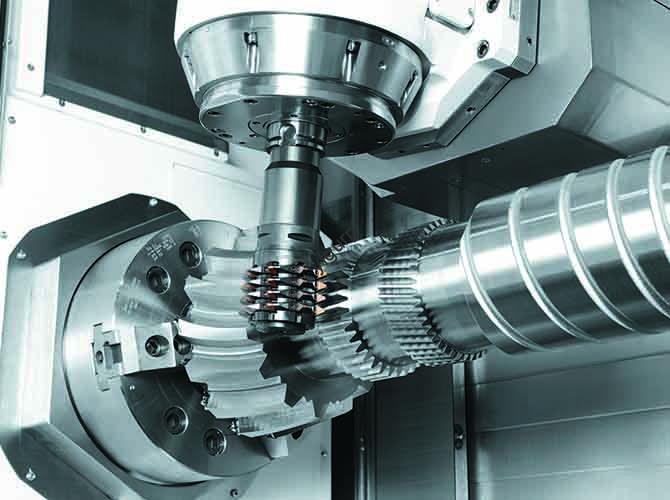
Les pièces en aluminium moulé sous pression sont largement utilisées dans l'automobile, électronique, et industries du matériel, mais leur surface brute manque souvent de protection, décoration, ou des fonctions spécifiques. Die casting aluminum surface treatment solves this problem through systematic processes—yet many engineers struggle with choosing the right method. Cet article décompose les processus de base, comparaisons, et des stratégies de sélection pour vous aider à prendre des décisions éclairées.
1. Why Is Pretreatment the Foundation of All Surface Treatments?
Pretreatment eliminates surface defects and contaminants, directly determining the quality of subsequent treatments. Skipping or rushing this step leads to coating peeling, uneven coloring, or poor corrosion resistance. Below is a detailed breakdown of key pretreatment steps:
| Pretreatment Step | Core Purpose | Common Methods | Key Notes |
| Degreasing | Remove grease, release agent residue | Solvent cleaning, alkaline degreasing, nettoyage par ultrasons | Choose methods based on contamination level (par ex., ultrasonic for heavy grease) |
| Oxide Film Removal | Eliminate natural thin oxide layer and slight surface metamorphism | Weak alkaline solution soaking | Avoid strong alkalis—they may etch the aluminum surface |
| Sanding/Descaling | Clear embedded mold sand or dirt from die casting | Manual sanding, mechanical sanding | Focus on areas with dense sand (par ex., gate or overflow grooves) |
| Deburring/Polishing | Remove burrs (at parting lines) and smooth surfaces | Manual polishing, mechanical grinding | Over-polishing closes pores (hurts coating adhesion); under-polishing leaves burr defects |
| Sandblasting/Shot Blasting | Improve surface roughness (boost coating adhesion) | Abrasive particle spraying (alumine, perles de verre) | Uniform spraying is critical—avoid uneven roughness |
Special Note for Porosity: Utiliser impregnation (fill tiny pores with resin or wax) to improve air tightness—this is a must for subsequent dense treatments like electroplating.
2. Protective Treatments: Which One Fits Your Corrosion Resistance Needs?
Protective treatments extend the service life of die casting aluminum parts. Below is a comparison of the most common methods to help you choose:
| Type de traitement | Working Principle | Avantages | Limites | Ideal Application Scenarios |
| Chemical Conversion Film | Chemical reaction forms a thin protective film (par ex., chromate, phosphate) | Faible coût, simple process; good pre-coating base | Poor long-term corrosion resistance | Short-term protection (par ex., temporary storage) or pre-coating for spraying |
| Anodisation | Electrochemical reaction generates a thick alumina film (dur, poreux) | Haute dureté (résistant à l'usure); excellente résistance à la corrosion | Die castings’ high porosity causes film blistering; poor dyeing effect | Parts needing high corrosion resistance (par ex., matériel marin, luminaires extérieurs) |
| Galvanoplastie | Electrolysis deposits metal layers (chrome, nickel) on the surface | Dual benefits: résistance à la corrosion + décoration; high hardness (chromage) | Complex pretreatment; strict control of chemical solutions (to avoid pore defects) | Decorative-cum-protective parts (par ex., garniture automobile, bathroom fixtures) |
| Pulvérisation | Apply coatings (poudre, liquid, electrophoretic) on the surface | Rich colors; good coverage (fits complex shapes); powder coating is eco-friendly | High-temperature curing (needs temperature control to prevent deformation) | Parts with complex shapes (par ex., boîtiers électroniques, appareils de cuisine) |
3. Decorative & Functional Treatments: Meet Special Requirements
Beyond protection, decorative treatments boost product value, alors que functional treatments enable specific performance.
3.1 Decorative Treatments: From Matte to Metallic Shine
| Traitement | Effect Description | Key Process | Limites | Target Products |
| Polished/Brushed | Brillant (brillant) or textured (brossé: straight grain, studded grain) surface | Mechanical grinding + polissage | Requires high initial surface quality | High-grade hardware (par ex., faucet handles, luxury electronic casings) |
| Sandblasting Effect | Uniform matte surface | Fine abrasive spraying | Cannot hide major surface defects | Parts needing low-gloss appearance (par ex., industrial control panels) |
| Anodisation + Coloration | Dyeing (organic dyes) or electrolytic coloring (bronze, noir) after sulfuric acid anodizing | Anodizing → coloring → sealing | Die castings’ porosity limits dyeing uniformity | Semi-decorative parts (par ex., medium-grade furniture hardware) |
| Vacuum Coating (PVD) | Deposits metal/ceramic films (or, rose gold, titane) via physical vapor deposition | High-vacuum environment + ion sputtering | Requires highly smooth substrate surface | High-end decorative parts (par ex., cadres de smartphones, boîtiers de montres de luxe) |
3.2 Functional Treatments: Tailored to Performance Needs
| Functional Requirement | Treatment Method | Exemples d'application |
| Conductivité | Electroplating copper/silver; conductive oxidation | Connecteurs électroniques, electromagnetic shielding parts |
| Isolation | Anodisation (thick film); polyurethane insulating paint coating | Composants du moteur, electronic insulation brackets |
| Résistance à l'abrasion | Hard anodizing (film thickness: 20-50µm); PVD durable film; wear-resistant spray coating | Moving parts (par ex., engrenages), cylindres, pneumatic components |
4. 4 Key Factors to Choose the Right Surface Treatment Process
Choosing a process is not about “the best” but “the most suitable.” Consider these four factors:
- Final Requirements: Clarify priorities—Is it corrosion resistance (par ex., outdoor parts need anodizing), décoration (par ex., luxury parts need PVD), ou fonctionnalité (par ex., connectors need conductive plating)?
- Propriétés des matériaux: Alloy composition and surface quality matter. Par exemple, ADC12 aluminum alloy (high silicon content) may affect electroplating uniformity; porous surfaces require impregnation first.
- Coût & Environmental Friendliness: Balance budget and regulations. Chromage (coût élevé, toxic) is being replaced by eco-friendly options like powder coating or PVD.
- Production Scale: Processus automatisés (par ex., electrophoresis, revêtement en poudre) suit mass production; manual polishing/PVD fits small-batch high-end products.
Yigu Technology’s Perspective on Die Casting Aluminum Surface Treatment
Chez Yigu Technologie, we believe pretreatment precision and process matching are the keys to successful die casting aluminum surface treatment. Over the years, we’ve seen many projects fail due to neglected porosity (no impregnation) or mismatched treatments (par ex., using anodizing for highly porous ADC12 parts). We advocate a “test-first” approach: conduct small-batch trials to verify pretreatment effectiveness and coating adhesion before mass production. En plus, as environmental regulations tighten, we prioritize eco-friendly processes like powder coating and chrome-free conversion films—helping clients meet both performance and sustainability goals.
FAQ (Frequently Asked Questions)
- Q: Why do die casting aluminum parts often have blistering during anodizing?
UN: The main cause is high surface porosity of die castings. During anodizing, air or moisture in pores expands under electrolysis, leading to blistering. Solve this by adding an impregnation step before anodizing to seal pores.
- Q: Which is more cost-effective for mass-produced outdoor aluminum parts—anodizing or powder coating?
UN: Powder coating is more cost-effective. It has lower equipment investment than anodizing, faster curing speed (suitable for mass production), and excellent outdoor weather resistance. Anodizing is better only if ultra-high hardness is required.
- Q: Can vacuum coating (PVD) be applied to die casting aluminum parts with rough surfaces?
UN: Non. PVD requires a highly smooth substrate (Ra ≤ 0.2μm). Rough surfaces will cause uneven film deposition, affecting both appearance and wear resistance. Pre-treat rough parts with fine polishing or sandblasting to smooth the surface first.