
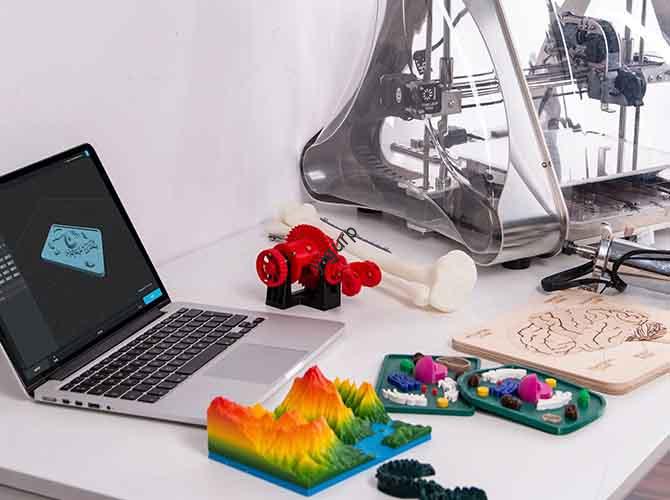
Si vous utilisez l'impression 3D pour des prototypes, pièces fonctionnelles, ou production en petites séries, Comprendre le coût par gramme de plastique imprimé en 3D est essentiel pour établir un budget. Le coût n’est pas fixe : il varie de 0.01 RMB/gram for basic PLA à 5 RMB/gram for high-performance PEEK—shaped by material type, technologie d'impression, et choix de services. This guide breaks down core cost drivers, fournit des références pratiques, shares cost-saving tips, and answers common questions to help you make informed decisions.
1. Cost Per Gram of Common 3D Printing Plastics
Different plastics have distinct properties and price points, directly impacting the total cost of your 3D prints. Below is a detailed breakdown of the most widely used materials:
| Plastic Type | Cost Per Gram (RMB/gramme) | Key Characteristics | Applications typiques |
| PLA (Acide polylactique) | 0.01 ~ 0.05 | Écologique, facile à imprimer, faible retrait | Hobby models, prototypes de base, projets éducatifs |
| ABS (Acrylonitrile-Butadiène-Styrène) | 0.03 ~ 0.10 | Haute résistance, good temperature resistance (jusqu'à 90°C), mais sujet à la déformation | Pièces fonctionnelles (par ex., coques de téléphone, toy shells) |
| PETG (Polyéthylène téréphtalate glycol) | 0.05 ~ 0.15 | Haute ténacité, résistance chimique, alimentaire | Medical accessories, pièces en contact avec les aliments (par ex., conteneurs de stockage) |
| TPU (Polyuréthane thermoplastique) | 0.10 ~ 0.30 | Haute élasticité, résistant à l'usure, flexible | Soft parts (par ex., semelles, phone grips, robot grippers) |
| COUP D'OEIL (Polyéther Éther Cétone) | 1.0 ~ 5.0 | Ultra-high performance: résistant à la chaleur (jusqu'à 250°C), résistant à la corrosion | Composants industriels, pièces aérospatiales, implants médicaux |
| Specialized Plastics | 0.5 ~ 20 | Includes conductive PLA, PLA renforcé de fibres de carbone, and flame-retardant ABS | Conductive sensors, high-strength structural parts, boîtiers électroniques |
Exemple: A 200g PLA prototype costs 2–10 RMB in material alone. The same-sized PEEK part costs 200–1,000 RMB—100–100x more—due to its industrial-grade performance.
2. 5 Core Factors That Impact the Total Cost Per Gram
The cost per gram of 3D printing plastic isn’t just about the material itself—it also depends on printing technology, travail, and other hidden expenses. Below is a breakdown of each factor:
(1) Printing Technology
Different technologies have varying equipment and operational costs, which add to the per-gram price:
| Type de technologie | Additional Cost Per Gram (RMB/gramme) | Avantages clés & Disadvantages | Idéal pour |
| FDM (Modélisation des dépôts fondus) | 0.02 ~ 0.08 | Low equipment cost, easy to maintain; but lower precision | PLA/ABS/PETG prints, cost-sensitive projects |
| SLS (Frittage sélectif au laser) | 0.2 ~ 0.8 | Aucun support nécessaire, détail élevé; but expensive equipment | TPU/nylon prints, géométries complexes |
| SLA/DLP (Light Curing) | 0.05 ~ 0.5 | Ultra-haute précision, surfaces lisses; but resin is costly | Pièces très détaillées (par ex., bijoux, modèles dentaires) |
Key Note: FDM is the most cost-effective for plastic prints—adding just 0.02–0.08 RMB/gram to the material cost—while SLS can double or triple the total per-gram cost.
(2) Brand & Quality of Materials
Material brand and quality significantly affect the price. Imported, high-quality materials often cost more than domestic, standard options:
- Domestic Materials: PLA from brands like eSUN or Creality costs 0.01–0.03 RMB/gram—affordable for most users.
- Imported Materials: Premium brands like ColorFabb (Netherlands) or Taulman (USA) charge 0.03–0.08 RMB/gram for PLA—2–3x more—due to stricter quality control and consistent performance.
(3) Labor & Service Fees
If you outsource printing to a service provider (instead of using your own machine), labor and service fees can account for 50%+ of the total cost:
| Service Type | Additional Cost Per Gram (RMB/gramme) | What It Includes |
| Basic Service | 0.05 ~ 0.20 | 3Impression D + basic post-processing (par ex., removing supports) |
| Premium Service | 0.2 ~ 1.0 | Custom programming + fine post-processing (par ex., ponçage, polissage) + inspection de la qualité |
Exemple: A 100g ABS part printed via basic service costs 0.08 (matériel) + 0.15 (service) = 0.23 RMB/gramme (total 23 RMB). The same part via premium service costs 0.08 + 0.5 = 0.58 RMB/gramme (total 58 RMB).
(4) Post-Processing Requirements
Many plastic parts need post-processing to meet quality standards, and each step adds to the per-gram cost:
| Post-Processing Step | Cost Per Gram (RMB/gramme) | But |
| Suppression du support | 0.01 ~ 0.05 | Remove excess material from the print |
| Sanding/Polishing | 0.05 ~ 0.20 | Smooth surface roughness (par ex., from Ra 1.6μm to Ra 0.8μm) |
| Peinture/Revêtement | 0.1 ~ 0.5 | Ajouter de la couleur, protection, or a matte/glossy finish |
| Traitement chimique | 0.2 ~ 1.0 | For ABS: vapor smoothing to eliminate layer lines |
Exemple: A 150g ABS part needing sanding and painting costs 0.08 (matériel) + 0.1 (ponçage) + 0.3 (peinture) = 0.48 RMB/gramme (total 72 RMB).
(5) Order Volume & Minimum Order Quantity (MOQ)
Service providers often offer discounts for large batches, while small orders may incur a “minimum fee” that inflates the per-gram cost:
| Order Volume | Discount vs. Petits lots | Exemple: 100g ABS Part (Original Cost: 0.23 RMB/gramme) |
| Petit lot (<100g) | 0% (May have MOQ fee) | 0.23 RMB/gramme + 50 RMB MOQ fee (total 73 RMB for 100g) |
| Medium Batch (100g ~ 1kg) | 10 ~ 20% | 0.18 ~ 0.21 RMB/gramme (total 18 ~ 21 RMB for 100g) |
| Large Batch (>1kilos) | 20 ~ 40% | 0.14 ~ 0.18 RMB/gramme (total 14 ~ 18 RMB for 100g) |
3. Total Cost Per Gram: Scenario-Based Breakdown
To see how all these factors come together, below are three common printing scenarios—from low-cost hobbies to high-end industrial parts:
| Scenario | Plastic Type | Technologie | Total Cost Per Gram (RMB/gramme) | Exemple (300g Part Total Cost) |
| Low-Cost Hobby (Self-Printed) | PLA | FDM | 0.01 ~ 0.05 (matériel) + 0.02 ~ 0.08 (équipement) = 0.03 ~ 0.13 | 9 ~ 39 RMB |
| Mid-Range Functional Part (Service Provider) | PETG | FDM | 0.05 ~ 0.15 (matériel) + 0.05 ~ 0.20 (service) + 0.05 ~ 0.20 (post-traitement) = 0.15 ~ 0.55 | 45 ~ 165 RMB |
| High-End Industrial Part | COUP D'OEIL | SLS | 1.0 ~ 5.0 (matériel) + 0.2 ~ 0.8 (technologie) + 0.2 ~ 1.0 (post-traitement) = 1.4 ~ 6.8 | 420 ~ 2,040 RMB |
4. 4 Practical Tips to Reduce the Cost Per Gram
You don’t have to compromise on quality to save money. Try these strategies:
(1) Choose the Right Material for Your Needs
- Use PLA for non-functional prototypes instead of ABS or PETG—saves 30–80% on material costs.
- Reserve PEEK or specialized plastics only for parts that need their unique properties (par ex., heat resistance for industrial use).
(2) Print In-House for Small Batches
If you print regularly, investing in a basic FDM printer (1,000–5,000 RMB) eliminates service fees. Par exemple, a 1kg PLA roll printed in-house costs 10–50 RMB vs. 50–150 RMB from a service—saving 80% au fil du temps.
(3) Optimize Print Design to Cut Waste
- Reduce infill: Use 10–20% infill for decorative parts (contre. 50% pour les pièces fonctionnelles) to cut material use by 30–80%.
- Avoid unnecessary supports: Design self-supporting angles (≥45° for most plastics) to reduce post-processing time and material waste.
(4) Batch Print to Get Discounts
Group small orders into a single batch to qualify for service provider discounts. Par exemple, impression 5 petites pièces PLA (total 300g) at once costs 0.03–0.13 RMB/gram vs. 0.03–0.13 + MOQ fees for individual prints.
Yigu Technology’s Perspective on 3D Printing Plastic Costs
Chez Yigu Technologie, we believe matching material and technology to project needs is the key to cost-effective 3D printing. Many clients overspend by using high-cost materials (par ex., COUP D'OEIL) for simple prototypes or outsourcing small prints that could be done in-house. Our team helps clients select the right plastic: for basic prototypes, we recommend PLA (0.01–0.05 RMB/gram) with FDM technology; pour les pièces fonctionnelles, PETG (0.05–0.15 RMB/gram) balances cost and performance. We also offer batch printing discounts (20–40% for >1kg orders) and optimize designs to reduce waste by 30–50%. Our goal is to help clients get high-quality 3D prints at the lowest possible cost per gram.
FAQ
- Why is PEEK so much more expensive than PLA?
PEEK is an ultra-high-performance plastic designed for extreme conditions (par ex., températures élevées, corrosion). Its production process is complex and requires specialized raw materials, making it 200–500x more expensive than PLA. It’s only used for critical applications like aerospace or medical implants where cheaper plastics can’t meet performance needs.
- Can I use recycled 3D printing plastic to save money?
Yes—recycled PLA or ABS costs 0.005–0.03 RMB/gram (50–50% cheaper than new material) and works well for non-critical projects (par ex., draft prototypes). Cependant, recycled plastic may have inconsistent quality (par ex., varying diameter for filaments) that can cause print defects, so it’s not recommended for functional parts.
- How much does post-processing add to the total cost per gram?
Post-processing typically adds 0.01–1.0 RMB/gram, depending on the steps. Basic support removal adds just 0.01–0.05 RMB/gram, while complex steps like chemical treatment for ABS can add 0.2–1.0 RMB/gram. For most mid-range parts, post-processing accounts for 10–30% of the total cost per gram.