
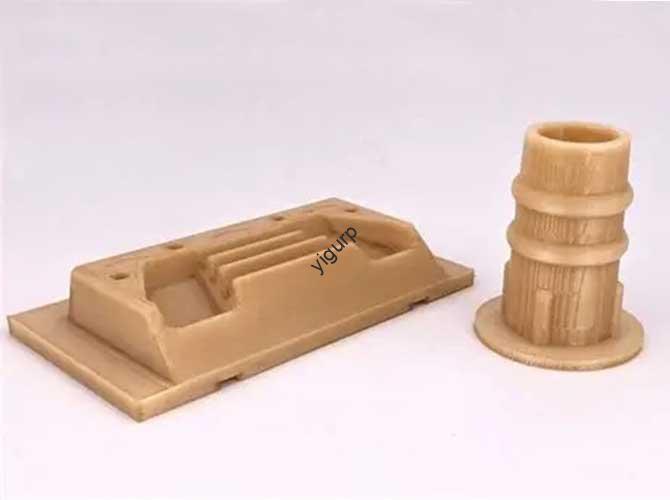
Le moulage sous pression en chambre froide est un processus de fabrication de précision essentiel pour les métaux à point de fusion élevé comme l'aluminium., magnésium, et du cuivre. Contrairement au moulage sous pression en chambre chaude (où le système d'injection est immergé dans du métal en fusion), c'est injection chamber and punch remain separate from the melt—making it ideal for large, composants complexes dans l'automobile, aérospatial, et électronique. Cependant, maximizing its benefits requires understanding equipment types, paramètres de processus, and defect prevention. This article systematically breaks down cold chamber die casting to help you solve practical challenges like machine selection, contrôle de qualité, and cost optimization.
1. Core Definition & Key Distinctions: Cold Chamber vs. Chambre chaude
To grasp cold chamber die casting’s unique value, it’s first critical to distinguish it from hot chamber die casting. This section uses a comparative structure with clear technical differences and application boundaries.
1.1 Fundamental Definition of Cold Chamber Die Casting
Cold chamber die casting is a high-pressure metal-forming process where:
- Le injection chamber (pressure chamber) et injection punch are not preheated or immersed in molten metal.
- Métal fondu (par ex., aluminum alloy at 670-720°C) is manually or automatically poured into the cold chamber via an external ladle.
- A hydraulic punch pushes the molten metal into the mold cavity at high speed (3-8 MS) et la pression (40-150 MPa) to form the part.
- After solidification (5-30 secondes, en fonction de la taille de la pièce), le moule s'ouvre, and the casting is ejected.
Its defining advantage is compatibility with high-melting-point metals—hot chamber systems can’t handle these because the molten metal would damage the immersed injection components.
1.2 Cold Chamber vs. Chambre chaude: Critical Differences
The table below highlights key distinctions to guide process selection:
| Comparison Dimension | Moulage sous pression en chambre froide | Moulage sous pression en chambre chaude |
| Metal Compatibility | High-melting-point metals: aluminium (60-70% of applications), magnésium, cuivre | Low-melting-point metals: zinc (90% of applications), lead, étain |
| Injection System | Chamber/punch are cold (room temp); metal is poured externally | Chamber/punch are immersed in molten metal; metal is sucked directly |
| Taille de la pièce & Poids | Grand, heavy parts (0.5-100 kilos): par ex., automotive engine blocks, Cadres de batterie EV | Petit, light parts (<0.5 kilos): par ex., zinc alloy toy parts, connecteurs électroniques |
| Production Speed | Ralentissez (30-120 pièces/heure) due to external pouring | Plus rapide (120-300 pièces/heure) due to automatic metal suction |
| Durée de vie de l'outil | Plus long (100,000-500,000 shots) – cold chamber reduces metal corrosion | Plus court (50,000-200,000 shots) – immersed components wear faster |
| Cost Structure | Higher equipment cost (\(500,000-\)2M); lower per-part cost for large batches | Lower equipment cost (\(200,000-\)800,000); higher per-part cost for large batches |
2. Cold Chamber Die Casting Equipment: Espèces, Principes, et sélection
Cold chamber machines are classified by chamber orientation—each type has unique strengths for specific applications. This section uses a type-by-type analysis with working principles and selection criteria.
2.1 Vertical Cold Chamber Die Casting Machines
- Structural Features: The pressure chamber is vertically oriented; uses upper and lower punches for collaborative injection.
- Working Principle:
- Mold clamps shut, and molten metal is poured into the top of the vertical chamber.
- The lower punch rises to seal the chamber bottom; the upper punch descends to push metal into the mold.
- After solidification, punches retract, and the casting is ejected.
- Avantages clés:
- Idéal pour center gate designs (common in symmetric parts like motor rotors).
- Minimal metal oxidation—vertical orientation reduces air contact during pouring.
- Application Scope: Small to medium castings (0.5-5 kilos): motor rotors, small hydraulic valves, aluminum alloy gears.
- Selection Tip: Choose for parts requiring symmetric filling (par ex., cylindrical rotors) or low oxidation (par ex., magnesium alloy components).
2.2 Horizontal Cold Chamber Die Casting Machines
- Structural Features: The pressure chamber and mold are horizontally aligned; uses a single horizontal punch.
- Working Principle:
- Mold clamps shut; molten metal is poured into the horizontal chamber via a ladle.
- The horizontal punch advances at high speed to push metal into the mold cavity.
- Pressure is held during solidification; the punch retracts, and the mold opens to eject the casting.
- Avantages clés:
- Easy automation: Compatible with robotic pouring and part pickup (critical for mass production).
- Scalable to large machines (clamping force up to 50,000 kN) for heavy parts.
- Low maintenance: Horizontal design simplifies chamber cleaning and punch lubrication.
- Application Scope: Grand, complex castings (5-100 kilos): pièces de châssis automobile, Cadres de batterie EV, aerospace structural components.
- Selection Tip: The mainstream choice for high-volume, large-part production (par ex., 100,000+ aluminum engine blocks/year).
2.3 Full Vertical Cold Chamber Die Casting Machines
- Structural Features: Compact vertical design with integrated mold and chamber; small footprint but tall profile.
- Working Principle: Similar to vertical machines but with a fully enclosed system—metal flows directly from the chamber to the mold with minimal turns.
- Avantages clés:
- Short flow path: Reduces metal cooling and turbulence (critique pour les pièces à parois minces).
- Space-efficient: 30-50% smaller footprint than horizontal machines (ideal for small factories).
- Application Scope: Petit, pièces de précision (0.1-2 kilos): electronic heat sinks, magnesium alloy phone frames, composants de dispositifs médicaux.
- Selection Tip: Choose for space-constrained facilities or parts requiring minimal flow resistance (par ex., 1mm-thick heat sinks).
2.4 Equipment Selection Checklist
Use this list to match machines to your project needs:
- Part Weight: <5 kg → vertical/full vertical; >5 kg → horizontal.
- Volume de production: <10,000 parts/year → vertical; >50,000 parts/year → horizontal (automation-friendly).
- Metal Type: Magnésium (oxidation-sensitive) → vertical (minimal air contact); Aluminium (grand volume) → horizontal.
- Part Complexity: Simple symmetric parts → vertical; complex shapes with multiple gates → horizontal.
3. Paramètres du processus & Quality Control for Cold Chamber Die Casting
Optimizing process parameters is critical to avoid defects like cold shuts, porosité, or flash. This section uses a parameter-by-parameter guide with specific ranges and quality control methods.
3.1 Critical Process Parameters
| Parameter Category | Key Parameters | Recommended Ranges (Alliage d'aluminium) | Impact on Quality |
| Metal Temperature | Molten aluminum temperature | 670-720°C (ADC12); 680-730°C (A356) | Too low → cold shuts; too high → oxidation/inclusions |
| Vitesse d'injection | Fast-stage speed | 3-8 MS (parois minces: 6-8 MS; thick walls: 3-5 MS) | Too slow → undercasting; too fast → turbulence/porosity |
| Pression d'injection | Specific pressure | 40-150 MPa (pièces complexes: 100-150 MPa; pièces simples: 40-80 MPa) | Too low → shrinkage; too high → flash/mold wear |
| Holding Time | Pressure holding duration | 5-20 secondes (thickness-dependent: +2s per 1mm wall) | Too short → shrinkage; too long → low efficiency |
| Température du moule | Cavity surface temperature | 180-250°C (parois minces: 220-250°C; thick walls: 180-220°C) | Too low → cold shuts; too high → sticking/slow cooling |
3.2 Mesures de contrôle de qualité
- Surveillance en cours de processus:
- Use cavity pressure sensors to track real-time pressure curves (ensure effective specific pressure matches set values).
- Install infrared thermometers to monitor mold temperature (deviation ≤±10°C).
- Post-Production Inspection:
- Précision dimensionnelle: Use CMM (Machine de mesure de coordonnées) for key dimensions (tolerance ±0.1mm for critical features).
- Internal Defects: X-ray inspection (ASTM E446 Level B) to detect porosity/shrinkage (≤1% porosity for pressure-bearing parts).
- Performances mécaniques: Essais de traction (σb ≥300MPa for aluminum structural parts) and hardness testing (HB ≥80 for ADC12).
4. Applications clés & Industry Case Studies
Cold chamber die casting dominates high-value manufacturing sectors. Below are industry-specific applications with real-world case studies to illustrate its impact.
4.1 Fabrication automobile (Largest Application)
- Key Parts: Blocs moteurs, carters de transmission, Cadres de batterie EV, aluminum wheels.
- Étude de cas: A major automaker switched from sand casting to horizontal cold chamber die casting for aluminum engine blocks:
- Before: 20% taux de défauts (rétrécissement, porosité); 4-hour production cycle.
- Après: 2% taux de défauts; 30-minute production cycle; 15% réduction de poids (from 35kg to 30kg).
- Key Parameters: 700°C aluminum temperature, 5 m/s injection speed, 120MPa specific pressure, 15-second holding time.
- Avantages: Improved fuel efficiency (5-8% per vehicle), mass production capability (10,000+ blocks/week).
4.2 Industrie aérospatiale
- Key Parts: Magnesium alloy structural brackets, copper alloy heat exchangers, titanium alloy fasteners (petit lot).
- Étude de cas: An aerospace supplier used vertical cold chamber die casting for magnesium alloy brackets:
- Défi: Need low weight (magnesium density 1.74g/cm³) et haute résistance (σb ≥280MPa).
- Solution: 680°C magnesium temperature, 4 m/s injection speed, 90MPa specific pressure, nitrogen-protected pouring (reduce oxidation).
- Résultat: Brackets met aerospace standards (OIN 9001:2015), avec 30% weight savings vs. aluminium.
4.3 Électronique & Produits de consommation
- Key Parts: Dissipateurs thermiques en aluminium (LED, CPUs), magnesium alloy phone/laptop frames, copper alloy connectors.
- Étude de cas: A tech company used full vertical cold chamber die casting for 1mm-thick aluminum heat sinks:
- Défi: Thin walls (1mm) require fast filling to avoid cold shuts.
- Solution: 720°C aluminum temperature, 7 m/s injection speed, 130MPa specific pressure, 8-second holding time.
- Résultat: 98% taux de rendement; heat dissipation efficiency improved by 25% contre. stamped heat sinks.
5. Common Defects & Dépannage
Even with optimized parameters, defects may occur. The table below uses a defect-cause-solution structure to resolve issues quickly.
| Defect Type | Main Causes | Step-by-Step Solutions |
| Cold Shuts | 1. Low metal temperature (<670°C for ADC12)2. Slow injection speed (<3 MS)3. Cold mold (<180°C) | 1. Increase metal temperature by 10-20°C.2. Boost injection speed by 1-2 MS (parois minces: jusqu'à 8 MS).3. Preheat mold to 200-220°C; use mold heaters for cold spots. |
| Porosity | 1. Turbulent flow (grande vitesse >8 MS)2. Inadequate degassing (hydrogen >0.15ml/100g Al)3. Late pressure application (>0.5s after filling) | 1. Reduce speed by 1-2 MS; utiliser “slow-fast-slow” speed profile.2. Degas with argon for 15 minutes; use 50μm ceramic filters.3. Advance pressure application to 0.2-0.3s after filling. |
| Flash | 1. Excessive specific pressure (>150MPa)2. Mold wear (parting surface gap >0.1mm)3. Insufficient clamping force (<1.2x injection force) | 1. Reduce specific pressure by 10-20MPa.2. Grind and repair mold parting surfaces (gap ≤0.05mm).3. Increase clamping force to 1.2-1.5x injection force. |
| Mold Sticking | 1. High mold temperature (>250°C)2. Inadequate release agent (too thin/too thick)3. Rough cavity surface (Râ >1.6µm) | 1. Lower mold temperature by 20-30°C.2. Apply uniform release agent (thickness 5-10μm); use high-temperature type. |
6. Yigu Technology’s Perspective on Cold Chamber Die Casting
Chez Yigu Technologie, we see cold chamber die casting as the backbone of high-end manufacturing—especially for EVs and aerospace. Many manufacturers underutilize its potential by sticking to outdated parameters or choosing the wrong machine type (par ex., vertical machines for large EV battery frames).
We recommend a simulation-driven approach: Use CAE software (par ex., MAGMA) to simulate filling and solidification before mold production—this cuts trial-and-error time by 40%. Pour les clients automobiles, we prioritize horizontal cold chamber machines with robotic automation (réduire les coûts de main-d'œuvre en 50% and ensuring parameter consistency).
We also advocate sustainable practices: Recycle runner scrap (pureté >99%) and use energy-efficient horizontal machines (25-30% energy savings vs. old models). By combining technology optimization and sustainability, cold chamber die casting can meet both quality and environmental goals.
7. FAQ: Common Questions About Cold Chamber Die Casting
Q1: Can cold chamber die casting be used for iron-based metals (par ex., cast iron)?
Non. Iron-based metals have extremely high melting points (1,200-1,500°C), which exceed the heat resistance of cold chamber components (H13 steel maxes out at 600-700°C). For iron-based parts, use sand casting or forging instead. Cold chamber die casting is limited to non-ferrous metals (aluminium, magnésium, cuivre).
Q2: What is the minimum production volume to justify cold chamber die casting?
Cold chamber die casting becomes cost-effective at 10,000+ parts/year (for aluminum parts). Below this volume, coûts de moulage élevés (\(50,000-\)200,000) make it uneconomical. Pour les petits lots (100-5,000 parties), consider sand casting or 3D printing (pour les prototypes). Par exemple, 5,000 aluminum brackets cost \(15/unit with cold chamber vs. \)8/unit with sand casting.
Q3: How to reduce oxidation in cold chamber die casting of magnesium alloys?
Magnesium is highly reactive—use three key measures: 1. Nitrogen Protection: Purge the injection chamber and mold with nitrogen before pouring (oxygen content <1%). 2. Low-Temperature Pouring: Keep magnesium temperature at 650-680°C (lower than aluminum) to reduce oxidation. 3. Special Release Agents: Use boron nitride-based release agents (form a protective film on the metal surface). These steps reduce oxide inclusions by 70-80%.