
1. Usinage pré-CNC: Design and Preparation for Home Theater System Prototypes
Before initiating Usinage CNC for the home theater system prototype, une étape systématique de conception et de préparation est essentielle pour répondre aux exigences fonctionnelles., de construction, et les exigences en matière d'expérience utilisateur. Cette étape suit une séquence linéaire, avec les détails clés organisés dans le tableau ci-dessous.
| Étape de conception | Exigences clés | Matériaux recommandés |
| Analyse de la demande de produits | System composition: Clarify components including host unit, speakers, télécommande, stand, and screen frame; Functional requirements: Host needs heat dissipation holes (Φ2-3mm, spacing 8-10mm), interfaces (USB 3.0, HDMI 2.1, audio ports), and control buttons; Structural requirements: Host size (par ex., 300×200×50mm), speaker grille ventilation rate (≥70%), stand load-bearing capacity (≥5kg); Apparence: Finition mate (reduces light reflection), hidden screws, and uniform color matching. | – |
| 3Modélisation D & Parting | Utiliser un logiciel de CAO (SolidWorks, ET NX) to create 3D models with precision (tolérance ±0,05 mm); Split into machinable components: Host upper/lower shells, speaker housings, speaker grilles, stand brackets, and button panels; Optimize draft slope (≥3°) for future mass production demolding; Perform topological reconstruction on curved surfaces (par ex., speaker housings) to reduce machining difficulty. | – |
| Sélection des matériaux | Choose materials based on component function, usinabilité, and environmental adaptability, while matching mass production standards. | Host Shells/Stand Brackets: Alliage d'aluminium 6061/6063 (léger, good heat dissipation, thickness 2-3mm); Speaker Housings/Button Panels: Alliage ABS/PC (faible coût, résistant aux chocs, thickness 1.5-2mm); Speaker Grilles/Transparent Decorative Pieces: Acrylic/PC (high light transmittance, thickness 1-1.5mm); Remote Control Case: Plastique ABS (léger, facile à teindre). |
| Prétraitement des matériaux | Couper les matières premières en flans (leave 0.5-1mm machining allowance): Aluminum alloy via bandsaw, ABS/acrylic via laser cutting; Anneal aluminum alloy (300-350°C pour 1-2 heures) pour réduire le stress interne; Dry ABS/acrylic (80-100°C pour 2-3 heures) pour éliminer l'humidité (prevents machining bubbles); Clean all blanks with alcohol to remove oil and dust. | – |
2. CNC Machining Preparation for Home Theater System Prototypes
Adequate preparation before formal machining ensures efficiency and precision in Usinage CNC for home theater system prototypes. This section covers tool selection, programmation, and fixture design.
2.1 Sélection des matériaux et des outils
The choice of materials and tools directly affects machining quality and efficiency. Le tableau ci-dessous fournit des recommandations détaillées:
| Catégorie | Options spécifiques | Scénarios d'application |
| Matériaux de logement | Alliage d'aluminium 6061 plate (2-3mm), ABS/PC plate (1.5-2mm), acrylic plate (1-1.5mm) | Aluminum alloy for host shells/stands (heat dissipation); ABS/PC for speaker housings (rentable); acrylic for grilles (transparence). |
| Structural Parts Materials | Aluminum alloy rod (diameter 8-10mm for stand axes), Feuille PC (1mm for button panels) | Stand axes (load-bearing); button panels (wear-resistant for frequent presses). |
| Outils d'usinage grossier | Φ8-12mm flat-bottom cutter (aluminum alloy/ABS), Φ6-8mm flat-bottom cutter (acrylique) | Quick material removal for large components (host shells, speaker housings). |
| Outils de finition | Φ4-6mm ball-head cutter (surfaces courbes), Φ1-2mm root-clearing cutter (interface holes), Φ2-3mm drill bit (heat dissipation holes) | Ensure smooth surfaces (Ra0.8-Ra3.2) and precise details (interface slots, grille holes). |
| Special Tools | M3-M6 taps (trous filetés), graveur laser (logo/interface symbols), thread milling cutter (large threaded holes) | Process assembly threads and functional marks (par ex., “HDMI”, “USB”). |
2.2 Programmation et conception de luminaires
Scientific programming and stable fixtures prevent machining errors and ensure precision.
| Lien | Opérations clés | But & Effet |
| Programmation FAO | – Usinage de sous-zones: First process outer contours (host shell edges, speaker housing shape), then internal details (circuit board cavities, grille holes) to avoid interference.- Layered cutting: Set roughing depth 0.5mm (aluminum alloy/ABS) or 0.2mm (acrylique); finishing depth 0.1-0.2mm.- Path optimization: Use contour milling for curved speaker housings and spiral feed for grille holes to avoid joint marks. | Improve efficiency; ensure dimensional accuracy (±0,05 mm) and surface smoothness. |
| Conception des luminaires | – Aluminum alloy/ABS: Use precision vise with soft jaws (prevent scratches) or vacuum adsorption platform (thin panels).- Acrylic/grilles: Use vacuum adsorption with buffer pads (avoid cracking); add auxiliary supports for thin-walled grilles (prevent vibration deformation).- Stand axes: Use three-jaw chuck for turning (ensure coaxiality). | Maintain workpiece stability; avoid surface damage and dimensional deviation. |
3. Core CNC Machining Process for Home Theater System Prototypes
Le formel Processus d'usinage CNC transforms design models into physical parts, with strict control over each step to ensure functionality and aesthetics.
3.1 Main Component Machining
Different components require targeted machining steps, as detailed below:
| Composant | Roughing Steps | Finishing Steps |
| Host Shell (Alliage d'aluminium) | 1. Mill outer contour (300×200×50mm, retain 0.5mm allowance);2. Mill circuit board cavity (depth 10-12mm) and interface slots (USB: 12×6mm, HDMI: 14×5mm);3. Drill heat dissipation holes (array layout, Φ2mm). | 1. Polish surface (Ra1.6-Ra3.2) for texture;2. Chamfer edges (C0.5mm) to avoid sharpness;3. Tap M3-M4 threaded holes (for upper/lower shell assembly). |
| Speaker Housing (ABS/PC) | 1. Mill cylindrical shape (diameter 150-200mm, retain 0.5mm allowance);2. Mill internal cavity (matches speaker driver size);3. Cut grille mounting groove (depth 1mm). | 1. Smooth cavity walls (Ra3.2);2. Machine wire holes (Φ3mm) for audio cables;3. Deburr all edges (prevent hand scratches). |
| Speaker Grille (Acrylique) | 1. Mill outer shape (matches speaker housing, retain 0.3mm allowance);2. Drill grille holes (Φ1.5mm, hexagonal array, spacing 3mm). | 1. Mirror polish (inner/outer surfaces, light transmittance ≥90%);2. Chanfrein de bord (C0.3mm) pour éviter l'écaillage;3. Clean holes to remove residual material. |
| Stand Bracket (Alliage d'aluminium) | 1. Mill flat base (150×100mm, retain 0.5mm allowance);2. Machine vertical support (height 200mm) and host mounting slots. | 1. Polish surface (Ra1.6) pour la résistance à la corrosion;2. Tap M5 threaded holes (for host fixation);3. Anodize (facultatif, noir/argent) pour améliorer la durabilité. |
3.2 Key Detail Machining
Critical details directly affect the prototype’s functionality and user experience:
- Usinage de trous de dissipation thermique: Ensure uniform hole distribution (spacing 8-10mm) on the host shell; control hole diameter (Φ2-3mm) to balance heat dissipation (≥30% open area) et la résistance structurelle.
- Interface Slot Machining: Match slot size to standard interfaces (USB 3.0: 12×6mm, HDMI 2.1: 14×5mm) with 0.1mm gap; machine chamfers (C0.2mm) on slot edges to avoid damaging cables.
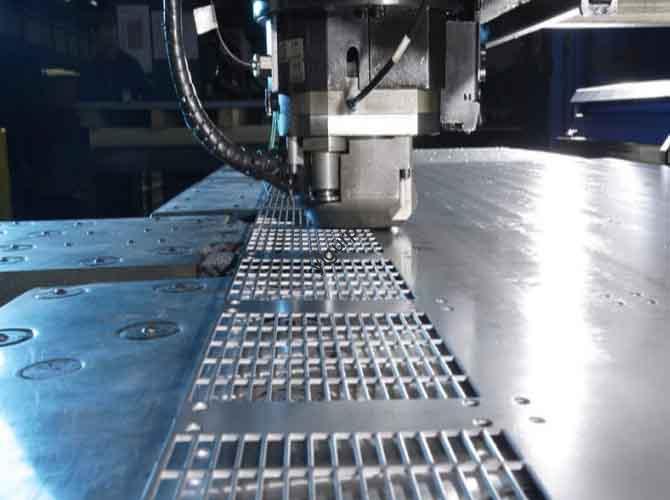
- Speaker Grille Machining: Use 5-axis CNC for curved grilles to ensure hole alignment; control hole spacing (3mm) to maintain ventilation rate (≥70%) and sound transmission quality.
- Threaded Hole Machining: Pre-drill pilot holes (par ex., Φ2.5mm for M3 threads) to prevent material cracking; use taps for aluminum alloy (hand tap) et ABS (machine tap) to ensure smooth screw installation.
3.3 Machining Quality Inspection
Conduct in-process checks to ensure quality:
- Contrôle dimensionnel: Utilisez des pieds à coulisse numériques (outer dimensions, tolérance ±0,05 mm) and coordinate measuring machine (MMT) (circuit board cavities, grille hole positions, tolerance ±0.03mm).
- Surface Quality Check: Use surface roughness meter (Ra0.8-Ra3.2 for visible parts, Ra3.2-Ra6.3 for internal parts); check for scratches (no visible scratches >0.5mm) and burrs.
- Fit Test: Test-fit host upper/lower shells (écart ≤0,1 mm), speaker grille in housing (pas de relâchement), and stand with host (stable mounting, no wobble).
4. Post-Processing and Assembly of Home Theater System Prototypes
Post-processing enhances performance and aesthetics, while precise assembly ensures functionality.
4.1 Traitement de surface
Different materials require targeted treatment to meet design goals:
| Matériel | Méthode de traitement de surface | But & Effet |
| Alliage d'aluminium (Host/Stand) | Sablage + Anodisation | Sandblasting creates matte finish (reduces reflection); anodisation (noir/argent) améliore la résistance à la corrosion (salt spray test ≥48 hours). |
| ABS/PC (Speaker Housing) | Peinture (matte black/white) + Sérigraphie | Painting matches system color; silk screen prints brand logos and interface labels (par ex., “Audio Out”). |
| Acrylique (Grille) | Polissage + Anti-Scratch Coating | Polishing ensures high transparency; anti-scratch coating (5-10µm) resists daily wear (no scratches after 500 steel wool tests). |
| Button Panels (PC) | UV Coating + Gravure Laser | UV coating enhances wear resistance; laser engraving creates translucent button symbols (par ex., “Pouvoir”, “Volume +”). |
4.2 Assembly and Functional Testing
Scientific assembly and strict testing ensure the prototype meets requirements.
4.2.1 Processus d'assemblage
Follow this sequence to avoid errors:
- Vérification avant assemblage: Inspect all parts for defects (pas de rayures, dimensional deviation ≤0.05mm); prepare auxiliary materials (silicone gaskets for waterproofing, vis, audio cables).
- Installation des composants:
- Host Assembly: Fix circuit board in host lower shell (M3 screws, torque 0.8-1N·m); install buttons on panel (snap-fit, ensure alignment with button grooves); join upper/lower shells (M4 screws, torque 1.2-1.5N·m).
- Speaker Assembly: Mount speaker driver in housing (M2 screws, torque 0.5N·m); attach grille to housing (snap-fit or double-sided tape, ensure even fit).
- Stand Assembly: Fasten stand bracket to base (M5 screws, torque 2-2.5N·m); mount host on stand (align with mounting slots, secure with screws).
- Final Check: Ensure no loose parts; verify interface alignment (no offset); check stand stability (no wobble under 5kg load).
4.2.2 Tests fonctionnels
Conduct comprehensive tests to validate performance:
- Tests fonctionnels:
- Interface Test: Plug/unplug USB/HDMI/audio cables 50 fois (no damage to slots, stable connection);
- Button Test: Press each button 10,000 fois (no stuck, consistent stroke, responsive);
- Test de dissipation thermique: Run host for 2 heures (circuit board temperature ≤55°C, no overheating);
- Sound Test: Play audio through speakers (no distortion, uniform volume from grille).
- Aesthetic Testing:
- Check color consistency (ΔE ≤1,5) et défauts de surface (no visible scratches/blemishes);
- Verify logo/symbol clarity (pas de bavure, alignment error ≤0.1mm).
- Durability Testing:
- Load Test: Place 5kg weight on stand for 24 heures (no deformation);
- Drop Test: Drop remote control from 1m (foam pad, no structural damage).
5. Application Scenarios of CNC Machined Home Theater System Prototypes
CNC machined home theater system prototypes serve multiple purposes in product development and market promotion:
| Scénario d'application | Utilisations spécifiques | Avantage de l'usinage CNC |
| Vérification de la conception du produit | Test heat dissipation efficiency, speaker sound quality, and stand stability; Optimize structure (par ex., adjust grille hole size for better sound). | Haute précision (±0,05 mm) ensures accurate simulation of mass production models; supports rapid iteration (modify 3D models, re-machine in 3-4 jours). |
| Market Research | Display at electronics exhibitions; Collect user feedback on appearance (couleur, texture) et fonctionnalité (interface layout, button feel); Adjust mass production plans. | Prototype appearance/functionality matches final products; attracts user attention (high-quality surface treatment). |
| Personnalisation en petits lots | High-end home customization (custom size/color), cadeaux d'entreprise (engrave logos); Produce ≤50 units without opening molds. | Flexible (adapt to custom designs quickly); rentable (no mold fees, lower than injection molding for small batches). |
| Educational Training | Disassemble to demonstrate system structure (host, speakers, stand) and CNC machining principles; Suitable for industrial design/mechanical engineering teaching. | Clear internal structure (easy to observe components); sûr (pas de bords tranchants, stable assembly). |
6. Key Precautions for CNC Machining Home Theater System Prototypes
To ensure quality and efficiency, observe these precautions:
- Contrôle de précision: Strictly control assembly gaps (≤0.1mm for host shells) and grille hole alignment (±0,03 mm); reserve ±0.1mm tolerance for threaded holes to avoid assembly issues.
- Material Adaptation: Alliage d'aluminium: Use cutting fluid to avoid overheating deformation; ABS: Control cutting temperature (≤150°C) pour éviter de fondre; acrylique: Réduire la vitesse d'avance (300-400 mm/min) pour éviter les fissures.
- Optimisation des coûts: CNC machining is ideal for ≤100 units; pour la production de masse (>1000 units), switch to injection molding (ABS/acrylic) and die casting (alliage d'aluminium) to reduce cost by 50-60%. Simplify complex surfaces (par ex., replace small-curvature speaker housings with straight lines) to shorten toolpaths.
- Opération de sécurité: Wear safety glasses/gloves during machining; use fume extractors for painting/anodization to avoid toxic exposure; ground equipment to prevent electric shock.
Le point de vue de Yigu Technology
Chez Yigu Technologie, nous croyons CNC machining is the backbone of high-quality home theater system prototypes. It enables precise control of critical details—from host heat dissipation holes (Φ2-3mm) to speaker grille alignment (±0,03 mm)—and supports rapid iteration, which is vital for balancing functionality (heat dissipation, sound quality) et esthétique (finition mate, uniform gaps) in home theater systems. When producing these prototypes, we focus on two core aspects: material-function matching (aluminum alloy for heat dissipation, acrylic for transparency) et optimisation des processus (5-axis machining for curved grilles, spiral feed for hole precision). By integrating strict quality control from design to testing, we help clients shorten development cycles by 25-30% and mitigate mass production risks. Regarder vers l'avenir, we will apply AI-driven parameter optimization to CNC machining, further improving efficiency while maintaining ±0.03mm precision for more refined home theater prototypes.
FAQ
- What materials are best for CNC machined home theater system prototype components, et pourquoi?
The best materials depend on components: Alliage d'aluminium 6061 for host shells/stands (léger, good heat dissipation, easy to anodize); ABS/PC alloy for speaker housings (rentable, résistant aux chocs); acrylic for grilles (high transmittance, facile à polir); PC for button panels (résistant à l'usure). These materials balance machinability, fonctionnalité, et esthétique.
- Can CNC machined home theater system prototypes be used directly for mass production?
Non. CNC prototypes are for design verification, market research, et personnalisation en petits lots (≤100 unités). Pour la production de masse (>1000 units), moulage par injection (ABS/acrylic) and die casting (alliage d'aluminium) are better—they reduce per-unit cost by 50-60% and increase speed.