
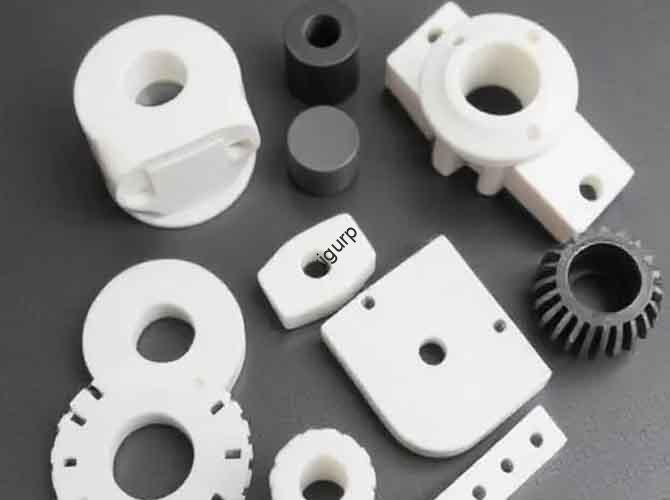
Le Processus de prototype de sèche-linge d'usinage CNC est un flux de travail systématique qui transforme les concepts de conception en prototypes physiques, valider l'authenticité de l'apparence, stabilité structurelle, faisabilité du montage, et logique fonctionnelle de base (par ex., rotation du tambour, circulation de l'air). Cet article détaille le processus étape par étape, de la conception préliminaire au débogage final, à l'aide de tableaux basés sur les données., directives pratiques, et des conseils de dépannage pour vous aider à relever les principaux défis et garantir le succès du prototype.
1. Préparation préliminaire: Poser les bases de l'usinage
La préparation préliminaire définit l'orientation de l'ensemble du développement du prototype. Il se concentre sur deux tâches principales: 3Modélisation D & conception structurelle et sélection des matériaux, tous deux adaptés aux besoins uniques des sécheuses (par ex., résistance à la chaleur, douceur de rotation du tambour).
1.1 3Modélisation D & Conception structurelle
Utilisez un logiciel de modélisation 3D professionnel pour créer un modèle prototype détaillé, garantir la rationalité structurelle et la transformabilité.
- Sélection de logiciels: Donnez la priorité aux outils comme SolidWorks, ET NX, ou ProE—ils prennent en charge la conception paramétrique et la modification facile des dimensions clés.
- Objectif de conception de base:
- Simulation d'apparence: Reproduisez la forme réelle du sèche-linge, y compris le armoire (taille: généralement 600 × 600 × 850 mm pour les modèles domestiques), corps de porte (courbé ou plat), et Panneau de contrôle (positions des boutons/rainures).
- Simplification des pièces fonctionnelles: Optimiser les structures de batterie, éléments chauffants, les fans, et tubes de condensation pour usinage CNC (par ex., simplifier les ailettes internes des éléments chauffants sans compromettre le flux d'air).
- Conception détachable: Concevoir des connexions entre les composants pour un assemblage facile, par exemple, utiliser des joints boulonnés entre le tambour et le meuble (réserver les trous de vis M4) et charnières pour le corps de la porte.
- Contrôle des dimensions clés: Assurez-vous que les paramètres critiques correspondent aux proportions réelles:
- Diamètre du tambour: 450–500mm (tolérance ±0,1 mm)
- Épaisseur de paroi d'armoire: 1.5–2mm (évite les déformations lors de l'usinage)
- Angle d'ouverture de la porte: 120°–150° (testé pour le confort de l'utilisateur)
Pourquoi est-ce important? Un détail manquant (par ex., trous de vis sans réserve pour le tambour) peut forcer la reprise, augmentation des coûts par 25% et retarder les délais de 2 à 3 jours.
1.2 Sélection des matériaux: Faire correspondre les propriétés aux composants
Différentes parties du sèche-linge nécessitent des matériaux aux caractéristiques spécifiques. Le tableau ci-dessous compare les options les plus adaptées, ainsi que leurs utilisations et exigences de traitement:
| Composant | Matériel | Propriétés clés | Exigences de traitement | Fourchette de coût (par kg) |
| Armoire & Corps de porte | Plastique ABS | Facile à usiner, faible coût, bonne finition de surface | Peinture PU mate en spray (simule une vraie texture plus sèche); Ra1,6–Ra3,2 après ponçage | \(3–)6 |
| Tambour & Supports | Alliage d'aluminium (6061) | Haute résistance, résistance à l'usure, léger | Anodisé (noir/argent) pour la résistance à la corrosion; erreur de rondeur ≤0,02 mm | \(6–)10 |
| Fenêtre d'observation | Acrylique | Haute transparence, bonne aptitude au traitement | Chanfrein de bord (R1–R2 mm); appliquer un film antidéflagrant après polissage | \(8–)12 |
| Base du panneau de commande | Plastique ABS + Mélange PC | Résistance aux chocs, résistance à la chaleur (jusqu'à 80°C) | Icônes blanches sérigraphiées (bouton d'alimentation, commutateur de mode); pas de bords tranchants | \(4–)7 |
| Tubes à condensation | PVC (Moulé) | Étanche, résistant à la corrosion | Couper à longueur (pas d'usinage CNC); relié avec de la colle | \(2–)4 |
Exemple: Le tambour utilise un alliage d'aluminium pour sa haute résistance, assurant une rotation douce sans déformation, tandis que le fenêtre d'observation choisit l'acrylique pour sa rentabilité et sa transparence, permettant aux utilisateurs de surveiller la progression du séchage.
2. Processus d'usinage CNC: De la configuration à la production des composants
La phase d'usinage CNC est au cœur de la création de prototypes. Il suit un flux de travail linéaire: machine & préparation des outils → programmation & simulation → serrage & usinage → contrôle & correction.
2.1 Machine & Préparation des outils
Une configuration appropriée garantit la précision et l’efficacité de l’usinage.
- Exigences de la machine:
- Utiliser une machine CNC à trois axes ou multiaxes de haute précision (précision de positionnement ±0,01 mm) pour soutenir la transformation mixte des plastiques et des métaux.
- Equipé d'un système de refroidissement (émulsion pour métaux, air comprimé pour plastiques) pour éviter le collage des outils et la déformation du matériau.
- Sélection d'outils:
| Tâche d'usinage | Type d'outil | Caractéristiques | Application |
| Ebauche | Fraise en carbure | Φ6–Φ10 mm, 2–3 dents | Supprimer 80 à 90 % de la marge vierge (par ex., contour extérieur du meuble) |
| Finition | Acier rapide (HSS) Fraise | Φ2–Φ4mm, 4–6 dents | Améliorer la qualité des surfaces (par ex., paroi intérieure du tambour) |
| Perçage/taraudage | Foret/taraud en acier au cobalt | Percer: Φ2–Φ8mm; Robinet: M3–M6 | Trous de montage du processus (par ex., trous de vis du panneau de commande) |
| Usinage de surfaces courbes | Coupe-nez boule | Φ2–Φ6 mm | Façonner des structures courbes (par ex., corps de porte, paroi intérieure du tambour) |
2.2 Programmation & Simulation
Une programmation précise évite les erreurs d'usinage et garantit la précision des composants.
- Importation de modèle: Importez le modèle 3D dans le logiciel CAM (par ex., Mastercam, Moulin électrique) et divisez-le en parties indépendantes (armoire, tambour, Panneau de contrôle) pour une programmation séparée.
- Planification du parcours d'outil:
- Armoire: Utiliser “fraisage de contours” pour le contour extérieur et “fraisage de surface” pour les surfaces supérieures/inférieures plates.
- Tambour: Adopter “fraisage superficiel” ou “rationaliser l'usinage” pour assurer une épaisseur et une rondeur de paroi uniformes.
- Panneau de contrôle: Utiliser “fraisage de poche” pour les rainures des boutons et “perçage → chanfreinage → taraudage” pour trous de montage.
- Vérification par simulation: Simuler des parcours d'outils dans un logiciel pour vérifier les interférences (par ex., collision de l'outil avec la table de la machine) et surcoupe (par ex., enlèvement excessif de matière du tambour).
2.3 Serrage & Usinage
Un serrage et un réglage des paramètres appropriés empêchent la déformation et garantissent la précision.
- Méthodes de serrage:
| Type de composant | Méthode de serrage | Précautions clés |
| Petites pièces (Tambour, Supports) | Pince plate de précision/ventouse sous vide | Aligner avec le système de coordonnées de la machine; utilisez des tampons souples pour éviter les rayures |
| Grandes pièces (Armoire, Corps de porte) | Plateau de boulon/pince spéciale | Répartir uniformément la force de serrage pour éviter la déformation des parois minces |
- Paramètres d'usinage:
| Matériel | Étape d'usinage | Vitesse (tr/min) | Vitesse d'alimentation (mm/dent) | Profondeur de coupe (mm) | Liquide de refroidissement |
| Alliage d'aluminium (Tambour) | Ebauche | 1200–1800 | 0.15–0,3 | 2–5 | Émulsion |
| Alliage d'aluminium (Tambour) | Finition | 2000–2500 | 0.08–0,15 | 0.1–0,3 | Émulsion |
| Plastique ABS (Armoire) | Ebauche | 800–1200 | 0.2–0,5 | 3–6 | Air comprimé |
| Plastique ABS (Armoire) | Finition | 1500–2000 | 0.1–0,2 | 0.1–0,2 | Air comprimé |
| Acrylique (Fenêtre d'observation) | Finition | ≤500 | 0.05–0,1 | 0.1 | Air comprimé |
Conseil critique: Pour pièces acryliques, Maintenez la vitesse de coupe ≤ 500 tr/min pour éviter les fissures : les vitesses élevées génèrent une chaleur excessive, faire fondre la surface du matériau.
2.4 Inspection & Correction
Une inspection stricte garantit que les composants répondent aux normes de conception.
- Contrôle dimensionnel:
- Utilisez des pieds à coulisse/micromètres pour mesurer les dimensions clés (par ex., diamètre du tambour, épaisseur de l'armoire).
- Utiliser une machine à mesurer tridimensionnelle (MMT) pour détecter les tolérances de forme et de position de pièces complexes (par ex., rondeur du tambour).
- Inspection des surfaces:
- Vérifiez visuellement les rayures, bavures, ou des surfaces inégales.
- Polissez les zones défectueuses avec du papier de verre de 800 à 2 000 mailles (par ex., bavures lisses sur les bords du panneau de commande).
- Mesures correctives:
- Écart dimensionnel: Ajuster les valeurs de compensation de l'outil ou réusiner la pièce.
- Mauvaise rugosité de la surface: Réduire la vitesse d'avance (par ex., depuis 0.2 à 0,1 mm/dent) ou ajouter une étape de polissage.
3. Post-traitement & Assemblée: Améliorer la fonctionnalité & Esthétique
Le post-traitement supprime les défauts et prépare les composants pour l'assemblage, tandis qu'un assemblage minutieux garantit le bon fonctionnement du prototype.
3.1 Post-traitement
- Ébavurage & Nettoyage:
- Pièces métalliques (Tambour, Supports): Utilisez des limes et des meuleuses pour éliminer les bavures de bord; nettoyer les résidus de liquide de coupe avec de l'alcool.
- Pièces en plastique (Armoire, Panneau de contrôle): Broyer légèrement les bavures avec une lame ou 1200 papier de verre à mailles; utiliser une brosse antistatique pour enlever les copeaux.
- Traitement de surface:
- Armoire & Corps de porte: Peinture PU mate en spray (durcir à 60°C pendant 2 heures) pour simuler la texture d'un vrai sèche-linge.
- Panneau de contrôle: Icônes blanches sérigraphiées (utilisez de l'encre à haute température pour éviter la décoloration) et texte de l'étiquette gravé au laser.
- Fenêtre Acrylique: Polir avec 2000 papier de verre à mailles pour la transparence; appliquer un film antidéflagrant pour éviter l'écaillage.
3.2 Assemblée & Débogage
Suivre un ordre d'assemblage séquentiel pour garantir la fonctionnalité.
- Installation des composants de base:
- Montez le tambour à l'armoire via des roulements/bagues (assurez-vous qu'il tourne librement sans gigue).
- Installez le tube de condensation (coupé à longueur) et fixez-le avec de la colle imperméable (vérifier les fuites après l'installation).
- Enceinte & Ensemble de contrôle:
- Attachez le corps de porte au meuble avec charnières (tester l'angle d'ouverture: 120°–150°; assurer une fermeture étanche).
- Sécurisez le Panneau de contrôle au cabinet (montage par pression ou par vis); aligner les boutons avec les rainures internes.
- Débogage fonctionnel:
| Article de test | Outils/Méthodes | Critères de réussite |
| Rotation du tambour | Rotation manuelle | Rotation fluide sans blocage; pas de bruit anormal |
| Fermeture de porte | Inspection visuelle + Jauge de force | Se ferme hermétiquement; force d'ouverture ≤5N |
| Étanchéité du tube de condensation | Remplissage d'eau | Aucune fuite après 12 heures debout |
| Boutons du panneau de commande | Presse manuelle | Commentaires clairs; pas de collage |
4. Précautions clés: Évitez les problèmes courants
Des mesures proactives préviennent les défauts et les retouches.
- Contrôle de la déformation des matériaux:
- Pour plastique ABS: Réduisez le temps de coupe continue à 10-15 minutes par pièce; utiliser un traitement segmenté pour éviter l'accumulation de chaleur.
- Pour alliage d'aluminium: Maintenir un débit de liquide de refroidissement suffisant (5-10L/min) pour éviter la déformation sous contrainte induite par la surchauffe.
- Surveillance de l'usure des outils:
- Remplacez les outils d'ébauche tous les 10 heures et outils de finition tous les 50 heures : les outils émoussés augmentent l'erreur dimensionnelle de 0,05 mm ou plus.
- Utilisez un outil prédéfini pour vérifier les écarts de longueur d’arête et de rayon avant l’usinage.
- Compensation de précision:
- Pour pièces à paroi mince (par ex., panneaux latéraux d'armoire, 1.5mm d'épaisseur): Réserver une surépaisseur d'usinage de 0,1 à 0,2 mm pour compenser la déformation de la force de serrage.
- Corriger les écarts de taille du matériau via une découpe d'essai (par ex., ajuster le diamètre du tambour de 0,03 mm si le flan est plus petit que prévu).
Le point de vue de Yigu Technology
Chez Yigu Technologie, nous voyons le Processus de prototype de sèche-linge d'usinage CNC comme un “validateur de conception”— il transforme les idées en produits tangibles tout en identifiant les défauts dès le début. Notre équipe priorise deux piliers: précision et praticité. Pour les pièces critiques comme les tambours, nous utilisons un usinage à cinq axes pour garantir une erreur de rondeur ≤0,02 mm, garantissant une rotation fluide. Pour fenêtres en acrylique, nous optimisons les paramètres de coupe (≤500 tr/min) pour éviter les fissures et appliquer des films antidéflagrants pour plus de sécurité. Nous intégrons également le post-usinage par numérisation 3D pour vérifier la précision dimensionnelle (±0,03 mm), réduisant les taux de reprise en 25%. En se concentrant sur ces détails, nous aidons nos clients à réduire les délais de mise sur le marché de 1 à 2 semaines. Que vous ayez besoin d'un prototype d'apparence ou fonctionnel, nous adaptons des solutions pour répondre aux objectifs esthétiques et de performance de votre marque.
FAQ
- Q: Combien de temps prend l'ensemble du processus de prototype de sèche-linge d'usinage CNC?
UN: Généralement 10 à 14 jours ouvrables. Cela comprend 1 à 2 jours de préparation, 3–4 jours pour l’usinage, 1–2 jours pour le post-traitement, 2–3 jours pour le montage, et 1 à 2 jours pour le débogage/l'inspection.
- Q: Puis-je remplacer l'alliage d'aluminium par du plastique ABS pour le tambour?
UN: Non. Le plastique ABS a une faible résistance (ne peut résister qu'à une force radiale ≤ 2 kg) et se déformera pendant la rotation, provoquant un blocage. Haute résistance de l’alliage d’aluminium (résiste à une force radiale ≥10 kg) est essentiel au bon fonctionnement à long terme du tambour.
- Q: Qu'est-ce qui cause le blocage du tambour, et comment y remédier?
UN: Les causes courantes sont une mauvaise rondeur du tambour (>0.02mm) ou roulements mal alignés. Correctifs: Réusiner le tambour avec une fraise boule pour lui redonner de la rondeur (≤0,02 mm); réaligner les roulements à l'aide d'un indicateur à cadran (assurer la coaxialité ±0,01 mm). Cela résout le brouillage en 1 à 2 heures.