
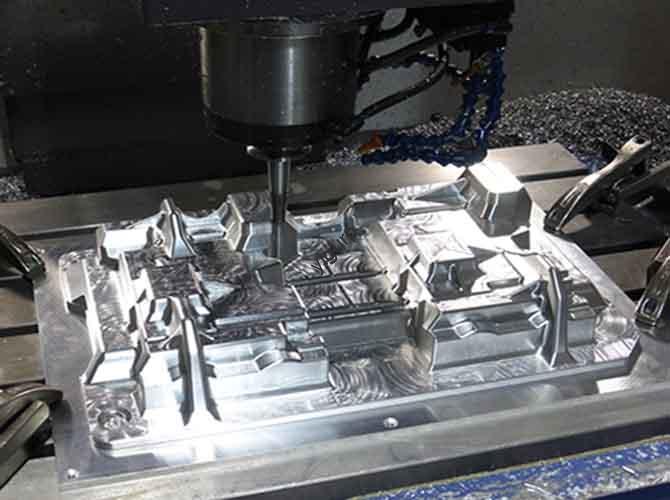
L’usinage continu sur tour CNC a changé la donne dans la fabrication moderne, activation sans surveillance, production 24 heures sur 24 de pièces de précision, mais de nombreux fabricants ont du mal à sélectionner leurs équipements, optimisation du programme, ou maintenir la stabilité du processus. Un type de tour mal adapté peut réduire l'efficacité de 30%; une mauvaise gestion des outils peut entraîner des temps d'arrêt fréquents. Cet article décompose les concepts de base, key technical points, scénarios d'application, and optimization strategies to help you unlock the full potential of CNC lathe continuous machining.
1. What Is CNC Lathe Continuous Machining? Définition & Avantages principaux
À la base, CNC lathe continuous machining uses pre-programmed G-codes to control automated lathes, completing multiple processes (tournant, forage, tapotement) for the same or different workpieces without manual intervention. Below is a 总分 structure of its definition and unmatched advantages:
1.1 Key Definition
Unlike traditional manual lathes (requiring constant operator oversight) or single-process CNC lathes (needing manual workpiece reloading), cette technologie intègre automated feeding (par ex., bar feeders), multi-tool turrets, et intelligent monitoring—enabling 24/7 production with minimal human input.
1.2 3 Core Advantages That Drive Adoption
| Avantage | Détails & Données | Real-World Impact |
| Ultra-High Efficiency | Reduces clamping time by 60-80% (no manual reloading) and downtime by 40%. For batch production (10,000+ parties), total cycle time is cut by 25-35% compared to single-process machining. | An automotive parts factory producing drive shafts increased daily output from 500 à 700 pieces after adopting continuous machining. |
| Qualité constante | Programmed control eliminates human error (par ex., uneven cutting depth from manual operation). Dimensional accuracy stays within ±0.005mm, and surface roughness (Râ) is consistently ≤1.6μm for batch parts. | A medical device manufacturer reduced defect rates of artificial joint stems from 3% to 0.5%—critical for meeting strict FDA standards. |
| Complex Process Integration | Supports multi-process centralized machining: turning outer circles → drilling inner holes → tapping threads → milling keyways. This eliminates the need to transfer workpieces between multiple machines. | A electronics factory now produces connector parts in one step (contre. 3 machines previously), cutting handling time and reducing part damage risk. |
2. Key Technical Points: From Equipment to Programming
Mastering CNC lathe continuous machining requires attention to four technical pillars. Below is a linear breakdown of each pillar, with actionable tips:
2.1 Equipment Selection & Configuration: Choose the Right “Tool”
Selecting the correct lathe and accessories is the first step to success. Use this comparison table to match equipment to your needs:
| Equipment Type | Core Features | Ideal Workpiece Types | Key Accessories to Add |
| CNC Turret Lathe | 8-12 tool stations; fast tool change (0.5-1 second per change); suitable for medium-complexity parts. | Arbres, manches, and other rotationally symmetric parts (par ex., pièces de moteur automobile). | Bar feeder (for long workpieces), coolant recycling system (reduces waste). |
| CNC Gang Tool Lathe | Tools arranged in a “gang” (no turret rotation); ultra-fast tool change (0.1-0.3 secondes); ideal for simple parts. | Petit, pièces à grand volume (par ex., connecteurs électroniques, small screws). | Automatic parts catcher (prevents finished parts from falling and getting damaged). |
| Turning-Milling Composite Lathe | Integrates lathe and milling functions (2-5 axis linkage); supports complex non-rotational features (par ex., milled flats on shafts). | Complex aerospace parts (par ex., pales de turbine), medical implants with irregular shapes. | Pallet exchange system (for unattended 24/7 opération), high-pressure coolant system (for tough materials like titanium). |
Critical Tip: For high-mix, production en faible volume (100-500 parts per batch), prioritize turret lathes (flexible tool changes). For high-volume, pièces simples, gang tool lathes are more cost-effective.
2.2 Program Design & Optimisation: The “Brain” of Continuous Machining
Poorly designed programs lead to wasted time and material. Suivez-les step-by-step best practices:
- CAD/CAM Integration: Convert 3D part models (from SolidWorks/AutoCAD) into G-code using CAM software (par ex., Mastercam, Fusion 360). Ensure the software supports “continuous machining logic” (par ex., sequencing processes to minimize tool movement).
- Parameter Calibration: Adjust key cutting parameters based on material—use this quick reference table:
| Matériel | Vitesse de broche (RPM) | Feed Speed (mm/rev) | Cutting Depth (mm) |
| 304 Acier inoxydable | 800-1500 | 0.1-0.2 | 0.5-1.5 |
| 6061 Alliage d'aluminium | 2000-4000 | 0.2-0.5 | 1.0-3.0 |
| 45# Acier au carbone | 1200-2500 | 0.15-0.3 | 0.8-2.0 |
| Alliage de titane (Ti-6Al-4V) | 300-800 | 0.05-0.15 | 0.3-1.0 |
- Simulation & Essai: Run the program in CNC simulation software (par ex., Vericut) to check for tool collisions or incorrect paths. Test with 5-10 trial parts before full production—this avoids costly material waste.
2.3 Contrôle des processus: Ensure Stability for Unattended Operation
To maintain quality during 24/7 usinage, focus on two key areas:
- Machine Rigidity: Choose lathes with high-rigidity cast iron bodies and servo motor drives—this reduces vibration (a major cause of uneven surface finish) par 50%.
- Real-Time Monitoring: Use the lathe’s intelligent control system to track:
- Spindle load (sudden spikes indicate tool wear or material impurities).
- Temperature (excess heat can warp workpieces—trigger alerts if >60°C).
- Cutting force (abnormal drops may mean a broken tool).
2.4 Tool & Consumables Management: Avoid Unexpected Downtime
Tools are the “teeth” of continuous machining—poor management leads to frequent stops. Follow these rules:
- Tool Matching: Use material-specific tools:
- Acier inoxydable: Carbide tools with TiAlN coating (resists wear from high heat).
- Aluminium: Diamond-like carbon (Contenu téléchargeable)-coated tools (prevent material sticking).
- Wear Compensation: Check tool wear every 500-1000 parties. Enable the lathe’s automatic tool change function—if wear exceeds 0.01mm, the machine swaps to a backup tool.
- Consumables Stock: Keep 20-30% extra tools (par ex., exercices, robinets) on hand—this avoids downtime waiting for replacements.
3. Typical Application Scenarios: Where Continuous Machining Shines
CNC lathe continuous machining is widely used across high-precision industries. Below is a scenario-based list of key applications:
| Industrie | Typical Workpieces | Why Continuous Machining Is Ideal |
| Automobile | Engine crankshafts, arbres de transmission, wheel hub bearings, fuel injector sleeves | Needs high volume (10,000+ pièces/mois) and consistent precision—continuous machining meets both while cutting costs. |
| Électronique & Électrique | Broches du connecteur, laptop hinge shafts, mobile phone middle frame components | Requires small, thin-walled parts (épaisseur de paroi <1mm) with fast cycle times—gang tool lathes excel here. |
| Dispositifs médicaux | Artificial joint stems, surgical forceps shafts, composants de la pompe à insuline | Demands ultra-high precision (±0,002mm) and biocompatible material machining—turning-milling composite lathes handle complex shapes. |
| Aérospatial | Aubes de turbines, aircraft engine connectors, satellite structural parts | Needs complex, multi-process parts (par ex., shafts with milled slots) and high-temperature material machining—5-axis turning-milling lathes reduce cycle time by 30%. |
4. 5-Step Checklist to Maximize ROI
To get the most value from CNC lathe continuous machining, follow this practical checklist:
- Define Goals: Clarify production volume (high/low), complexité de la pièce (simple/complex), et exigences de qualité (par ex., Ra ≤1.6μm).
- Select Equipment: Match lathe type to your goals (par ex., turning-milling composite for complex aerospace parts).
- Optimize Programs: Use simulation software and trial runs to refine G-codes and cutting parameters.
- Train Operators: Ensure staff can handle monitoring, tool changes, and basic troubleshooting—this reduces human error during unattended shifts.
- Track Metrics: Monitor OEE (Overall Equipment Efficiency)—target >85% (world-class level for continuous machining). Track defect rates and downtime to identify improvement areas.
Yigu Technology’s Perspective on CNC Lathe Continuous Machining
Chez Yigu Technologie, we believe holistic optimization—not just equipment upgrades—unlocks continuous machining’s value. Many clients buy advanced lathes but fail to optimize programs or tool management, leaving 20-30% efficiency on the table. We take a “360° approach”: 1) Help select lathes based on part analysis (par ex., recommending gang tool lathes for high-volume electronics parts); 2) Optimize programs via AI-driven CAM software (reducing cycle time by 15-20%); 3) Train teams on real-time monitoring and tool maintenance. For clients with unattended needs, we also integrate IoT sensors to track machine status remotely—cutting unexpected downtime by 25%.
FAQ (Frequently Asked Questions)
- Q: Can CNC lathe continuous machining handle high-mix, production en faible volume (par ex., 100 parts of 5 different types)?
UN: Oui, but choose a CNC turret lathe (flexible tool changes) and use quick-change fixtures. Pre-program G-codes for each part type—switching between parts takes 10-15 minutes (contre. 30+ minutes for single-process lathes). For even faster changes, use a tool presetter to pre-calibrate tool offsets.
- Q: How to prevent tool breakage during unattended continuous machining?
UN: D'abord, utiliser wear-resistant coated tools (par ex., TiAlN for stainless steel). Deuxième, set up spindle load alerts—if load exceeds 120% of normal, the machine pauses and sends an alert. Troisième, keep 2-3 backup tools in the turret—if one breaks, the machine automatically switches to a backup.
- Q: Is CNC lathe continuous machining more expensive than traditional machining? What’s the payback period?
UN: Initial costs are higher (tour + accessories = \(50,000-\)200,000 contre. \(20,000-\)50,000 for traditional lathes). But payback is fast: Pour une production en grand volume (10,000+ pièces/mois), savings from reduced labor and increased output typically cover costs in 6-12 mois. For low-volume, the payback may take 18-24 months—but quality improvements still justify investment for critical parts (par ex., dispositifs médicaux).