
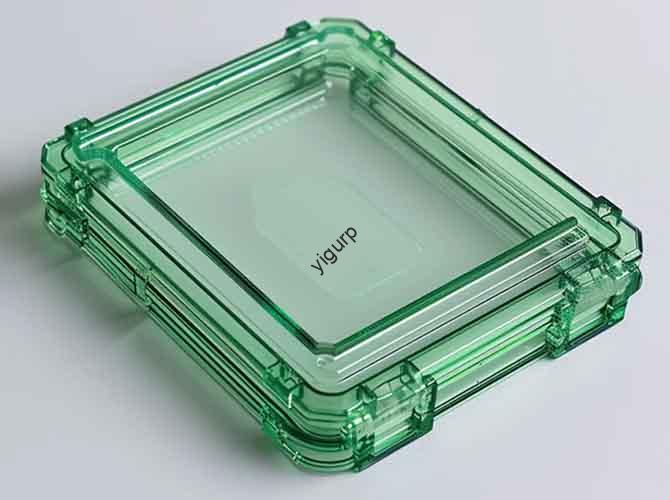
If you’ve ever wondered what AM additive manufacturing (souvent appelée impression 3D) c'est vraiment le cas et pourquoi c'est plus qu'un simple outil pour amateurs, tu es au bon endroit. À la base, fabrication additive (SUIS) est un processus qui construit des objets physiques couche par couche à partir de conceptions numériques, contrairement aux méthodes « soustractives » traditionnelles (comme couper ou percer) that remove material from a solid block. This simple shift in approach lets businesses create complex shapes, réduire les déchets, and speed up production in ways that were impossible just a decade ago.
Whether you’re a small product designer, a manufacturing manager at a mid-sized firm, or an entrepreneur exploring new production methods, understanding AM can help you cut costs, innovate faster, et rester compétitif. Let’s break down everything you need to know—from how it works to real-world success stories and how to choose the right AM solution for your needs.
What Exactly Is Additive Manufacturing (SUIS)? A Simple, Jargon-Free Explanation
Commençons par les bases: fabrication additive is a family of technologies that turn 3D digital models (created in software like CAD) into physical parts by adding material one thin layer at a time. Think of it like building a house with bricks—each layer is a tiny “brick” that stacks on top of the last until the full structure is complete.
This is a radical departure from fabrication soustractive (par ex., Usinage CNC, fraisage) ou formative manufacturing (par ex., moulage par injection). Par exemple, if you wanted to make a simple plastic bracket with subtractive methods, you’d start with a solid plastic block and cut away material until the bracket shape remains—wasting up to 70% of the original material. With AM, you only use the material needed for the bracket, slashing waste and opening up design possibilities (like hollow interiors or intricate lattice structures that would break in subtractive processes).
Key Terms to Know (No Jargon Overload!)
To avoid confusion, let’s define the most common terms you’ll hear:
- FDM (Modélisation des dépôts fondus): The most widely used AM technology. It melts a plastic filament (like PLA or ABS) and extrudes it through a nozzle, couche par couche. Great for prototypes and low-cost parts.
- ANS (Stéréolithographie): Uses a laser to harden liquid resin into layers. Produces ultra-detailed parts (think jewelry or dental models) but requires post-processing (like cleaning with alcohol).
- SLS (Frittage sélectif au laser): Uses a laser to fuse tiny plastic, métal, or ceramic powder particles. Ideal for strong, pièces fonctionnelles (par ex., composants aérospatiaux) because it doesn’t need support structures.
- Digital Twin: A virtual copy of a physical AM part. Businesses use this to test performance (par ex., how a part will hold up under stress) avant l'impression, saving time and material.
How Does Additive Manufacturing Work? A Step-by-Step Breakdown
You don’t need to be an engineer to understand the AM process—here’s a simple, actionable breakdown that shows how digital designs become physical parts:
Étape 1: Create or Import a 3D Digital Model
Everything starts with a digital design. You can:
- Design your own part using CAD software (par ex., Fusion 360, SolidWorks). Many tools have free versions for small businesses or beginners.
- Download pre-made designs from platforms like Thingiverse or GrabCAD (great for common parts like hinges or brackets).
- Scan an existing physical part using a 3D scanner (useful for replacing old parts that don’t have digital blueprints).
Pro Tip: Make sure your design is “AM-ready.” For example, avoid sharp overhangs (angles steeper than 45 degrees) in FDM printing—they’ll need support structures that add time and material. Most CAD software has built-in checks to fix these issues.
Étape 2: Prepare the Model for Printing (Tranchage)
Suivant, you’ll use “slicer” software (par ex., Traitement, PrusaSlicer) to convert your 3D model into a file the 3D printer can read (usually a .gcode file). The slicer does two critical things:
- Splits the model into hundreds or thousands of thin layers (typically 0.1–0.3mm thick—thinner layers = more detail but slower printing).
- Tells the printer exactly how to move (par ex., vitesse, température, where to add support structures).
Par exemple, if you’re printing a plastic cup with FDM:
- The slicer will create layers that form the cup’s walls and base.
- It will add temporary support structures under the cup’s rim (si nécessaire) to prevent it from collapsing during printing.
Étape 3: Print the Part
Now it’s time to hit “print!” The process varies by technology, but here’s what happens with FDM (the most common type):
- The printer heats the plastic filament to its melting point (180–250°C, en fonction du matériau).
- The nozzle moves back and forth, depositing the melted plastic onto the build plate (a heated surface that keeps the first layer stuck).
- After each layer is printed, the build plate lowers slightly, and the next layer is added on top.
Most small parts (like a phone case) take 1–4 hours to print, while larger or more detailed parts (like a prototype engine component) can take 12–24 hours.
Étape 4: Post-Process the Part
Une fois l'impression terminée, you’ll need to finish the part to get it ready for use. Post-processing steps depend on the technology:
- FDM: Supprimer les structures de support (usually by hand or with pliers) and sand the surface for a smoother finish.
- ANS: Wash the part in isopropyl alcohol to remove excess resin, then cure it under UV light to harden it fully.
- SLS: Remove loose powder (using a brush or air blower) and optionally heat-treat the part for extra strength.
Real-World Example: A small automotive parts manufacturer I worked with uses FDM to print prototype sensor brackets. They skip expensive tooling (which would cost \(5,000–)10,000 for a single bracket design) and instead print 5–10 prototypes in a day. Après test, they tweak the digital design and print new versions—cutting their prototype timeline from 4 semaines à 4 jours.
What Are the Most Common Additive Manufacturing Technologies? A Comparison Table
Not all AM technologies are the same—each has strengths, faiblesses, et utilisations idéales. To help you choose, here’s a side-by-side comparison of the four most popular options:
| Technologie | Materials Used | Points forts | Key Limitations | Applications idéales | Average Cost (Printer) |
| FDM (Modélisation des dépôts fondus) | Plastic filaments (PLA, ABS, PETG, nylon) | Faible coût, facile à utiliser, minimal post-processing | Lower detail, weaker parts (contre. SLS), needs supports | Prototypes, pièces à faible volume (par ex., parenthèses, boîtiers), hobby projects | \(200–)5,000 (consumer/professional) |
| ANS (Stéréolithographie) | Résine liquide (photopolymer) | Détails ultra élevés (0.025mm layers), smooth surface finish | Brittle parts (contre. FDM/SLS), toxic resin (needs safety gear) | Bijoux, modèles dentaires, figurines, detailed prototypes | \(500–)10,000 |
| SLS (Frittage sélectif au laser) | Plastic powder (nylon, TPU), poudre de métal (aluminium, titane) | Fort, pièces durables, no supports needed, large gamme de matériaux | High cost, slow printing, requires powder handling | Pièces fonctionnelles (par ex., composants aérospatiaux, implants médicaux), end-use products | \(10,000–)200,000+ |
| mjf (Fusion multi-jets) | Plastic powder (nylon) | Fast printing, consistent part quality, faible gaspillage | Limited material options, coût élevé | High-volume small parts (par ex., engrenages, attaches), produits de consommation | \(50,000–)300,000+ |
Key Takeaway: If you’re new to AM, start with FDM—it’s affordable and easy to learn. Si tu as besoin de fort, pièces fonctionnelles, SLS or MJF may be worth the investment.
What Materials Are Used in Additive Manufacturing?
AM’s versatility comes from its wide range of materials—you can print with plastics, métaux, céramique, and even biological materials (like human tissue for medical research). Here’s a breakdown of the most common materials and their uses:
1. Plastiques (The Most Popular Choice)
Plastics are ideal for prototypes, low-weight parts, et produits de consommation. The most common types include:
- PLA (Acide polylactique): Made from corn starch—biodegradable, faible coût, and easy to print. Great for prototypes and hobby projects, but not heat-resistant (melts at ~60°C).
- ABS (Acrylonitrile Butadiène Styrène): Stronger and more heat-resistant than PLA (melts at ~100°C). Used for functional parts (par ex., pièces de jouets, garniture automobile) but requires a heated build plate to prevent warping.
- Nylon: Flexible, durable, et résistant aux produits chimiques. Used for end-use parts like gears, charnières, et dispositifs médicaux (often with SLS technology).
- TPU (Polyuréthane thermoplastique): Soft and elastic—like rubber. Ideal for phone cases, joints, and footwear soles.
2. Métaux (For Strong, Pièces industrielles)
Metal AM is used in industries where strength and precision matter most, like aerospace, médical, et automobile. Common metals include:
- Aluminium: Lightweight and strong—used for aerospace components (par ex., supports d'avion) et pièces automobiles.
- Titane: Biocompatible (safe for the human body) and extremely strong—used for medical implants (par ex., arthroplasties de la hanche) and high-performance aerospace parts.
- Acier inoxydable: Corrosion-resistant—used for tools, luminaires, and marine components.
Fun Fact: NASA uses metal AM to print rocket engine parts. Dans 2020, they successfully tested a 3D-printed copper combustion chamber for the Space Launch System (SLS) rocket—this part was 20% plus léger et 30% cheaper to make than traditional methods.
3. Autres matériaux
- Céramique: Heat-resistant and biocompatible—used for dental crowns, pièces de moteur, et électronique.
- Composites: Materials mixed with fibers (like carbon fiber or glass fiber) pour plus de force. Used for high-performance parts (par ex., cadres de drones, équipement sportif).
- Biomaterials: Living cells mixed with a “scaffold” material—used in medical research to print tissues (par ex., skin grafts) and eventually organs.
What Are the Real-World Benefits of Additive Manufacturing? (With Data)
AM isn’t just a “cool” technology—it delivers tangible business benefits. Here are the top advantages, backed by data and case studies:
1. Reduce Waste (and Save Money)
Traditional manufacturing wastes up to 70% de matériel (par ex., CNC machining cuts away most of a metal block). AM uses only the material needed for the part, réduire les déchets en 70–90% (source: ASTM International, the global standards organization for AM).
Étude de cas: Adidas uses AM to print midsoles for its Futurecraft 4D shoes. By using SLS technology, they reduce material waste by 95% compared to traditional foam cutting. This not only saves them $1.2 million annually in material costs but also aligns with their sustainability goals.
2. Speed Up Production (From Weeks to Days)
Tooling for traditional manufacturing (like injection molds) can take 4–12 weeks to make and cost \(10,000–)100,000. With AM, you can print a part in hours or days—no tooling needed.
Data Point: A study by Deloitte found that AM reduces time-to-market for new products by 30–50% on average. Par exemple, a medical device company used FDM to print prototypes of a new insulin pen—cutting their prototype timeline from 6 semaines à 3 jours.
3. Create Complex Designs (That Were Impossible Before)
AM lets you print shapes with internal channels, structures en treillis, or hollow interiors—designs that would break in subtractive manufacturing. This is a game-changer for industries like aerospace (where lightweight parts improve fuel efficiency) et médical (where custom implants fit patients better).
Exemple: GE Aviation uses SLS to print fuel nozzles for its LEAP engine. The 3D-printed nozzle has 16 parties, par rapport à 200 parts in the traditional version. It’s also 25% lighter and 5x more durable—saving airlines $1.6 million per plane over the engine’s lifetime.
4. Customize Parts Easily (No Extra Cost)
Dans la fabrication traditionnelle, customizing a part (par ex., making a unique size for a patient) requires new tooling—adding cost and time. With AM, you just tweak the digital design—customization is free.
Medical Example: Stryker, a medical device company, uses AM to print custom knee replacements. Each implant is designed to fit a patient’s unique bone structure (using a 3D scan of their knee). Patients recover 20% plus rapide, and the implants last 10% longer than standard replacements (source: Stryker’s 2023 Annual Report).
What Are the Challenges of Additive Manufacturing? (And How to Overcome Them)
AM isn’t perfect—there are challenges to consider before investing. Here are the most common ones and practical solutions:
1. High Upfront Costs (For Industrial Printers)
Industrial AM printers (like SLS or metal printers) can cost \(10,000–)500,000. This is a barrier for small businesses.
Solution: Start small with a consumer FDM printer (\(200–)2,000) to test prototypes. If you need industrial parts, use a service bureau (like 3D Hubs or Protolabs) to print parts on demand—no need to buy a printer. Par exemple, a small electronics company I worked with uses 3D Hubs to print 100 custom enclosures per month—costing \(5 par pièce, contre. \)5,000 for a mold.
2. Slow Printing Speed (For Large or Detailed Parts)
AM is slower than traditional manufacturing for high-volume parts. Par exemple, an injection mold can make 1,000 plastic cups per hour—while an FDM printer makes 1 cup per hour.
Solution: Use AM for low-volume or custom parts, and traditional manufacturing for high-volume parts. Par exemple, a toy company uses FDM to print 50 prototypes of a new action figure (testing different designs), then switches to injection molding to make 100,000 units for sale.
3. Material Limitations (par ex., Résistance à la chaleur, Force)
Some AM materials (like PLA) aren’t heat-resistant or strong enough for industrial use.
Solution: Choose the right material for your application. If you need a heat-resistant part, use ABS or nylon (instead of PLA). If you need a strong metal part, use titanium (instead of aluminum). Work with material suppliers to test samples—most will send free or low-cost test parts.
4. Contrôle de qualité (Ensuring Parts Are Consistent)
AM parts can have defects (comme une déformation, séparation des couches, or air bubbles) if the printer isn’t calibrated correctly.
Solution: Invest in quality control tools (par ex., a 3D scanner to check part dimensions) and train your team on printer calibration. Many modern printers have built-in sensors that detect defects and pause printing—reducing waste. Par exemple, a aerospace company uses a laser scanner to check every 3D-printed part—catching 99% of defects before they’re used in planes.
How to Choose the Right Additive Manufacturing Solution for Your Business?
Choosing an AM solution depends on your goals, budget, and the parts you want to print. Here’s a step-by-step guide to make the right decision:
Étape 1: Define Your Goals
Ask yourself:
- Do you need prototypes (rapide, faible coût) or end-use parts (fort, durable)?
- What’s your budget? (Consumer printers: \(200–)5,000; industrial printers: $10,000+)
- How many parts do you need to print per month? (Low volume: <100; volume élevé: >1,000)
- What material do you need? (Plastique, métal, céramique?)
Étape 2: Choose the Right Technology
Use this cheat sheet to match your goals to a technology:
- But: Prototypes à faible coût (plastique): FDM
- But: Detailed prototypes (par ex., bijoux): ANS
- But: Fort, pièces fonctionnelles (plastic or metal): SLS
- But: High-volume small parts (plastique): mjf
Étape 3: Decide to Buy or Outsource
- Buy a printer if: You need to print parts frequently (par ex., 50+ per month), want control over the process, and have the budget for maintenance (par ex., filament, résine, poudre).
- Outsource to a service bureau if: You need parts occasionally, want to test AM before investing, or need industrial materials (like titanium) that require expensive printers.
Étape 4: Test Before You Invest
Most printer manufacturers offer free demos or trial prints. Send them your 3D model and ask for a sample part—this lets you test quality, durabilité, and fit before committing. Par exemple, a furniture designer I advised sent a chair leg model to three FDM printer manufacturers. They tested the sample legs for strength (sitting on them!) and chose the printer that produced the most durable part at the lowest cost.
Yigu Technology’s Perspective on Additive Manufacturing
Chez Yigu Technologie, we believe fabrication additive (SUIS) is no longer a “future technology”—it’s a critical tool for businesses to stay agile and sustainable in today’s fast-paced market. Au cours des cinq dernières années, nous avons travaillé avec 500+ small and mid-sized businesses (SMBs) to integrate AM into their workflows, and we’ve seen firsthand how it solves their biggest pain points:
We also see AM as a sustainability driver. Traditional manufacturing wastes 50–70% of material, but AM cuts that to 10% or less. Our clients have reduced their carbon footprint by 25–30% on average by switching to AM for prototypes and low-volume parts.
Cela dit, we caution businesses against “AM for AM’s sake.” Success depends on matching the right technology to your needs—don’t invest in a $50,000 SLS printer if you only need to print PLA prototypes. Our team offers free consultations to help businesses map their goals to AM solutions, ensuring they get ROI from day one.
FAQ: Your Most Common Additive Manufacturing Questions Answered
We’ve compiled the questions we hear most often from businesses exploring AM. If you don’t see your question here, feel free to reach out!
1. Is additive manufacturing the same as 3D printing?
Yes and no. 3Impression D is the term most people use for consumer or hobbyist AM (like FDM printers for home use). Fabrication additive is the industry term that includes all layer-based technologies—from consumer FDM to industrial metal printers. Think of it like “cars” vs. “vehicles”: all 3D printing is AM, but not all AM is 3D printing (par ex., industrial SLS is AM but not typically called “3D printing”).
2. How much does it cost to get started with AM?
You can start with a consumer FDM printer for 200–2,000 (par ex., Creality Ender 3 or Prusa Mini+). For small businesses, expect to spend 500–5,000 for a professional FDM printer (better build quality, larger print size) plus 50–200 per month on materials (filament, résine). If you outsource to a service bureau, parts cost 1–100 each, depending on size and material.
3. Can AM be used for mass production?
It depends on the part and volume. AM is great for low-to-medium volume production (1–10 000 pièces) but not yet as fast or cheap as traditional methods (comme le moulage par injection) for high volume (100,000+ parties). Cela dit, AM is improving—technologies like MJF can print 1,000+ small parts per day, making it viable for mass production of niche products (par ex., dispositifs médicaux sur mesure).
4. Are AM parts as strong as traditionally made parts?
Oui, si vous choisissez le bon matériau et la bonne technologie. Par exemple:
- FDM parts made with ABS or nylon are strong enough for most consumer products (par ex., coques de téléphone, jouets).
- SLS parts made with nylon or metal are as strong as (or stronger than) traditionally machined parts—GE Aviation’s 3D-printed fuel nozzles are 5x more durable than the traditional version.
Always test parts for your specific use case (par ex., load-bearing parts need strength testing) before using them in critical applications.