
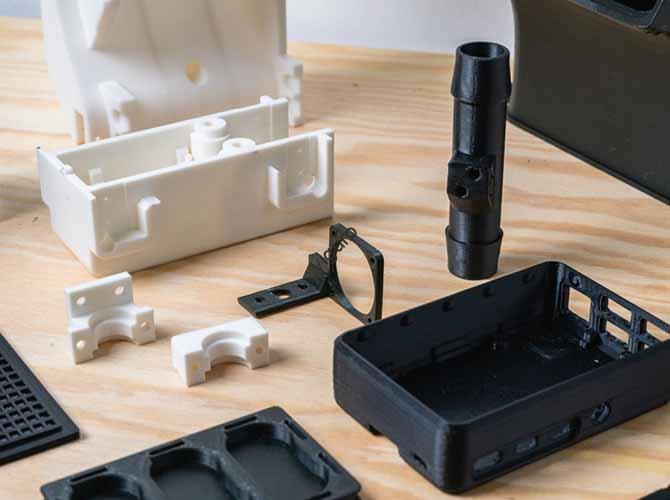
Si vous débutez dans l’impression 3D ou si vous cherchez à faire évoluer votre fabrication additive (SUIS) opérations, vous avez probablement demandé: Qu’est-ce que la poudre de fabrication additive exactement ?, et pourquoi est-ce important? En termes simples, additive manufacturing powder is the raw material that fuels most industrial 3D printing processes—think selective laser melting (GDT) ou fusion par faisceau d'électrons (EBM). Unlike traditional plastics or filaments, these powders are engineered to melt, fusible, and solidify into precise, pièces complexes, making them critical for industries like aerospace, dispositifs médicaux, et automobile.
But not all powders are created equal. The wrong powder can lead to weak parts, matériaux gaspillés, or failed projects. Dans ce guide, nous allons détailler tout ce que vous devez savoir: from how AM powders work and their key types to how to select, store, and test them. We’ll also share real-world examples and data to help you make confident decisions.
What Exactly Is Additive Manufacturing Powder?
À la base, additive manufacturing powder is a fine, uniform material designed for layer-by-layer 3D printing. Unlike the plastic filaments used in consumer 3D printers, AM powders are typically made from metals, polymères, céramique, or composites—and their quality directly impacts the final part’s strength, précision, et durabilité.
Key Characteristics of High-Quality AM Powder
For a powder to work well in industrial AM, it must meet strict standards. Here are the non-negotiable traits:
- Particle Size & Distribution: Most metal powders range from 15–45 micrometers (µm) in diameter—about 1/5 the thickness of a human hair. A narrow size range ensures consistent melting; if particles are too large, they won’t fuse properly, and if too small, they risk clumping or catching fire.
- Sphericity: Round, spherical particles flow more smoothly (critical for even layer deposition) and melt uniformly. Irregularly shaped powders (like those from some cheaper production methods) can cause gaps in layers.
- Pureté: Contaminants (even tiny amounts of oil or dust) weaken parts. Par exemple, medical-grade titanium powder must have a purity of 99.9% or higher to meet biocompatibility standards.
- Fluidité: Measured in seconds (using a “Hall flowmeter”), good flowability means powder spreads evenly across the build plate. A flow time of 25–35 seconds is typical for high-performance metal powders.
Exemple concret: Dans l'aérospatiale, Boeing uses titanium alloy powder (Ti-6Al-4V) for 3D-printed engine parts. The powder must have a sphericity of >95% and a particle size of 20–45 μm to withstand extreme temperatures and pressure. If the powder’s flowability is off by just 5 secondes, it can cause uneven layers—and a part that fails safety tests.
The Most Common Types of Additive Manufacturing Powder (and Their Uses)
Choosing the right powder starts with understanding your application. Below are the four main categories, along with their key benefits and real-world use cases.
| Powder Type | Matériaux courants | Idéal pour | Avantages clés | Industry Examples |
| Métal | Titane, Aluminium, Acier inoxydable, Inconel | Fort, pièces résistantes à la chaleur | Rapport résistance/poids élevé; durable | Aérospatial (supports de moteur), Médical (implants) |
| Polymère | Nylon (PA12), PETG, TPU | Faible coût, pièces flexibles | Léger; facile à imprimer; abordable | Automobile (clips intérieurs), Consumer (jouets) |
| Céramique | Alumine, Zircone, Silica | Heat/chemical-resistant parts | Resists high temps (jusqu'à 1 800°C); non-reactive | Électronique (isolateurs), Dentaire (couronnes) |
| Composite | Metal-polymer blends, Carbon fiber-reinforced nylon | Force équilibrée + flexibilité | Combines properties of two materials | Robotique (engrenages), Sportif (cadres de vélo) |
Deep Dive: Poudres métalliques (the Most In-Demand Category)
Metal powders dominate industrial AM because they mimic the strength of traditional machined parts. Let’s break down the top options:
- Titane (Ti-6Al-4V): Idéal pour les implants médicaux (it’s biocompatible) et pièces aérospatiales (lightweight but strong). UN 2024 report from SmarTech Analysis found that titanium powder accounts for 35% of all metal AM material sales.
- Aluminium (AlSi10Mg): Popular in automotive and consumer goods because it’s cheap and lightweight. Ford uses aluminum powder to 3D-print cylinder heads, réduisant le poids des pièces de 40%.
- Inconel 718: A superalloy that withstands temperatures up to 1,260°C—perfect for jet engine components. GE Aviation uses Inconel powder for 3D-printed turbine blades, réduisant le temps de production en 50%.
How Is Additive Manufacturing Powder Made? (3 Key Production Methods)
The way a powder is manufactured directly affects its quality. Here are the three most common methods, ranked by industry preference:
1. Gas Atomization (Best for High-Quality Metal Powders)
This is the gold standard for metal AM powders. Voici comment ça marche:
- A metal alloy is melted in a crucible (usually made of ceramic or graphite).
- A high-pressure gas (argon or nitrogen) is blown through the molten metal, breaking it into tiny droplets.
- The droplets cool mid-air and solidify into spherical particles.
- The powder is sifted to remove oversized/undersized particles, resulting in a uniform batch.
Why It’s Preferred: Gas atomization produces powders with high sphericity (>90%) and low impurities. Cependant, it’s expensive—costing 2–3x more than other methods.
2. Plasma Atomization (For Ultra-Pure Powders)
Similar to gas atomization, but uses a plasma torch (instead of gas) to melt the metal. This method is used for ultra-pure powders (comme le titane de qualité médicale) because the plasma heats the metal to higher temperatures, burning off more contaminants.
Cas d'utilisation: Stryker, a medical device company, uses plasma-atomized titanium powder for hip implants. The process ensures the powder has <0.1% impuretés, meeting FDA biocompatibility standards.
3. Mechanical Milling (Cheapest, But Lowest Quality)
This method grinds solid metal into powder using rotating balls (like a blender). It’s cheap but produces irregularly shaped particles with high contamination risk (from the milling equipment).
When to Avoid It: Mechanical milling is only suitable for low-stress parts (like decorative items). It’s not used in aerospace or medical applications because the powder’s irregular shape causes poor layer adhesion.
How to Choose the Right Additive Manufacturing Powder (Guide étape par étape)
Selecting a powder isn’t guesswork—it’s a process. Suivez-les 5 steps to match your powder to your project goals:
Étape 1: Define Your Part’s Requirements
Start by asking:
- What will the part be used for? (par ex., a medical implant needs biocompatibility; a jet part needs heat resistance)
- What mechanical properties matter most? (force, flexibilité, résistance à la chaleur)
- Quel est votre budget? (metal powders cost \(50–)500/kilos; ceramics are even pricier)
Exemple: If you’re 3D-printing a dental crown, you need a ceramic powder (zircone) that’s biocompatible, fort, and matches tooth color. A polymer powder would be too weak, and a metal powder would be unsafe.
Étape 2: Match Powder to Your 3D Printing Process
Not all powders work with all AM technologies. Par exemple:
- GDT (Fusion laser sélective): Works with most metal powders (titane, aluminium) but requires good flowability.
- EBM (Fusion par faisceau d'électrons): Uses higher temperatures, so it’s best for high-melting-point metals (comme le tungstène).
- SLS (Frittage sélectif au laser): Typically uses polymer powders (nylon) or ceramic powders.
Pour un pourboire: Check your 3D printer’s manual—manufacturers (like EOS or 3D Systems) often list “approved powders” to avoid compatibility issues.
Étape 3: Evaluate Powder Quality Certifications
Always ask suppliers for a Certificate of Analysis (CoA). This document should include:
- Particle size distribution (par ex., D10=15μm, D50=30μm, D90=45μm)
- Sphericity percentage
- Purity levels (par ex., 99.95% pure titanium)
- Flow rate (par ex., 30 seconds via Hall flowmeter)
Drapeau rouge: If a supplier can’t provide a CoA, walk away. Poor-quality powder can ruin your printer or lead to part failures.
Étape 4: Test Small Batches First
Before buying a large quantity, order a sample (usually 1–5 kg) and run test prints. Vérifiez:
- Layer adhesion (no gaps between layers)
- Finition superficielle (lisse, no rough spots)
- Résistance mécanique (test with a tensile tester—most metal parts should have a tensile strength of >500 MPa)
Étude de cas: A small automotive parts manufacturer once skipped testing and bought 100 kg of low-cost aluminum powder. The powder had irregular particles, conduisant à 80% of their prints cracking. They lost $10,000 in materials and time—lessons learned.
Étape 5: Consider Sustainability
Powder reuse is a big part of AM sustainability. Most metal powders can be reused 5–10 times (after sifting to remove oversized particles). Demandez aux fournisseurs:
- Is the powder recyclable?
- Does it come in reusable packaging?
UN 2023 study by the Additive Manufacturing Green Alliance found that reusing titanium powder reduces material waste by 60% and cuts costs by 30%.
How to Store and Handle Additive Manufacturing Powder (Avoid Costly Mistakes)
Even the best powder will fail if stored poorly. Here’s how to keep it in top condition:
Key Storage Rules
- Keep It Dry: Metal and ceramic powders absorb moisture, which causes “spattering” during printing (molten powder pops, leaving holes in parts). Store powders in a dry room with <30% humidité. Use desiccant packs or a dehumidifier.
- Avoid Contamination: Use dedicated tools (spatulas, funnels) for each powder type—cross-contamination (par ex., mixing aluminum and steel powder) can weaken parts.
- Control Temperature: Most powders work best at 20–25°C. Extreme heat can cause clumping; extreme cold can make powders brittle.
Handling Safety Tips
- Wear PPE: Metal powder particles are small enough to inhale, so wear a respirator (N95 or higher) and gloves. Some powders (like nickel-based alloys) can cause skin irritation.
- Use Explosion-Proof Equipment: Fine metal powders are flammable. Store them in explosion-proof cabinets and use vacuum cleaners designed for AM powders (regular vacuums can spark fires).
Real-World Mistake: A 3D printing shop in 2022 didn’t dry their stainless steel powder. The moisture caused the powder to spatter during printing, ruining a $5,000 aerospace part. They now use a humidity-controlled storage room and test powder moisture levels daily.
Yigu Technology’s Perspective on Additive Manufacturing Powder
Chez Yigu Technologie, we believe additive manufacturing powder is the “unsung hero” of industrial 3D printing. Too many businesses focus on 3D printer specs while overlooking powder quality—but the two go hand in hand. We’ve seen clients cut production costs by 25% simply by switching to high-quality, recyclable powders. For small to mid-sized manufacturers, we recommend starting with aluminum or nylon powders (affordable and versatile) before moving to specialty materials like titanium. The key is to partner with suppliers who provide transparent CoAs and offer testing support—this avoids costly errors and ensures consistent part quality.
FAQ: Common Questions About Additive Manufacturing Powder
1. How much does additive manufacturing powder cost?
Prices vary by material:
- Polymer powders: \(20–)100/kilos
- Metal powders: \(50–)500/kilos (titanium is ~\(300/kilos; Inconel is ~\)500/kilos)
- Ceramic powders: \(100–)1,000/kilos
Reusing powder can cut costs by 30–50%.
2. Can I mix different types of AM powder?
No—mixing powders (par ex., aluminum and steel) changes their chemical composition, leading to weak or brittle parts. Stick to one powder type per project.
3. How long does additive manufacturing powder last?
Unopened powder lasts 1–2 years (if stored properly). Opened powder should be used within 6 months—even with reuse, it loses quality after 5–10 cycles.
4. What’s the difference between “virgin” and “recycled” powder?
Virgin powder is new, never used. Recycled powder is sifted and reprocessed from unused powder in prints. Recycled powder works well for non-critical parts but may have slightly lower flowability than virgin powder.
5. How do I test if my powder is still good?
Run a “flow test” (using a Hall flowmeter) and a “particle size analysis” (via a laser diffraction tool). If the flow time is >40 seconds or the particle size distribution is too wide, the powder should be replaced.