
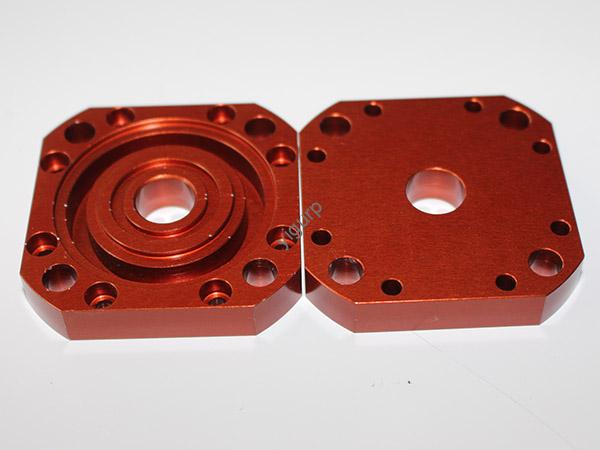
Acier de construction WCB (une qualité commune d'acier au carbone selon ASTM A216) est un polyvalent, cost-effective material celebrated for its excellent soudabilité, ductilité, et résistance à la pression—traits shaped by its balanced chemical composition (carbone faible à moyen, impuretés contrôlées) et des processus de fabrication simples. Contrairement aux aciers fortement alliés, WCB excelle dans les applications structurelles et sous pression, making it a top choice for petroleum and natural gas, traitement chimique, production d'énergie, and industrial manufacturing industries. Dans ce guide, nous allons décomposer ses propriétés clés, utilisations réelles, production techniques, et comment il se compare à d'autres matériaux, helping you select it for projects that demand reliability and compatibility with high-pressure environments.
1. Key Material Properties of WCB Structural Steel
WCB’s performance stems from its carbon-lean composition and controlled processing, which balance strength, maniabilité, and pressure resistance for industrial-grade applications.
Chemical Composition
WCB’s formula prioritizes pressure resistance and weldability, with typical ranges for key elements (per ASTM A216 standards):
- Carbon: 0.25-0.35% (medium content to support résistance à la traction while retaining soudabilité—critical for pressure vessels and pipelines)
- Manganese: 0.60-1.05% (enhances hardenability and tensile strength without compromising ductility)
- Phosphorus: ≤0.035% (strictly controlled to prevent cold brittleness, essential for low-temperature applications like offshore pipelines)
- Sulfur: ≤0.040% (limited to avoid hot cracking during welding and ensure uniform forming of pressure-containing parts)
- Silicium: 0.15-0.40% (aids deoxidation during steelmaking and stabilizes high-temperature mechanical properties for power plant components)
- Chromium: ≤0.30% (trace impurity, no intentional addition—avoids carbide formation that could reduce ductility)
- Molybdène: ≤0.15% (trace impurity, no intentional addition—keeps material cost low while maintaining performance)
- Nickel: ≤0.30% (trace impurity, no intentional addition—ensures compatibility with standard welding processes)
Physical Properties
| Propriété | Typical Value for WCB Structural Steel |
| Densité | ~7.85 g/cm³ (consistent with standard carbon steels, no extra weight penalty for pressure vessel designs) |
| Point de fusion | ~1450-1500°C (suitable for hot working, soudage, and heat treatment of thick-walled parts) |
| Conductivité thermique | ~45 W/(m·K) (at 20°C—enables efficient heat dissipation in heat exchangers or boiler components) |
| Specific heat capacity | ~0.48 kJ/(kg·K) (at 20°C) |
| Coefficient of thermal expansion | ~12 x 10⁻⁶/°C (20-500°C—compatible with most industrial piping systems, reducing thermal stress in welded joints) |
Propriétés mécaniques
After standard annealing (per ASTM A216), WCB delivers reliable performance for pressure and structural applications:
- Résistance à la traction: ~485-655 MPa (ideal for pressure vessels, pipelines, and boiler components handling up to 10,000 psi)
- Yield strength: ≥275 MPa (ensures parts resist permanent deformation under high pressure, such as chemical reactor shells)
- Élongation: ≥22% (dans 50 mm—excellent ductility for forming complex shapes like curved pipeline sections or pressure vessel heads)
- Dureté (Brinell): ≤197 HB (annealed state—soft enough for machining; can be increased to 220-240 HB via tempering for wear-resistant parts)
- Résistance aux chocs (Charpy V-notch, 0°C): ≥27 J (good for mild cold environments, preventing brittle failure in winter-use pipelines or refinery equipment)
- Fatigue resistance: ~240-300 MPa (at 10⁷ cycles—critical for dynamic-pressure parts like pump casings or turbine inlet pipes)
Other Properties
- Résistance à la corrosion: Modéré (no alloy additions for enhanced rust protection; requires surface treatment like painting, galvanisation, or epoxy coating for outdoor or chemical-exposed use—lasts 15+ years with proper coating)
- Weldability: Excellent (low carbon content allows welding with common methods—MIG, TIG, arc welding—without preheating for thin sections <12 mm; preheating to 150-200°C recommended for thick sections to avoid cracking)
- Usinabilité: Very Good (annealed state, HB ≤197, works well with high-speed steel or carbide tools; fast cutting speeds reduce production time by 20% contre. alloy steels)
- Ductilité: Excellent (supports cold forming of pressure vessel heads or bent pipelines without cracking—critical for custom industrial designs)
- Toughness: Bien (retains ductility at low temperatures, making it suitable for offshore oil platforms or cold-climate power plants)
2. Real-World Applications of WCB Structural Steel
WCB’s balance of pressure resistance, soudabilité, and cost-effectiveness makes it a staple in industries where safe handling of fluids or gases under high pressure is critical. Here are its most common uses:
Petroleum and Natural Gas
- Pipelines: Transmission pipelines for oil or natural gas use WCB—résistance à la pression (handles up to 10,000 psi) et soudabilité enable seamless jointing of long pipeline sections, reducing leak risks.
- Storage tanks: Above-ground or underground oil storage tanks use WCB—ductilité supports tank expansion/contraction with temperature changes, et usinabilité allows precise fitting of valves and fittings.
- Refinery equipment: Oil refinery distillation columns or pressure vessels use WCB—résistance à la traction (485-655 MPa) withstands high-temperature (300-400°C) and high-pressure conditions during oil refining.
- Gas processing plants: Natural gas compression cylinders or separator vessels use WCB—résistance aux chocs (≥27 J at 0°C) prevents failure in cold offshore environments, ensuring safe gas processing.
Exemple de cas: An oil company used stainless steel for 8-inch natural gas transmission pipelines but faced high material costs. Switching to WCB (with epoxy coating) cut material costs by 40%—over 20 années, the company saved $2.8 million for a 500-km pipeline, with no increase in maintenance or leak incidents.
Traitement chimique
- Chemical reactors: Batch or continuous chemical reactors use WCB—chemical compatibility (with non-aggressive chemicals like ethanol or water) et résistance à la pression support safe reaction conditions (jusqu'à 8,000 psi).
- Storage vessels: Chemical storage tanks for acids (par ex., dilute sulfuric acid) or solvents use WCB—revêtement époxy enhances corrosion resistance, et ductilité allows tank customization for different chemical volumes.
- Piping systems: Chemical plant piping for water, vapeur, or non-corrosive fluids use WCB—soudabilité simplifies on-site installation, et usinabilité enables precise threading of pipe joints to avoid leaks.
- Échangeurs de chaleur: Shell-and-tube heat exchangers use WCB for shell components—conductivité thermique (45 W/(m·K)) supports efficient heat transfer between fluids, et dureté resists vibration from fluid flow.
Power Generation
- Power plant components: Coal-fired or natural gas power plant boiler tubes (non-high-temperature sections) use WCB—résistance à la chaleur (up to 400°C) et résistance à la pression withstand steam pressure (jusqu'à 9,000 psi) during power generation.
- Boiler components: Boiler drums or feedwater heaters use WCB—ductilité allows forming of large-diameter drum shells, et soudabilité enables attachment of tubes and nozzles with minimal stress.
- Turbine casings: Low-pressure turbine casings use WCB—résistance à la fatigue (240-300 MPa) handles cyclic steam pressure changes, extending turbine life by 20+ années.
- Pressure vessels: Power plant steam accumulators or condensate tanks use WCB—rentabilité reduces capital expenditure for power plant construction, without compromising safety.
Fabrication industrielle
- Équipement industriel: Hydraulic press cylinders or air compressor tanks use WCB—résistance à la pression supports high-pressure fluid or air storage, et usinabilité allows precise machining of cylinder inner surfaces for smooth piston movement.
- Bâtis de machines: Heavy-duty manufacturing machinery frames (par ex., metal stamping presses) use WCB—résistance à la traction prend en charge 50+ ton pressing forces, et soudabilité simplifies assembly of large frame sections.
- Composants structurels: Factory mezzanines or equipment platforms use WCB—yield strength (≥275 MPa) supports heavy equipment loads (10-20 ton), et rentabilité reduces factory construction costs.
- Fabricated parts: Custom industrial brackets or support beams use WCB—ductilité enables bending to fit tight spaces, et fast machining reduces lead time for custom orders.
Infrastructure
- Ponts: Small highway or pedestrian bridge support beams use WCB—résistance à la traction (485-655 MPa) supports traffic loads, et soudabilité simplifies on-site assembly of bridge sections.
- Buildings: Industrial warehouse columns or roof trusses use WCB—rentabilité reduces building construction costs, et usinabilité allows easy attachment of overhead crane rails.
- Infrastructure components: Water treatment plant storage tanks or sewage pipelines use WCB—résistance à la corrosion (avec revêtement) withstands moisture, et ductilité supports pipeline bending around obstacles.
3. Manufacturing Techniques for WCB Structural Steel
Producing WCB requires straightforward processes to control carbon content and ensure pressure resistance—no specialized alloy handling, making it cost-effective for large-scale industrial production. Here’s the detailed process:
1. Primary Production
- Steelmaking:
- Basic Oxygen Furnace (BOF): Primary method—molten iron from a blast furnace is mixed with scrap steel; oxygen is blown into the furnace to reduce carbon content to 0.25-0.35%. Manganese and silicon are added to meet WCB’s composition standards (per ASTM A216).
- Electric Arc Furnace (EAF): For small batches—scrap steel is melted at 1600-1700°C. Carbon and alloys are added to adjust composition, with real-time sensors ensuring compliance with WCB’s chemical requirements.
- Blast furnace: Iron ore is smelted into molten iron (pig iron) with high carbon content (3-4%); coke and limestone are added to remove impurities, producing a base material for BOF steelmaking.
2. Secondary Processing
- Fonderie: Molten WCB steel is cast into ingots, slabs, or specialized shapes (par ex., pressure vessel heads) via sand casting or investment casting—casting ensures uniform thickness for pressure-containing parts, avoiding weak points.
- Roulement: Cast slabs are heated to 1100-1200°C and rolled into plates, barres, or pipes via hot rolling mills. Hot rolling refines grain structure (enhancing toughness) and shapes WCB into standard industrial forms (par ex., 10-mm thick plates for pipelines, 200-mm diameter pipes for reactors).
- Forgeage: Heated steel (1050-1100°C) is pressed into complex shapes (par ex., valve bodies or pump casings) using hydraulic presses—forging improves material density and eliminates internal porosity, critical for pressure-containing parts.
- Traitement thermique:
- Recuit: Heated to 815-870°C for 2-4 heures, slow-cooled to 600°C. Reduces hardness to ≤197 HB, improves ductility, and relieves internal stress from casting/rolling—mandatory for WCB to meet ASTM A216’s toughness requirements.
- Quenching and tempering (optional): Heated to 830-860°C (quenched in water) then tempered at 550-600°C. Increases tensile strength to 655 MPa and hardness to 220-240 HB—used for WCB parts needing extra wear resistance (par ex., arbres de machines).
3. Traitement de surface
- Peinture: Epoxy or polyurethane paints are applied to WCB parts (par ex., pipelines, storage tanks)—prevents atmospheric corrosion, extending service life by 15+ years in outdoor environments.
- Galvanisation: Hot-dip galvanizing (revêtement de zinc, 50-100 µm d'épaisseur) is used for WCB parts exposed to moisture (par ex., poutres de pont, water treatment plant pipes)—boosts corrosion resistance by 8-10x vs. uncoated WCB.
- Revêtement: Epoxy or fusion-bonded epoxy (FBE) coatings are applied to WCB pipelines—resists chemical corrosion (par ex., in oil refineries) and soil moisture (for underground pipelines), avoiding leaks.
- Dynamitage: Shot blasting removes surface scale or rust from rolled/cast WCB—improves coating adhesion, ensuring uniform corrosion protection for pressure vessels or structural parts.
4. Contrôle de qualité
- Inspection: Visual inspection checks for surface defects (par ex., fissures, porosité) in cast, rolled, or forged WCB—critical for pressure-containing parts to avoid leaks.
- Essai:
- Essais de traction: Samples are pulled to failure to verify tensile (485-655 MPa) and yield (≥275 MPa) strength—ensures compliance with ASTM A216 standards.
- Tests d'impact: Charpy V-notch tests measure impact resistance (≥27 J at 0°C)—confirms performance in low-temperature environments.
- Pressure testing: WCB pressure vessels or pipelines are hydrostatically tested (filled with water and pressurized to 1.5x design pressure) to detect leaks—mandatory for industrial safety certification.
- Non-destructive testing: Ultrasonic testing detects internal defects (par ex., voids in cast parts) in thick-walled WCB components like reactor shells—avoids catastrophic failure under high pressure.
- Attestation: Each batch of WCB receives an ASTM A216 material certificate, verifying chemical composition and mechanical properties—mandatory for use in petroleum, chimique, or power industries.
4. Étude de cas: WCB Structural Steel in Chemical Reactor Manufacturing
A chemical equipment manufacturer used alloy steel for 5000-liter batch reactors (handling dilute acids) but faced high material costs and long lead times. Switching to WCB (with epoxy coating) delivered transformative results:
- Économies de coûts: WCB’s material cost was 55% lower than alloy steel—for 20 reactors, the manufacturer saved $320,000 in capital expenditure.
- Production Efficiency: WCB’s soudabilité reduced reactor assembly time by 30% (no specialized welding techniques needed), cutting lead time from 12 semaines à 8 weeks—enabling faster delivery to chemical plant clients.
- Performance Reliability: WCB reactors (with epoxy coating) showed no corrosion or leaks after 5 years of use—matching alloy steel’s performance at a fraction of the cost, boosting customer satisfaction.
5. WCB Structural Steel vs. Other Materials
How does WCB compare to other structural and pressure-resistant materials? Le tableau ci-dessous met en évidence les principales différences:
| Matériel | Coût (contre. WCB) | Résistance à la traction (MPa) | Pressure Resistance (Max psi) | Résistance à la corrosion | Weldability | Poids (g/cm³) |
| Acier de construction de la WCB | Base (100%) | 485-655 | 10,000 | Modéré (Needs Coating) | Excellent | 7.85 |
| Low-Carbon Steel (A36) | 85% | 400-550 | 6,000 | Faible (Needs Coating) | Very Good | 7.85 |
| Acier inoxydable (316L) | 350% | 515-620 | 12,000 | Excellent | Bien | 7.93 |
| Acier allié (A387 Gr. 11) | 220% | 515-690 | 15,000 | Bien | Équitable | 7.85 |
| Alliage d'aluminium (6061-T6) | 280% | 310 | 3,000 | Bien | Modéré | 2.70 |