
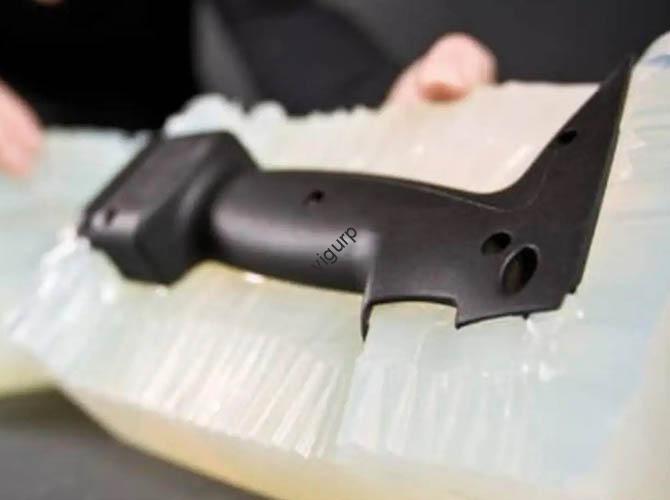
Si vous êtes un fabricant, concepteur de produits, ou entrepreneur au Canada à la recherche d'un moyen rentable de créer des prototypes de haute qualité ou des pièces de production en petits lots, coulée sous vide est une solution à explorer. En termes simples, la coulée sous vide au Canada utilise un vide pour aspirer du polyuréthane ou du silicone liquide dans un moule (généralement réalisé à partir d'un modèle maître), produire des pièces qui correspondent étroitement à l'original dans les détails, texture, et même certaines propriétés mécaniques. C’est idéal pour des industries comme l’automobile, dispositifs médicaux, électronique grand public, et l'aérospatiale, offrant un juste milieu entre l'impression 3D (pour des pièces rapides mais moins durables) et moulage par injection (pour un outillage volumineux mais coûteux).
Qu'est-ce que le moulage sous vide, et pourquoi est-ce pertinent au Canada?
Pour commencer, décomposons les bases pour ceux qui découvrent le processus. Coulée sous vide (également appelé moulage d'uréthane) est une technique de moulage à basse pression qui repose sur le vide pour éliminer les bulles d'air, s'assurer que le matériau liquide remplit chaque détail du moule. Contrairement au moulage par injection, qui nécessite un outillage métallique (coûtant des dizaines de milliers de dollars), le moulage sous vide utilise des moules en silicone, ce qui le rend abordable pour les petites séries (généralement 10 à 100 pièces par moule) et rapide à mettre en place (les moules peuvent être prêts en 1 à 3 jours).
Au Canada, ce processus a gagné en popularité pour trois raisons principales. D'abord, Le solide secteur manufacturier du Canada (surtout en Ontario, Québec, et la Colombie-Britannique) exige des solutions de prototypage flexibles pour suivre la concurrence mondiale. Deuxième, des industries comme la fabrication de dispositifs médicaux (un $15 milliards d'industries au Canada, par Santé Canada 2024 données) exigent des pièces qui répondent à des normes strictes : le moulage sous vide peut produire des pièces biocompatibles en utilisant des matériaux comme le polyuréthane de qualité médicale. Troisième, Les concepteurs canadiens ont souvent besoin de délais d'exécution rapides pour tester leurs produits dans des climats froids (par ex., pièces automobiles pour conditions hivernales)—le moulage sous vide livre les pièces en 5 à 10 jours, contre 4 à 6 semaines pour les outils de moulage par injection.
Un exemple concret: Une startup basée à Toronto développant un capteur de temps froid portable est nécessaire 50 prototypes à tester dans le nord de l’Ontario. Utilisation de la coulée sous vide, ils ont créé des pièces avec une poignée caoutchoutée (manipuler des gants) et une coque extérieure durable, le tout pour 70% inférieur au coût de l'outillage de moulage par injection. Le processus leur permet de répéter deux fois avant de finaliser la conception, gagner des mois de temps de développement.
Principaux avantages du moulage sous vide pour les entreprises canadiennes
Pour les entreprises canadiennes, Le moulage sous vide n'est pas seulement un outil de prototypage : c'est un choix stratégique qui répond à des défis courants tels que le coût., vitesse, et adaptabilité. Voici les principaux avantages, soutenu par les connaissances de l'industrie:
1. Rentabilité pour les petits lots
L'outillage de moulage par injection pour une seule pièce peut coûter cher \(10,000–)50,000 au Canada, ce qui est prohibitif pour les startups ou la production en petits lots. Moules en silicone pour coulée sous vide, par contre, coût \(500–)2,000, en fonction de la taille et de la complexité. Cela le rend accessible aux entreprises de régions comme le Canada atlantique., où les budgets de fabrication peuvent être plus serrés.
2. Polyvalence des matériaux pour les climats canadiens
Les conditions météorologiques extrêmes au Canada (des hivers à -40 °C en Alberta aux étés humides en Nouvelle-Écosse) exige des pièces capables de résister à des conditions difficiles. Supports de coulée sous vide sur 50 matériels, y compris:
- Polyuréthane (Unité centrale): Disponible en duromètres de 30 Rive A (caoutchouc souple) à 85 Rive D (plastique dur), parfait pour les joints automobiles ou les boîtiers de produits de consommation.
- Silicone: Résistant à la chaleur (jusqu'à 200°C) et flexible, idéal pour les scellés médicaux ou les ustensiles de cuisine.
- Résines de type ABS: Rigide et résistant aux chocs, adapté aux boîtiers électroniques.
Une entreprise d'équipement de plein air basée à Vancouver a utilisé le moulage sous vide pour produire 100 prototypes d'une boucle de botte d'hiver. Ils ont testé trois matériaux : PU 60 Shore D (pour la durabilité), 40 Rive A TPE (pour la flexibilité), et résine chargée de verre (pour la force)—avant de choisir la meilleure option pour les hivers canadiens.
3. Délai d'exécution rapide pour respecter les délais du marché
Les entreprises canadiennes sont souvent confrontées à des délais serrés pour lancer leurs produits avant les pics saisonniers (par ex., équipement de sports d'hiver au 4e trimestre ou mobilier d'extérieur au 2e trimestre). La coulée sous vide réduit considérablement les délais de livraison:
- Création de modèle maître (via impression 3D ou usinage CNC): 1–2 jours.
- Fabrication de moules en silicone: 1–3 jours.
- Coulée et finition des pièces: 2–5 jours.
Cela signifie qu'un projet complet peut être réalisé en 5 à 10 jours, contre 4 à 8 semaines pour le moulage par injection.. Un fabricant de jouets basé à Montréal a utilisé cette vitesse pour créer 80 prototypes d'un jouet sur le thème des vacances en 7 jours, leur permettant de tester la demande et d'ajuster la conception avant la production en série.
Comment fonctionne la coulée sous vide: Une analyse étape par étape
Comprendre le processus aide les entreprises canadiennes à savoir à quoi s'attendre et comment préparer leurs conceptions.. Voici un simplifié, flux de travail standard de l'industrie utilisé par la plupart des fournisseurs de moulage sous vide au Canada:
Étape 1: Créer un modèle principal
Le processus commence par un maître-modèle, une réplique exacte de la pièce que vous souhaitez produire. Au Canada, la plupart des fournisseurs utilisent Impression 3D SLA (pour des détails élevés) ou Usinage CNC (pour durable, pièces de haute précision) faire le maître. Par exemple, une entreprise aérospatiale basée à Calgary a utilisé de l'aluminium usiné CNC pour créer un modèle principal d'un composant de satellite, garantir des tolérances serrées (±0,02 mm) pour les ajustements critiques.
Étape 2: Construire le moule en silicone
Le maître modèle est placé dans une boîte à moule, et du silicone liquide est versé autour. Le moule est ensuite durci au four (généralement à 60-80°C) pendant 4 à 8 heures. Une fois guéri, le moule est coupé en deux moitiés pour retirer le maître, créant ainsi une cavité qui correspond à la forme de la pièce. La plupart des moules en silicone au Canada durent de 10 à 50 moulages., en fonction du matériau et de la complexité de la pièce.
Étape 3: Préparer le matériel de moulage
Le matériau choisi (par ex., polyuréthane) est mélangé avec un durcisseur dans des proportions précises (typiquement 1:1 ou 2:1). Pour les pièces nécessitant de la couleur, le pigment est ajouté à cette étape ; les fournisseurs canadiens proposent souvent une correspondance de couleurs personnalisée pour répondre aux normes de la marque. (par ex., faire correspondre la couleur du logo d'une entreprise pour les produits de consommation).
Étape 4: Couler la pièce en utilisant une pression sous vide
Le moule est placé dans une chambre à vide, et le matériau liquide est versé dans la cavité. Le vide (généralement -95 kPa) élimine les bulles d'air, s'assurer que le matériau remplit chaque détail, du petit texte aux textures complexes. Cette étape est critique pour les pièces telles que les composants de dispositifs médicaux, où les bulles d'air pourraient compromettre la fonctionnalité.
Étape 5: Démouler et finir la pièce
Après durcissement (1–4 heures, en fonction du matériau), le moule est ouvert, et la pièce est retirée. Les étapes de finition finales peuvent inclure la coupe du matériau en excès, ponçage, peinture, ou ajout d'inserts (par ex., fils métalliques pour vis). Une entreprise d'électronique basée à Toronto a ajouté des inserts en laiton aux boîtiers moulés sous vide pour un thermostat intelligent, créer un professionnel, pièce prête à la production.
Meilleurs matériaux de coulée sous vide pour les applications canadiennes
Choisir le bon matériau est essentiel pour répondre aux exigences environnementales et industrielles uniques du Canada.. Vous trouverez ci-dessous une comparaison des matériaux les plus couramment utilisés par les fournisseurs canadiens de moulage sous vide., avec leurs meilleures utilisations:
| Type de matériau | Duromètre (Rive) | Propriétés clés | Applications canadiennes idéales | Coût (CAD par kg) |
| Polyuréthane (Unité centrale) | 30A-85D | Durable, résistant aux chocs, personnalisable | Pièces automobiles, boîtiers de produits de consommation | \(45 – \)80 |
| Silicone | 20UN – 70A | Résistant à la chaleur, flexible, biocompatible | Sceaux médicaux, ustensiles de cuisine | \(60 – \)100 |
| TPE (Élastomère thermoplastique) | 30UN – 90A | Doux, semblable à du caoutchouc, recyclable | Joints, poignées pour outils | \(50 – \)90 |
| Résine remplie de verre | 70D-90D | Haute résistance, rigide, résistant aux produits chimiques | Composants aérospatiaux, pièces industrielles | \(75 – \)120 |
Données provenant de l'Association canadienne de moulage sous vide (CVCA) 2024 Guide des matériaux
Par exemple, un fabricant de matériel agricole de Winnipeg a choisi une résine chargée de verre pour les pièces moulées sous vide utilisées dans les machines agricoles : sa résistance chimique protège contre les engrais, et sa résistance résiste à une utilisation intensive dans les conditions difficiles des prairies..
Comment choisir un fournisseur de moulage sous vide au Canada
Tous les services de coulée sous vide au Canada ne sont pas identiques. Pour vous assurer d'obtenir des pièces de qualité et un service fiable, concentrez-vous sur ces quatre facteurs:
1. Expérience et certifications de l'industrie
Recherchez des prestataires ayant une expérience dans votre secteur. Par exemple:
- Fabricants de dispositifs médicaux: Choisissez un fournisseur avec ISO 13485 attestation (pour la fabrication de qualité médicale) et expérience avec les matériaux biocompatibles.
- Entreprises aérospatiales: Recherchez la certification AS9100 (pour les normes de qualité aérospatiale) et expertise dans les pièces à tolérances serrées.
Une startup de dispositifs médicaux basée à Halifax a travaillé avec un fournisseur basé en Nouvelle-Écosse certifié ISO 13485, ce qui garantissait que ses pièces d'outils chirurgicaux moulées sous vide répondaient aux exigences strictes de Santé Canada..
2. Équipement et capacité
Renseignez-vous sur les chambres à vide du fournisseur (plage de taille et de pression) et capacités de fabrication de moules. Des chambres plus grandes (par ex., 1mx 1m) sont nécessaires pour les grosses pièces comme les pare-chocs automobiles, tandis que les chambres à haute pression (-98 kPa) sont meilleurs pour les pièces détaillées comme les composants électroniques. Aussi, vérifiez leur capacité de production : peuvent-ils gérer la taille de votre lot (par ex., 100 parties) dans votre calendrier?
3. Localisation et expédition
Choisir un fournisseur local peut économiser du temps et des coûts. Par exemple:
- Entreprises ontariennes: Fournisseurs à Toronto, Ottawa, ou Waterloo offrent une livraison le jour même ou le lendemain.
- Ouest canadien: Vancouver (Colombie-Britannique) et Calgary (AB) avoir d'importants centres de coulée sous vide, réduire les délais d'expédition vers l'Alberta, Saskatchewan, ou au Manitoba.
Une entreprise d'équipement industriel basée à Regina a choisi un fournisseur de Calgary pour éviter les retards d'expédition transfrontaliers (commun aux États-Unis. fournisseurs) et réduire les émissions de carbone du transport longue distance.
4. Avis clients et études de cas
Vérifiez les avis sur des plateformes comme Google ou les forums de l'industrie (par ex., Magazine de la fabrication canadienne). Demandez des études de cas liées à votre secteur : cela montre que le fournisseur comprend vos besoins uniques. Un designer de meubles basé à Québec a trouvé un fournisseur montréalais grâce à une étude de cas sur les pieds de meubles en plastique moulé sous vide., s'assurer que le fournisseur puisse gérer ses gros, parties texturées.
Défis courants en matière de coulée sous vide (et comment les fournisseurs canadiens les résolvent)
Bien que la coulée sous vide soit fiable, il a des limites. Les fournisseurs canadiens ont développé des solutions pour relever ces défis, garantir une qualité constante:
Défi 1: Limites de taille des pièces
La plupart des chambres à vide au Canada peuvent traiter des pièces jusqu'à 1 m x 1 m x 0,5 m.. Pour les pièces plus grandes (par ex., tableaux de bord automobiles), les fournisseurs utilisent moules segmentés— couler la pièce en sections et les relier ensemble. Un équipementier automobile basé à Windsor a utilisé cette méthode pour créer un prototype de tableau de bord de 1,2 m de long., obtenir une finition sans couture avec un adhésif structurel.
Défi 2: Durabilité du matériau pour un usage intensif
Les pièces moulées sous vide sont moins durables que les pièces moulées par injection (qui utilisent des thermoplastiques). Pour résoudre ça, Les fournisseurs canadiens offrent options de renforcement:
- Ajout de fibres de verre à la résine (augmente la force de 30 à 50 %).
- Insertion de tiges de métal ou de fibre de carbone dans des pièces pour un support structurel.
- Application d'un revêtement protecteur (par ex., Peinture résistante aux UV pour pièces extérieures).
Une entreprise d'équipement de construction de Saskatoon a ajouté des fibres de verre aux poignées moulées sous vide d'un marteau-piqueur, ce qui les rend suffisamment solides pour résister à une utilisation quotidienne sur les chantiers.
Défi 3: Impact du temps froid sur le durcissement des moisissures
En hiver, basses températures (surtout en Alberta, Saskatchewan, ou au Manitoba) peut ralentir le durcissement du moule en silicone. Les fournisseurs canadiens résolvent ce problème en:
- Utilisation de salles de moulage à température contrôlée (maintenu à 22-25°C).
- Ajout d'additifs à durcissement rapide au silicone (réduisant le temps de durcissement de 20 à 30 %).
- Isoler les boîtes de moules pendant le transport pour éviter les chutes de température.
Le point de vue de Yigu Technology sur le moulage sous vide au Canada
Chez Yigu Technologie, nous considérons le moulage sous vide comme un outil essentiel pour l’écosystème de fabrication et de conception du Canada. Sa capacité à équilibrer la vitesse, coût, et la qualité correspond parfaitement aux besoins des entreprises canadiennes, des startups du pôle technologique de Toronto aux entreprises aérospatiales établies au Québec.. Nous avons travaillé avec des clients canadiens pour optimiser les flux de travail de coulée sous vide, comme l'utilisation de modèles maîtres SLA de haute précision pour les pièces médicales et de résine de renforcement pour les composants automobiles pour climats froids. Un aperçu clé: Les entreprises canadiennes accordent souvent la priorité à la durabilité, et le moulage sous vide y contribue en réduisant les déchets de matériaux. (les moules en silicone sont réutilisables, et l'excès de résine peut être recyclé) et réduire les émissions de carbone (une production plus rapide signifie moins de consommation d’énergie). Nous croyons que le moulage sous vide ne se développera au Canada qu'à mesure que des industries comme les véhicules électriques (VÉ) et les énergies renouvelables exigent des solutions de prototypage plus flexibles.
FAQ sur le moulage sous vide au Canada
1. Quelle est la taille maximale d’un lot pour la coulée sous vide au Canada?
La plupart des fournisseurs gèrent des lots de 10 à 100 pièces par moule. Pour les grandes séries (100+ parties), vous devrez peut-être créer plusieurs moules ou envisager de passer au moulage par injection. Certains fournisseurs canadiens offrent des services de duplication de moules pour augmenter la production.
2. La coulée sous vide peut-elle produire des pièces avec des tolérances serrées?
Oui : les tolérances typiques sont de ±0,1 mm pour les petites pièces (moins de 100 mm) et ±0,1% pour les pièces plus grandes. Pour les applications critiques (par ex., aérospatial), les fournisseurs peuvent atteindre ±0,05 mm en utilisant des modèles maîtres de haute précision (Usiné CNC ou imprimé SLA avec de fines couches).
3. La coulée sous vide convient-elle aux pièces de qualité alimentaire ou médicale?
Absolument. De nombreux fournisseurs canadiens offrent des produits sans danger pour les aliments (Approuvé par la FDA) silicones et polyuréthanes biocompatibles (conforme à l'ISO 10993 normes). Assurez-vous de confirmer les certifications auprès de votre fournisseur : ceci n'est pas négociable pour les pièces médicales ou en contact avec les aliments..
4. Combien coûte la coulée sous vide au Canada?
Les coûts varient selon la taille de la pièce, complexité, et du matériel. Un petit, partie simple (par ex., un support en plastique de 50 mm) peut coûter \(20–)50 par unité, tandis qu'un grand, partie détaillée (par ex., un prototype automobile de 300 mm) pourrait coûter \(100–)300 par unité. Les coûts du moule s'ajoutent \(500–)2,000 dès le départ.
5. Combien de temps faut-il pour obtenir des pièces moulées sous vide au Canada?
La plupart des projets prennent 5 à 10 jours entre la conception et la finition des pièces.. Services urgents (3–5 jours) sont disponibles pour les besoins urgents (par ex., tests de prototypes de dernière minute) mais peut coûter 20 à 30 % de plus.