
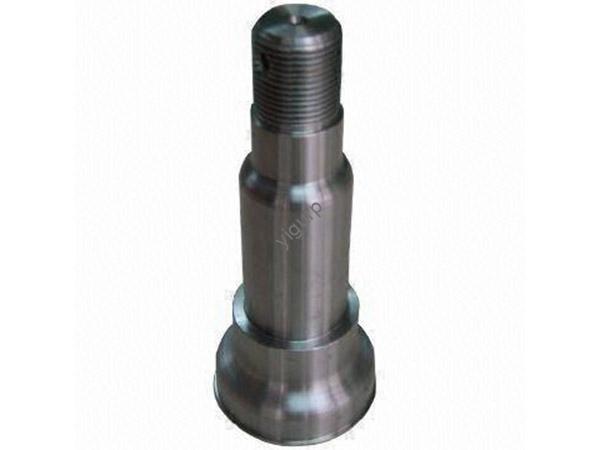
If you need a material that handles both strong acids and high temperatures—whether for chemical reactors or marine equipment—UNS N08825 Incoloy 825 is a top solution. Cet alliage nickel-fer-chrome se distingue par sa résistance totale à la corrosion et ses performances mécaniques fiables.. Ce guide détaille tout ce que vous devez savoir, de ses propriétés principales aux utilisations réelles, so you can choose the right material for your project.
1. Material Properties of UNS N08825 Incoloy 825
Incoloy 825’s strength comes from its carefully balanced composition and versatile characteristics. Let’s explore each property clearly.
1.1 Composition chimique
Every element in this alloy plays a key role in boosting corrosion resistance and strength. Below is its typical composition (by weight):
| Élément | Gamme de contenu (%) | Key Role |
|---|---|---|
| Nickel (Dans) | 38–46 | Base metal—provides ductility and protects against stress cracking |
| Fer (Fe) | 22–30 | Adds structural strength and reduces material cost |
| Chrome (Cr) | 19–23 | Enhances oxidation resistance and fights pitting in acidic liquids |
| Molybdène (Mo) | 2.5–3.5 | Boosts resistance to strong acids (like hydrochloric and sulfuric acid) |
| Cuivre (Cu) | 1.5–3,0 | Improves resistance to sulfuric acid and acidic brines |
| Carbone (C) | Max 0.05 | Minimizes carbide formation (prevents intergranular corrosion) |
| Manganèse (Mn) | Max 1.0 | Aids in manufacturing (par ex., welding and casting) |
| Silicium (Et) | Max 0.5 | Reduces oxidation at high temperatures |
| Soufre (S) | Max 0.015 | Kept low to prevent brittleness and corrosion in harsh environments |
| Niobium (Nb) | 0.6–1.2 | Stabilizes the alloy and prevents intergranular corrosion |
| Titane (De) | 0.6–1.2 | Works with niobium to enhance strength and corrosion resistance |
1.2 Propriétés physiques
These traits make Incoloy 825 easy to design with for tough industrial tasks:
- Densité: 8.14 g/cm³ (lighter than Hastelloy alloys, similar to stainless steel)
- Point de fusion: 1370–1400°C (2500–2550°F) – handles high-heat processes like welding
- Conductivité thermique: 15.1 Avec(m·K) at 20°C (68°F); increases to 22.7 Avec(m·K) at 600°C – efficient heat transfer
- Thermal Expansion Coefficient: 15.8 μm/(m·K) (20–100°C); 18.3 μm/(m·K) (20–600°C) – minimal warping when heated
- Electrical Resistivity: 112 Ω·mm²/m at 20°C – suitable for electrical components in corrosive areas
- Propriétés magnétiques: Slightly magnetic at room temperature (loses magnetism above 300°C/570°F) – works for most industrial needs
1.3 Propriétés mécaniques
Incoloy 825 balances strength and flexibility, même à des températures élevées. All values below are for the annealed (traité thermiquement) version:
| Propriété | Valeur (Room Temperature) | Value at 600°C |
|---|---|---|
| Résistance à la traction | Min 550 MPa (80 ksi) | 370 MPa (54 ksi) |
| Limite d'élasticité | Min 240 MPa (35 ksi) | 210 MPa (30 ksi) |
| Élongation | Min 30% (dans 50 mm) | 35% (dans 50 mm) |
| Dureté | Max 190 HB (Brinell) | N / A |
| Résistance à la fatigue | 220 MPa (10⁷ cycles) | 170 MPa (10⁷ cycles) |
| Résistance au fluage | Maintains strength up to 815°C (1500°F) | – |
1.4 Autres propriétés
- Résistance à la corrosion: Excellent in mixed acids (par ex., hydrochloric + sulfuric) and seawater – outperforms stainless steel and Monel 400.
- Oxidation Resistance: Resists scaling in air up to 980°C (1800°F) for short periods – ideal for furnace components.
- Stress Corrosion Cracking (SCC) Resistance: Resists SCC in chloride-rich solutions (a common issue for 316 acier inoxydable).
- Pitting Resistance: High resistance to pitting in salty or acidic brines (suitable for offshore oil rigs).
- Hot/Cold Working Properties: Easy to hot forge (at 1100–1200°C) and cold form (par ex., flexion, estampillage) – retains strength after shaping.
2. Applications of UNS N08825 Incoloy 825
Incoloy 825’s all-around performance makes it perfect for demanding industries. Voici ses utilisations les plus courantes, avec des exemples concrets:
2.1 Chemical Processing Equipment
- Use Case: A chemical plant in China uses Incoloy 825 for sulfuric acid storage tanks. The tanks have lasted 7 years with no corrosion—compared to 3 years for stainless steel tanks.
- Other Uses: Acid mixers, échangeurs de chaleur, and pipework for mixed acids.
2.2 Oil and Gas Industry
- Use Case: An offshore oil rig in the Gulf of Mexico uses Incoloy 825 for wellhead valves. The alloy resists salty seawater and high-pressure natural gas, réduisant les coûts de maintenance en 35%.
2.3 Marine Applications
- Use Case: A shipyard in South Korea uses Incoloy 825 for seawater cooling systems. The system has run for 10 years without pitting—stainless steel systems failed after 4 années.
2.4 Échangeurs de chaleur
- Use Case: A power plant in Germany uses Incoloy 825 for heat exchanger tubes. The tubes handle acidic coolant—they’ve lasted 8 années, par rapport à 5 years for carbon steel tubes.
2.5 Pharmaceuticals & Transformation des aliments
- Use Case: A pharmaceutical company in the U.S. uses Incoloy 825 for mixing tanks. The alloy is non-toxic (répond aux normes FDA) and resists corrosion from acidic drugs.
3. Manufacturing Techniques for UNS N08825 Incoloy 825
To get the best performance from Incoloy 825, manufacturers use these specialized methods:
- Fonderie: Investment casting (using a wax mold) is ideal for complex shapes (par ex., corps de vannes). The low sulfur content prevents defects during casting.
- Forgeage: Hot forging (at 1100–1200°C) shapes the alloy into strong parts like pump impellers. Cold forging (à température ambiante) is used for small components (par ex., boulons) to boost hardness.
- Soudage: Gas Tungsten Arc Welding (GTAW) is recommended. Use matching filler metals (par ex., ERNiFeCr-3) to maintain corrosion resistance. Pre-weld cleaning (to remove oils) is critical for strong welds.
- Usinage: Utiliser des outils en carbure (they stay sharp longer). Add coolant (par ex., mineral oil) to prevent overheating—Incoloy 825 can work-harden if cut too quickly.
- Traitement thermique:
- Recuit: Heat to 980–1050°C, cool rapidly (air or water) – softens the alloy for forming and restores ductility.
- Stress Relieving: Heat to 700–800°C, cool slowly – reduces internal stresses after welding or cold working.
- Traitement de surface: Passivation (using nitric acid) enhances pitting resistance. No painting is needed— the alloy’s natural surface resists rust in most environments.
4. Étude de cas: Incoloy 825 in a Chemical Reactor
A chemical company in Brazil needed a reactor to produce fertilizers. The reactor uses a mix of hydrochloric and sulfuric acid at 120°C—their old reactor (316 acier inoxydable) failed after 2 years due to corrosion.
They switched to an Incoloy 825 reactor. Here’s the result:
- Lifespan: The reactor has run for 6 years with no corrosion.
- Économies de coûts: Les coûts de maintenance ont diminué 65% (no need for frequent part replacements).
- Performance: The alloy’s even heat transfer improved fertilizer production efficiency by 12%.
This case proves why Incoloy 825 is the top choice for mixed-acid chemical processes.
5. Comparative with Other Materials
How does UNS N08825 Incoloy 825 stack up against other common materials? The table below compares key properties:
| Matériel | Résistance à la corrosion (Mixed Acids) | Résistance à la traction (MPa) | Max Service Temp (°C) | Coût (Relative) |
|---|---|---|---|---|
| Incoloy 825 | Excellent | 550 | 815 | Moyen-élevé |
| Acier inoxydable 316 | Pauvre | 515 | 870 | Faible |
| Titanium Alloy Ti-6Al-4V | Bien (chlorides) | 860 | 400 | Très élevé |
| Inconel 625 | Excellent (high temps) | 930 | 980 | Haut |
| Hastelloy C22 | Excellent (acides) | 690 | 650 | Haut |
| Monel 400 | Bien (seawater) | 550 | 480 | Moyen |
| Acier au carbone | Very Poor | 400 | 425 | Très faible |
Key Takeaways:
- Incoloy 800 outperforms stainless steel and carbon steel in mixed-acid corrosion resistance.
- It’s more affordable than titanium alloys and Inconel, making it a cost-effective choice for heat-intensive tasks.
- Inconel 625 works better at extreme temps, but Incoloy 825 offers better value for applications up to 815°C.
Yigu Technology’s Perspective
Chez Yigu Technologie, we recommend UNS N08825 Incoloy 825 for clients in chemical processing, pétrole et gaz, et industries maritimes. Its all-around corrosion resistance and high-temperature stability make it a reliable, long-lasting solution. Our team provides custom machining and heat treatment for Incoloy 825 composants, ensuring they meet strict industry standards. For projects needing a balance of acid resistance and heat performance, Incoloy 825 delivers unmatched value.
FAQ
1. Can UNS N08825 Incoloy 825 handle mixed acids?
Oui! It’s designed for this—even blends of hydrochloric and sulfuric acid won’t corrode it. This makes it way better than stainless steel or carbon steel for mixed-acid tasks.
2. Is Incoloy 825 suitable for marine heat exchangers?
Absolument. Its highpitting resistance and seawater corrosion resistance make it ideal for marine heat exchangers—outperforming materials like Monel 400 in long-term use.
3. What’s the typical lifespan of Incoloy 825 parts in chemical processing?
In harsh mixed-acid environments, Incoloy 825 parts last 6–10 years—2–3 times longer than stainless steel parts. Proper maintenance (par ex., recuit) can extend this lifespan even further.