
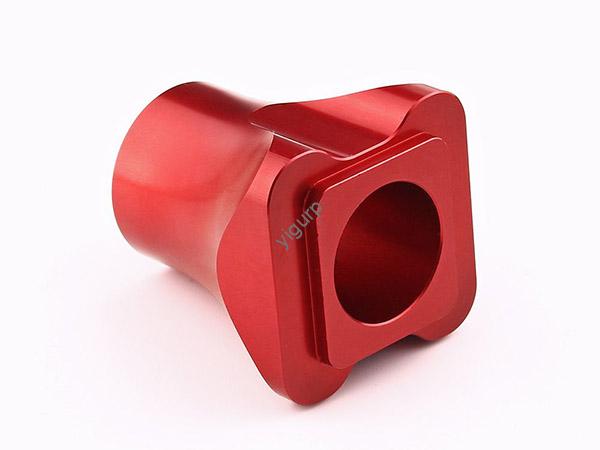
Si vous avez du mal avec des matériaux qui échouent à haute température, produits chimiques corrosifs, or harsh industrial settings—UNS N06600 nickel alloy (également connu sous le nom d'Inconel® 600) est la solution. This nickel-chromium alloy delivers unmatchedstabilité à haute température etrésistance à la corrosion, ce qui en fait un incontournable de l'aérospatiale, traitement chimique, et industries nucléaires. Dans ce guide, nous allons décomposer ses propriétés clés, utilisations réelles, étapes de fabrication, and how it compares to alternatives—so you can build components that withstand the toughest conditions.
1. Material Properties of UNS N06600 Nickel Alloy
UNS N06600’s performance stems from its high nickel content (for toughness and heat resistance) et du chrome (pour la protection contre la corrosion). Let’s explore its properties in detail:
1.1 Chemical Composition
Every element in UNS N06600 is engineered to excel in extreme environments—no compromises on heat or corrosion resistance. Below is its standard composition (per ASTM B168):
| Element | Content Range (%) | Key Role |
|---|---|---|
| Nickel (Dans) | 72.0 – 79.0 | The base element—providesstabilité à haute température et la ténacité; resists chloride stress corrosion cracking. |
| Chromium (Cr) | 14.0 – 17.0 | Deliversrésistance à la corrosion and oxidation protection; forms a protective Cr₂O₃ layer at high temperatures. |
| Fer (Fe) | 6.0 – 10.0 | Enhances strength and workability without reducing nickel’s heat resistance. |
| Carbon (C) | ≤ 0.15 | Boosts high-temperature strength; kept low to avoid carbide precipitation (which can cause brittleness). |
| Manganese (Mn) | ≤ 1.00 | Improves weldability and formability; minimizes brittleness. |
| Silicium (Et) | ≤ 0.50 | Enhances oxidation resistance at high temperatures; controls melting characteristics. |
| Sulfur (S) | ≤ 0.015 | Ultra-low to avoid hot cracking during welding and reduce corrosion susceptibility. |
| Cuivre (Cu) | ≤ 0.50 | A minor impurity; no significant impact on performance. |
| Titane (De) | ≤ 0.10 | Minimisé (unlike other super-alloys) to prioritize general corrosion resistance. |
| Aluminium (Al) | ≤ 0.10 | A trace element; no contribution to heat or corrosion properties. |
1.2 Physical Properties
These properties reflect UNS N06600’s ability to perform in extreme heat and corrosion—critical for industrial and aerospace applications. All values are measured at room temperature unless noted:
- Densité: 8.47 g/cm³ (higher than steel, due to high nickel content).
- Point de fusion: 1370 – 1425 °C (high enough to withstand furnace components and aerospace engine parts).
- Conductivité thermique: 15.1 W/(m·K) (à 100 °C); 21.0 W/(m·K) (à 600 °C)—low enough to retain heat in high-temperature components.
- Coefficient de dilatation thermique: 13.1 × 10⁻⁶/°C (20–100 °C); 16.5 × 10⁻⁶/°C (20–600 °C)—stable expansion for precision parts.
- Specific Heat Capacity: 450 J/(kg·K) (à 25 °C)—efficient at absorbing heat without rapid temperature changes.
- Conductivité électrique: 9.6 × 10⁶ S/m (à 20 °C)—lower than copper, but suitable for electrical components in harsh environments.
1.3 Propriétés mécaniques
UNS N06600’s mechanical properties are optimized for strength at high temperatures and toughness at room temperature. Below are typical values (annealed condition, per ASTM B168):
| Propriété | Valeur typique (Annealed) | Test Standard | Why It Matters |
|---|---|---|---|
| Dureté (HRB) | 80 – 95 | ASTM E18 | Balanced hardness—tough enough for impact, strong enough for high-pressure parts. |
| Résistance à la traction | ≥ 550 MPa | ASTM E8 | Handles high pressure in chemical reactors and heat exchangers. |
| Yield Strength (0.2% offset) | ≥ 240 MPa | ASTM E8 | Resists permanent deformation at high temperatures (jusqu'à 600 °C). |
| Élongation (dans 50 mm) | ≥ 30% | ASTM E8 | High ductility—allows forming into complex shapes (par ex., furnace tubes). |
| Impact Toughness (Charpy V-notch) | ≥ 100 J (à 20 °C) | ASTM E23 | Excellent toughness—prevents brittle failure in cold or shock-loaded parts. |
| Résistance au fluage | 100 MPa at 700 °C (10⁵ hours) | ASTM E139 | Maintains strength under long-term high-temperature stress (critical for turbine parts). |
| Fatigue Strength | ~250 MPa (10⁷ cycles) | ASTM E466 | Resists failure from repeated thermal or mechanical stress. |
1.4 Other Properties
- Résistance à la corrosion: Excellent. Résiste:
- Oxidation up to 1095 °C (grâce à la couche d'oxyde de chrome).
- Corrosive chemicals (acide sulfurique, nitric acid, seawater).
- Chloride stress corrosion cracking (superior to many stainless steels).
- Oxidation Resistance: Outstanding. Forms a dense Cr₂O₃ layer that prevents further oxidation at 800–1095 °C—ideal for furnace components.
- Weldability: Very Good. Can be welded via TIG, MIG, or shielded metal arc welding (SMAW); preheating is not required (reduces manufacturing complexity).
- Usinabilité: Équitable. High toughness and work hardening require sharp carbide tools and slow cutting speeds (10–20 m/min for turning); use sulfurized cutting fluids to reduce friction.
- Formabilité: Bien. Can be cold-formed (rolling, flexion) or hot-formed (at 980–1150 °C) into tubes, feuilles, or complex shapes.
2. Applications of UNS N06600 Nickel Alloy
UNS N06600’s ability to withstand heat and corrosion makes it indispensable in industries where failure is costly. Here are its most common uses, avec des exemples réels:
2.1 Composants aérospatiaux
- Exemples: Turbine engine combustion chambers, systèmes d'échappement, and aircraft fuel lines.
- Why it works: Stabilité à haute température (jusqu'à 1095 °C) resists engine heat, while corrosion resistance handles jet fuel chemicals. Un États-Unis. aerospace manufacturer used UNS N06600 for turbine combustion chambers—component life increased by 300% contre. acier inoxydable.
2.2 Chemical Processing Equipment
- Exemples: Échangeurs de chaleur, reaction vessels, and piping for processing sulfuric acid, nitric acid, or chlorinated solvents.
- Why it works: Corrosion resistance prevents chemical attack, while creep resistance handles long-term high-temperature operation. A German chemical plant used UNS N06600 heat exchangers—maintenance costs dropped by 60% (no more corrosion-related leaks).
2.3 Nuclear Reactors
- Exemples: Fuel cladding, reactor vessels, and control rod components.
- Why it works: Resists radiation-induced embrittlement and corrosion from reactor coolants (par ex., eau, liquid sodium). A French nuclear operator used UNS N06600 for fuel cladding—no failures in 15 years of operation.
2.4 Marine and Oil & Gas Applications
- Exemples: Offshore platform piping, seawater heat exchangers, and oil well casing (high-temperature reservoirs).
- Why it works: Resists seawater corrosion and sulfide stress cracking (common in oil wells). A Norwegian offshore company used UNS N06600 piping—corrosion rates dropped to 0.01 mm/year (contre. 0.1 mm/year for stainless steel).
2.5 Furnace and Heat Treatment Components
- Exemples: Furnace liners, heating elements, and annealing baskets (used in metal heat treatment).
- Why it works: Oxidation resistance withstands furnace heat (jusqu'à 1095 °C), while toughness handles thermal cycling. A Japanese heat treatment shop used UNS N06600 annealing baskets—basket life increased from 6 mois à 3 années.
3. Manufacturing Techniques for UNS N06600 Nickel Alloy
UNS N06600’s manufacturing requires careful handling to preserve its heat and corrosion properties. Voici une ventilation étape par étape:
- Fusion:
- Matières premières (high-purity nickel, chrome, iron) are melted in a vacuum induction furnace (VIF) or argon-oxygen decarburization (AOD) furnace. Vacuum melting ensures low impurity levels (critical for corrosion resistance).
- Casting/Forging:
- Molten alloy is cast into ingots or continuous cast into slabs/billets.
- Ingots are hot-forged at 980–1150 °C to form bars, tubes, or sheets—forging improves grain structure and eliminates internal defects.
- Rolling/Forming:
- Hot rolling (at 950–1100 °C) produces sheets, assiettes, or strips.
- Cold rolling (room temperature) creates thinner sheets with tighter tolerances; intermediate annealing (at 900–1000 °C) reduces work hardening.
- Traitement thermique:
- Solution Annealing: The most common treatment—heat to 1050–1150 °C, hold 30–60 minutes, water quench. This dissolves carbides, restores ductility, and maximizes corrosion resistance.
- Stress Relieving: Heat to 650–750 °C, hold 1–2 hours, air cool. Reduces residual stresses from welding or forming (prevents cracking in corrosive environments).
- Usinage:
- Use carbide tools with positive rake angles to minimize work hardening.
- Cutting speeds: 10–15 m/min (tournant), 5–10 m/min (fraisage); taux d'avance: 0.1–0.2 mm/rev.
- Use sulfurized mineral oil or water-soluble cutting fluids to cool the tool and workpiece.
- Soudage:
- Recommended methods: TIG (best for precision), MIG, SMAW.
- Filler metal: ERNiCr-3 (matches UNS N06600’s composition).
- Post-weld heat treatment: Solution anneal (if corrosion resistance is critical) or stress relieve (pour pièces de structure).
- Traitement de surface (Facultatif):
- Pickling (nitric-hydrofluoric acid bath) removes oxide scale from welding/heat treatment—restores the chromium oxide layer.
- Passivation (nitric acid bath) enhances corrosion resistance for marine or chemical applications.
4. Étude de cas: UNS N06600 in Chemical Plant Heat Exchangers
Un États-Unis. chemical plant faced a crisis: leur 316 stainless steel heat exchangers for sulfuric acid processing leaked every 6–12 months due to corrosion, causing costly downtime and environmental risks. They switched to UNS N06600, and here’s what happened:
- Processus: UNS N06600 tubes (25 mm diamètre, 1.5 mm wall) were solution annealed (1100 °C, water quench), welded to carbon steel headers with ERNiCr-3 filler, and pickled to remove oxide scale.
- Résultats:
- Corrosion rate dropped from 0.12 mm/year (acier inoxydable) à 0.008 mm/year (UNS N06600)—heat exchangers operated for 8 years without leaks.
- Downtime reduced by 95%—no more unplanned shutdowns for repairs.
- Maintenance costs fell by $200,000/year (pièces de rechange + labor savings).
- Why it works: UNS N06600’s chromium content resisted sulfuric acid corrosion, while its nickel base prevented stress cracking—solving the plant’s core reliability issue.
5. UNS N06600 vs. Other High-Performance Alloys
How does UNS N06600 compare to alternatives for extreme environments? Let’s evaluate key properties:
| Matériel | Nickel Content (%) | Résistance à la corrosion | High-Temp Stability (Max °C) | Résistance à la traction (MPa) | Coût (contre. UNS N06600) | Idéal pour |
|---|---|---|---|---|---|---|
| UNS N06600 | 72 – 79 | Excellent | 1095 | ≥ 550 | 100% | General extreme environments (chaleur + corrosion) |
| 316 Acier inoxydable | 10 – 14 | Bien | 870 | ≥ 515 | 30% | Mild corrosion/heat (not extreme) |
| Inconel 718 (NOUS N07718) | 50 – 55 | Very Good | 1204 | ≥ 1240 | 200% | High-strength aerospace (turbines) |
| Hastelloy C276 (UNS N10276) | 57 – 63 | Supérieur | 1010 | ≥ 690 | 300% | Severe chemicals (chlorides, acides) |
| Titanium Grade 5 | 0 | Very Good | 400 | ≥ 860 | 250% | Lightweight aerospace (low heat) |
Key takeaway: UNS N06600 offers the best balance of cost, résistance à la corrosion, and high-temperature performance for general extreme environments. It’s cheaper than Inconel 718/Hastelloy C276 and far more durable than 316 acier inoxydable.
Yigu Technology’s View on UNS N06600 Nickel Alloy
Chez Yigu Technologie, UNS N06600 is our top recommendation for clients in chemical processing, aérospatial, et industries nucléaires. Its ability to handle both high heat and corrosion solves the biggest pain point: frequent component failure in extreme conditions. We leverage its weldability and formability to create custom parts—from heat exchanger tubes to aerospace engine components—often pairing it with solution annealing to maximize durability. For businesses prioritizing long-term reliability over upfront cost, UNS N06600 isn’t just a material—it’s an investment in avoiding costly downtime and repairs.
FAQ About UNS N06600 Nickel Alloy
1. Can UNS N06600 be used in cryogenic environments (par ex., liquid nitrogen, -196 °C)?
Oui! UNS N06600 retains excellent toughness at cryogenic temperatures—its impact toughness remains ≥ 80 J at -196 °C. It’s often used in cryogenic storage tanks or rocket fuel lines (liquid oxygen).
2. Is UNS N06600 susceptible to any type of corrosion?
It’s highly resistant to most corrosion, but it can suffer fromcarburization in high-carbon, low-oxygen environments (par ex., coal-fired furnace atmospheres). Pour éviter cela, use a protective coating (par ex., alumine) or control the atmosphere’s carbon content.
3. How does UNS N06600’s cost compare to stainless steel, and is it worth the premium?
UNS N06600 costs ~3x more than 316 stainless steel upfront. But it’s worth it for extreme environments: it lasts 5–10x longer, reduces downtime, and avoids corrosion-related failures. For high-value applications (par ex., nucléaire, aérospatial), the ROI typically comes within 1–2 years.