
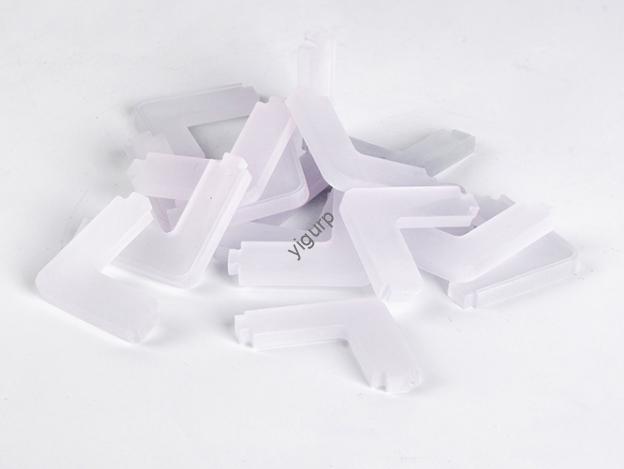
If you’re a product engineer or procurement professional working on parts that need résistance à la corrosion, retardateur de flamme, et faible friction, Téflon (polytétrafluoroéthylène, PTFE) est probablement votre matériel de prédilection. But turning Teflon into high-precision prototypes requires mastering the Teflon CNC processing prototype process. Ce guide détaille chaque étape, conseil technique, and real-world example to help you avoid common pitfalls and get perfect results.
1. Conception & Programmation: Lay the Foundation for Precision
The first step in the Teflon CNC processing prototype process is creating a detailed 3D model and translating it into machine-readable code. Here’s how to do it right:
- 3D Modeling with CAD Software: Use tools like SolidWorks or AutoCAD to design the prototype. Par exemple, a medical device manufacturer we worked with needed a Teflon valve prototype—their CAD model included 0.1mm tolerance for the valve’s inner hole to ensure leak-proof performance.
- CAM Programming for Teflon’s Unique Traits: Teflon has low hardness (Rive D 50-60) and is easy to wear, so your CAM software (par ex., Mastercam) must account for this. Nous recommandons:
- Cutting speed: 150-250 m/mon (faster than metal to reduce material melting)
- Vitesse d'alimentation: 50-100 mm/min (slower to avoid tool slipping)
- Tool path: Climb milling to minimize Teflon deformation
Étude de cas: A chemical equipment firm once skipped adjusting feed rates for Teflon—their first prototype had a surface roughness of Ra 3.2 µm (way above the required Ra 0.8 µm). After tweaking the CAM program to slow the feed rate to 70 mm/min, they achieved Ra 0.6 μm on the second try.
2. Équipement & Sélection d'outils: Choose Tools That Work for Teflon
Not all CNC machines or tools are suitable for Teflon. The wrong choice can ruin prototypes and waste time. Below is a comparison of tools and equipment to help you decide:
| Item | Recommended Options | Raisonnement |
| CNC Machine | High-rigidity vertical machining centers | Teflon is soft—rigid machines prevent vibration (which causes dimension errors). |
| Outils de coupe | Acier rapide (HSS) or carbide end mills | HSS stays sharp for Teflon; carbide resists wear for long runs. |
| Tool Flute Count | 4-flute or 6-flute tools | More flutes distribute cutting force evenly, reducing Teflon melting. |
Pro Tip: For thin-walled Teflon prototypes (par ex., 0.5mm d'épaisseur), use a 6-flute carbide tool with a polished surface—it reduces friction and avoids warping.
3. Usinage CNC: Step-by-Step Execution
Once design, programmation, and tooling are set, it’s time to machine. Follow these two key stages, plus cooling best practices, for success:
3.1 Surface Preparation & Fixation
- Clean Teflon sheets with isopropyl alcohol to remove oil or dust—this prevents tool slippage.
- Use vacuum chucks or soft-jaw clamps to hold the material. Par exemple, when machining a Teflon gasket prototype (100x100x2mm), a vacuum chuck keeps the sheet flat without leaving indentations.
3.2 Roughing vs. Finition: Différences clés
| Stage | Depth of Cut | Feed Speed | But |
| Roughing | 1-3 mm | 80-120 mm/min | Remove excess material quickly |
| Finition | 0.1-0.3 mm | 40-70 mm/min | Ensure dimension accuracy (±0,02 mm) |
3.3 Refroidissement & Lubrication: Avoid Teflon Overheating
Teflon melts at 327°C, so constant cooling is critical. Utiliser water-based coolants (not organic solvents—they release toxic gases when heated). We suggest a coolant flow rate of 5-8 L/min, directed at the tool-workpiece interface.
Real Example: An automotive client was machining Teflon bushings and noticed the material turning brown (a sign of overheating). By increasing coolant flow to 7 L/min and angling the nozzle closer to the cut, they eliminated discoloration and improved bushing roundness by 90%.
4. Contrôle de qualité & Post-traitement: Ensure Prototype Performance
Even the best machining needs checks and tweaks. Here’s how to guarantee your Teflon prototype meets standards:
- Quality Checks After Each Stage:
- Use a coordinate measuring machine (MMT) pour vérifier les dimensions (par ex., diamètre du trou, longueur).
- Test surface roughness with a profilometer—aim for Ra 0.4-1.6 μm for most industrial uses.
- Conduct functional tests: For a Teflon seal prototype, test it under 10 bar pressure to check for leaks.
- Post-Processing Options:
- Sablage: For a matte finish (common in food-grade Teflon parts).
- Sérigraphie: Add part numbers or logos (used by electronics clients for Teflon insulators).
- Polissage: Achieve a glossy surface (ideal for medical Teflon components).
Yigu Technology’s View on Teflon CNC Processing Prototype Process
Chez Yigu Technologie, we’ve supported over 500 clients in optimizing their Teflon CNC processing prototype process. We believe the biggest challenge is balancing efficiency and precision—many teams rush roughing, leading to finishing errors. Our solution? Custom CAM program templates for Teflon, which pre-set cutting parameters based on part thickness and shape. This cuts prototype lead time by 30% while keeping defect rates below 2%. We also recommend pairing CNC machining with post-processing like cryogenic deburring to enhance Teflon’s wear resistance.
FAQ
- What’s the typical lead time for a Teflon CNC prototype?
Pour les pièces simples (par ex., joints, bagues), le délai de livraison est 3-5 jours. For complex shapes (par ex., multi-hole valves), c'est 7-10 jours (including design and quality checks).
- Can Teflon CNC prototypes be used for high-temperature applications?
Yes—Teflon retains its properties up to 260°C. We’ve made prototypes for aerospace clients that operate in 200°C environments with no performance issues.
- How much does a Teflon CNC prototype cost?
Costs depend on size and complexity: A small gasket (50x50mm) frais \(50-\)80, tandis qu'un grand, complex part (200x200mm with 10+ trous) frais \(200-\)350.