
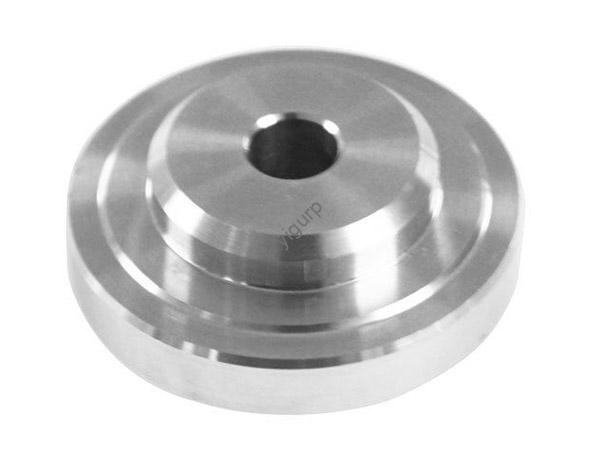
L'acier à outils T10 est un acier à haute teneur en carbone, low-alloy tool steel renowned for its exceptional dureté, résistance à l'usure, et rentabilité - caractéristiques dues à sa teneur élevée en carbone et à ses ajouts d'alliages contrôlés (chrome, vanadium). Contrairement aux aciers rapides (HSS) comme T1, Le T10 donne la priorité à l'abordabilité et à la simplicité pour les applications d'outils à contraintes moyennes, ce qui en fait un excellent choix pour la fabrication d'outils, génie mécanique, fabrication automobile, and small-scale industrial production where extreme heat resistance is not required. Dans ce guide, nous allons décomposer ses propriétés clés, utilisations réelles, procédés de fabrication, et comment il se compare à d'autres matériaux, helping you select it for projects that demand durability without excessive cost.
1. Key Material Properties of T10 Tool Steel
T10’s performance lies in its high-carbon composition and minimal alloying, which balance hardness, résistance à l'usure, and workability for medium-duty tool applications.
Composition chimique
T10’s formula focuses on hardness and wear resistance, with controlled alloys to avoid brittleness:
- Carbone (C): 0.95-1.05% (high enough to form hard iron carbides, critique pour résistance à l'usure and post-heat-treatment hardness)
- Manganèse (Mn): 0.30-0.60% (modest addition enhances hardenability and tensile strength without compromising toughness)
- Silicium (Et): 0.15-0.35% (aids deoxidation during steelmaking and stabilizes mechanical properties across batches)
- Soufre (S): ≤0.030% (ultra-low to maintain dureté and avoid cracking during heat treatment or tool use)
- Phosphore (P.): ≤0.030% (strictly controlled to prevent cold brittleness, essential for tools used in low-temperature environments)
- Chrome (Cr): 0.10-0.30% (trace addition improves hardenability and résistance à la corrosion, ensuring uniform heat treatment results)
- Vanadium (V): 0.05-0.15% (optional, refines grain size, améliore impact toughness, and reduces carbide segregation)
Propriétés physiques
| Propriété | Typical Value for T10 Tool Steel |
| Densité | ~7,85 g/cm³ (consistent with standard carbon steels, no extra weight penalty for tool designs) |
| Point de fusion | ~1430-1480°C (suitable for hot working and standard heat treatment processes) |
| Conductivité thermique | ~40 W/(m·K) (at 20°C—higher than HSS like T1, enabling better heat dissipation in medium-speed cutting) |
| Specific heat capacity | ~0.48 kJ/(kg·K) (at 20°C) |
| Electrical resistivity | ~180 Ω·m (at 20°C—higher than low-carbon steels, limiting use in electrical applications) |
| Magnetic properties | Ferromagnétique (retains magnetism in all states, simplifying non-destructive testing for tool defects) |
Propriétés mécaniques
After standard heat treatment (trempe et revenu), T10 delivers reliable performance for medium-duty tools:
- Résistance à la traction: ~1800-2000 MPa (high enough for medium-cutting-force applications like milling mild steel or wood)
- Yield strength: ~1600-1800 MPa (ensures tools resist permanent deformation under moderate machining loads)
- Dureté (Rockwell C): 58-62 CRH (after heat treatment—adjustable: 58-59 HRC for tough punches, 61-62 HRC for wear-resistant cutting tools)
- Ductilité:
- Élongation: ~6-10% (dans 50 mm—moderate, sufficient for shaping into simple tool blanks without cracking)
- Reduction of area: ~15-25% (indicates basic toughness for medium-stress use, avoiding sudden breakage in normal operation)
- Impact toughness (Charpy V-notch, 20°C): ~15-25 J/cm² (lower than HSS but sufficient for non-high-impact tools like lathe tools or small dies)
- Fatigue resistance: ~700-800 MPa (at 10⁷ cycles—critical for high-volume tools like production-line punches or reamers)
- Résistance à l'usure: Very Good (high carbon carbides resist abrasion 2-3x better than low-carbon steels, extending tool life for medium-speed cutting)
- Red hardness: Modéré (retains ~50 HRC at 300°C—suitable for medium-speed cutting (200-300 m/min for mild steel), not ideal for high-temperature applications)
Autres propriétés
- Résistance à la corrosion: Faible (minimal chromium addition; requires surface treatment like oiling or painting for outdoor use or wet machining)
- Weldability: Pauvre (high carbon content causes cracking; preheating to 300-400°C and post-weld tempering are mandatory for repairs, making it impractical for most welded tools)
- Usinabilité: Équitable (annealed state, HB 180-220, requires high-speed steel (HSS) or carbide tools for machining; post-heat-treatment grinding is needed for precision edges (hardening to 58-62 HRC makes it unmachinable with standard tools))
- Formabilité: Modéré (hot forming is recommended for complex shapes—heated to 1050-1100°C for forging into tool blanks; cold forming is limited due to high hardness in annealed state)
- Stabilité thermique: Modéré (loses hardness above 300°C—avoid high-temperature applications like hot-forming dies or high-speed cutting of hard metals)
2. Real-World Applications of T10 Tool Steel
T10’s balance of hardness, résistance à l'usure, and cost makes it a staple in industries where medium-duty tool performance and affordability are key. Voici ses utilisations les plus courantes:
Fabrication d'outils
- Outils de coupe: Medium-speed cutting tools for machining mild steel (par ex., 1018 acier au carbone) or wood use T10—résistance à l'usure poignées 300+ pièces par outil (contre. 150+ for low-carbon steels), reducing tool replacement costs.
- Milling cutters: Small end mills for light-duty milling of aluminum or plastic use T10—dureté (59-60 CRH) maintains sharpness, and low cost suits small-batch production.
- Lathe tools: Turning tools for machining brass or copper components (par ex., plumbing fittings) use T10—résistance à la traction withstands moderate cutting forces, and fatigue resistance ensures 8,000+ turns per tool.
- Poinçons: Small punches for stamping thin metal sheets (par ex., 1-3 mm steel) use T10—dureté resists minor impacts, and wear resistance handles 100,000+ stampings.
- Alésoirs: Medium-tolerance reamers (±0,005mm) for metalworking (par ex., electrical junction box holes) use T10—meulage de précision creates sharp edges, and wear resistance maintains accuracy over 12,000+ reams.
Exemple de cas: A small machine shop used low-carbon steel for woodworking lathe tools but faced tool dulling after 200 workpieces. Switching to T10 extended tool life to 500 workpieces (150% longer)—cutting sharpening time by 60% and saving $12,000 annually in labor costs.
Génie mécanique
- Arbres: Petit, high-wear shafts for household appliances (par ex., blender blades or vacuum cleaner rollers) use T10—résistance à l'usure reduces abrasion from dust or debris, extending shaft life by 2x.
- Engrenages: Low-torque gears for small machinery (par ex., conveyor systems or office equipment) use T10—dureté (60-61 CRH) reduces tooth wear, and cost-effectiveness suits high-volume production.
- Machine parts: High-wear components (par ex., bearing races for small motors) use T10—résistance à l'usure extends part life, reducing maintenance downtime for small industrial machines.
- Équipement industriel: Cutting blades for paper or cardboard processing use T10—sharpness retention reduces blade replacement frequency by 50%, improving production efficiency.
Industrie automobile
- Composants du moteur: Non-high-temperature engine parts (par ex., oil pump gears or small sensor housings) use T10—résistance à l'usure reduces component degradation, and cost suits low-budget automotive lines.
- Pièces de transmission: Small transmission gears for light vehicles (par ex., scooters or small cars) use T10—résistance à la traction handles moderate torque loads, and fatigue resistance ensures 100,000+ km of use.
- Axles: Small axles for lightweight vehicles (par ex., electric bikes or golf carts) use T10—yield strength (1600-1800 MPa) resists bending under light loads, reducing maintenance costs.
- Suspension components: Small suspension brackets for light vehicles use T10—dureté resists wear from road debris, and cost-effectiveness suits mass production.
Other Applications
- Moules: Cold-forming molds for plastic parts (par ex., toy components or small containers) use T10—résistance à l'usure poignées 5,000+ forming cycles, and low cost suits small-batch mold production.
- Meurt: Small cold-heading dies for fasteners (par ex., small screws or rivets) use T10—dureté (61-62 CRH) creates precise fastener heads, and cost-effectiveness reduces production expenses.
- Woodworking tools: Handheld woodworking tools (par ex., chisels or hand planes) use T10—sharpness retention improves user efficiency, and affordability suits hobbyists or small woodshops.
- Agricultural machinery: Petits composants (par ex., cutter blades for small harvesters or pruning tools) use T10—résistance à l'usure handles plant debris, and cost suits agricultural equipment on a budget.
3. Manufacturing Techniques for T10 Tool Steel
Producing T10 requires straightforward processes to control carbon content and optimize heat treatment for hardness—no specialized alloy handling (unlike HSS), making it cost-effective to manufacture. Here’s the detailed process:
1. Sidérurgie
- Four à arc électrique (AEP): Primary method—scrap steel, carbone, and trace alloys (chrome, vanadium) are melted at 1550-1650°C. Real-time sensors monitor chemical composition to keep carbon (0.95-1.05%) within strict ranges—critical for hardness and wear resistance.
- Four à oxygène de base (BOF): For large-scale production—molten iron from a blast furnace is mixed with scrap steel; oxygen adjusts carbon content. Alloys are added post-blowing to avoid oxidation, ensuring precise control over trace elements.
- Continuous casting: Molten steel is cast into slabs or billets (100-250 mm d'épaisseur) via a continuous caster—fast and consistent, ensuring uniform carbon distribution and minimal internal defects.
2. Travail à chaud
- Hot rolling: Slabs/billets are heated to 1050-1100°C and rolled into bars, assiettes, or tool blanks (par ex., 30×30 mm bars for punches or reamers). Hot rolling refines grain structure and shapes T10 into standard tool forms, while avoiding carbon segregation.
- Hot forging: Heated steel (1000-1050°C) is pressed into simple tool shapes (par ex., lathe tool blanks or punch heads) using hydraulic presses—improves material density and aligns grain structure, enhancing toughness.
- Extrusion: Heated steel is pushed through a die to create long, uniform shapes (par ex., reamer blanks or small cutter bars)—ideal for high-volume tool production.
- Recuit: After hot working, steel is heated to 750-800°C for 2-4 heures, slow-cooled to 500°C. Reduces hardness to HB 180-220, making it machinable and relieving internal stress from rolling/forging.
3. Travail à froid (Limité, for Precision)
- Cold drawing: For small-diameter tools (par ex., small drill bits or thin punches), cold drawing pulls annealed steel through a die at room temperature to reduce diameter and improve dimensional accuracy—enhances surface finish (Râ 1.0 µm) but requires post-drawing annealing to retain machinability.
- Usinage de précision: CNC mills or grinders shape annealed T10 into tool blanks (par ex., cutter bodies or punch shafts)—HSS tools work for basic machining; carbide tools are recommended for tighter tolerances (±0,01 mm); machining is limited to pre-hardening steps (post-hardening grinding is needed for final precision).
4. Traitement thermique (Key to T10’s Performance)
- Trempe: Heated to 780-820°C (austenitizing) pour 20-40 minutes (shorter than HSS, as high carbon dissolves faster), quenched in water or oil. Hardens T10 to 63-65 HRC—water quenching maximizes hardness but increases distortion; oil quenching reduces distortion (dureté 60-62 CRH) for precision tools.
- Trempe: Reheated to 180-220°C for 1-2 heures, air-cooled. Balances dureté and toughness—avoids over-tempering (which reduces wear resistance); higher tempering (250-300°C) lowers hardness to 58-60 HRC for tools needing extra toughness (par ex., coups de poing).
- Durcissement superficiel: Facultatif, for extreme wear applications—low-temperature nitriding (500-550°C) forms a 3-5 μm nitride layer, boosting wear resistance by 25% (ideal for cutting tools or die edges).
- Stress relief annealing: Applied after machining—heated to 550-600°C for 1 heure, slow-cooled. Reduces residual stress from cutting, preventing tool warping during quenching.
5. Traitement de surface & Finition
- Affûtage: Post-heat-treatment grinding with aluminum oxide wheels refines tool edges to ±0.005 mm tolerances—ensures sharp, consistent cutting surfaces for tools like reamers or lathe tools.
- Oiling: Light oil coating is applied to prevent rust for storage or indoor use—simple and cost-effective, ideal for hand tools or small dies.
- Peinture: Spray painting is used for outdoor tools (par ex., agricultural blades)—protects against mild corrosion, extending service life by 1-2 années.
4. Étude de cas: T10 Tool Steel in Small-Batch Punch Production
A small hardware manufacturer used low-alloy steel for small screw punches (estampillage 2 mm steel sheets) but faced two issues: punch wear after 50,000 stampings and high tool costs. Switching to T10 delivered transformative results:
- Tool Life Extension: T10’s résistance à l'usure extended punch life to 150,000 stampings (200% longer)—cutting punch replacement frequency by 67% and saving $8,000 annually in tool costs.
- Rentabilité: T10’s material cost was 30% lower than low-alloy steel, and simpler manufacturing (no complex heat treatment) reduced production time by 20%—saving an additional $4,000 annuellement.
- Quality Improvement: T10’s consistent dureté (60-61 CRH) reduced stamping defects (par ex., bavures) par 80%, lowering quality control rejects and improving customer satisfaction.