
L'acier à outils T1 est un acier à haute teneur en carbone, acier rapide à base de tungstène (HSS) réputé pour son caractère exceptionnel résistance à l'usure, dureté rouge, et stabilité thermique—traits driven by its alloy-rich composition (tungstène, chrome, vanadium) et un traitement thermique précis. Contrairement aux aciers à outils faiblement alliés, Le T1 excelle dans les applications de coupe à grande vitesse et d'outils robustes, ce qui en fait un excellent choix pour la fabrication d'outils, génie mécanique, fabrication automobile, and mold production where extreme durability and heat resistance are critical. Dans ce guide, nous allons décomposer ses propriétés clés, utilisations réelles, procédés de fabrication, et comment il se compare à d'autres matériaux, vous aidant à le sélectionner pour les projets qui exigent des performances sans compromis.
1. Key Material Properties of T1 Tool Steel
T1’s performance lies in its optimized alloy composition and heat-treatable nature, which balance hardness, dureté, and heat resistance for high-stress, applications à haute température.
Composition chimique
T1’s formula prioritizes high-speed cutting performance and wear resistance, with strict ranges for key alloying elements:
- Carbone (C): 0.70-0.80% (high enough to form hard carbides with tungsten/vanadium, critique pour résistance à l'usure)
- Manganèse (Mn): 0.15-0.40% (modest addition enhances hardenability without compromising thermal stability)
- Silicium (Et): 0.20-0.40% (aids deoxidation during steelmaking and stabilizes high-temperature mechanical properties)
- Soufre (S): ≤0,030% (ultra-faible à entretenir dureté and avoid cracking during heat treatment or high-speed cutting)
- Phosphore (P.): ≤0,030% (strictement contrôlé pour éviter la fragilité au froid, essential for tools used in low-temperature environments)
- Chrome (Cr): 3.75-4.50% (enhances hardenability and résistance à la corrosion, garantissant des résultats de traitement thermique uniformes)
- Molybdène (Mo): ≤0.60% (trace addition boosts red hardness and fatigue resistance for high-speed applications)
- Vanadium (V): 1.00-1.50% (affine la taille des grains, améliore résistance aux chocs, and forms ultra-hard vanadium carbides for wear resistance)
- Tungstène (W): 17.50-19.00% (élément central pour dureté rouge—retains hardness at 600°C+ during high-speed cutting, avoiding softening)
Propriétés physiques
| Propriété | Typical Value for T1 Tool Steel |
| Densité | ~8.70 g/cm³ (higher than low-alloy steels, due to tungsten content—no impact on tool performance for most applications) |
| Point de fusion | ~1420-1480°C (lower than pure metals but suitable for hot working and heat treatment) |
| Conductivité thermique | ~25 W/(m·K) (at 20°C—lower than carbon steels, but sufficient for heat dissipation during cutting) |
| Capacité thermique spécifique | ~0.45 kJ/(kg·K) (à 20°C) |
| Résistivité électrique | ~200 Ω·m (at 20°C—higher than low-alloy steels, limiting use in electrical applications) |
| Propriétés magnétiques | Ferromagnétique (conserve le magnétisme dans tous les états, simplifying non-destructive testing for tool defects) |
Propriétés mécaniques
Après traitement thermique standard (trempe et revenu), T1 delivers industry-leading performance for high-speed cutting and heavy-duty tools:
- Résistance à la traction: ~2400-2600 MPa (exceptionally high, ideal for high-cutting-force applications like milling hard steels)
- Limite d'élasticité: ~2000-2200 MPa (garantit que les outils résistent à la déformation permanente sous de lourdes charges d'usinage)
- Dureté (Rockwell C.): 63-66 CRH (après traitement thermique - réglable: 63-64 HRC for tough cutting tools, 65-66 HRC for wear-resistant dies)
- Ductilité:
- Élongation: ~8-12% (dans 50 mm—moderate, sufficient for shaping into tool blanks without cracking)
- Réduction de superficie: ~20-30% (indicates good toughness for high-speed cutting, avoiding sudden tool breakage)
- Résistance aux chocs (Charpy encoche en V, 20°C): ~25-35 J/cm² (good for HSS—higher than ceramic tools, reducing chipping risk during cutting)
- Résistance à la fatigue: ~900-1000 MPa (at 10⁷ cycles—critical for high-volume cutting tools like production-line lathe tools)
- Résistance à l'usure: Excellent (tungsten and vanadium carbides resist abrasion 3-4x better than low-alloy steels, prolonger la durée de vie de l'outil)
- Dureté rouge: Supérieur (retains ~60 HRC at 600°C—enables high-speed cutting (400+ m/min pour l'acier doux) without softening)
Autres propriétés
- Résistance à la corrosion: Modéré (chromium addition protects against mild humidity; requires surface treatment like coating for outdoor use or wet machining)
- Soudabilité: Pauvre (high carbon and tungsten content causes cracking; preheating to 600-700°C and post-weld tempering are mandatory for repairs, making it impractical for most welded tools)
- Usinabilité: Équitable (état recuit, HB 240-280, requires carbide tools for machining; post-heat-treatment grinding is needed for precision edges, as hardening (63-66 CRH) makes it unmachinable with standard tools)
- Formabilité: Modéré (hot forming is recommended for complex shapes—heated to 1100-1150°C for forging into tool blanks; cold forming is limited due to high hardness in annealed state)
- Stabilité thermique: Excellent (retains mechanical properties at 600°C+, making it ideal for high-speed cutting or hot-forming dies)
2. Applications réelles de l'acier à outils T1
T1’s red hardness and wear resistance make it a staple in industries where high-speed, haute température, or heavy-duty tool performance is non-negotiable. Voici ses utilisations les plus courantes:
Fabrication d'outils
- Outils de coupe: High-speed cutting tools for machining hard steels (par ex., 4140 acier allié) use T1—dureté rouge retains sharpness at 600°C+, enabling cutting speeds 2x faster than low-alloy tools.
- Fraises: End mills for heavy-duty milling of cast iron or stainless steel use T1—résistance à l'usure poignées 500+ parts per cutter (contre. 200+ for M2 HSS), reducing tool replacement costs.
- Lathe tools: Turning tools for automotive crankshafts or industrial gears use T1—résistance à la traction withstands high cutting forces, and fatigue resistance ensures 10,000+ turns per tool.
- Broches: Internal broaches for shaping gear teeth or keyways use T1—meulage de précision creates sharp, consistent teeth, and wear resistance maintains accuracy over 20,000+ cycles de brochage.
- Alésoirs: Alésoirs de précision pour trous à tolérance serrée (±0,0005mm) in aerospace components use T1—état de surface (Râ 0.1 µm) ensures hole quality, and wear resistance extends reamer life by 3x.
Exemple de cas: A machining shop used M2 HSS for milling 4140 alloy steel parts but faced tool dulling after 250 parties. Switching to T1 extended tool life to 600 parties (140% plus long)—réduire le temps de réaffûtage de 50% et économiser $48,000 annuellement en coûts de main d'œuvre et d'outillage.
Génie mécanique
- Arbres: High-stress shafts for industrial compressors or turbine generators use T1—résistance à la traction (2400-2600 MPa) handles rotational loads up to 10,000 RPM, and fatigue resistance prevents failure from repeated stress.
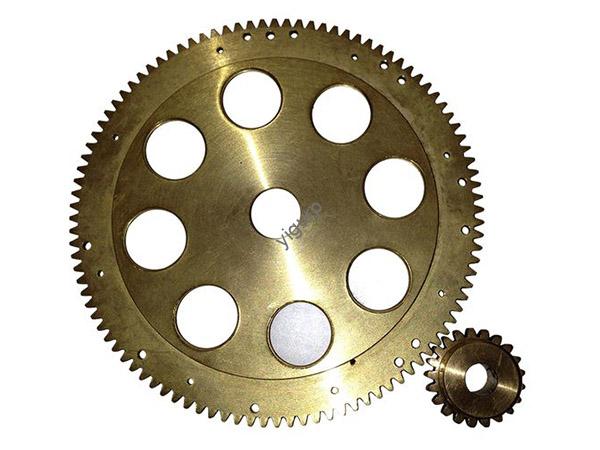
- Engrenages: Heavy-duty gears for mining equipment or marine propulsion systems use T1—résistance à l'usure reduces tooth wear by 60% contre. acier au carbone, extending gear life to 5+ années.
- Pièces de machines: Composants haute température (par ex., furnace conveyor rollers) use T1—stabilité thermique retains strength at 500°C+, avoiding deformation in high-heat environments.
- Équipement industriel: Cutting blades for metal shredders or recycling machinery use T1—dureté resists impact from metal scraps, and wear resistance extends blade life by 2.5x.
Industrie automobile
- Composants du moteur: High-temperature engine parts (par ex., valve seats or camshafts) use T1—stabilité thermique withstands 550°C+ engine heat, et la résistance à l'usure réduit la dégradation des composants.
- Pièces de transmission: Transmission gears for heavy-duty trucks use T1—résistance à la traction handles torque loads up to 1500 N·m, and fatigue resistance ensures 300,000+ km d'utilisation.
- Essieux: Heavy-duty trailer axles use T1—limite d'élasticité (2000-2200 MPa) resists bending under 30+ tonnes de charges, réduisant les temps d'arrêt pour maintenance en 40%.
- Composants de suspension: High-stress suspension brackets for off-road vehicles use T1—dureté resists impact from rough terrain, and wear resistance prevents corrosion-related failure.
Autres applications
- Moules: Hot-forming molds for aluminum or brass use T1—stabilité thermique retains shape at 450°C+, et poignées résistantes à l'usure 10,000+ forming cycles.
- Meurt: Cold-heading dies for fastener manufacturing use T1—dureté (65-66 CRH) creates precise fastener heads, and wear resistance extends die life by 3x vs. Acier à outils D2.
- Poinçons: High-speed punches for stamping thick steel sheets (par ex., 10 mm en acier inoxydable) use T1—résistance aux chocs résiste à l'écaillage, et poignées résistantes à l'usure 200,000+ estampages.
- Woodworking tools: Industrial woodworking blades for cutting hardwoods (par ex., oak or maple) use T1—sharpness retention reduces blade sharpening frequency by 70%, améliorer l'efficacité de la production.
3. Techniques de fabrication de l'acier à outils T1
Producing T1 requires specialized processes to control its alloy composition (especially tungsten and vanadium) and optimize its heat treatment for red hardness and wear resistance. Voici le processus détaillé:
1. Sidérurgie
- Four à arc électrique (AEP): Méthode principale : ferraille d'acier, tungstène, chrome, vanadium, and other alloys are melted at 1650-1750°C. Surveillance de capteurs en temps réel composition chimique to keep tungsten (17.50-19.00%) et du vanadium (1.00-1.50%) within strict ranges—critical for red hardness and wear resistance.
- Refusion à l'arc sous vide (NOTRE): Facultatif, for high-purity T1—molten steel is remelted in a vacuum to remove impurities (par ex., oxygène, azote), improving toughness and reducing tool failure risk.
- Coulée continue: Molten steel is cast into slabs or billets (100-300 mm d'épaisseur) via a continuous caster—fast and consistent, ensuring uniform alloy distribution and minimal internal defects.
2. Travail à chaud
- Laminage à chaud: Slabs/billets are heated to 1100-1150°C and rolled into bars, assiettes, or tool blanks (par ex., 50×50 mm bars for milling cutters). Hot rolling refines grain structure and shapes T1 into standard tool forms, while avoiding tungsten carbide segregation.
- Hot forging: Heated steel (1050-1100°C) is pressed into complex tool shapes (par ex., lathe tool blanks or punch heads) using hydraulic presses—improves material density and aligns grain structure, améliorer la ténacité.
- Extrusion: Heated steel is pushed through a die to create long, formes uniformes (par ex., reamer blanks or broach bars)—ideal for high-volume tool production.
- Recuit: After hot working, steel is heated to 850-900°C for 4-6 heures, slow-cooled to 600°C. Reduces hardness to HB 240-280, making it machinable and relieving internal stress from rolling/forging.
3. Travail à froid (Limité, for Precision)
- Cold drawing: For small-diameter tools (par ex., drill bits or small reamers), cold drawing pulls annealed steel through a die at room temperature to reduce diameter and improve dimensional accuracy—enhances surface finish (Râ 0.8 µm) but requires post-drawing annealing to retain machinability.
- Usinage de précision: CNC mills or grinders shape annealed T1 into tool blanks (par ex., milling cutter bodies or lathe tool holders)—carbide tools are mandatory due to T1’s moderate hardness in annealed state; machining is limited to pre-hardening steps (post-hardening grinding is needed for final precision).
4. Traitement thermique (Key to T1’s Performance)
- Trempe: Heated to 1260-1300°C (austénitisant) pour 30-60 minutes (longer than low-alloy steels to dissolve tungsten carbides), quenched in oil or air. Hardens T1 to 65-68 HRC—air quenching reduces distortion but lowers hardness slightly (63-65 CRH) for large tools.
- Trempe: Reheated to 540-580°C for 1-2 heures, refroidi par air (repeated 2-3 fois). Soldes dureté rouge and toughness—critical for high-speed cutting; évite la surchauffe, ce qui réduirait la résistance à l'usure.
- Durcissement superficiel: Facultatif, for extreme wear applications—low-temperature nitriding (500-550°C) forms a 5-10 μm nitride layer, augmentant la résistance à l'usure en 30% (ideal for cutting tools or dies).
- Recuit de détente: Applied after machining—heated to 600-650°C for 1 heure, refroidi lentement. Reduces residual stress from cutting, empêchant la déformation de l'outil pendant la trempe.
5. Traitement de surface & Finition
- Affûtage: Post-heat-treatment grinding with diamond wheels refines tool edges to ±0.001 mm tolerances—ensures sharp, consistent cutting surfaces for precision tools like reamers or broaches.
- Revêtement: Dépôt physique en phase vapeur (PVD) revêtements (par ex., nitrure de titane et d'aluminium, TiAlN) are applied to cutting tools—reduces friction, extends tool life by 2.5x, and improves heat dissipation during high-speed cutting.
- Polissage: Precision polishing creates a smooth surface (Râ 0.1 µm) for tools like reamers or dies—reduces material adhesion during cutting/forming, improving part quality.
4. Étude de cas: T1 Tool Steel in Heavy-Duty Gear Milling
A gear manufacturer used D2 tool steel for milling large industrial gears (4140 acier allié, 500 mm diamètre) mais j'ai été confronté à deux problèmes: tool wear after 150 gears and high regrinding costs. Switching to T1 delivered transformative results:
- Tool Life Extension: T1’s résistance à l'usure et dureté rouge extended tool life to 400 engrenages (167% plus long)—cutting regrinding frequency by 60% et économiser $30,000 annually in regrinding costs.
- Efficacité de production: T1’s ability to handle higher cutting speeds (350 m/min vs. 200 m/min for D2) reduced milling time per gear by 43%, augmenter la capacité de production de 75 gears per month.
- Économies de coûts: Despite T1’s 40% coût matériel plus élevé, le fabricant a sauvé $96,000 annually via longer tool life and faster production—achieving ROI in 3 mois.