
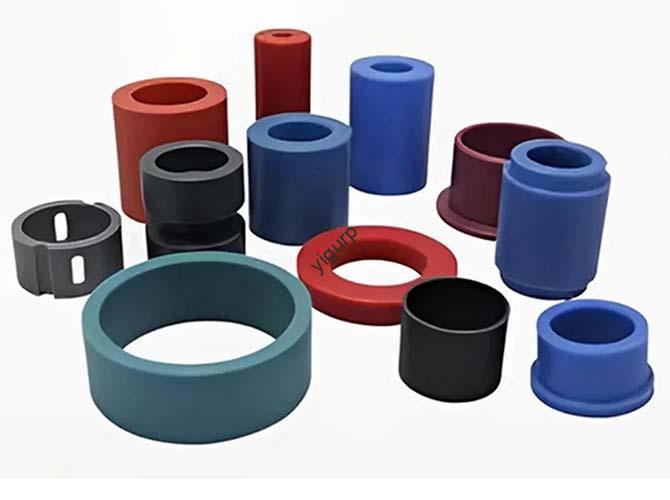
Dans le domaine du développement de produits, les pièces prototypes en plastique jouent un rôle essentiel dans les tests de conception, fonctions de validation, et accélération du lancement sur le marché. Lorsqu'il s'agit de produire ces prototypes avec précision et efficacité, Swiss-type Machining Technology emerges as a game-changer. Mais comment cette technologie s’adapte-t-elle aux propriétés uniques des plastiques ?, and what steps are involved in usinage top-notch plastic prototype parts? This article breaks down the essentials to help you overcome common challenges in plastic prototype manufacturing.
1. Swiss-type Machining Technology: Tailored for Plastic Prototypes
Swiss-type Machining Technology isn’t just for metals—it’s equally adept at handling plastics, thanks to its precision, flexibilité, et automatisation. Contrairement à l'usinage traditionnel, it’s designed to tackle the softness and flexibility of plastic materials, ensuring consistent results even for complex part geometries.
Core Components & Advantages of Swiss-type Machining for Plastics
| Component/Feature | Role in Plastic Prototype Machining |
| CNC Swiss Machines | Automate processes with computer controls, ensuring repeatable accuracy for plastic parts with tight tolerance requirements. |
| Usinage multi-axes | Enables simultaneous drilling, fraisage, et tournant, perfect for complex plastic part geometry (par ex., intricate slots or threads). |
| High-speed Machining | Reduces heat buildup (critical for heat-sensitive plastics like polycarbonate) and shortens machining time. |
| Chucking and Bar Feeding | Securely holds plastic bars (common raw material for prototypes) to prevent warping during cutting. |
| Cutting Tools and Inserts | Outils spécialisés (par ex., carbide inserts) minimize plastic melting and ensure smooth surface finish. |
| Automation | Lowers manual intervention, reducing the risk of damaging delicate plastic prototypes during handling. |
Why does this matter? Imagine you’re developing a polycarbonate prototype for a medical device with tiny holes (1mm diamètre) et une stricte tolérance (±0,02 mm). UN CNC Swiss machine with multi-axis machining can create these features in one setup—no need to move the part between machines, which would risk bending or scratching the soft plastic.
2. Plastic Prototype Parts: Key Considerations Before Machining
Before starting the machining process, getting the basics right—like material selection and design—saves time and avoids costly reworks. Plastic prototypes have unique needs, and overlooking these can lead to flawed parts that don’t reflect the final product.
Critical Factors for Plastic Prototype Success
| Facteur | Détails & Recommendations |
| Sélection des matériaux | Choose thermoplastics based on prototype use: – ABS: Ideal for visual prototypes (faible coût, facile à usiner). – Polycarbonate: Great for functional tests (résistant aux chocs, transparent). – Nylon: Best for parts needing wear resistance (par ex., engrenages). – Polypropylène: Good for flexible prototypes (résistant aux produits chimiques). |
| Conception CAO | Utiliser GOUJAT (Conception Assistée par Ordinateur) software to optimize part geometry: – Avoid sharp corners (plastics are prone to cracking here). – Add fillets (rounded edges) to improve machining ease and part strength. – Clearly define tolerance requirements (par ex., ±0.05mm for non-critical features). |
| Surface Finish Goals | Decide on finish early: – Finition mate: Easy to achieve with standard cutting tools. – Glossy finish: Requires finer cutting inserts and slower feed rates. |
Exemple: A startup designing a plastic phone case prototype chose ABS for its low cost and good machinability. Their CAD design included fillets on all edges, which prevented the plastic from cracking during Swiss turning—saving them from redoing the entire batch.
3. The Step-by-Step Machining Process for Plastic Prototypes
Machining plastic prototype parts with Swiss-type technology follows a logical, sequential process that prioritizes precision and material protection. Each step addresses a key challenge (par ex., accumulation de chaleur, déformation des pièces) to ensure the final prototype meets design specs.
Étape 1: Machine Setup and Calibration
- Load the plastic bar (par ex., ABS, polycarbonate) into the chucking and bar feeding system.
- Calibrate the CNC Swiss machine to match the plastic’s properties: Lower spindle speeds for heat-sensitive plastics (par ex., polypropylène) pour éviter de fondre.
- Install specialized cutting tools and inserts (par ex., high-speed steel tools for soft plastics) to minimize tool wear.
Étape 2: Tournant (Shaping the Basic Form)
- The machine rotates the plastic bar while a cutting tool performs Tournage suisse to shape the outer surface (par ex., the body of a plastic gear).
- Use slow feed rates (par ex., 0.1mm/rev) to prevent the plastic from deforming—soft plastics are more prone to warping than metals.
Étape 3: Opérations secondaires (Adding Details)
- Utiliser multi-axis machining to perform:
- Forage: Create holes for screws or connectors (use sharp drills to avoid chipping the plastic).
- Fraisage: Add slots, rainures, or recesses (par ex., for button placements on a plastic controller prototype).
- Threading: Cut internal or external threads (use fine-thread tools to prevent stripping the plastic).
Étape 4: Affûtage (Refining Surface Finish)
- Perform affûtage only if a smooth finish is required (par ex., transparent polycarbonate prototypes).
- Use a soft grinding wheel to avoid scratching the plastic’s surface.
Étape 5: Quality Control and Inspection
- Conduct contrôle de qualité checks using tools like calipers (pour vérifier les tolérances) and a surface roughness tester (to check finish).
- Utiliser méthodes d'inspection like visual checks (for cracks or chips) and dimensional measurements (to ensure part geometry matches the CAD design).
- If issues are found (par ex., a hole is too small), adjust the CNC program and re-run a test part before machining the full batch.
Key Machining Parameters for Common Plastics
| Plastic Type | Vitesse de broche (RPM) | Vitesse d'alimentation (mm/rev) | Recommended Cutting Tool |
| ABS | 3,000–5,000 | 0.1–0.2 | Plaquettes en carbure |
| Polycarbonate | 2,500–4,000 | 0.08–0.15 | Acier rapide |
| Nylon | 3,500–5,500 | 0.12–0.22 | Diamond-coated inserts |
| Polypropylène | 2,000–3,500 | 0.07–0.13 | Plaquettes en carbure |
Yigu Technology’s Perspective
Chez Yigu Technologie, we’ve refined Swiss-type machining for plastic prototypes to address the unique challenges of plastic materials. Our team uses specialized tooling and calibrated CNC Swiss machines to prevent heat damage and warping—critical for plastics like polycarbonate. We often advise clients to prioritize material selection early: Choosing the right thermoplastic (par ex., ABS for visuals, nylon for function) permet d'économiser du temps et de l'argent. For plastic prototype projects, Swiss-type machining isn’t just efficient—it’s the most reliable way to get accurate, functional parts that speed up product development.
FAQ
1. Can Swiss-type machining handle complex plastic prototype geometries (par ex., parts with multiple holes and slots)?
Oui! Multi-axis machining in Swiss-type machines lets you add holes, machines à sous, and other details in one setup—no need for multiple machines. This avoids damaging delicate plastic parts during handling and ensures consistent geometry.
2. How do you prevent plastic from melting during Swiss-type machining?
Use low spindle speeds (par ex., 2,000–3,500 RPM for polypropylene) et des vitesses d'alimentation lentes. Also, use specialized cutting tools (par ex., acier rapide) that dissipate heat well, and avoid machining the same area repeatedly (which builds up heat).
3. Is Swiss-type machining cost-effective for small plastic prototype batches (par ex., 5–10 pièces)?
Absolument. While setup costs are slightly higher, automation and one-setup machining reduce labor time. Pour les petits lots, this means lower overall cost than traditional machining (which requires multiple setups and more manual work).