
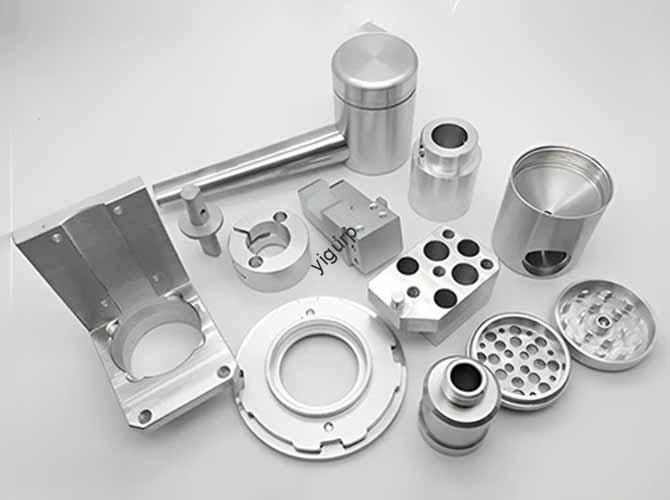
Dans le monde de la mécanique de précision, la création de pièces prototypes métalliques de haute qualité est une étape critique du développement de produits. Parmi les différentes techniques de fabrication disponibles, Swiss Machine Technology stands out for its ability to deliver exceptional accuracy and consistency. But how exactly does this technology streamline the metal machining process for prototype production? Let’s break down the key elements, mesures, and benefits to help you solve common challenges in prototype part manufacturing.
1. Understanding Swiss Machine Technology: The Backbone of Precision
At the core of efficient prototype production lies Swiss Machine Technology, a set of tools and processes designed for ultra-precise machining. Contrairement aux tours conventionnels, Swiss machines excel at handling small, complex parts—making them ideal for prototypes that demand tight tolerances.
Key Components of Swiss Machine Technology
| Component | Function |
| Swiss Lathe | The primary tool for turning operations, holding the workpiece securely. |
| CNC Swiss Machine | Automates machining with computer controls for repeatable accuracy. |
| Tour de type suisse | Features a guide bushing to reduce workpiece vibration during cutting. |
| Outillage en direct | Enables milling, forage, and threading in a single setup, gain de temps. |
| Guide Bushing | Supports long workpieces, ensuring stability for high-precision cuts. |
Why does this matter for prototypes? Imagine you’re developing a tiny medical component that requires a tolerance of ±0.001mm. UN CNC Swiss Machine with live tooling can complete turning, forage, and threading in one run—eliminating errors from multiple setups and speeding up prototype delivery.
2. The Metal Machining Process for Swiss-Made Prototypes
Creating a metal prototype with a Swiss machine follows a linear, step-by-step process that prioritizes precision and efficiency. Each stage builds on the last, ensuring the final part meets design specs.
Step-by-Step Metal Machining Process
- Conception & Préparation: Start with a 3D model of the prototype. Engineers program the CNC Swiss Machine to follow the design, selecting the right metal (par ex., aluminium, acier inoxydable) for the part’s purpose.
- Workpiece Loading: The raw metal stock is fed into the Swiss Lathe, secured by the guide bushing to prevent movement.
- Tournant: The lathe rotates the workpiece while a cutting tool shapes its outer surface—this is the foundation of the part’s form.
- Opérations secondaires: En utilisant outillage dynamique, the machine adds details like holes (forage), machines à sous (fraisage), or threads (filetage). All done in one setup!
- Affûtage: For extra smoothness or tight tolerances, affûtage refines the part’s surface to meet precision requirements.
- Inspection: The prototype is measured using precision tools to check for accuracy. Si des ajustements sont nécessaires, the CNC program is tweaked, and the process repeats.
This streamlined flow solves a big problem for prototype teams: temps perdu. By combining multiple operations into one setup, Swiss machining cuts prototype lead times by up to 50% compared to conventional methods.
3. Prototype Part Production: Why Swiss Machines Outperform Others
Quand il s'agit de prototype part production, Swiss machines offer unique advantages that address common pain points—like slow turnaround, inconsistent quality, or difficulty with complex designs.
Swiss Machine vs. Conventional Machining for Prototypes
| Facteur | Swiss Machine Technology | Usinage conventionnel |
| Précision | Achieves tolerances as tight as ±0.0005mm (haute précision). | Typically limits to ±0.01mm, struggling with micro machining. |
| Délai d'exécution | 1–3 days for most prototypes (one-setup efficiency). | 5–7 jours (multiple setups for secondary operations). |
| Complexité | Gère des conceptions complexes (par ex., micro holes, fils de discussion) easily. | Struggles with small, complex parts due to vibration. |
| Cost for Prototypes | Lower overall cost (fewer setups = less labor). | Coût plus élevé (more labor for multiple setups and rework). |
Par exemple, a startup developing a wearable tech prototype needed 10 sample parts with tiny, trous filetés. Using a Swiss-type lathe, they got the parts in 2 days—ready for prototype testing. With conventional machining, the same job would have taken a week and risked inconsistent thread quality.
4. Ingénierie de précision: The Art of Meeting Tight Tolerances
Ingénierie de précision is all about control—controlling every cut, every tool movement, and every measurement to create parts that fit perfectly. Swiss machines are built for this control, making them indispensable for prototypes that demand excellence.
How Swiss Machines Ensure Precision
- Contrôle de tolérance: The guide bushing reduces workpiece deflection, keeping cuts within the required tolerance (often as low as ±0.001mm).
- Accuracy in Reproduction: CNC programming ensures that every sample part is identical—critical for reliable prototype testing.
- Micro Machining Capabilities: Swiss machines handle small parts (down to 0.5mm in diameter) en toute simplicité, making them ideal for electronics or medical prototypes.
Think of it like baking a cake: si tu as besoin 10 identical cupcakes (prototypes), you use a precise recipe (CNC program) and a steady hand (Swiss machine). Conventional methods are like baking without a measuring cup—you might get close, but not perfect every time.
5. Techniques de fabrication: Optimizing Swiss Machining for Prototypes
To get the most out of Swiss machining for prototype production, it’s important to use the right manufacturing techniques. Here are three key strategies to solve common challenges:
Haut 3 Techniques for Swiss-Made Prototypes
- Leverage Live Tooling for One-Setup Production: Instead of moving the part between machines for milling or drilling, use live tooling to do it all in one run. This cuts down on errors and speeds up delivery.
- Choose the Right Metal for the Prototype: For functional testing, use the same metal as the final product (par ex., titanium for aerospace parts). For visual prototypes, aluminum works well (it’s cheap and easy to machine).
- Test Early with Small Batches: Produce 5–10 sample parts first for prototype testing. Swiss machines make small batches cost-effective, so you can fix design flaws before scaling up.
Yigu Technology’s Perspective
Chez Yigu Technologie, we’ve seen how Swiss Machine Technology transforms prototype part production. Our clients—from startups to Fortune 500 firms—rely on our CNC Swiss machines to turn their designs into high-precision metal prototypes fast. The key advantage? Swiss machining eliminates the “guesswork” in prototype development, ensuring parts meet tolerances on the first try. For teams aiming to accelerate product development, investing in Swiss-based prototype manufacturing isn’t just efficient—it’s a way to reduce risk and get to market faster.
FAQ
1. How long does it take to make a metal prototype with a Swiss machine?
Most simple to moderately complex prototypes take 1–3 days. Complex parts with micro machining or tight tolerances may take 3–5 days, but this is still 50% faster than conventional methods.
2. Can Swiss machines handle all types of metal for prototypes?
Oui! Swiss machines work with common prototype metals like aluminum, acier inoxydable, laiton, titane, and even exotic alloys. The key is choosing the right cutting tools for the metal’s hardness.
3. Is Swiss machining cost-effective for small prototype batches (1–10 pièces)?
Absolument. While Swiss machines have higher upfront costs, their one-setup efficiency reduces labor and rework costs—making them cheaper for small batches than conventional machining, which requires multiple setups.