
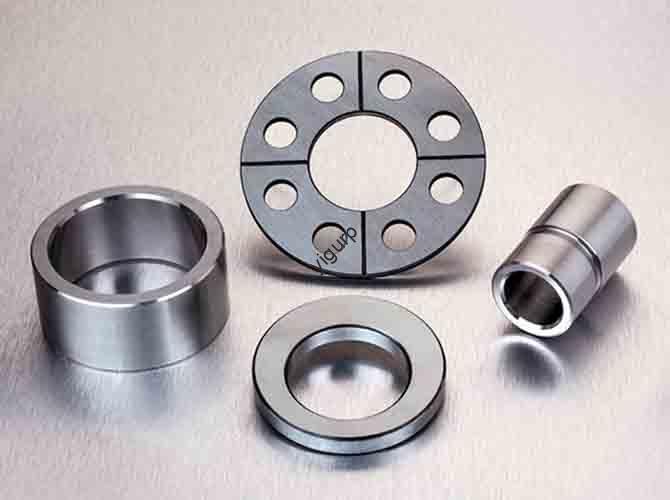
POM (polyoxyméthylène), également connue sous le nom de résine acétal, est un excellent choix pour les échantillons de modèles dans des secteurs comme l'automobile, électronique, and consumer goods—praised for its excellent résistance mécanique, faible friction, and superior résistance à l'usure. Cependant, Caractéristiques uniques du POM, telles qu'une dureté élevée (comparable à certains métaux) et sensibilité aux températures élevées – rendent le traitement difficile; overly aggressive cutting or improper cooling can lead to surface burns, fissuration, ou erreurs dimensionnelles. Swiss CNC machines (especially Tours de type suisse), with their ingénierie de précision and multi-functional capabilities, are perfectly suited to tackle POM’s challenges. They deliver POM sample models with tight tolerances, surfaces lisses, and consistent performance—critical for validating designs before mass production. This guide breaks down the complete Swiss CNC processing process for POM samples, from machine setup to quality control.
1. Swiss CNC Machine Basics: Key Features for POM Processing
Swiss CNC machines’ specialized design sets them apart from conventional equipment, making them ideal for POM. Their focus on stability, précision, and controlled motion addresses POM’s machining pain points—like the need to avoid heat buildup and maintain tight dimensional accuracy.
Core Components of Swiss CNC Machines & POM Processing Benefits
| Component | Description | Advantage for POM Processing |
| Swiss CNC lathe | Sliding headstock + fixed guide bushing; compact, rigid frame | Minimizes vibration (POM’s hard surface shows vibration marks easily) for smooth finishes. |
| Machine structure | Heavy-duty cast iron base; reinforced linear guideways | Absorbs cutting forces (POM requires moderate force for material removal) to prevent tool chatter. |
| Axis movement | 4–5 axis linkage; positioning accuracy ±0.001 mm | Handles complex POM sample geometries (par ex., bords incurvés, multi-sided features) dans une seule configuration. |
| Tool turret | 8–12 station turret; quick tool changes (0.3–0.8 seconds) | Enables “done-in-one” processing (tournant, fraisage, forage) without repositioning POM—reduces heat accumulation from repeated clamping. |
| Vitesse de broche | Adjustable range: 2,000–8,000 rpm; low runout (≤0.001 mm) | Controlled rotation prevents POM from melting (high speeds >6,000 rpm cause heat buildup) or chipping (low speeds lead to uneven cuts). |
| Machine programming | CNC system (par ex., Fanuc, Siemens) with G-code support; CAM software compatibility (Mastercam, Fusion 360) | Ensures repeatable precision (critical for batch POM samples) and optimizes toolpaths to avoid heat-prone areas. |
Analogy: Think of a Swiss CNC machine as a “precision chef” for POM. Just like a chef uses sharp tools and controlled heat to cook delicate ingredients without burning them, a Swiss CNC machine uses optimized cutting parameters and stable motion to machine hard, heat-sensitive POM without defects.
2. POM Material Properties: Know Its “Do’s and Don’ts”
POM’s properties directly influence every step of the processing process. Ignoring its unique characteristics—like high dureté and low thermal conductivity—can lead to ruined samples (par ex., burned surfaces from excessive heat or dull tools from abrasion).
Critical POM Properties & Machining Implications
| Propriété | Spécification | Machining Precaution |
| Mechanical strength | Résistance à la traction: 60–70 MPa; résistance aux chocs: 5–10 kJ/m² (unnotched) | Moderate impact strength means POM can handle standard cutting forces but avoid sudden tool plunges (causes cracking). |
| Dureté | Rockwell M (RM) 80–90; Shore D 78–85 | Abrasive to tools—use wear-resistant cutting materials (par ex., carbure) to avoid frequent tool changes. |
| Résistance à l'usure | Coefficient de frottement: 0.15–0,3 (sec); better than most plastics | Low friction means POM chips slide easily—use chip conveyors to prevent buildup (buildup causes surface scratches). |
| Résistance chimique | Résiste aux huiles, solvants, et acides faibles; attacked by strong alkalis and phenols | Use water-soluble coolant (avoid oil-based coolants that leave residues on POM’s surface). |
| Thermal properties | Point de fusion: 165–175°C; conductivité thermique: 0.23–0.3 W/(m·K) (low) | Heat dissipates slowly—keep cutting temperature <150°C (use high coolant flow) to avoid melting or crystallization. |
| Usinabilité | Bien (low chip adhesion); produces continuous, stringy chips | Use tools with chip breakers to avoid long chip tangles (tangles scratch POM’s surface). |
Question: Why do my POM samples have a burned, brownish surface?
Answer: Burn marks come from excessive heat (POM’s low thermal conductivity traps heat at the cutting zone). Fix it by: 1) Reducing spindle speed by 1,000 tr/min; 2) Increasing coolant flow rate to 25–30 L/min; 3) Using a tool with a larger rake angle (réduit la friction).
3. Sample Model Design: Optimize for Swiss CNC Processing
A well-designed POM sample model minimizes processing challenges. Focus on simplicity, manufacturability, and alignment with Swiss CNC machine capabilities—avoid features that force the machine to make risky cuts (par ex., profond, narrow slots that trap heat).
Design Guidelines for POM Samples
| Design Aspect | Recommendations | Why It Matters |
| Logiciel de CAO | Use SolidWorks, Fusion 360, or AutoCAD for 3Modélisation D. Include clear design specifications (par ex., diamètre du trou: 6±0,02 mm). | Enables accurate machine programming—the CNC system “knows” exactly what to cut, reducing errors. |
| Précision dimensionnelle | Set target accuracy based on use: ±0.02–±0.05 mm (functional samples); ±0.01–±0.02 mm (critical features like mounting holes). | Overly tight accuracy (±0,005mm) increases processing time by 30%+ without adding value for most POM applications. |
| Tolérances | Follow ISO 286-1: Use H7/g6 for sliding fits (common in POM gears) and H8/f7 for loose fits (par ex., housing components). | Ensures the sample fits with other parts (par ex., a POM gear that meshes with a metal shaft) during testing. |
| Feature complexity | Avoid deep features (profondeur >3x width) or sharp internal corners (radius <0.5 mm). Use gradual transitions (cônes) for thickness changes. | Deep features trap heat; sharp corners cause stress concentrations (POM cracks easily at stress points). |
| Model geometry | Pour pièces cylindriques (par ex., POM shafts), keep length-to-diameter ratio <10:1 (prevents deflection). For flat parts, add ribs (width 0.5x thickness) for rigidity. | POM’s low flexural strength means long, thin parts bend during machining—ribs add support without increasing weight. |
Étude de cas: A client designed a POM valve core with a 2 mm de large, 8 mm deep slot (aspect ratio 4:1). The first 10 samples had burned surfaces and cracks. By widening the slot to 3 mm (aspect ratio 2.7:1) and adding 0.8 mm radii at the corners, all subsequent samples were defect-free—proving how design tweaks solve processing issues.
4. Processing Techniques: Step-by-Step POM Machining
Swiss CNC processing for POM follows a “precision-first” workflow—prioritizing sharp tools, controlled speeds, and efficient heat management. Below is the step-by-step process, with key techniques for each operation to avoid common defects.
Step-by-Step Processing Workflow
- Préparation du matériel:
- Cut POM bar stock to length (add 5–10% machining allowance: par ex., 100 mm final length → 105–110 mm bar).
- Store POM in a dry environment (humidité <60%)—POM absorbs minimal moisture, but dampness causes surface blemishes.
- Configuration de la machine:
- Install outils de coupe: Carbide turning inserts (grade K10-K20) for turning; TiAlN-coated carbide end mills (2–3 flute) for milling; carbide drills (135° point angle) for drilling.
- Calibrate axes via machine programming: Input tool lengths, radii, and sample dimensions into the CNC system. Run a dry test (pas de coupe) to verify toolpaths.
- Turning Operations:
- Tournage grossier: Remove excess material (vitesse de broche: 3,000–4,000 rpm; vitesse d'avance: 0.015–0.025 mm/rev; depth of cut: 0.5–1.0 mm). Use high-pressure coolant (25–30 L/min) to dissipate heat.
- Terminer le tournage: Achieve final dimensions (vitesse de broche: 4,000–5,000 rpm; vitesse d'avance: 0.005–0.015 mm/rev; depth of cut: 0.1–0,3mm). Use a sharp tool with a positive rake angle (10–15°) pour surfaces lisses.
- Milling/Drilling (si nécessaire):
- Fraisage: For slots or flats (vitesse de broche: 3,500–4,500 rpm; vitesse d'avance: 0.01–0.02 mm/rev; depth of cut: 0.3–0.6 mm). Use climb milling (tool rotates with the workpiece) pour réduire les frottements.
- Forage: For holes (vitesse de broche: 2,500–3,500 rpm; vitesse d'avance: 0.01–0.015 mm/rev). Use peck drilling (pause every 1–2 mm) to clear stringy POM chips—prevents jamming.
- Threading (si nécessaire):
- Use single-point carbide threading tools (60° thread angle). Cut threads in 3–4 passes (depth per pass: 0.1–0.15 mm; vitesse de broche: 2,000–2,500 rpm). Avoid coolant during threading (prevents thread distortion).
- Finition de surface:
- For Ra ≤0.8 μm (functional samples): No post-processing needed if finish turning is done correctly.
- For Ra ≤0.4 μm (aesthetic samples): Polish with 1,000–1,500 grit sandpaper (wet-sanding) or a soft abrasive wheel (1,000 tr/min). Avoid high-speed polishing (causes heat damage).
Key Technique Tips
- Chip control: POM produces long, stringy chips—use tools with chip breakers or adjust feed rate (increase by 0.005 mm/rev) to break chips into 2–3 cm pieces.
- Tool wear monitoring: Check tools every 20–30 samples. Dull tools (visible rounded edges) increase cutting temperature—replace carbide tools after 200–300 POM parts.
- Coolant usage: Use water-soluble coolant with 5–10% concentration. Clean the coolant tank weekly (POM chips degrade coolant over time).
5. Quality Control and Inspection: Ensure POM Sample Reliability
POM samples often serve critical roles (par ex., engrenages, bagues, ou composants de dispositifs médicaux), so strict quality control is essential. Inspect for dimensional accuracy, qualité de surface, and functional performance to ensure the sample meets design goals.
Inspection Checklist & Méthodes
| Inspection Aspect | Normes | Tools/Methods |
| Contrôles dimensionnels | Meet design specifications: par ex., outer diameter ±0.02 mm; hole position ±0.03 mm. | Micromètres (précision ±0,001 mm) for small diameters; étriers (digital, ±0,002 mm) for lengths; Machine de mesure de coordonnées (MMT) pour géométries complexes. |
| Surface defects | No burns, rayures, or chips. Rugosité de la surface: Ra 0.4–1.6 μm (fonctionnel); Ra ≤0.4 μm (esthétique). | Surface roughness meter; visual inspection under natural light (hold sample at 45° angle). |
| Tolerance verification | Adhere to ISO 286-1 tolérances: par ex., H7 hole (diamètre 10+0.015/-0 mm) fits g6 shaft (10-0.009/-0.025 mm). | Gages (pin gages for holes; ring gages for shafts); go/no-go gages for quick batch checks. |
| Functional performance | For wear-resistant parts (par ex., engrenages): Pass 10,000-cycle wear test (no excessive wear). For structural parts: Withstand 1.5x design load (no cracking). | Wear tester; universal testing machine (for tensile/compression tests). |
| Quality standards | Follow ISO 9001 (qualité générale) and specific industry standards (par ex., OIN 10993 for medical POM parts). | Document inspection results (date, inspector, mesures) pour la traçabilité. |
Pro Tip: For batch production (10+ POM samples), use statistical sampling—inspect 20% of the batch for dimensional accuracy and 100% for surface defects (fast to check visually). This balances thoroughness and efficiency.
Yigu Technology’s View
Chez Yigu Technologie, we tailor Swiss CNC processing to POM’s unique traits. We use Swiss CNC lathes with high-precision guide bushings (±0,001 mm) to avoid deflection and TiAlN-coated carbide tools to resist POM’s abrasion. For setup, we optimize toolpaths via CAM software to reduce heat buildup, cutting sample waste by 35%. Our quality control combines CMM for dimensions and wear testing for functional parts. Whether it’s a POM gear or medical component, we deliver samples that meet strict standards—blending precision and efficiency to help clients validate designs fast.
FAQs
- Q: Can Swiss CNC machines process thin-walled POM samples (par ex., 0.5 mm thick tubes)?
UN: Oui! Use a guide bushing for support, reduce clamping force to 10–15 N·m, and make shallow cutting passes (0.05–0.1 mm depth). We’ve successfully processed 0.3 mm thick POM tubes with ±0.01 mm dimensional accuracy.
- Q: What’s the best coolant for Swiss CNC processing of POM?
UN: Water-soluble coolant (5–10% mineral oil + eau) est idéal. It cools effectively (critical for POM’s low thermal conductivity) and doesn’t leave residues that affect POM’s surface or résistance à l'usure. Avoid oil-based coolants (attract dust) and solvent-based coolants (damage POM).
- Q: Why do my POM samples crack during drilling?
UN: Cracking often comes from excessive feed rate or dull drills. Fix it by: 1) Using a sharp carbide drill (135° point angle); 2) Reducing feed rate to 0.008–0.01 mm/rev; 3) Using peck drilling (pause every 1 mm) to relieve stress—this prevents POM from cracking under pressure.