
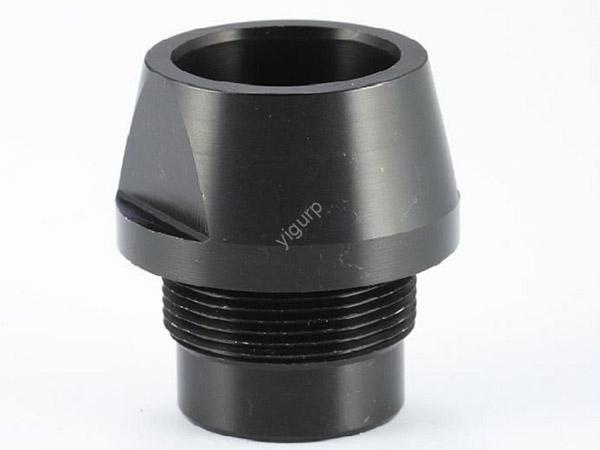
L'acier inoxydable de qualité supérieure se distingue comme un matériau haute performance conçu pour les environnements exigeants où l'acier inoxydable standard n'est pas à la hauteur.. Its carefully crafted chemical composition—featuring high chromium content and precise alloy additions—delivers exceptional corrosion resistance, force, et durabilité. Que ce soit dans les moteurs aérospatiaux ou les implants médicaux, this grade solves problems like premature failure or rust in critical applications. Dans ce guide, nous allons décomposer ses principales caractéristiques, utilisations réelles, comment c'est fait, et comment il se compare à d'autres matériaux, helping you choose it for reliable, long-lasting solutions.
1. Key Material Properties of Stainless Steel Premium Grade
The superiority of stainless steel premium grade starts with its optimized chemical composition, which shapes its outstanding propriétés mécaniques, fiable physical properties, and other critical characteristics.
Composition chimique
Stainless steel premium grade is defined by its high-purity, balanced elements that boost performance:
- High chromium content: 18-25% (forms a thick, stable oxide layer—core to its excellente résistance à la corrosion)
- Nickel content: 8-20% (stabilizes the austenitic structure for ductility and enhances corrosion resistance)
- Molybdenum content: 2-6% (améliore pitting resistance in chloride-rich environments, par ex., seawater)
- Low carbon content: ≤0.03% (minimizes intergranular corrosion, critical for welded parts like piping)
- Manganese content: ≤2% (enhances strength without reducing ductility)
- Silicon content: ≤1% (aids in deoxidation during manufacturing)
- Phosphorus content: ≤0.04% (controlled to avoid brittleness)
- Sulfur content: ≤0.01% (ultra-low to maintain corrosion resistance and purity)
- Additional alloying elements: Azote (boosts strength), titanium/niobium (prevents carbide precipitation), et du cuivre (enhances formability)
Propriétés physiques
| Propriété | Valeur typique (Grade 316L, a common premium grade) |
| Densité | 7.9 g/cm³ |
| Conductivité thermique | 16 Avec(m·K) (at 20°C) |
| Specific Heat Capacity | 0.5 J/(g·K) (at 20°C) |
| Coefficient de dilatation thermique | 16 × 10⁻⁶/°C (20-500°C) |
| Propriétés magnétiques | Non-magnetic or weakly magnetic (austenitic premium grades; martensitic premium grades may be slightly magnetic) |
Propriétés mécaniques
Stainless steel premium grade delivers robust strength while retaining flexibility—critical for complex applications:
- Haute résistance à la traction: 550-900 MPa (higher than standard stainless steel like 304)
- Yield strength: 200-500 MPa (varie selon le niveau; duplex premium grades have higher yield strength)
- Élongation: 30-45% (dans 50 mm—retains ductility for forming parts like medical implants)
- Dureté: 150-250 Brinell, 70-95 Rockwell B, 160-260 Vickers (varie selon le niveau; martensitic premium grades are harder)
- Fatigue strength: 250-400 MPa (at 10⁷ cycles—ideal for parts under repeated stress, like aircraft fasteners)
- Impact toughness: 100-200 J. (at room temperature—far higher than standard grades, resisting cracking from sudden impacts)
Other Critical Properties
- Excellente résistance à la corrosion: Outperforms standard stainless steel—resists acids, saltwater, and industrial chemicals (par ex., Grade 904L resists sulfuric acid).
- Pitting resistance: Superior—molybdenum and nitrogen prevent pitting in harsh settings (par ex., marine offshore platforms).
- Stress corrosion cracking resistance: Very good—handles tensile stress in corrosive environments better than standard grades (par ex., Grade 2205 duplex premium grade).
- Résistance à l'usure: Good—harder than standard grades, making it suitable for parts like food processing blades.
- Usinabilité: Moderate—easier to machine than high-strength alloys like titanium; requires sharp carbide tools for harder premium grades.
- Weldability: Excellent—low carbon content (par ex., 316L) avoids weld corrosion; duplex premium grades need controlled heat input.
- Formabilité: Very good—can be deep-drawn (par ex., for medical device casings) or bent (par ex., for architectural cladding) sans craquer.
2. Real-World Applications of Stainless Steel Premium Grade
Stainless steel premium grade’s blend of excellente résistance à la corrosion et haute résistance à la traction makes it ideal for industries where failure is costly or dangerous. Voici ses utilisations les plus courantes:
Industrie aérospatiale
- Aircraft components: Pièces de moteur (par ex., pales de turbine) use Grade 625 (a nickel-chromium premium alloy)—resists high temperatures (up to 1,000°C) and jet fuel corrosion.
- Attaches: Titanium-stabilized premium grades (par ex., 321) secure critical parts—non-magnetic and resistant to vibration fatigue.
- Train d'atterrissage: Duplex premium grades (par ex., 2205) handle heavy loads and resist corrosion from atmospheric moisture.
Exemple de cas: An aerospace manufacturer switched from standard 304 to Grade 316L premium stainless steel for aircraft fuel lines. The new lines lasted 3x longer (15,000 flight hours vs. 5,000) and eliminated fuel leak risks from corrosion.
Industrie automobile
- Composants hautes performances: Racing engine valves use martensitic premium grades (par ex., 440C)—handle extreme heat and retain strength at 600°C.
- Exhaust systems: Grade 439 (a ferritic premium grade) resists exhaust gas corrosion and reduces weight vs. acier au carbone.
- Suspension components: Duplex premium grades (par ex., 2304) balance strength and weight, improving handling for luxury cars.
Industrie maritime
- Ship components: Hull fasteners and propeller shafts use Grade 904L—resists saltwater pitting better than standard 316.
- Seawater systems: Heat exchangers in offshore platforms use Grade 2507 (super duplex premium grade)—handles high-pressure seawater without corrosion.
- Offshore platforms: Structural brackets use Grade 317L—resists harsh marine weather and chemical exposure.
Médical & Food Industries
- Industrie médicale:
- Instruments chirurgicaux: Grade 316L is biocompatible, facile à stériliser (résistant à l'autoclave), and won’t react with bodily fluids.
- Implants: Hip/knee implants use Grade 316LVM (vacuum-melted premium grade)—ultra-pure, reducing infection risk.
- Food and beverage industry:
- Processing equipment: Conveyors and mixers use Grade 316L—resists food acids (par ex., tomato, citrus) and meets FDA standards.
- Sanitary fittings: Valves and pipes use electropolished Grade 316L—smooth surface prevents bacteria buildup.
Traitement chimique & Construction
- Chemical processing: Storage tanks for acids (par ex., acide chlorhydrique) use Grade 904L—resists chemical degradation.
- Construction industry:
- Architectural cladding: Grade 316L gives buildings (par ex., skyscrapers) a sleek, rust-free finish for decades.
- Composants structurels: Bridges in coastal areas use duplex premium grades—stronger than standard steel and corrosion-resistant.
3. Manufacturing Techniques for Stainless Steel Premium Grade
Producing stainless steel premium grade requires precision to maintain purity and performance. Here’s the process:
1. Metallurgical Processes (High-Purity Focus)
- Four à arc électrique (AEP): Melts scrap steel, chrome, nickel, and molybdenum at 1,600-1,700°C. Ultra-low sulfur scrap is used to meet purity standards.
- Four à oxygène de base (BOF): For large-scale production—blows oxygen to remove impurities, then adds alloying elements (par ex., azote) to precise levels.
- Vacuum Arc Remelting (VAR): Critical for medical/ aerospace grades (par ex., 316LVM). Melts the alloy in a vacuum to remove gas bubbles, ensuring ultra-purity.
- Electroslag Remelting (ESR): Improves microstructure uniformity—uses an electric current to remelt the alloy, réduire les défauts (par ex., in turbine blade materials).
2. Rolling Processes
- Hot rolling: Heats the alloy to 1,100-1,200°C and rolls into thick shapes (assiettes, barres) for structural parts—maintains grain structure for strength.
- Cold rolling: Cold-rolled to thin sheets (par ex., for cladding or medical devices) with tight thickness control—improves surface finish and hardness.
3. Traitement thermique
- Solution annealing: Heated to 1,050-1,150°C (varie selon le niveau) and water-quenched—dissolves carbides, restoring corrosion resistance (critical for low-carbon premium grades like 316L).
- Stress relief annealing: Heated to 800-900°C for 1-2 hours—reduces stress from welding/forming without lowering strength (used for aerospace components).
- Quenching and tempering: For martensitic premium grades (par ex., 440C)—quenched to harden, then tempered to balance hardness and toughness (for cutting tools).
4. Forming and Surface Treatment
- Forming methods:
- Press forming: Uses hydraulic presses to shape parts like medical device casings (done at room temperature for ductile premium grades).
- Deep drawing: Creates hollow parts (par ex., food processing tanks) from thin premium grade sheets—high formability prevents cracking.
- Usinage: Uses CNC machines with carbide tools—slower speeds for harder grades (par ex., 440C) to avoid tool wear.
- Traitement de surface:
- Pickling: Dipped in acid to remove scale from hot rolling—preserves corrosion resistance.
- Passivation: Treated with nitric acid to enhance the chromium oxide layer—boosts rust resistance.
- Électropolissage: For medical/food parts—creates a smooth, microbe-resistant surface (removes 5-10 μm of material for purity).
- Revêtement (PVD/CVD): Revêtements minces (par ex., nitrure de titane) add wear resistance for premium grade cutting tools.
5. Contrôle de qualité (Stringent Standards)
- Ultrasonic testing: Checks for internal defects (par ex., fissures) in thick parts (par ex., pales de turbine).
- Radiographic testing: Inspects welds for flaws (par ex., porosité) in critical parts (par ex., implants médicaux).
- Essais de traction: Verifies haute résistance à la traction (550-900 MPa) and yield strength.
- Microstructure analysis: Examines the alloy under a microscope to confirm uniform grain size and no impurities (critical for premium grade purity).
- Chemical composition testing: Uses spectrometry to ensure elements (par ex., chrome, molybdène) meet exact levels—no deviations from premium grade specs.
4. Étude de cas: Premium Grade Stainless Steel in Offshore Wind Turbine Seawater Systems
An offshore wind farm struggled with corrosion in standard 316 stainless steel seawater cooling systems. The systems failed after 2 années, costing $500,000 per turbine to replace. They switched to Grade 2507 (super duplex premium grade), with the following results:
- Résistance à la corrosion: Après 5 années, no pitting or rust was detected—2.5x longer lifespan than standard 316.
- Performance: The systems maintained consistent cooling efficiency (98% contre. 85% pour 316 après 2 années), reducing turbine downtime.
- Économies de coûts: The farm saved $2 million annually by eliminating frequent replacements—proving premium grade’s long-term value.
5. Stainless Steel Premium Grade vs. Other Materials
How does stainless steel premium grade compare to standard materials? Let’s break it down with a detailed table:
| Matériel | Coût (contre. Grade 316L Premium) | Résistance à la traction | Résistance à la corrosion (Saltwater) | Purity (Low Sulfur) | Biocompatibilité |
| Grade 316L (Prime) | Base (100%) | 550-650 MPa | Excellent | ≤0.01% | Oui |
| Grade 304 (Standard) | 60% | 515 MPa | Bien | ≤0.03% | Non |
| Acier au carbone | 30% | 400-550 MPa | Pauvre | ≤0.05% | Non |
| Alliage de titane (Ti-6Al-4V) | 400% | 860 MPa | Excellent | Haut | Oui |
| Duplex Premium (2205) | 150% | 620-800 MPa | Excellent | ≤0.01% | Non |
Application Suitability
- Implants médicaux: Grade 316LVM (prime) is better than titanium (moins cher, easier to machine) and meets biocompatibility standards.
- Offshore Marine: Super duplex premium (2507) outperforms standard 316 (resists high-pressure seawater) and is cheaper than titanium.
- Transformation des aliments: Grade 316L (prime) is superior to standard 304 (resists food acids) and meets FDA requirements.
- Aerospace Engine Parts: Nickel-chromium premium grades (par ex., 625) handle high temperatures better than standard stainless steel.
Yigu Technology’s View on Stainless Steel Premium Grade
Chez Yigu Technologie, we see stainless steel premium grade as a strategic choice for critical applications. C'est high chromium content, ultra-purity, and balanced alloys solve pain points like corrosion and premature failure for our aerospace, médical, and marine clients. We often recommend Grade 316L for general premium needs and Grade 2507 for harsh marine/chemical settings. While costlier than standard grades, its long lifespan and low maintenance deliver better total value—aligning with our goal of sustainable, reliable solutions.
FAQ
1. What makes stainless steel premium grade “premium” vs. standard stainless steel?
Premium grade has high chromium content (18-25% contre. 18% in standard 304), low carbon content (≤0.03% vs. ≤0.08% in 304), and additional alloys (par ex., molybdène, azote) for better corrosion resistance and strength. It also uses high-purity manufacturing (par ex., VAR) to reduce defects—critical for demanding industries.
2. Is stainless steel premium grade suitable for medical implants?
Yes—grades like 316LVM (vacuum-melted premium grade) are ideal. They’re biocompatible (no reaction with bodily fluids), facile à stériliser (résistant à l'autoclave), and ultra-pure (low sulfur), reducing infection risk. They meet ISO 10993 normes médicales.
3. How do I choose the right stainless steel premium grade?
Prioritize your top need:
- Medical/food use: Choose 316L (biocompatible, Approuvé par la FDA).
- Marine/offshore: Choisir 2507 (super duplex, saltwater-resistant).
- High-temperature aerospace: Choisir 625 (nickel-chrome, résistant à la chaleur).
- General premium use: Choose 316L (balanced corrosion resistance and cost).