
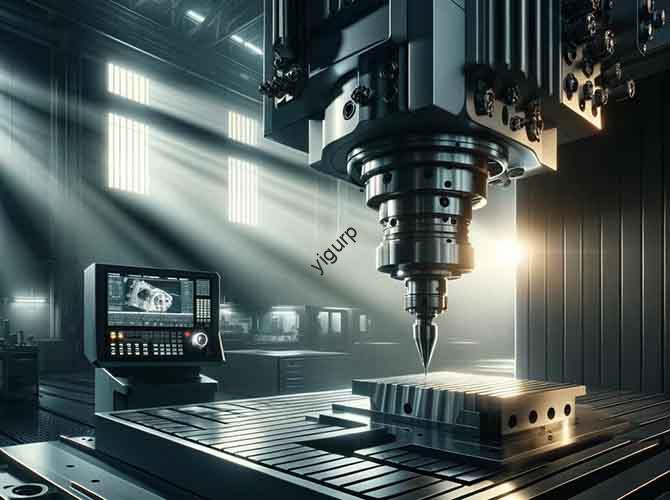
In the realm of fabrication additive, stainless steel metal 3D printing has emerged as a transformative technology, tirer parti des propriétés exceptionnelles de l’acier inoxydable pour créer des, composants complexes. Contrairement à l'usinage traditionnel, limité par la complexité des formes et le gaspillage de matériaux, cette technologie construit des pièces couche par couche à partir de modèles numériques., unlocking new possibilities for industries ranging from aerospace to healthcare. This guide explores its core material advantages, key applications, technical benefits, flux de travail, and why it’s becoming a cornerstone of modern manufacturing.
1. Unmatched Material Properties of Stainless Steel for 3D Printing
Le succès de stainless steel metal 3D printing lies in the inherent properties of stainless steel, which address critical industry needs—from durability in harsh environments to aesthetic appeal for consumer goods. Below is a detailed breakdown of these properties and their real-world impacts.
1.1 Key Material Properties & Industrial Relevance
| Propriété | Technical Details | Impact sur l'industrie |
| Superior Corrosion Resistance | Contains chromium (10.5%+ by weight) that forms a protective oxide layer, resisting rust, produits chimiques, et l'humidité. Performs well in saltwater, acide, and high-humidity environments. | Ideal for marine components (par ex., ship propeller parts), équipement de traitement chimique, and outdoor infrastructure—parts last 2–3x longer than carbon steel alternatives. |
| High Mechanical Strength | Tensile strength ranges from 500–1,200 MPa (depending on the grade, par ex., 316L: 550 MPa; 17-4 PH: 1,100 MPa) with excellent fatigue resistance. | Meets load-bearing requirements for aerospace (par ex., supports de moteur) et automobile (par ex., pièces de suspension) applications—supports heavy loads without deformation. |
| Exceptional Heat Resistance | Maintains structural integrity at temperatures up to 800°C (for high-temperature grades like 310S). Resists thermal expansion and warping under extreme heat. | Critical for high-temperature components: gas turbine blades, pièces de four industriel, and exhaust systems—avoids failure in high-heat operating conditions. |
| Versatile Processing Performance | Compatible with all major metal 3D printing technologies (par ex., SLS, DMLS, Jet de liant). Can be post-processed (machined, welded, brillant) to refine precision and surface finish. | Enables flexible production: 3D print complex shapes, then mill for tight tolerances (±0,01 mm) or polish for a mirror-like surface (Râ < 0.8 µm). |
| Esthétique & Hygienic Appeal | Silvery-white metallic luster with a smooth, non-porous surface (after post-processing). Non-toxic and easy to sterilize (resists bacteria growth). | Perfect for consumer goods (bijoux, montres, high-end cookware) et dispositifs médicaux (outils chirurgicaux, implants)—combines visual appeal with hygiene. |
2. Wide-Ranging Applications of Stainless Steel Metal 3D Printing
Stainless steel metal 3D printing is revolutionizing five key industries by solving traditional manufacturing pain points—from complex geometry limitations to long lead times. Below are its most impactful use cases with specific examples.
2.1 Applications spécifiques à l'industrie & Études de cas
| Industrie | Exemples d'application | Why 3D Printing Is Better Than Traditional Methods |
| Aérospatial & Défense | – Composants du moteur: Aubes de turbines, injecteurs de carburant, and combustion chambers. – Pièces structurelles: Supports d'aile, satellite frames. Cas: Airbus used 3D-printed 316L stainless steel fuel nozzles, reducing part weight by 40% and cutting assembly time from 15 jours pour 2 jours. | Traditional machining can’t create internal cooling channels (critical for turbine blades); 3D printing enables complex hollow structures, améliorer le rendement énergétique en 15%. |
| Automobile | – Performance parts: Racing engine blocks, exhaust manifolds. – Custom components: Vintage car replacement parts, véhicule électrique (VE) boîtiers de batterie. Cas: Porsche used 3D-printed 17-4 PH stainless steel piston caps for its 911 GT2 RS, increasing engine power by 10% while reducing weight. | Shortens production lead times for low-volume parts (par ex., vintage car parts: 1 week vs. 8 weeks with casting) and enables lightweight designs to boost EV range. |
| Dispositifs médicaux | – Implants: Artificial hips, knee joints, couronnes dentaires (using biocompatible 316L or 17-4 PH). – Outils chirurgicaux: Scalpels, forceps, et rétracteurs. Cas: A medical device firm 3D-printed 316L stainless steel hip implants, customizing them to patient CT scans—post-surgery recovery time decreased by 25%. | Traditional implants are one-size-fits-all; 3D printing enables personalized designs that fit perfectly, reducing rejection rates (depuis 5% à <1%). |
| Moule & Outillage | – Moules à injection: Complex mold inserts with conformal cooling channels. – Die casting tools: High-wear die components. Cas: A plastic injection molding company used 3D-printed 316L mold inserts, cutting cooling time for plastic parts by 60% and increasing mold lifespan by 30%. | Conformal cooling channels (3Imprimé en D) distribute heat evenly, avoiding plastic part warpage—improves production efficiency and part quality. |
| Biens de consommation & Luxury | – Bijoux: Intricate necklaces, anneaux (using polished 316L). – Watches: Watch cases, bracelets (combining strength with elegance). – Homeware: High-end cutlery, decorative art. Cas: A luxury watch brand launched 3D-printed 316L stainless steel cases, featuring complex engravings that couldn’t be achieved with CNC machining—sales increased by 40% in the first quarter. | Enables unique, complex designs (par ex., bijoux creux avec motifs internes) that stand out in the market—no need for expensive custom tooling. |
3. Technical Advantages of Stainless Steel Metal 3D Printing
Par rapport à la fabrication traditionnelle (fonderie, forger, Usinage CNC), stainless steel metal 3D printing offers three game-changing advantages that drive efficiency, personnalisation, et l'innovation.
3.1 Core Technical Benefits (with Data)
- Unprecedented Design Freedom
Traditional machining struggles with undercuts, cavités internes, and organic shapes—often requiring multiple parts assembled together. 3D printing builds parts layer by layer, permettre:
- Géométries complexes: Internal lattice structures (reducing weight by 50% sans perdre de force), hollow shafts with spiral channels, and custom organic shapes (par ex., patient-specific implant contours).
- Assemblage réduit: Combine 5–10 traditional parts into 1 3D-printed component—cutting assembly time by 70% and eliminating joint failure risks.
- Efficacité de production élevée & Économies de coûts
- Des délais de livraison plus rapides: Produce prototypes in 3–5 days (contre. 2–4 weeks with casting) and low-volume parts (10–100 unités) dans 1 à 2 semaines.
- Moins de gaspillage de matière: Traditional machining removes 70–90% of raw material; 3D printing uses 95%+ of the stainless steel powder (unprinted powder is recycled). For a 1kg aerospace part, this saves \(50–)200 in material costs.
- On-Demand Personalization
Adjust digital models to meet unique customer needs—no retooling required. Examples include:
- Médical: Custom dental crowns tailored to a patient’s tooth shape (printed in 24 heures).
- Automobile: Personalized car emblems or interior trim for luxury vehicles.
- Industriel: Custom-sized valve parts for legacy machinery (no need to stock hundreds of part variants).
4. Workflow of Stainless Steel Metal 3D Printing
The process of 3D printing stainless steel parts involves four key stages, from digital design to final post-processing. Following this workflow ensures high precision, force, et qualité.
4.1 Step-by-Step Production Workflow
- Conception numérique & Préparation
- Create a 3D model (Logiciel de CAO: SolidWorks, Fusion 360) with detailed dimensions and tolerances (par ex., ±0.02 mm for medical parts).
- Slice the model into thin layers (0.02–0.1 mm) using slicing software (par ex., Matérialiser la magie), generating G-code for the 3D printer.
- Select the stainless steel grade (par ex., 316L for corrosion resistance, 17-4 PH for high strength) and prepare the printer (calibrate build plate, load powder).
- 3D Impression (Fabrication additive)
Choose the appropriate technology based on part requirements:
- SLS (Frittage sélectif au laser): Uses a laser to fuse stainless steel powder layer by layer—ideal for complex, low-to-medium volume parts.
- DMLS (Frittage laser direct des métaux): Higher precision than SLS (tolerances ±0.01 mm)—used for medical implants and aerospace components.
- Jet de liant: Prints with a binding agent to form green parts, then sinters them in a furnace—cost-effective for high-volume parts (par ex., biens de consommation).
- Post-traitement
- Depowdering: Remove unprinted stainless steel powder (recyclable for future prints).
- Debinding (for Binder Jetting): Heat the part to remove the binding agent (prevents cracking during sintering).
- Frittage: Heat the part to 1,300–1,400°C (in a vacuum furnace) to densify the material (achieves 95–99% density, improving strength).
- Finition: Machine for tight tolerances, polish for surface smoothness, or weld to assemble multi-part components.
- Contrôle qualité
- Use a coordinate measuring machine (MMT) to verify dimensional accuracy.
- Perform non-destructive testing (CND: radiographie, ultrasonic) détecter les défauts internes (par ex., porosité).
- Test mechanical properties (résistance à la traction, résistance à la corrosion) pour assurer le respect des normes de l’industrie (par ex., ASTM F138 for medical stainless steel).
Yigu Technology’s Perspective on Stainless Steel Metal 3D Printing
Chez Yigu Technologie, we recognize stainless steel metal 3D printing as a catalyst for industrial innovation. Our solutions integrate high-precision DMLS printers (optimized for 316L and 17-4 PH) with AI-driven process monitoring, reducing part defects by 45% and cutting production time by 30%. We’ve supported clients in aerospace, médical, and automotive sectors—from creating lightweight turbine parts to personalized implants—delivering cost savings of 25–50% vs. méthodes traditionnelles. As stainless steel grades advance (par ex., high-temperature 310S variants), we’re investing in simulation tools to optimize printing parameters, making this technology more accessible for SMEs.
FAQ: Common Questions About Stainless Steel Metal 3D Printing
- Q: Is stainless steel metal 3D printing more expensive than traditional machining?
UN: For low-volume (1–100 unités) ou pièces complexes, Non. 3D printing eliminates tooling costs (\(5,000–)50,000 for traditional molds) and reduces material waste—total costs are 30–50% lower. For high-volume (10,000+ unités) pièces simples, traditional machining may be cheaper, but 3D printing still offers design flexibility.
- Q: Can 3D-printed stainless steel parts match the strength of traditionally made parts?
UN: Yes—with post-processing. Sintered 3D-printed stainless steel achieves 95–99% density, matching the tensile strength of cast or forged stainless steel. Pour les applications critiques (par ex., aérospatial), traitement thermique (par ex., precipitation hardening for 17-4 PH) can further boost strength to exceed traditional parts.
- Q: What stainless steel grades are most commonly used in 3D printing?
UN: The top three grades are: – 316L: Résistant à la corrosion, biocompatible—used for medical devices, pièces marines. – 17-4 PH: Haute résistance, heat-resistant—ideal for aerospace and automotive components. – 304L: Rentable, general-purpose—used for consumer goods and industrial brackets.