
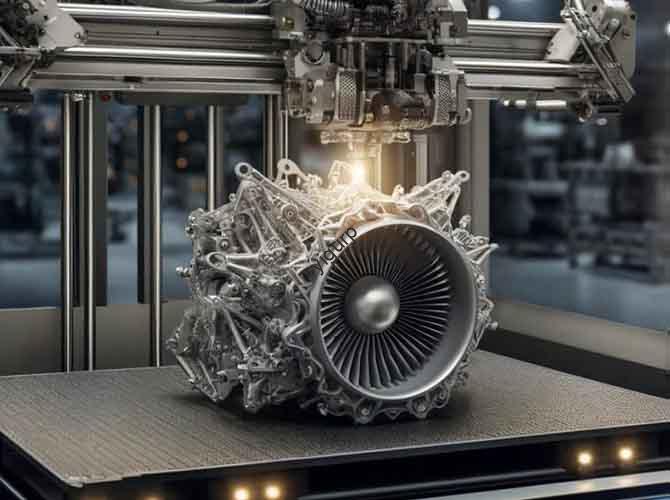
L'acier inoxydable, apprécié pour sa solidité, résistance à la corrosion, and versatility—has become a staple in impression 3D métal, combler le fossé entre les prototypes fonctionnels et les pièces finales de qualité industrielle. Pour les ingénieurs, fabricants, et créateurs, comprendre comment l'acier inoxydable est imprimé en 3D, quels types fonctionnent le mieux, et comment surmonter les défis communs est essentiel. This article answers the question “Can stainless steel be 3D printed?” by breaking down key materials, technologies, candidatures, et conseils pratiques.
1. Which Stainless Steels Can Be 3D Printed? Key Types & Use Cases
Not all stainless steels are equally suited for 3D printing. Three grades dominate due to their processability and performance in real-world applications. Below is a detailed breakdown to help you select the right material.
| Stainless Steel Grade | Core Properties | 3D Printing Compatibility | Ideal Application Scenarios |
| 316L Stainless Steel | – Excellente résistance à la corrosion (resists saltwater, produits chimiques)- Biocompatible (FDA-approved for medical use)- Good tensile strength (480–550 MPa) | Haut (most widely used in metal 3D printing) | Implants médicaux (couronnes dentaires, orthopedic stents), composants marins, pièces de traitement chimique |
| 304 Acier inoxydable | – General-purpose corrosion resistance- Moderate strength (515–550 MPa)- Cost-effective vs. 316L | Moyen (requires parameter optimization for oxidation control) | Supports industriels, non-critical automotive parts (boîtiers de capteurs), appareils électroménagers |
| 17-4 PH Stainless Steel | – Martensitic precipitation-hardened alloy- High strength after heat treatment (1,100–1,300 MPa)- Good wear resistance | Haut (ideal for high-stress parts) | Composants structurels aérospatiaux, vannes haute pression, precision mechanical gears |
2. How Is Stainless Steel 3D Printed? Core Technologies
Stainless steel relies on three main 3D printing technologies, each with unique trade-offs in cost, précision, and part performance. The table below compares their key features to help you match the process to your project.
| 3Technologie d'impression D | Working Principle | Avantages clés | Key Limitations | Ideal Use Cases |
| GDT (Fusion laser sélective) | High-energy fiber laser (500–1,000 W) melts stainless steel powder layer by layer in an argon-protected chamber. | – High part density (>99.5%)- Exceptional precision (épaisseur de couche: 20–100 μm)- Suitable for complex geometries (structures creuses, conceptions de treillis) | – High equipment cost (\(200k–\)1M+)- Slow print speed for large parts | Implants médicaux, aerospace precision components |
| EBM (Fusion par faisceau d'électrons) | Focused electron beam (1–3 kW) melts powder in a vacuum environment, using high heat to reduce thermal stress. | – Vacuum reduces oxidation risk- Faster print speed than SLM for thick parts- Better for large, composants à parois épaisses | – Lower precision than SLM (épaisseur de couche: 50–200 μm)- Limited to conductive metals | Large industrial molds, heavy-duty automotive parts |
| BJ (Binder Jet Molding) | Liquid binder is jet-printed onto stainless steel powder to bond layers; parts are then sintered in a furnace to densify. | – Lowest cost vs. SLM/EBM- Fast print speed (no melting step)- Aucune structure de support nécessaire | – Lower part density (90–95%)- Weaker mechanical properties (30% lower strength than SLM) | Non-load-bearing prototypes, pièces décoratives, low-stress industrial components |
3. Advantages of 3D Printing Stainless Steel
3D printing unlocks unique benefits that traditional machining (fraisage, fonderie) cannot match—especially for complex or low-volume projects:
- Complex Structure Freedom
Traditional methods struggle with internal channels, modèles de treillis, or hollow designs (par ex., lightweight aerospace brackets). 3D printing builds parts layer by layer, enabling geometries that reduce weight by 30–50% without sacrificing strength.
- On-Demand Customization
Pour applications médicales (par ex., patient-specific hip implants) or small-batch industrial parts, 3D printing eliminates tooling costs (\(10k–\)50k per mold) and cuts lead time from weeks to days.
- Efficacité matérielle
Traditional machining wastes 50–70% of stainless steel as scrap. 3L'impression D utilise uniquement la poudre nécessaire à la pièce, réduire les déchets à <10% (unprinted powder is recyclable).
- Corrosion & Strength Retention
SLM-printed 316L retains 95% of the corrosion resistance of forged 316L, making it suitable for harsh environments (par ex., marin, traitement chimique).
4. Key Challenges & Practical Solutions
While 3D printing stainless steel is feasible, three common challenges can impact part quality. Below are proven solutions to mitigate risks:
4.1 Défi 1: Oxidation During Printing
Stainless steel oxidizes at high temperatures, forming brittle oxide layers that weaken parts.
Solutions:
- Use SLM with argon gas (oxygen content <0.1%) or EBM’s vacuum chamber to isolate powder.
- Pre-dry stainless steel powder (80–120°C for 2–4 hours) pour éliminer l'humidité, which exacerbates oxidation.
4.2 Défi 2: Thermal Stress Cracks
Rapid heating/cooling during printing causes internal stress, leading to cracks—especially in thick parts.
Solutions:
- Optimize parameters: For SLM, set laser power to 600–800 W, scanning speed to 400–600 mm/s, and layer thickness to 50 µm (balances heat input and cooling).
- Post-print stress-relief annealing: Heat parts to 800–900°C for 1–2 hours, then cool slowly to release internal stress.
4.3 Défi 3: Post-Processing Complexity
Raw 3D printed parts require finishing to meet accuracy and performance standards.
Solutions:
- Remove supports with wire EDM (for precision parts) or mechanical cutting (pour les pièces non critiques).
- For corrosion resistance: Polish parts to a Ra <0.8 μm surface finish or apply a passivation coating (par ex., nitric acid treatment).
5. Yigu Technology’s Perspective on 3D Printing Stainless Steel
Chez Yigu Technologie, we see 3D printed stainless steel as a “bridge material”—it balances performance, coût, and versatility for most industrial needs. Many clients overspend on SLM when BJ works for prototypes, or choose 316L for non-corrosive applications (wasting 20–30% in material costs). Nos conseils: Start with a “needs-first” assessment—use 304 pour les pièces générales, 316L for corrosion/medical use, et 17-4 PH for high-strength needs. Pour les petits lots (<100 parties), SLM delivers the best value; for large prototypes, BJ cuts costs by 50%. We also optimize parameters in-house: For a recent client’s 316L dental crowns, adjusting SLM laser speed to 500 mm/s reduced cracks by 80% and improved density to 99.8%. This practical approach ensures clients get high-quality parts without unnecessary expenses.
FAQ: Common Questions About 3D Printing Stainless Steel
- Q: Can 3D printed stainless steel match the strength of traditionally forged stainless steel?
UN: Yes—with SLM. SLM-printed 316L has a tensile strength of 480–550 MPa, identical to forged 316L. EBM-printed parts are slightly weaker (450–500 MPa), while BJ parts are 30% weaker (better for non-load-bearing use).
- Q: Is 3D printing stainless steel cost-effective for large-batch production (>1,000 parts)?
UN: No—traditional casting is cheaper for large batches. 3D printing shines for small batches (<500 parties) ou des conceptions complexes; pour 1,000+ parties, casting’s lower per-unit cost (50–70% less than SLM) makes it better.
- Q: Do 3D printed stainless steel parts require post-processing?
UN: Yes—minimum post-processing includes support removal and stress-relief annealing (pour éviter les fissures). Pour les pièces critiques (par ex., implants médicaux), additional polishing or passivation is needed to improve corrosion resistance and biocompatibility.