
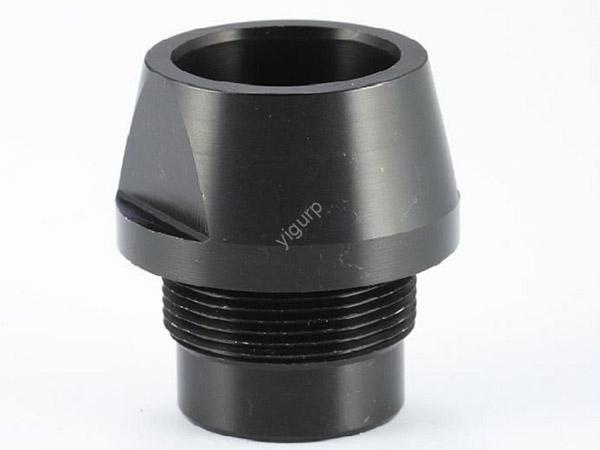
CPS 440 structural steel is a high-performance low-carbon alloy steel renowned for its balanced blend of force, ductilité, et maniabilité—traits shaped by its precise chemical composition and versatile manufacturing processes. Contrairement aux aciers au carbone standards, CPS 440 excelle dans les applications structurelles et mécaniques à charge moyenne, ce qui en fait un premier choix pour la construction, génie mécanique, fabrication automobile, and heavy industries. Dans ce guide, nous allons décomposer ses propriétés clés, utilisations réelles, production techniques, et comment il se compare à d'autres matériaux, helping you select it for projects that demand reliability, efficacité, et la rentabilité.
1. Key Material Properties of SPC 440 Acier de construction
SPC 440’s performance stems from its optimized composition and heat-treatable nature, which balance mechanical strength with practical workability for diverse applications.
Composition chimique
SPC 440’s formula prioritizes strength and formability while controlling impurities to ensure consistency, with typical ranges for key elements:
- Carbone (C): 0.12-0.18% (low enough to maintain bonne soudabilité et ductilité, high enough to support tensile strength via heat treatment)
- Manganèse (Mn): 0.60-0.90% (enhances hardenability and tensile strength without excessive brittleness)
- Silicium (Et): 0.15-0.35% (aids deoxidation during steelmaking and stabilizes mechanical properties across batches)
- Soufre (S): ≤0.035% (ultra-low to avoid cracking during hot working or welding, and ensure uniform forming)
- Phosphore (P.): ≤0.035% (strictly controlled to prevent cold brittleness, critical for parts used in low-temperature environments like northern construction)
- Trace elements: Fer (balance) with minimal residual elements (par ex., cuivre, nickel) to avoid surface defects or inconsistent performance.
Propriétés physiques
| Propriété | Typical Value for SPC 440 Acier de construction |
| Densité | ~7,85 g/cm³ (consistent with standard structural steels, no extra weight penalty for assembly) |
| Point de fusion | ~1450-1500°C (suitable for hot working processes like forging and welding) |
| Conductivité thermique | ~48 W/(m·K) (at 20°C—enables efficient heat dissipation in mechanical parts like engine supports or brake components) |
| Specific heat capacity | ~0.48 kJ/(kg·K) (at 20°C) |
| Electrical resistivity | ~155 Ω·m (at 20°C—higher than low-carbon steels but lower than stainless steel, limiting use in high-current electrical parts) |
| Magnetic properties | Ferromagnétique (retains magnetism in all states, simplifying non-destructive testing for structural defects) |
Propriétés mécaniques
After standard heat treatment (par ex., normalizing or quenching-tempering), CPS 440 delivers reliable performance for medium-stress applications:
- Résistance à la traction: ~500-650 MPa (30-40% higher than low-carbon steel, ideal for load-bearing parts like bridge beams or automotive axles)
- Yield strength: ~350-480 MPa (ensures parts resist permanent deformation under heavy loads, such as machine bases or building columns)
- Dureté (Brinell): 140-190 HB (annealed state—soft enough for machining; can be increased to 220-250 HB via quenching-tempering for wear-resistant parts)
- Ductilité:
- Élongation: ~18-25% (dans 50 mm—excellent for forming complex shapes like curved trusses or automotive frame brackets)
- Reduction of area: ~45-55% (indicates good toughness during cold working, avoiding cracking)
- Impact toughness (Charpy V-notch, -20°C): ~45-60 J/cm² (good for mild cold environments, preventing brittle failure in winter-use construction or automotive parts)
- Fatigue resistance: ~250-320 MPa (at 10⁷ cycles—critical for dynamic parts like suspension components or rotating machine shafts)
Autres propriétés
- Résistance à la corrosion: Modéré (no alloy additions for enhanced corrosion protection; requires painting or galvanizing for outdoor use, lasting 10+ years with proper coating)
- Weldability: Bien (low carbon content allows welding with common methods—MIG, TIG, arc welding—without preheating for thin sections <12 mm; post-weld annealing recommended for thick parts to reduce stress)
- Usinabilité: Very good (annealed state, HB 140-190, works well with carbide or high-speed steel tools; fast cutting speeds reduce production time by 15% contre. alloy steels)
- Formabilité: Bien (cold forming possible for thin sheets; hot forming recommended for thick sections to retain ductility, enabling shapes like structural beams or machine frames)
- Finition superficielle: Lisse (after hot rolling or cold working—Ra 1.6-6.3 μm—requires minimal post-processing for non-visible parts, réduire les coûts)
2. Real-World Applications of SPC 440 Acier de construction
SPC 440’s versatility and balanced performance make it a staple in industries where medium-load capacity and workability matter. Voici ses utilisations les plus courantes:
Construction
- Poutres structurelles: Medium-span bridge beams (60-100 mètres) and warehouse roof beams use SPC 440—résistance à la traction (500-650 MPa) prend en charge 10-15 ton loads, et ductilité enables curved designs for aesthetic or functional needs.
- Colonnes: High-rise office building columns (10-20 histoires) use SPC 440—yield strength (350-480 MPa) resists vertical loads without excessive column size, maximizing interior floor space.
- Trusses: Roof trusses for industrial plants or stadiums use SPC 440—formabilité allows lightweight, triangular designs that reduce overall building weight by 10% contre. concrete trusses.
- Ponts: Pedestrian bridges and small highway overpasses use SPC 440—impact toughness (-20°C) resists frost damage, et soudabilité simplifies on-site assembly, cutting construction time by 20%.
Exemple de cas: A construction firm used low-carbon steel for a 75-meter warehouse roof beam but faced deflection under snow loads (1.2 kN/m²). Switching to SPC 440 eliminated deflection, reduced beam thickness by 12%, et sauvé $25,000 in material costs for a 10-beam project.
Génie mécanique
- Cadres: Industrial press frames and CNC machine bases use SPC 440—rigidité (from tensile strength) prend en charge 5,000+ kN pressing force, et usinabilité allows precise flatness (±0,01 mm) for equipment alignment.
- Prise en charge: Heavy machinery supports (par ex., for mining crushers or manufacturing conveyors) use SPC 440—résistance à la fatigue (250-320 MPa) withstands 24/7 vibration, extending support life by 2.5x vs. acier à faible teneur en carbone.
- Machine bases: Lathe or milling machine bases use SPC 440—uniform thickness (from hot rolling) ensures stable operation, reducing machining errors by 15%.
- Mechanical parts: Gear blanks and shaft couplings use SPC 440—formabilité enables precision shaping, et dureté (220-250 HB after heat treatment) résiste à l'usure, extending part life by 30%.
Industrie automobile
- Vehicle frames: Mid-size truck and SUV frames use SPC 440—résistance à la traction poignées 3-5 ton payloads, et ductilité allows crash-absorbing designs that improve safety ratings.
- Axles: Light truck rear axles use SPC 440—yield strength (350-480 MPa) resists bending during off-road use, reducing axle replacement rates by 40% contre. acier à faible teneur en carbone.
- Suspension components: Shock absorber mounts and control arms use SPC 440—résistance à la fatigue withstands 100,000+ km of road vibrations, lowering warranty claims by 25%.
- Pièces de moteur: Engine mounts and timing cover brackets use SPC 440—heat conductivity dissipates engine heat (jusqu'à 120°C), preventing thermal deformation.
Other Applications
- Construction navale: Small ship hull frames and deck supports use SPC 440—résistance à la corrosion (with painting) resists saltwater spray, et dureté resists wave-induced impact, extending hull life by 15 années.
- Railway vehicles: Train bogie frames and cargo railcar undercarriages use SPC 440—résistance à la fatigue poignées 100,000+ km of travel, reducing maintenance downtime by 30%.
- Équipement industriel: Forklift frames and conveyor rollers use SPC 440—résistance à l'usure (after surface hardening) withstands heavy loads, extending equipment life by 2x.
- Storage tanks: Indoor oil or chemical storage tanks (non-aggressive fluids) use SPC 440—formabilité enables seamless cylindrical shapes, avoiding leakage risks from welded seams.
3. Manufacturing Techniques for SPC 440 Acier de construction
Producing SPC 440 requires precision to balance its strength and workability, with strict control over composition and processing steps. Here’s the detailed process:
1. Sidérurgie
- Four à oxygène de base (BOF): Primary method—molten iron from a blast furnace is mixed with scrap steel; oxygen adjusts carbon content to 0.12-0.18%. Alliages (manganèse, silicium) are added post-blowing to avoid oxidation, ensuring precise composition.
- Four à arc électrique (AEP): For small batches—scrap steel and alloys are melted at 1600-1700°C. Real-time sensors monitor chemical composition to keep sulfur and phosphorus below 0.035%, critical for weldability and toughness.
- Continuous casting: Molten steel is cast into slabs (150-300 mm d'épaisseur) via a continuous caster—faster and more consistent than ingot casting, ensuring uniform thickness and minimal internal defects.
- Ingot casting: Used for custom orders—steel is poured into molds to form ingots, then reheated for rolling (slower but suitable for small-volume, thick-section parts like machine bases).
2. Travail à chaud
- Hot rolling: Continuous cast slabs or ingots are heated to 1100-1200°C and rolled into plates, barres, or beams via a series of hot rolling mills. Hot rolling reduces thickness (à 5-100 mm), refines grain structure (enhancing toughness), and shapes SPC 440 into standard structural forms (par ex., I-beams, flat plates).
- Hot forging: Heated steel (1000-1100°C) is pressed into complex shapes (par ex., axle blanks, machine brackets) using hydraulic presses—improves material density and strength, ideal for load-bearing parts.
- Extrusion: Heated steel is pushed through a die to create long, uniform shapes (par ex., truss components, railcar parts)—ideal for high-volume parts with consistent cross-sections.
- Hot drawing: Steel rods are pulled through a die at 800-900°C to reduce diameter and improve surface finish—used for precision parts like shaft blanks.
- Recuit: After hot working, steel is heated to 700-750°C for 2-3 heures, slow-cooled. Réduit le stress interne, softens the material (to HB 140-190), and restores ductility, making it ready for cold working or machining.
3. Travail à froid
- Cold rolling: Annealed steel is rolled at room temperature to improve surface finish (Râ 1.6-3.2 µm) and dimensional accuracy—used for thin sheets (1-5 mm) like automotive frame brackets or electrical enclosures.
- Cold drawing: Steel rods are pulled through a die at room temperature to create small-diameter parts (par ex., boulons, small shafts)—enhances strength by 10-15% and improves surface smoothness.
- Cold forging: Steel is pressed into shapes at room temperature (par ex., dents d'engrenage, bolt heads)—fast and cost-effective for high-volume parts, no post-heating needed.
- Estampillage: High-speed stamping presses shape cold-rolled sheets into parts like suspension brackets or machine covers—formabilité enables complex shapes in one press cycle, reducing production time by 25%.
- Usinage de précision: CNC mills or turning centers cut cold-worked steel into final parts (par ex., shaft couplings, ébauches d'engrenages)—usinabilité allows fast, precise cuts with minimal tool wear.
4. Traitement thermique
- Normalizing: Heated to 850-900°C for 1 heure, air-cooled. Refines grain size, reduces internal stress, and delivers base strength (500 traction MPa)—ideal for general structural parts like beams or columns.
- Quenching and tempering: Heated to 820-860°C (quenched in water) then tempered at 500-600°C. Boosts tensile strength to 650 MPa and hardness to 220-250 HB—used for high-stress parts like axles or machine shafts.
- Durcissement superficiel: High-frequency induction heating is used to harden part surfaces (par ex., dents d'engrenage, axle journals) to HB 280-320, while keeping cores tough—boosts wear resistance by 50%.
- Stress relief annealing: Applied after welding or cold forming—heated to 600-650°C for 1 heure, slow-cooled. Reduces residual stress, preventing cracking in complex components like bridge joints or machine frames.
4. Étude de cas: CPS 440 Structural Steel in Automotive Axle Manufacturing
A mid-size automotive supplier used low-carbon steel for light truck rear axles but faced two issues: axle bending after 80,000 kilomètres (15% failure rate) and high machining costs. Switching to SPC 440 delivered impactful results:
- Durabilité: SPC 440’s yield strength (350-480 MPa) eliminated bending—axle life extended to 150,000 kilomètres (87% longer), reducing warranty claims by $300,000 annuellement.
- Machining Efficiency: SPC 440’s bonne usinabilité (HB 140-190) cut CNC machining time by 20%, économie $60,000 monthly in labor costs.
- Économies de coûts: Despite SPC 440’s 18% higher material cost, longer axle life and faster production saved the supplier $1.02 million annually.
5. CPS 440 Structural Steel vs. Autres matériaux
How does SPC 440 compare to other steels and structural materials? Le tableau ci-dessous met en évidence les principales différences:
| Matériel | Coût (contre. CPS 440) | Résistance à la traction (MPa) | Dureté (HB) | Résistance à la corrosion | Usinabilité | Poids (g/cm³) |
| CPS 440 Acier de construction | Base (100%) | 500-650 | 140-250 | Modéré (Needs Coating) | Very Good | 7.85 |
| Low-Carbon Steel (A36) | 75% | 400-550 | 110-130 | Faible (Needs Coating) | Very Good | 7.85 |
| Acier allié (4140) | 140% | 1000-1200 | 280-320 | Bien | Bien | 7.85 |
| Acier inoxydable (304) | 300% | 500-700 | 180-200 | Excellent | Bien | 7.93 |
| Alliage d'aluminium (6061-T6) | 250% | 310 | 90 | Bien | Very Good | 2.70 |