
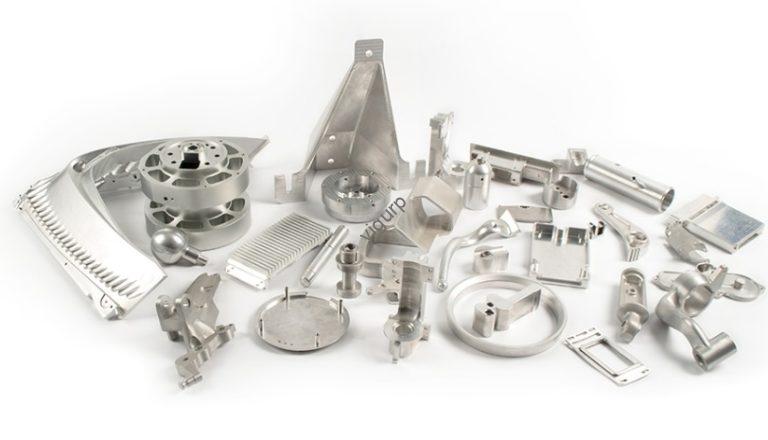
Dans les domaines de fabrication haut de gamme où la précision et la complexité comptent le plus, comme l'aérospatiale, dispositifs médicaux, and automotive—six-axis CNC machining prototype model stands as a game-changer. Contrairement aux machines CNC traditionnelles à 3 ou 5 axes, ce processus utilise des outils à six degrés de liberté (X, Oui, Z, plus rotation autour de trois axes), letting it craft intricate parts that other methods can’t. Whether you’re making a lightweight aerospace component or a precise medical device part, this guide breaks down every step, avantages clés, cas concrets, and tips to help you leverage this technology effectively.
1. What Is a Six-Axis CNC Machining Prototype Model?
Avant de plonger dans le processus, let’s clarify what makes this method unique. UN six-axis CNC machining prototype model is a manufacturing technique that uses computer-controlled (CNC) machines with six movable axes to create high-precision prototype parts or low-volume production components.
Différence clé: Six-Axis vs. Other CNC Types
To understand its advantage, let’s compare it to common CNC options:
| CNC Type | Axes of Motion | Précision (Tolérance) | Idéal pour | Gestion de la complexité |
| 3-Axe | X, Oui, Z (linéaire) | ±0,05 mm | Pièces simples (par ex., écrans plats) | Low—can’t reach hidden or angled surfaces |
| 5-Axe | X, Oui, Z + 2 rotations | ±0,02 mm | Moderate complexity (par ex., curved automotive parts) | Medium—struggles with deeply nested features |
| Six-Axis | X, Oui, Z + 3 rotations | ±0,005–0,01 mm | High complexity (par ex., aerospace engine blades, implants médicaux) | High—accesses every surface, even internal cavities |
This extra rotation lets the machine “wrap around” parts, eliminating the need to reposition the material mid-process (a step that introduces errors in other CNC types). Par exemple, a six-axis machine can machine a twisted aerospace turbine blade in one go, while a 5-axis machine would need two setups—and risk misalignment.
2. Step-by-Step Process of Six-Axis CNC Machining Prototype Model
The process follows a structured workflow to ensure precision and consistency. Skipping any step can lead to flawed parts, so attention to detail is key.
Étape 1: Conception & Programming – Lay the Digital Foundation
Every prototype starts with a digital model. Voici comment y parvenir:
- 3Modélisation D: Utilisez un logiciel comme SolidWorks, CATIA, ou Fusion 360 to create a detailed 3D model of the part. For a medical implant (par ex., a hip replacement component), the model must include tiny surface textures that promote bone growth—six-axis machining can replicate these exactly.
- Programmation CNC: Convert the 3D model into a machine-readable program (using CAM software like Mastercam). The program defines the tool path, vitesse de coupe, et vitesse d'avance. For a complex automotive gear part, the program might include 500+ tool movements to ensure every tooth is precise.
- Astuce clé: Test the program in a digital simulation first. A aerospace company once skipped this and damaged a $5,000 titanium part—simulation would have caught the tool collision early.
Étape 2: Equipment Selection & Preparation – Choose the Right Tools
Not all six-axis machines are the same—pick one that matches your part’s needs:
- Type de machine: Vertical six-axis machines work well for small parts (par ex., capteurs médicaux), while horizontal machines handle larger components (par ex., blocs moteurs automobiles).
- Sélection d'outils: Use carbide tools for hard materials (comme l'acier inoxydable) et acier rapide (HSS) tools for softer ones (comme l'aluminium). For a titanium aerospace part, a carbide end mill with a coating (par ex., TiAlN) reduces wear and extends tool life by 50%.
- Étalonnage des machines: Avant usinage, calibrate the machine to ensure axes are aligned. Even a 0.001mm misalignment can ruin a high-precision part. Most modern machines have auto-calibration features—use them!
Étape 3: Préparation du matériel & Fixation – Secure the Raw Material
The right material and proper fixation prevent shifting during machining:
- Material Choices: Common options include aluminum alloys (léger, idéal pour l'aérospatiale), acier inoxydable (durable, utilisé dans les dispositifs médicaux), et les plastiques (faible coût, for automotive interior parts). Par exemple, a drone prototype’s frame might use aluminum alloy 6061 (strength-to-weight ratio of 205 MPa / 2.7 g/cm³).
- Fixation Methods: Use vises or clamps for small parts, or custom fixtures for irregular shapes. A medical device manufacturer making a curved implant uses a 3D-printed fixture that matches the part’s contour—this keeps it stable during machining.
- Checklist: Ensure the material is clean (no oil or debris) and the fixture is tight—loose material leads to uneven cuts.
Étape 4: Ebauche & Finishing – Shape the Part Precisely
These two stages turn raw material into a finished prototype:
- Ebauche: Use large tools (par ex., 10mm end mills) to quickly remove excess material. The goal is to get close to the final shape without worrying about surface quality. For a 100mm x 50mm aluminum part, roughing might remove 80% of the material in 10–15 minutes.
- Finition: Switch to smaller, sharper tools (par ex., 2mm ball-end mills) for fine cuts. This step ensures precise dimensions and smooth surfaces. A medical implant’s finishing step might involve a tool path that creates a surface roughness of Ra 0.8μm—critical for biocompatibility.
- Exemple: An automotive company making a prototype gear used roughing to shape the gear’s outer diameter, then finishing to cut the teeth. The finished gear had a tolerance of ±0.008mm, meeting strict industry standards.
Étape 5: Post-traitement & Inspection de la qualité – Garantir la perfection
Even the best machining needs final checks and touches:
- Post-traitement: Clean the part with ultrasonic cleaning (to remove cutting fluid and debris) and deburr edges (to eliminate sharp spots). For a stainless steel medical part, passivation (un traitement chimique) adds a protective layer against rust.
- Contrôle qualité: Use tools like coordinate measuring machines (MMT) to check dimensions, and optical scanners to verify surface quality. A aerospace component might undergo 10+ inspection points—including checking hole depth, surface flatness, and axis alignment.
- Failure Example: A team skipped inspection on a prototype turbine blade and later found a 0.01mm deviation in one edge. This would have caused airflow issues in the final engine—catching it early saved $20,000 en refonte.
Étape 6: Traitement de surface & Optimization – Enhance Performance
Surface treatments improve durability, esthétique, et fonctionnalité:
- Common Treatments:
- Anodisation: Pour pièces en aluminium (par ex., cadres de drones) – adds color and corrosion resistance.
- Sablage: Creates a matte finish (used in automotive interior parts for grip).
- Peinture: For consumer-facing parts (par ex., prototype electronics enclosures) – improves appearance.
- Conseils d'optimisation: If a part is too heavy (par ex., un support aérospatial), use six-axis machining to add lightweight pockets—this can cut weight by 30% sans perdre de force.
3. Applications du monde réel & Études de cas
Six-axis CNC machining prototype model shines in industries where precision and complexity are non-negotiable. Here are three key use cases with real examples:
Cas 1: Aerospace – Turbine Blade Prototypes
A leading aerospace company needed to test a new turbine blade design for jet engines. The blade had a twisted shape with internal cooling channels—impossible to machine with 5-axis tools.
- Solution: They used a six-axis CNC machine to machine the blade from a single block of titanium alloy. The machine’s extra rotation let it reach the internal channels without repositioning.
- Résultat: The prototype had a tolerance of ±0.007mm, and testing showed it improved engine efficiency by 8%. Using six-axis machining cut prototype development time by 4 weeks compared to 5-axis methods.
Cas 2: Medical Devices – Hip Replacement Implants
A medical device manufacturer was developing a custom hip implant. The implant needed a porous surface to help bone grow into it, plus a precise ball-and-socket joint.
- Solution: Six-axis CNC machining was used to create the porous surface (via tiny, evenly spaced holes) and machine the joint to a tolerance of ±0.005mm.
- Résultat: The prototype passed biocompatibility tests, and surgeons reported it fit better than previous designs. The manufacturer was able to start clinical trials 2 des mois plus tôt que prévu.
Cas 3: Automotive – High-Performance Gearbox Parts
A luxury car brand wanted to prototype a gearbox part for its electric vehicle. The part had curved teeth and a hollow center—features that 3-axis machines couldn’t handle.
- Solution: A six-axis machine machined the part from stainless steel, using a combination of roughing and finishing tools to get the teeth and hollow center right.
- Résultat: The prototype gearbox handled 20% more torque than the old design, and the car’s acceleration improved by 0.5 secondes (0–60 mph). La marque sauvée $15,000 by avoiding 5-axis rework.
4. Key Advantages of Six-Axis CNC Machining Prototype Model
Why choose this method over other prototype manufacturing techniques? Voici les principaux avantages, backed by data:
1. Unmatched Precision
Six-axis machines achieve tolerances of ±0,005–0,01 mm—far better than 3-axis (±0,05 mm) or even 5-axis (±0,02 mm) machines. This is critical for parts like medical implants, where a tiny deviation can cause patient harm.
2. Faster Production for Complex Parts
By eliminating the need to reposition parts mid-process, six-axis machining cuts prototype time by 20–30% compared to 5-axis. Par exemple, a complex aerospace part that takes 10 hours to make with 5-axis takes only 7 hours with six-axis.
3. Reduced Material Waste
Because six-axis machines follow precise tool paths, they waste 15–20% less material than other CNC types. Pour les matériaux coûteux comme le titane (costing $50–$150 per kg), this saves significant money. A team making a titanium prototype saved $800 in material costs by using six-axis machining.
4. Versatility Across Materials
Six-axis machines work with almost any material—aluminum, acier inoxydable, titane, plastiques, et même des composites. This means you can use the same machine for different prototype projects, reducing equipment costs.
5. Yigu Technology’s Perspective on Six-Axis CNC Machining Prototype Model
Chez Yigu Technologie, nous croyons six-axis CNC machining prototype model is a cornerstone of high-end manufacturing innovation. Too many teams settle for 5-axis machining for complex parts, only to face rework and delays. We recommend it for aerospace, médical, and automotive clients who need uncompromising precision. Our team uses six-axis machines to help clients cut prototype development time by 25–30% and reduce material waste by 18%. Par exemple, we helped a medical device startup deliver a hip implant prototype 2 mois plus tôt, getting them to clinical trials faster. Six-axis isn’t just a tool—it’s a way to turn bold design ideas into reliable prototypes.
FAQ
- How much does a six-axis CNC machining prototype cost?
Les coûts dépendent de la taille de la pièce, matériel, et complexité. A small aluminum prototype (par ex., 50mm x 30mm) costs $200–$500. A large titanium aerospace part can cost $2,000–$5,000. While more expensive than 3-axis, it saves money by avoiding rework and reducing development time.
- How long does it take to make a six-axis CNC machining prototype?
Pièces simples (par ex., small medical sensors) prendre 1 à 3 jours. Pièces complexes (par ex., pales de turbine aérospatiale) take 5–10 days. This includes design, programmation, usinage, and inspection—faster than 5-axis for complex projects.
- Can six-axis CNC machining be used for low-volume production (pas seulement des prototypes)?
Oui! It’s ideal for low-volume production (10–100 pièces) where precision is key. Par exemple, a medical device company used six-axis machining to make 50 custom hip implants for clinical trials. For volumes over 100, injection molding or 3-axis machining may be cheaper, but six-axis remains the top choice for precision-focused low-volume runs.