
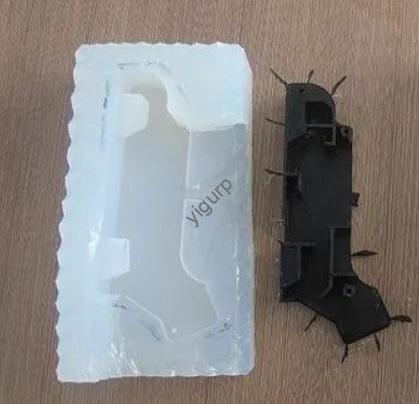
Si vous avez exploré les méthodes de prototypage rapide ou de production en petits lots, you’ve likely encountered the term duplexage en silicone. Également connu sous le nom de réplication de silicone ou moulage sous vide., cette technique est devenue la pierre angulaire de la fabrication moderne pour sa capacité à créer des répliques précises rapidement et à moindre coût.. Mais qu’est-ce que le duplexage au silicone exactement ?? Comment ça marche, and when should you use it for your projects? Dans ce guide, we’ll answer these questions and more, breaking down everything you need to know about this versatile manufacturing process.
What Is Silicone Duplexing?
À la base, duplexage en silicone is a replication process that uses silicone molds to create precise copies of original prototypes or parts. Sometimes called vacuum molding due to its use of vacuum conditions, this technique produces replicas with an impressive 99.8% reduction rate—meaning the copies are nearly identical to the original sample.
The Fundamental Principle
Silicone duplexing works on a simple yet effective principle: create a flexible silicone mold from an original template, then use that mold to cast duplicate parts using various materials. Unlike traditional manufacturing methods that require expensive tooling or long production cycles, silicone duplexing offers a middle ground that balances speed, coût, and accuracy—making it ideal for small-batch production and prototyping.
Key Terminology to Know
To understand silicone duplexing better, let’s clarify some important terms:
- Moule en silicone: A flexible tool made from silicone rubber that captures the exact shape and details of an original prototype.
- Coulée sous vide: The process of pouring liquid materials into the silicone mold under vacuum conditions to eliminate air bubbles.
- Master Model/Prototype: The original part used to create the silicone mold, typically made via CNC machining, 3Impression D, or SLA laser prototyping.
- Casting Materials: Liquids poured into the mold to create replicas, including PU (polyuréthane), silicone, nylon, et ABS.
The Silicone Duplexing Process: Répartition étape par étape
Silicone duplexing follows a straightforward three-step process that balances precision with efficiency. Let’s walk through each stage in detail:
Étape 1: Manufacturing the Master Prototype
Every silicone duplexing project begins with a high-quality master prototype. This is created using one of several methods based on the project requirements:
- Usinage CNC: Ideal for precise, geometrically complex parts with tight tolerances.
- SLA Laser Rapid Prototyping: Perfect for highly detailed parts that require smooth surface finishes.
- 3D Impression: Great for quick turnaround times and complex geometries that are difficult to machine.
The prototype is manufactured from the 3D drawings provided by the customer, ensuring it matches the exact specifications of the desired final part. This step is critical because any flaws or imperfections in the master prototype will be replicated in all subsequent copies.
Étape 2: Creating the Silicone Mold
Once the master prototype is ready, the next step is creating the silicone mold:
- Prepare the Mold Base: Build a container around the prototype to contain the liquid silicone.
- Secure the Prototype: Position and fix the prototype within the mold base to prevent movement during pouring.
- Mix and Pour Silicone: Prepare the silicone rubber according to the manufacturer’s instructions and pour it over the prototype, ensuring all details are covered.
- Cure the Silicone: Allow the silicone to dry and cure for approximately 8 hours at room temperature.
- Demold the Prototype: Carefully open the cured silicone mold and remove the master prototype, leaving a precise negative impression ready for casting.
The quality of the silicone mold directly impacts the quality of the final replicas, so proper mixing, pouring, and curing are essential.
Étape 3: Casting and Curing the Replicas
With the silicone mold ready, it’s time to create the replicas:
- Prepare the Casting Material: Mix the chosen material (Unité centrale, silicone, ABS-like resin, etc.) according to its specific formula.
- Coulée sous vide: Pour the liquid material into the silicone mold under vacuum conditions to eliminate air bubbles that could mar the final surface.
- Primary Curing: Place the filled mold in a constant temperature chamber set to 60°–70°C for 30–60 minutes to allow initial curing.
- Démoulage: Remove the partially cured part from the mold once it has achieved sufficient strength.
- Secondary Curing (Facultatif): For enhanced material properties, some projects require a second curing step in an incubator set to 70°–80°C for 2–3 hours.
This process can be repeated with the same silicone mold until the mold reaches the end of its service life, typically after 15–20 uses for most applications.
Materials Used in Silicone Duplexing
One of the strengths of silicone duplexing is its compatibility with various materials, allowing manufacturers to match the properties of the final production material closely. Here are the most common options:
Primary Casting Materials
- Polyuréthane (Unité centrale) Résines: Le choix le plus populaire, available in various hardnesses (Shore A to Shore D) to mimic different plastics and rubbers.
- Caoutchouc de silicone: Used for creating flexible parts that need heat resistance or elasticity.
- ABS-Like Resins: Formulated to replicate the strength, rigidité, and surface finish of actual ABS plastic.
- Nylon Composites: Offer enhanced strength and heat resistance for functional prototypes.
- PMMA (Acrylique) Résines: Provide transparent or translucent parts with glass-like clarity.
Silicone Mold Materials
The molds themselves are made from specialized silicone rubbers that offer:
- Excellent flexibility for easy demolding
- High temperature resistance for curing processes
- Good tear strength to withstand multiple uses
- Low shrinkage to maintain dimensional accuracy
| Type de matériau | Propriétés clés | Typical Applications |
| PU Resins | Various hardnesses, bonne résistance aux chocs | Prototypes de produits de consommation, logements |
| Caoutchouc de silicone | Résistance à la chaleur, flexibilité, inertie chimique | Joints, scellés, flexible components |
| ABS-Like Resins | Rigidité, bonne finition de surface, usinabilité | Boîtiers électroniques, pièces structurelles |
| PMMA Resins | Transparence, Résistance aux UV | Lentilles, couvertures d'affichage, clear components |
| Nylon Composites | Haute résistance, résistance à l'usure | Gear prototypes, composants mécaniques |
Applications of Silicone Duplexing Across Industries
Silicone duplexing has found applications in numerous industries thanks to its versatility and cost-effectiveness. Let’s explore the key areas where it delivers the most value:
Plastic Prototype Manufacturing
Silicone duplexing is widely used to create plastic prototypes for product development:
- Electronique grand public: Prototypes for televisions, monitors, téléphones intelligents, et autres appareils.
- Appareils électroménagers: Early versions of small kitchen appliances and home devices.
- Équipement industriel: Functional prototypes for machinery components.
The 3D prototype proofing process, often using photosensitive resins, falls into this category, allowing designers to test form, ajuster, and function before committing to expensive production tooling.
Silicone Laminate Prototypes
For design validation and presentation, silicone laminate prototypes are invaluable:
- Industrie automobile: Interior and exterior component prototypes for cars and trucks.
- Toy Manufacturing: Concept models and pre-production samples.
- Produits de consommation: Handicrafts, daily necessities, et articles ménagers.
- Dispositifs médicaux: Non-functional design prototypes for ergonomic testing.
These prototypes focus primarily on visual appearance and design validation rather than functional testing, though they can sometimes be made with functional properties.
Small-Batch Production Runs
Au-delà du prototypage, silicone duplexing excels at production en petites séries:
- Pièces personnalisées: Low-volume production of specialized components.
- Limited Editions: Short-run manufacturing of collectibles or limited-release products.
- Bridge Production: Filling the gap between prototyping and full-scale production.
- Aftermarket Components: Replacement parts for legacy products.
This application is particularly valuable for startups and small businesses that need to bring products to market quickly without large upfront investments.
Advantages of Silicone Duplexing
Silicone duplexing offers numerous benefits that make it a compelling choice for prototyping and small-batch production:
Rentabilité
- Low Production Costs: Significantly cheaper than CNC machining for multiple parts and more affordable than traditional mold making.
- No Expensive Tooling: Eliminates the need for costly metal molds required for injection molding.
- Reduced Material Waste: More efficient use of materials compared to subtractive manufacturing methods like CNC machining.
Speed and Efficiency
- Short Production Cycles: From prototype to finished parts in days rather than weeks or months.
- Délai d'exécution rapide: Quick iteration between design changes and new prototypes.
- No Mold Opening Delays: Saves weeks or months compared to traditional mold development timelines.
Quality and Versatility
- High Reduction Rate: 99.8% accuracy ensures replicas closely match the original prototype.
- Low Failure Rate: Vacuum casting minimizes defects like air bubbles and incomplete fills.
- Flexibilité matérielle: Ability to use various materials to match final production specifications.
- Exquisite Workmanship: Produces parts with smooth surfaces and no burrs when done correctly.
Small-Batch Benefits
- Ideal for Customization: Easily accommodates design changes between production runs.
- Market Testing: Allows businesses to test market response before scaling up production.
- Risk Mitigation: Reduces financial risk by limiting investment in unproven designs.
Key Characteristics of Silicone Duplexing Prototypes
The parts produced via silicone duplexing exhibit specific characteristics that contribute to their usefulness:
Mold Properties
- Stabilité dimensionnelle: Silicone molds do not deform or shrink significantly during use.
- Résistance à la température: Withstand the curing temperatures required for various casting materials.
- Reusability: Can be used repeatedly (15–25 times) before showing signs of wear.
- Detail Capture: Excellent reproduction of fine details from the master prototype.
Part Characteristics
- Finition de surface: Lisse, consistent surfaces that often require minimal post-processing.
- Précision dimensionnelle: Close tolerance replication of the original prototype.
- Propriétés des matériaux: Parts can mimic the mechanical properties of production materials.
- Personnalisation: Easy color matching and texture replication for visual accuracy.
Limitations and Considerations
While highly versatile, silicone duplexing does have some limitations to consider:
Mold Lifespan
The biggest limitation is the limited service life of silicone molds, typically 15–25 uses. After this, molds begin to degrade, losing detail and dimensional accuracy. This makes silicone duplexing impractical for large production runs where hundreds or thousands of parts are needed.
Material Limitations
While casting materials can mimic many production plastics, they often don’t perfectly match the mechanical properties of the real materials. This can limit the usefulness of prototypes for certain types of functional testing.
Size Constraints
Silicone duplexing works best for small to medium-sized parts. Very large components can be challenging due to the difficulty of creating and handling large silicone molds under vacuum conditions.
Post-Processing Requirements
While many parts require minimal post-processing, some may need additional work like trimming, ponçage, or painting to achieve the desired finish—adding time and cost to the process.
Yigu Technology’s Perspective
Chez Yigu Technologie, we consider silicone duplexing a cornerstone of rapid product development. Its ability to balance speed, coût, and accuracy makes it invaluable for bridging the gap between design and production. We leverage its strengths in small-batch customization and prototype validation to help clients accelerate time-to-market while minimizing risk. When paired with precise prototype manufacturing, silicone duplexing delivers exceptional replication quality that supports confident decision-making during product development.
FAQ
1. How many parts can a single silicone mold produce?
A typical silicone mold used in duplexing has a service life of 15–25 production cycles. The exact number depends on factors like part complexity, material used, and care during demolding. More intricate parts with thin walls may reduce mold lifespan, while simpler geometries can sometimes exceed 25 utilise.
2. What’s the difference between silicone duplexing and injection molding?
The primary differences lie in tooling, volume, et le coût. Silicone duplexing uses inexpensive silicone molds with limited lifespans, making it ideal for 10–100 parts. Injection molding requires costly metal molds but becomes more economical for production runs of 10,000+ parties. Duplexing offers faster turnaround, while injection molding provides better material properties and consistency for large volumes.
3. Can silicone duplexing produce functional prototypes for testing?
Oui, depending on the casting material chosen. Many PU and ABS-like resins used in silicone duplexing offer mechanical properties sufficient for basic functional testing, including impact resistance and dimensional stability. Cependant, for rigorous testing requiring exact production material properties, duplexing prototypes may serve as visual references rather than functional test samples.