
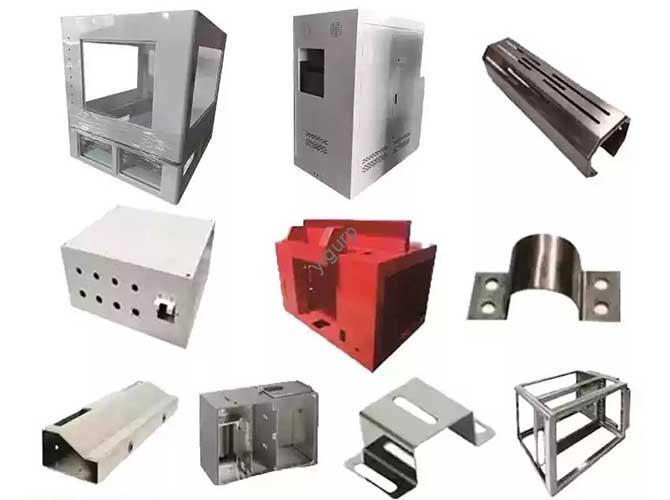
Si vous recherchez « Tôle Chine,« Vous cherchez probablement à comprendre pourquoi la Chine est un choix mondial de premier plan pour la fabrication de tôles., comment trouver des fournisseurs fiables, ou ce qui distingue les services de tôlerie chinois. La réponse courte? China’s sheet metal industry combinestechnologie avancée, compétitivité des coûts, capacités de production de masse, and a mature supply chain—making it a go-to for businesses worldwide, des petites startups à Fortune 500 entreprises. Dans ce guide, nous allons détailler tout ce que vous devez savoir, from industry trends to practical sourcing tips, to help you make informed decisions.
Why Choose Sheet Metal China? Key Advantages for Global Buyers
China’s dominance in the global sheet metal market isn’t accidental. It’s built on decades of investment in infrastructure, main d'oeuvre qualifiée, et innovation technologique. Here are the core advantages that attract buyers from Europe, North America, et au-delà:
1. Cost-Effectiveness Without Compromising Quality
Chinese manufacturers benefit from economies of scale—large production volumes lower per-unit costs—without cutting corners on quality. Par exemple, a U.S.-based electronics company we worked with reduced their sheet metal component costs by25-30% by switching to a Chinese supplier, while maintaining ISO 9001 et l'IATF 16949 attestations (critical for automotive and tech industries). This cost savings comes from optimized material sourcing (China is one of the world’s top steel producers) and efficient labor management, not poor quality.
2. Technologie avancée & Diversified Capabilities
Gone are the days when China was only known for basic manufacturing. Aujourd'hui, top Chinese sheet metal factories useCNC punching machines, laser cutting systems (with precision up to ±0.1mm), robotic welding arms, and automated bending machines. Un exemple concret: A German medical device firm sourced stainless steel sheet metal enclosures from a Chinese supplier that used fiber laser cutters to achieve the tight tolerances required for medical equipment—meeting the strict EU MDR (Medical Device Regulation) normes.
Chinese manufacturers also handle a wide range of materials, including aluminum, acier inoxydable (304, 316), acier au carbone, and even specialty alloys like titanium. This versatility means you can source everything from simple brackets to complex aerospace components in one place.
3. Délai d'exécution rapide & Mass Production Capacity
China’s mature supply chain—from raw material suppliers to secondary finishing services (peinture, revêtement en poudre, placage)—cuts lead times significantly. Pour les projets urgents, many factories offer1-2 prototypes de la semaine et4-6 week mass production timelines, par rapport à 6-8 weeks in some Western countries. A European automotive parts distributor recently ordered 50,000 sheet metal brackets and received them in 5 semaines, thanks to the supplier’s automated production lines and local material stockpiles.
The Current State of China’s Sheet Metal Industry: Données & Tendances
To understand the reliability of Sheet Metal China, let’s look at key facts and trends that shape the industry:
Market Size & Global Share
- China is the world’s largest sheet metal manufacturing hub, accounting for over 40% of global sheet metal production (2024 data from the China Association of Metalforming).
- The industry’s market value exceeded 1.2 trillion RMB (≈$165 billion) dans 2023, with a annual growth rate of 6-8%—driven by demand from automotive, électronique, et les secteurs des énergies renouvelables.
Key Regional Clusters
Most sheet metal factories are concentrated in industrial zones, making it easier for buyers to visit and coordinate. The top clusters include:
| Region | Focus Industries | Avantages clés |
|---|---|---|
| Guangdong (Shenzhen, Guangzhou) | Électronique, Biens de consommation | Proximity to tech hubs; prototypage rapide |
| Jiangsu (Suzhou, Wuxi) | Automobile, Équipement médical | Contrôle de qualité strict; ISO certifications |
| Zhejiang (Hangzhou, Ningbo) | Machinerie, Énergie renouvelable | Cost-competitive; production à grande échelle |
Par exemple, Shenzhen alone has over 5,000 sheet metal suppliers, many specializing in custom parts for smartphones and IoT devices.
Emerging Trends Shaping the Industry
- Green Manufacturing: More factories are adopting eco-friendly practices, such as using water-based paints and recycling scrap metal. Sur 60% of top suppliers now have ISO 14001 (environmental management) attestation (2024 survey by China Metalforming).
- Smart Factories: IoT sensors and AI are being used to monitor production lines. A supplier in Suzhou reduced defect rates by 18% after implementing AI-powered quality checks for laser-cut parts.
- Customization for Niche Sectors: Demand for high-precision sheet metal in aerospace (par ex., supports d'avion) et énergies renouvelables (par ex., cadres de panneaux solaires) is growing—driving investment in advanced machinery like 5-axis laser cutters.
How to Choose a Reliable Sheet Metal Supplier in China: Guide étape par étape
Finding the right supplier is critical to avoiding delays, quality issues, or communication problems. Voici un exemple pratique, actionable process based on our 10+ years of sourcing experience:
Étape 1: Define Your Requirements Clearly
Before reaching out to suppliers, document:
- Material type (par ex., 304 acier inoxydable, 6061 aluminium)
- Thickness (0.5mm–20mm is standard for most sheet metal)
- Tolerance needs (par ex., ±0.1mm for precision parts)
- Finition (revêtement en poudre, anodisation, galvanisation)
- Quantity (prototype, petit lot <1,000 unités, mass production >10,000 units)
- Certifications required (OIN 9001, IATF 16949, CE, FDA pour les pièces médicales)
A U.K. robotics company we advised saved 3 months of back-and-forth by sharing 3D CAD files and a detailed spec sheet upfront—suppliers could provide accurate quotes within 48 heures.
Étape 2: Screen Suppliers for E-E-A-T (Expérience, Compétence, Authoritativeness, Trustworthiness)
Avoid “middlemen” by focusing on factories with:
- 5+ années d'expérience: Look for suppliers that specialize in your industry (par ex., if you need automotive parts, choose a supplier with IATF 16949 certification and past clients like Toyota or VW).
- Verifiable client references: Ask for 2-3 references from buyers in your country—follow up to ask about quality, lead times, et communications.
- Transparent facilities: Request a virtual tour or photos of their factory floor. A reliable supplier will show you their CNC machines, quality control labs, and storage areas.
Red flags to watch for: Unwillingness to share certifications, vague answers about production processes, or extremely low quotes (often a sign of poor quality).
Étape 3: Request Samples & Conduct Quality Checks
Never place a large order without testing a sample first. Here’s what to check:
- Précision dimensionnelle (use calipers or a coordinate measuring machine, MMT)
- Finition superficielle (no scratches, uneven coating, or burrs)
- Material authenticity (ask for a material certificate, par ex., MTR—Mill Test Report)
A Canadian furniture brand once received samples that looked good but failed load tests—they avoided a $50,000 mistake by testing before mass production.
Étape 4: Negotiate Terms & Protect Your Business
Clear contracts are essential. Key terms to include:
- Tarifs (fixed or per-unit, avec des remises sur volume)
- Lead times (with penalties for delays)
- Quality guarantees (return policy for defective parts)
- Payment terms (par ex., 30% deposit, 70% upon delivery)
- Intellectual property (IP) protection (non-disclosure agreements, NDA, to prevent your designs from being shared)
For international shipments, work with suppliers who have experience with EXW, FOB, or CIF Incoterms—this clarifies who is responsible for shipping, insurance, and customs.
Common Challenges in Sourcing Sheet Metal from China (and How to Solve Them)
While Sheet Metal China offers many benefits, buyers often face hurdles. Here’s how to overcome them:
Défi 1: Language & Communication Barriers
Many factory workers speak limited English, which can lead to misinterpretation of specs.Solution: Work with suppliers who have English-speaking sales or project managers. Use visual tools like 3D models, diagrams, and photos instead of just text. Pour les projets complexes, hire a local sourcing agent (but verify their credentials first).
Défi 2: Quality Inconsistency
Not all suppliers meet the same standards—some may cut corners to lower costs.Solution: Choose suppliers with third-party certifications (OIN, IATF) and conduct regular quality audits (in-person or via a third-party inspector like SGS or BV). Pour les grosses commandes, use “batch inspections” (checking 10-15% of units before shipment).
Défi 3: Shipping Delays & Customs Issues
Global supply chain disruptions (par ex., port congestion) or incorrect documentation can delay deliveries.Solution: Plan ahead—add 1-2 weeks to your lead time for unexpected delays. Ensure the supplier provides all required documents (commercial invoice, packing list, certificate of origin) to avoid customs hold-ups. Use reliable freight forwarders with experience in your country’s import rules.
Yigu Technology’s Perspective on Sheet Metal China
Chez Yigu Technologie, we’ve partnered with over 100 Chinese sheet metal suppliers in the past 8 années, supporting clients in automotive, électronique, et énergies renouvelables. What sets China apart is its ability to balance “speed, qualité, and cost”—a combination that’s hard to find elsewhere. Cependant, success depends onstrategic sourcing, not just choosing the cheapest supplier. We recommend buyers focus on long-term partnerships: A good Chinese supplier will invest in understanding your needs, s'adapter aux changements de conception, and even suggest cost-saving tweaks (par ex., switching to a lighter material without losing strength). While challenges like communication exist, they’re easily solved with proper planning. For businesses looking to scale, Sheet Metal China isn’t just a sourcing option—it’s a competitive advantage.
FAQ About Sheet Metal China
1. Quelle est la quantité minimum de commande (MOQ) for Chinese sheet metal suppliers?
MOQs vary: Most suppliers accept prototypes (1-10 unités) and small batches (100-500 unités), but mass production orders (1,000+ unités) often get better pricing. Some specialize in low-MOQ custom parts—just ask upfront.
2. How do I verify a Chinese sheet metal supplier’s certifications?
Ask for digital copies of certifications (OIN 9001, IATF 16949) and cross-check them on the issuing body’s website (par ex., GV, BV). For critical industries (médical, aérospatial), request a third-party audit report.
3. Can Chinese suppliers handle custom sheet metal designs?
Yes—top suppliers use CAD/CAM software (SolidWorks, AutoCAD) to turn your 3D models or 2D drawings into parts. Many also offer design for manufacturing (DFM) services to optimize your design for cost and production efficiency.
4. How long does it take to ship sheet metal parts from China to my country?
Air freight takes 3-7 jours (faster but more expensive), while sea freight takes 2-6 semaines (cheaper for large volumes). Par exemple, shipping to the U.S. West Coast takes 2-3 weeks by sea; to Europe, 3-4 semaines.
5. Are there any hidden costs when sourcing from China?
Watch for additional costs like tooling fees (for custom dies), finishing charges (anodisation, placage), expédition, customs duties, and inspection fees. Ask for a “total landed cost” quote upfront to avoid surprises.