
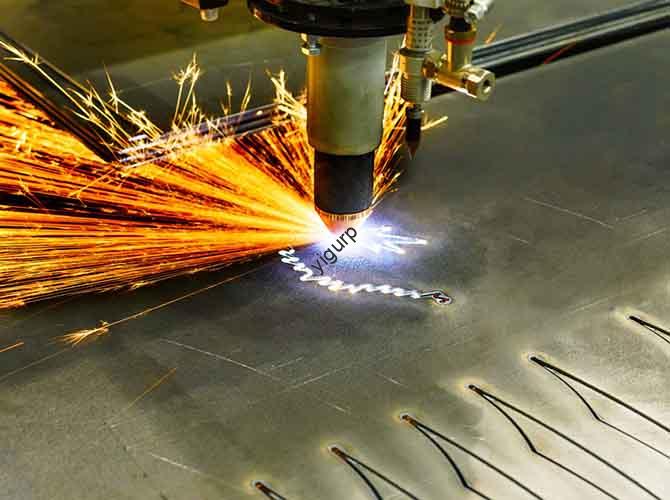
Si vous vous êtes déjà demandé comment sont fabriqués les composants essentiels qui alimentent les machines, des moteurs de voiture aux pompes industrielles,, tu es au bon endroit. Shaft machining is the backbone of manufacturing, créer des pièces de précision qui transfèrent la puissance et le mouvement dans d'innombrables appareils. Que vous soyez un amateur souhaitant apprendre les bases, un étudiant étudiant en fabrication, or a professional seeking to refine your processes, this guide covers everything you need to know about shaft machining, from core processes to material selection and equipment use.
1. Understanding Shaft Machining: What It Is and Why It Matters
À la base, shaft machining is the process of shaping raw metal (ou d'autres matériaux) into cylindrical or tapered components called “shafts.” These parts are critical because they act as the “spines” of mechanical systems—think of a car’s crankshaft converting linear motion into rotational power, or a motor’s spindle spinning to drive a tool. Without precise shaft machining, machines would fail to operate smoothly, efficiently, or safely.
A Real-World Example of Shaft Machining Importance
In the automotive industry, a single mistake in machining a camshaft (a key shaft type) can lead to engine misfires, reduced fuel efficiency, or even total engine failure. A leading auto parts manufacturer once reported that a 0.001-inch deviation from the specified diameter of a camshaft journal (a critical feature) caused a recall of 50,000 véhicules. This shows why precision in shaft machining isn’t just a “nice-to-have”—it’s a necessity.
Key Goals of Shaft Machining
- Précision: Shafts often require tolerances as tight as ±0.0005 inches to fit with other components.
- Qualité des surfaces: Surfaces lisses (achieved through processes like polissage ou superfinishing) reduce friction and wear.
- Force: Materials and heat treatments are chosen to ensure shafts can handle loads without bending or breaking.
2. Shaft Machining Processes: From Turning to Superfinishing
No two shafts are the same, so manufacturers use a range of processes to shape them. Below’s a breakdown of the most common methods, their uses, et applications du monde réel.
2.1 Tournant: The Foundation of Shaft Machining
Tournant is the most basic and widely used shaft machining process. It involves rotating a metal workpiece while a cutting tool removes material to create cylindrical shapes. There are two main types:
- Manual Turning: Done on a traditional lathe, it’s ideal for simple shafts or small-batch production. Par exemple, a local machine shop might use manual turning to make replacement arbres de pompe for agricultural equipment.
- Tournage CNC: Uses computer-controlled lathes (CNC Lathes) for high precision and large-batch production. A medical device manufacturer, par exemple, relies on Tournage CNC to produce tiny, precise shafts for surgical tools—where even a hairline error could be dangerous.
A 进阶 version of turning is Hard Turning, which machines metal that’s already been heat-treated to high hardness (jusqu'à 65 CRH). This eliminates the need for separate grinding steps, saving time and money. A case study: a gear manufacturer switched from grinding to Hard Turning for their arbres de transmission, réduisant le temps de production en 30% while maintaining the same surface quality.
2.2 Affûtage: For Ultra-Precision and Smooth Surfaces
When turning alone isn’t enough to achieve the required precision or surface finish, affûtage takes over. This process uses an abrasive wheel to remove small amounts of material, creating extremely smooth surfaces and tight tolerances. Common grinding methods for shafts include:
- Rectification cylindrique: Used to grind the outer surface of cylindrical shafts (par ex., transmission shafts for trucks). It ensures the shaft’s diameter is consistent along its entire length.
- Meulage sans centre: Idéal pour la production en grand volume (like making essieux for bicycles). Unlike cylindrical grinding, it doesn’t use centers to support the workpiece—instead, the shaft is held between a grinding wheel and a regulating wheel, allowing for faster processing.
2.3 Other Essential Processes
- Fraisage: Creates flat surfaces, machines à sous, or complex shapes (comme rainures de clavette ou cannelures) on shafts. Par exemple, un line shaft (used to transmit power in factories) might have milled rainures de clavette to attach pulleys or gears.
- Broaching: A fast way to create internal or external features like cannelures ou rainures de clavette. A automotive supplier might use broaching to make vilebrequins with splined ends that connect to the transmission.
- Polissage & Superfinishing: These final steps improve surface quality. Polissage uses a soft wheel with abrasive compounds to remove small scratches, alors que superfinishing (a more precise process) creates a mirror-like surface. Ceci est essentiel pour motor shafts in high-speed applications, where smooth surfaces reduce noise and extend lifespan.
Comparison of Shaft Machining Processes
| Processus | Idéal pour | Plage de tolérance | Finition de surface (Râ) | Typical Application |
| Tournage CNC | Cylindrical shapes, volume élevé | ±0.0005–0.005 in | 16–63 µin | Arbres pour dispositifs médicaux |
| Hard Turning | Heat-treated shafts, tolérances serrées | ±0.0001–0.001 in | 8–32 µin | Arbres de transmission |
| Rectification cylindrique | Ultra-precision, surfaces lisses | ±0.00005–0.0005 in | 0.4–8 µin | Camshaft journals |
| Meulage sans centre | Grand volume, small shafts | ±0.0001–0.001 in | 0.8–16 µin | Bicycle axles |
| Polissage | Final surface refinement | N / A | 0.1–0.8 µin | Luxury car motor shafts |
3. Key Shaft Features and Geometries: What Makes a Shaft Work
Shafts aren’t just simple cylinders—they have specific features designed to connect to other parts (like gears or bearings) and handle loads. Below are the most common features and their purposes.
3.1 Essential Shaft Features
- Journal: The part of the shaft that fits inside a bearing. Journals must be extremely smooth and round to reduce friction. Par exemple, un crankshaft has multiple journals that connect to the engine’s connecting rods.
- Shoulder: A raised step on the shaft that stops components (like gears or bearings) from moving along the shaft’s length. UN gear shaft might have a shoulder to hold a gear in place.
- Keyway: A slot cut into the shaft that holds a “key” (a small metal piece) to connect the shaft to a gear or pulley. Without a keyway, the gear would slip on the shaft instead of rotating with it.
- Spline: A series of ridges (like teeth) on the shaft that connect to a splined hole in another part. Splines are stronger than keyways and are used for high-torque applications, comme transmission shafts in trucks.
- Thread: Helical grooves cut into the shaft that allow nuts or other threaded parts to attach. UN pump shaft might have threads to connect to a impeller.
- Taper: A conical section of the shaft that allows for easy assembly or disassembly. Par exemple, un spindle in a lathe might have a taper to hold a tool holder securely.
3.2 Common Shaft Geometries
- Solid Shaft: The most basic type—completely solid throughout. Used for most applications, comme motor shafts.
- Hollow Shaft: Has a hole through the center, making it lighter than a solid shaft of the same diameter. Hollow shafts are used in applications where weight matters, comme composants aérospatiaux ou line shafts in large factories.
- Eccentric Shaft: Has a section that’s offset from the center (eccentric). This is used to convert rotational motion into linear motion, like in a washing machine’s agitator shaft.
A Practical Tip for Designing Shaft Features
When designing a shaft, avoid sharp corners on épaules ou diameter transitions (places where the shaft’s diameter changes). Sharp corners create stress concentrations, which can cause the shaft to crack under load. Instead, use a small radius (par ex., 0.010 pouces) to distribute stress evenly. A manufacturer once reduced shaft failure rates by 40% simply by adding radii to their camshaft épaules.
4. Primary Shaft Types: Which One Do You Need?
Shafts come in many types, each designed for a specific purpose. Understanding the differences helps you choose the right shaft for your application.
4.1 Common Shaft Types and Their Uses
| Shaft Type | But | Principales fonctionnalités | Example Application |
| Transmission Shaft | Transfers power between components | Often has splines or keyways | Connects a car’s engine to its wheels |
| Line Shaft | Transmits power to multiple machines | Long, with pulleys or gears attached | Factory conveyor systems |
| Crankshaft | Converts linear motion to rotation | Eccentric journals | Moteurs de voiture |
| Camshaft | Controls valve timing in engines | Lobes (cams) to push valves | Gasoline or diesel engines |
| Motor Shaft | Transfers power from a motor to a load | Smooth journals, often threaded ends | Electric motor for a fan |
| Pump Shaft | Drives the impeller in a pump | Corrosion-resistant material | Water pumps, oil pumps |
| Gear Shaft | Integrates with gears to transmit torque | Has gears machined directly onto it | Gearboxes in trucks |
| Broche | Holds and rotates tools or workpieces | Haute précision, often tapered | Lathes, fraiseuses |
| Axle | Supports weight and rotates with wheels | Fort, thick diameter | Car or bicycle wheels |
4.2 How to Choose the Right Shaft Type
The key factors to consider are:
- Load: How much weight or torque will the shaft handle? UN crankshaft needs to handle high torque, so it’s made from strong alloy steel.
- Vitesse: How fast will the shaft rotate? UN spindle in a high-speed milling machine needs to be balanced to avoid vibration.
- Environnement: Will the shaft be exposed to moisture, produits chimiques, or high temperatures? UN pump shaft in a swimming pool needs to be made from stainless steel to resist rust.
5. Materials and Properties: Choosing the Right Metal for Your Shaft
The material you choose for a shaft directly affects its strength, durabilité, et performances. Below are the most common materials and their key properties.
5.1 Common Shaft Materials
- Acier au carbone: The most affordable option, ideal for low-to-medium load applications. Par exemple, 1045 acier au carbone (which has 0.45% carbone) is used for line shafts in factories because it’s strong and easy to machine.
- Acier allié: Contains other metals (like chromium, nickel, or molybdenum) to improve strength and durability. 4140 acier allié is a popular choice for vilebrequins et arbres de transmission because it can be heat-treated to handle high torque.
- Acier inoxydable: Resistant to rust and corrosion, making it perfect for wet or harsh environments. 304 acier inoxydable is used for arbres de pompe in food processing plants (where hygiene is critical) et motor shafts in marine applications.
5.2 Key Material Properties for Shafts
- Dureté: The material’s resistance to indentation or wear. Measured using the Rockwell scale (par ex., 50 CRH). Arbres de transmission need high hardness (55–60 HRC) to resist wear from gears.
- Résistance à la traction: The maximum stress the material can handle before breaking. Measured in pounds per square inch (psi). Axles need high tensile strength (100,000+ psi) to support the weight of a vehicle.
- Résistance à l'usure: The material’s ability to resist damage from friction. Camshafts need good wear resistance to avoid wearing down their lobes.
5.3 Traitement thermique: Enhancing Material Properties
Heat treatment is a critical step in shaft machining that modifies the material’s properties without changing its shape. Common methods include:
- Quenching and Tempering: Involves heating the metal to a high temperature, quickly cooling it (quenching in water or oil), then reheating it (trempe) to reduce brittleness. This process increases both strength and toughness. Par exemple, 4140 acier allié is quenched and tempered to make vilebrequins that can handle high torque without breaking.
- Case Hardening: Hardens only the outer surface of the shaft while keeping the core soft and tough. This is ideal for shafts that need a hard outer layer to resist wear (comme arbres de transmission) but a soft core to absorb impact. A common case hardening method is carburizing, where the shaft is heated in a carbon-rich atmosphere to add carbon to the surface.
A Data-Driven Example: Material Performance
A study by the American Society of Mechanical Engineers (ASME) compared the performance of 1045 acier au carbone et 4140 acier allié pour transmission shafts:
- 1045 Acier au carbone: Tensile strength = 90,000 psi; Hardness = 20 CRH (non traité). Failed after 10,000 cycles of high torque.
- 4140 Acier allié (Quenched and Tempered): Tensile strength = 150,000 psi; Hardness = 35 CRH. Withstood 50,000 cycles of the same torque.
This shows why alloy steel with heat treatment is a better choice for high-load applications.
6. Machining Centers and Equipment: The Tools That Make Precision Possible
You can’t produce high-quality shafts without the right equipment. Below are the key machines and tools used in shaft machining, along with their uses.
6.1 Lathes: The Workhorse of Shaft Machining
Lathes are the most essential equipment for shaft machining—they rotate the workpiece while a cutting tool shapes it. Common types include:
- Tour CNC: Computer-controlled lathes that can produce precise shafts with minimal human error. They’re used for high-volume production (like making motor shafts pour appareils électroménagers) et des formes complexes (comme arbres excentriques).
- Between-Centers Lathe: Uses two centers (one in the headstock, one in the tailstock) to support long shafts. Ideal for machining line shafts ou essieux that need to be straight and consistent.
- Mill-Turn Center: Combines a lathe and a milling machine in one. This allows manufacturers to machine complex shafts (avec rainures de clavette, cannelures, et fils de discussion) in a single setup, reducing time and error. Par exemple, un camshaft can be turned, fraisé, and drilled all on a mill-turn center.
6.2 Supporting Tools and Accessories
- Chuck: Holds the workpiece in place on a lathe. A three-jaw chuck is used for round workpieces (like solid shafts), while a four-jaw chuck is used for irregular shapes.
- Tailstock: Provides additional support for long workpieces. It can also hold tools like drills or reamers to create holes in the end of a shaft (pour hollow shafts).
- Steady Rest: A device that clamps around the shaft to prevent it from bending during machining. Used for long, thin shafts (comme spindles) that would vibrate or flex under the cutting tool’s pressure.
- Follow Rest: Similar to a steady rest, but it moves with the cutting tool to support the shaft as it’s being machined. Ideal for machining cônes or other features on long shafts.
- Live Center: A rotating center in the tailstock that reduces friction when the workpiece is rotating. Used for high-speed turning to prevent the shaft from overheating.
6.3 Grinding Machines
- Cylindrical Grinding Machine: Grinds the outer surface of cylindrical shafts to achieve ultra-precise diameters and smooth surfaces. It uses a rotating abrasive wheel that moves along the length of the shaft.
- Centerless Grinding Machine: Comme mentionné plus tôt, this machine doesn’t use centers—instead, it uses a grinding wheel and a regulating wheel to hold and rotate the shaft. It’s perfect for high-volume production of small shafts (comme bicycle axles).
A Tip for Equipment Maintenance
Regular maintenance of machining equipment is crucial for producing consistent, high-quality shafts. Par exemple, un Tour CNC’s cutting tools should be replaced every 500–1,000 parts (en fonction du matériau) to avoid dulling, which can cause rough surfaces or dimensional errors. A factory that skipped tool maintenance once saw a 25% increase in defective arbres de transmission—costing them $10,000 in rework.