
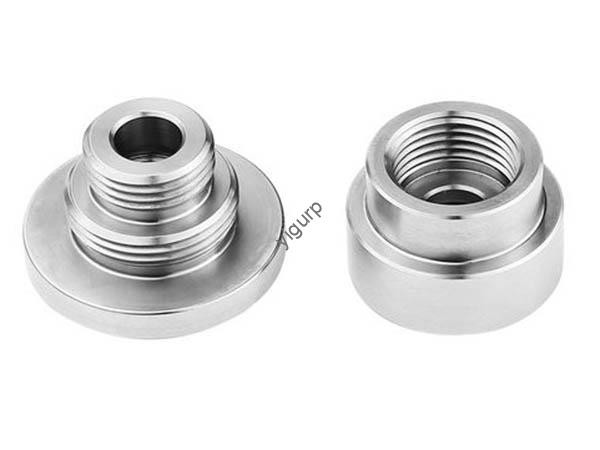
Si vous concevez, construire, ou entretenir des équipements sous pression, comme des chaudières industrielles, réservoirs de stockage de produits chimiques, ou des réacteurs pétrochimiques : vous avez besoin d'un acier qui équilibre la résistance, sécurité, and affordability.Catégorie SA515 70 pressure vessel steel is the industry’s trusted choice: comme nuance d'acier au carbone dans le code ASME des chaudières et des appareils à pression (BPVC), c'est 70 ksi (483 MPa) minimum yield strength meets global safety standards, while its low cost and easy fabrication solve common equipment challenges. Ce guide détaille ses propriétés, utilisations réelles, processus de fabrication, and material comparisons to help you make informed decisions for your projects.
1. Material Properties of SA515 Grade 70 Acier pour appareils à pression
SA515 Grade 70’s performance comes from its simple yet effective carbon-manganese composition—engineered for pressure service, with tight control over impurities to ensuredureté etsoudabilité. Explorons ses propriétés clés en détail.
1.1 Composition chimique
Catégorie SA515 70 follows strict ASME BPVC standards (Section II, Partie A), with elements tailored to avoid failure under pressure and temperature changes. Vous trouverez ci-dessous sa composition chimique typique (for plates ≤ 25 mm d'épaisseur):
| Élément | Symbole | Gamme de contenu (%) | Rôle clé |
|---|---|---|---|
| Carbone (C) | C | ≤ 0.30 | Augmente la force; kept moderate to preservesoudabilité (critical for joining pressure vessel sections) |
| Manganèse (Mn) | Mn | 0.79 – 1.30 | Primary strengthener; améliorerésistance à la traction etductilité without making the steel brittle |
| Silicium (Et) | Et | 0.13 – 0.45 | Aide à éliminer l'oxygène pendant la fabrication de l'acier; supports structural integrity at high temperatures |
| Phosphore (P.) | P. | ≤ 0.035 | Minimized to prevent brittle fracture in cold or cyclic pressure conditions |
| Soufre (S) | S | ≤ 0.035 | Controlled to avoid weld defects (par ex., fissures) and corrosion in wet industrial environments |
| Chrome (Cr) | Cr | ≤ 0.25 | Oligoélément; no major impact on standard performance |
| Nickel (Dans) | Dans | ≤ 0.25 | Oligoélément; enhances low-temperaturerésistance aux chocs (for outdoor tanks in cold regions) |
| Vanadium (V) | V | ≤ 0.03 | Oligoélément; refines grain structure for more uniform strength |
| Molybdène (Mo) | Mo | ≤ 0.10 | Oligoélément; slightly improves high-temperature creep resistance (useful for boilers) |
| Cuivre (Cu) | Cu | ≤ 0.30 | Oligoélément; adds mild resistance to atmospheric corrosion for outdoor equipment |
1.2 Propriétés physiques
These traits determine how SA515 Grade 70 performs in real-world equipment:
- Densité: 7.85 g/cm³ (comme la plupart des aciers au carbone)—simplifies weight calculations for large vessels (par ex., 20-meter diameter tanks)
- Point de fusion: 1,420 – 1,460 °C (2,588 – 2,660 °F)—works with standard welding methods (MOI, TIG, SAW) used in vessel fabrication
- Conductivité thermique: 45.0 Avec(m·K) à 20 °C—ensures even heat spread in boilers, reducing hot spots that cause stress
- Coefficient de dilatation thermique: 11.7 × 10⁻⁶/°C (20 – 100 °C)—minimizes expansion/contraction damage during boiler startup/shutdown
- Propriétés magnétiques: Ferromagnétique (attire les aimants)—enables non-destructive testing (CND) like magnetic particle inspection to find hidden defects.
1.3 Propriétés mécaniques
Catégorie SA515 70 meets ASME’s strict requirements for pressure vessel safety. Vous trouverez ci-dessous les valeurs typiques (for plates ≤ 25 mm d'épaisseur):
| Propriété | Méthode de mesure | Valeur typique | ASME Minimum Requirement |
|---|---|---|---|
| Dureté (Rockwell) | DGRH | 75 – 90 DGRH | N / A (maintenu bas pour éviter la fragilité) |
| Dureté (Vickers) | HT | 150 – 180 HT | N / A |
| Résistance à la traction | MPa (ksi) | 515 – 655 MPa (75 – 95 ksi) | 515 MPa (75 ksi) |
| Limite d'élasticité | MPa (ksi) | 483 – 550 MPa (70 – 80 ksi) | 483 MPa (70 ksi) |
| Élongation | % (dans 50 mm) | 22 – 28% | 20% |
| Résistance aux chocs | J. (à -30 °C) | ≥ 40 J. | ≥ 27 J. (for low-temperature service) |
| Limite de fatigue | MPa (faisceau rotatif) | 190 – 230 MPa | N / A (tested per project pressure cycles) |
1.4 Autres propriétés
SA515 Grade 70’s equipment-specific traits make it ideal for pressure vessels:
- Soudabilité: Excellent—even novice welders can join it without cracking, which speeds up field fabrication of large tanks.
- Formabilité: Good—can be bent into curved shapes (par ex., boiler shells) sans perdre de force, saving time on custom parts.
- Résistance à la corrosion: Moderate—resists water and mild chemicals; for harsh conditions (par ex., gaz acide), add epoxy coatings or CRA cladding.
- Ductilité: High—absorbs sudden pressure spikes (par ex., in chemical reactors) sans casser, a key safety feature.
- Dureté: Reliable—works in temperatures down to -30 °C, so it’s suitable for outdoor tanks in Canada, Europe du Nord, or China’s northeast.
2. Applications of SA515 Grade 70 Acier pour appareils à pression
SA515 Grade 70’s versatility and safety make it a top choice for pressure-containing equipment worldwide. Voici ses utilisations les plus courantes:
- Pressure Vessels: Réacteurs chimiques, high-pressure gas cylinders, and oil refining vessels—handles pressures up to 10,000 psi, compliant with ASME BPVC.
- Storage Tanks: Large oil, eau, and chemical tanks—its formabilité allows for seamless, leak-proof walls, and its low cost fits big-project budgets.
- Boilers: Industrial boilers and power plant steam generators—tolerates temperatures up to 450 °C, perfect for steam production.
- Petrochemical Plants: Distillation columns and heat exchangers—resists cyclic temperature changes (depuis 20 °C to 400 °C) sans dommage.
- Équipement industriel: Hydraulic reservoirs and compressor housings—used in factories for reliable pressure containment.
- Construction and Infrastructure: Municipal water pressure tanks and wastewater treatment vessels—affordable for public projects that need long-term durability.
3. Manufacturing Techniques for SA515 Grade 70 Acier pour appareils à pression
Making SA515 Grade 70 requires following ASME standards to ensure safety. Voici le processus étape par étape:
- Sidérurgie:
- Produced using an Four à arc électrique (AEP) (recycles scrap steel, écologique) ou Four à oxygène de base (BOF) (uses iron ore). Workers carefully control carbon (≤ 0.30%) et du manganèse (0.79–1,30%) to meet ASME rules.
- Roulement:
- The steel is Laminé à chaud (1,100 – 1,200 °C) into plates of different thicknesses (6 mm à 200+ mm). Hot rolling makes the grain structure fine, stimuler dureté for pressure service.
- Traitement thermique:
- Normalization: Plates are heated to 815 – 900 °C, held for 30–60 minutes, puis refroidi à l'air. This evens out the microstructure, réduit le stress, et améliore résistance aux chocs.
- Trempe: Facultatif (for thick plates > 50 mm)—reheated to 550 – 650 °C to make the steel less brittle and easier to weld.
- Usinage & Finition:
- Plates are cut with plasma or laser tools to fit vessel sizes. Workers drill holes for nozzles and manholes, then grind edges smooth for tight welds (no leaks allowed!).
- Traitement de surface:
- Revêtement: Pour protéger contre la corrosion:
- Epoxy Liners: For chemical tanks—resists acids and alkalis for 15+ années.
- Placage de zinc: For outdoor equipment—stops rust from rain and humidity.
- CRA Cladding: For sour gas vessels—adds a thin stainless steel layer to prevent sulfide damage.
- Peinture: For boilers—high-temperature paint (jusqu'à 450 °C) stops oxidation from hot steam.
- Revêtement: Pour protéger contre la corrosion:
- Contrôle de qualité:
- Analyse chimique: Use spectrometry (per ASME BPVC) to check element levels.
- Tests mécaniques: Do tensile, impact, and hardness tests to confirm strength (ASME BPVC Section VIII).
- CND: Tests par ultrasons (chèques 100% of the plate) finds internal defects; radiographic testing checks all welds.
- Hydrostatic Testing: Finished vessels are filled with water and pressed to 1.5× their design pressure for 30–60 minutes—no leaks mean they pass!
4. Études de cas: Catégorie SA515 70 en action
Real projects show why SA515 Grade 70 is trusted for pressure equipment.
Étude de cas 1: Chemical Storage Tank (Inde)
A chemical company in Gujarat needed a 15-meter diameter tank to store 500,000 liters of sulfuric acid (low concentration). They chose SA515 Grade 70 assiettes (12 mm d'épaisseur, normalized) pour leursoudabilité et à faible coût. Workers welded the tank on-site in 2 semaines. Après 5 années, the tank has no corrosion (thanks to an epoxy liner) and has never leaked—saving the company $100,000 contre. utilisant de l'acier inoxydable.
Étude de cas 2: Industrial Boiler (Canada)
A paper mill in Ontario needed a boiler to make steam for paper production. They used SA515 Grade 70 assiettes (30 mm d'épaisseur, tempéré) for the boiler shell. The boiler runs at 400 °C and 4,000 psi daily. Après 8 years of non-stop use, it has no cracks or stress damage—even in Canada’s -30 °C hivers. The mill saved 30% on material costs vs. acier allié.
5. Catégorie SA515 70 contre. Autres matériaux
How does SA515 Grade 70 compare to other pressure vessel materials?
| Matériel | Similarities to SA515 Grade 70 | Différences clés | Idéal pour |
|---|---|---|---|
| Catégorie SA516 60 | ASME carbon steel for pressure vessels | Lower yield strength (414 MPa/60 ksi); moins cher; moins fort | Low-pressure tanks (≤ 5,000 psi) like water storage |
| Catégorie SA516 70 | ASME carbon steel, same yield strength | SA516 has stricter impact toughness rules; better for low temperatures | Cold-climate pressure vessels (par ex., Europe du Nord) |
| 316L Acier inoxydable | Pressure vessel use | Great corrosion resistance; 3× more expensive; résistance inférieure | Sour gas or high-chemical vessels |
| SA387 Grade 11 | Alloy steel for pressure service | Handles higher temps (jusqu'à 593 °C); 2× more expensive | Power plant boilers (superheated steam) |
| Matériaux composites | Pressure containment | Léger (1/5 steel weight); 5× more expensive | Aerospace or portable gas cylinders |
| Plastique (PEHD) | Low-pressure storage | Corrosion-proof; faible; bon marché | Small chemical tanks (≤ 100 psi) |
Yigu Technology’s Perspective on SA515 Grade 70
Chez Yigu Technologie, Catégorie SA515 70 is our go-to for cost-effective, safe pressure equipment. It meets ASME standards globally, so our clients use it in projects from India to Canada. We supply custom-thickness plates (6–200mm) with epoxy, zinc, or CRA treatments—tailored to their needs (par ex., cold-climate tanks get normalized plates). For clients moving from SA516 Grade 60, Catégorie SA515 70 offers more strength without extra cost, making it perfect for mid-pressure projects.
FAQ About SA515 Grade 70 Acier pour appareils à pression
- Can SA515 Grade 70 be used for sour gas pressure vessels?
Yes—if you add protection. Use CRA cladding (par ex., 316L acier inoxydable) or a thick epoxy liner to stop sulfide stress cracking. Make sure the steel’s sulfur content is ≤ 0.015% (meets ASME sour service rules). - What’s the maximum temperature SA515 Grade 70 can handle?
It works safely up to 450 °C (842 °F) for long-term use. For temps above that (par ex., chaudières à vapeur surchauffée), use SA387 alloy steel—its molybdenum resists creep (slow deformation from heat/pressure). - Is SA515 Grade 70 easier to weld than SA516 Grade 70?
Yes—slightly. SA515 has looser impact toughness rules, so it needs less preheating during welding (gain de temps sur place). Both work with standard fillers, but SA515 is better for projects where welding speed matters (par ex., large on-site tanks).