
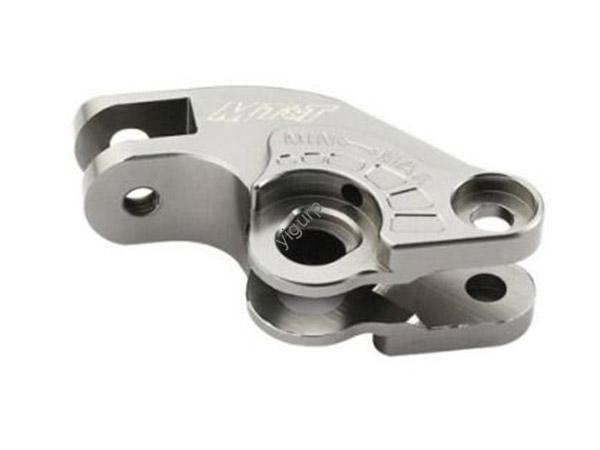
Si vous êtes en génie mécanique, fabrication automobile, ou un chantier, L'acier de construction S50C est un matériau que vous rencontrerez probablement. En tant qu'acier à teneur moyenne en carbone, ça équilibre la force, usinabilité, et l'abordabilité, mais comment cela s'adapte-t-il à votre projet? Ce guide détaille ses principales caractéristiques, utilisations réelles, étapes de fabrication, et comment il se compare à d'autres matériaux, vous aider à prendre des décisions éclairées.
1. Material Properties of S50C Steel
S50C’s versatility comes from its well-rounded properties. Let’s explore itsChemical composition, Physical properties, Mechanical properties, etOther properties in detail.
1.1 Chemical Composition
S50C’s performance is defined by its precise element ratios (per JIS G4051 standards). Below is the typical range:
| Element | Content Range (%) | Key Role |
|---|---|---|
| Carbon (C) | 0.47–0.53 | Boosts hardness and tensile strength |
| Manganese (Mn) | 0.60–0.90 | Enhances ductility and workability |
| Silicium (Et) | 0.15–0.35 | Improves heat resistance during processing |
| Sulfur (S) | ≤0.030 | Minimized to avoid brittleness |
| Phosphorus (P.) | ≤0.030 | Limited to prevent cold cracking |
| Trace elements | ≤0.20 (total) | Small amounts of Cr, Dans, etc.—no major impact on core properties |
1.2 Physical Properties
These traits affect how S50C behaves in different environments and processes:
- Densité: 7.85 g/cm³ (standard for carbon steels, easy to calculate part weight)
- Point de fusion: 1495–1530°C (compatible with common heat treatments like quenching)
- Conductivité thermique: 48 W/(m·K) at 20°C (good for heat dissipation in machinery parts)
- Specific heat capacity: 470 J/(kg·K) (handles temperature changes without damage)
- Electrical resistivity: 150 nΩ·m (higher than low-carbon steels, not ideal for electrical parts)
- Magnetic properties: Ferromagnetic (responds to magnets, useful for industrial sorting)
1.3 Propriétés mécaniques
S50C’s mechanical strength makes it ideal for load-bearing and wear-resistant parts. Key values (annealed state unless noted):
| Propriété | Valeur typique | Why It Matters |
|---|---|---|
| Résistance à la traction | 590–730 MPa | Handles pulling forces in shafts/gears |
| Yield strength | ≥345 MPa | Resists permanent deformation under load |
| Dureté | 170–210 Brinell (recuit); jusqu'à 55 CRH (quenched/tempered) | Balances machinability (recuit) et résistance à l'usure (traité thermiquement) |
| Ductilité | ≥14% elongation | Flexible enough for bending/forging |
| Impact toughness | ≥32 J at 20°C | Moderate toughness—best for non-cold environments |
| Fatigue resistance | ~290 MPa | Endures repeated stress in moving parts |
1.4 Other Properties
- Résistance à la corrosion: Faible (prone to rust; needs painting, galvanisation, or oiling for outdoor use)
- Weldability: Modéré (requires preheating to 150–250°C to avoid cracking; post-weld annealing recommended)
- Usinabilité: Bien (easily drilled/turned with standard tools—best in annealed state)
- Formabilité: Modéré (can be forged or stamped into simple shapes but less flexible than low-carbon steels)
2. Applications of S50C Structural Steel
S50C’s balance of strength and machinability makes it versatile across industries. Here are real-world uses with examples:
2.1 Génie mécanique
- Arbres: Industrial motor shafts (par ex., in water pumps) use S50C—its tensile strength (590–730 MPa) handles high-speed rotation, and heat treatment boosts wear resistance.
- Engrenages: Small to medium-sized gears (in conveyor systems) use S50C—its hardness (after tempering) resists tooth wear, ensuring long service life.
- Roulements: Bearing races for low-load machinery (like electric fans) use S50C—its machinability ensures precise dimensions for smooth rotation.
2.2 Industrie automobile
- Composants du moteur: Camshafts for small gasoline engines (par ex., in motorcycles) use S50C—heat treatment hardens the surface to resist valve wear.
- Pièces de transmission: Manual transmission gears (in compact cars like Honda Fit) use S50C—its fatigue resistance endures constant gear meshing.
- Axles: Light truck rear axles use S50C—its yield strength (≥345 MPa) handles heavy loads without bending.
2.3 Construction
S50C is less common for large structures but shines in small, composants à haute résistance:
- Steel beams for small buildings: Residential garage support beams use S50C—its strength saves space compared to lower-carbon steels.
- Truss connectors: Industrial shed trusses use S50C bolts—its hardness resists loosening under vibration.
2.4 Other Applications
- Construction navale: Small boat propeller shafts use S50C—its strength handles water pressure, and painting prevents corrosion.
- Railway tracks: Minor railway components (like switch parts) use S50C—its wear resistance endures train traffic.
- Équipement industriel: Hydraulic cylinder rods use S50C—its machinability ensures a smooth surface for seal compatibility.
3. Manufacturing Techniques for S50C Steel
Producing high-quality S50C requires careful control of carbon content and processing. Here’s the step-by-step process:
3.1 Steelmaking
- Electric arc furnace (EAF): Most common method—scrap steel is melted at 1600°C, then carbon and manganese are added to reach the 0.47–0.53% C range.
- Basic oxygen furnace (BOF): Used for large batches—iron ore is converted to steel, then oxygen is blown in to remove impurities before adjusting carbon levels.
- Continuous casting: Molten steel is poured into water-cooled molds to form slabs, blooms, or billets (raw material for further processing).
3.2 Hot Working
- Hot rolling: Slabs are heated to 1100–1200°C and rolled into bars, tiges, or plates—this improves strength and workability.
- Hot forging: Pour pièces complexes (like gears), hot forging shapes S50C at high temperatures, enhancing grain structure for durability.
3.3 Cold Working
- Cold rolling: For precision parts (like thin shafts), cold rolling increases surface smoothness and hardness.
- Cold drawing: Rods are pulled through dies to reduce diameter—used for making high-precision bolts or shafts.
3.4 Traitement thermique
Heat treatment is critical to tailor S50C’s properties:
- Recuit: Heating to 820–860°C, cooling slowly—softens steel for machining.
- Quenching/tempering: Heating to 820–860°C, quenching in water/oil, then tempering at 500–600°C—boosts hardness and toughness for wear-resistant parts.
- Durcissement superficiel: Cémentation (adding carbon to the surface) followed by quenching—hardens the surface while keeping the core ductile (used for gears).
4. Études de cas: S50C in Real-World Projects
4.1 Mechanical Component: Gear Manufacturing for Conveyors
A logistics company needed gears for their warehouse conveyors that could withstand 8-hour daily use. They chose S50C for its:
- Usinabilité (easy to cut precise tooth shapes).
- Dureté (50 HRC after quenching/tempering) to resist wear.
- Rentabilité (30% cheaper than alloy steels like 4140).
Résultat: Gears lasted 2 years without replacement—double the lifespan of previous low-carbon steel gears.
4.2 Automotive Application: Motorcycle Camshafts
A motorcycle manufacturer used S50C for camshafts to balance performance and cost:
- Traitement thermique (trempe + trempe) hardened the cam lobes to 52 CRH, resisting valve wear.
- Ductility of S50C prevented cracking during camshaft machining.
Résultat: Camshafts passed 100,000 km durability tests with no signs of wear.
4.3 Construction: Garage Support Beams
A residential builder used S50C beams for a 2-car garage:
- S50C’s high tensile strength allowed using 10% thinner beams than S235JR (acier à faible teneur en carbone), saving space.
- Galvanizing protected against moisture, preventing rust.
Résultat: Beams supported the garage roof (including snow load) pour 15 years with no deformation.
5. Comparative Analysis: S50C vs. Other Materials
5.1 Comparison with Other Steels
| Matériel | Résistance à la traction (MPa) | Résistance à la corrosion | Coût par rapport. S50C | Idéal pour |
|---|---|---|---|---|
| S50C Steel | 590–730 | Faible | Base (100%) | Engrenages, arbres, small load parts |
| Acier à faible teneur en carbone (S235JR) | 360–510 | Faible | 70% | Welded parts, low-load beams |
| Acier allié (4140) | 860–1000 | Modéré | 180% | Pièces très sollicitées (par ex., aircraft landing gear) |
| Acier inoxydable (304) | 515 | Excellent | 350% | Corrosive environments (par ex., chemical pipes) |
5.2 Comparison with Non-Metallic Materials
- Aluminium (6061-T6): Plus léger (densité 2.7 g/cm³ vs. 7.85 g/cm³) but weaker (résistance à la traction 310 MPa contre. 590–730 MPa)—use S50C for high-strength mechanical parts.
- Composites en fibre de carbone: Stronger (résistance à la traction 3000 MPa) but 8x more expensive—use for aerospace; S50C is better for industrial/automotive use.
- Plastiques (PA66): Cheaper but less strong (résistance à la traction 80 MPa)—use for low-load parts; S50C for load-bearing components.
5.3 Comparison with Other Structural Materials
- Béton: Cheaper for large structures but heavier—use S50C for small, strong components (par ex., beam connectors) that concrete can’t replace.
- Bois: More eco-friendly but less durable—use S50C for parts exposed to moisture or heavy loads.
6. Yigu Technology’s View on S50C Structural Steel
Chez Yigu Technologie, S50C is our go-to for medium-strength mechanical parts. Its balance of machinability, force, and cost makes it perfect for gears, arbres, et composants automobiles. We often recommend annealing it for easy processing and quenching/tempering for wear resistance. Pour une utilisation en extérieur, we pair it with zinc plating to boost corrosion resistance, extending part life by 25%. While it’s not ideal for cold or corrosive environments, it’s unmatched for affordable, reliable industrial parts.
FAQ About S50C Structural Steel
- Can S50C be used in cold climates?
Non, not recommended. Its impact toughness drops below 20°C (≥32 J at 20°C, but much lower at -10°C+), so it may crack under stress. Use cold-resistant steels like S355JR for cold regions. - Do I need special tools to machine S50C?
Non. Standard carbide tools work well. For best results, use coolants to prevent overheating, especially when machining heat-treated S50C (harder than annealed steel). - How does S50C differ from S45C?
S50C has higher carbon content (0.47–0.53% vs. 0.42–0.48% for S45C), making it stronger (tensile strength 590–730 MPa vs. 570–700 MPa) but slightly less ductile. Use S45C for parts needing more flexibility; S50C for higher-strength applications.