
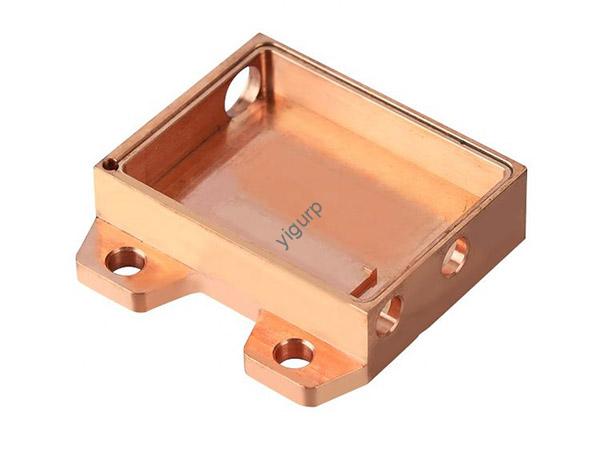
Si vous travaillez dans des secteurs comme le génie mécanique, automobile, ou un chantier, vous avez peut-être entendu parler de l'acier de construction S35VN. Il est apprécié pour son mélange unique de résistance et de durabilité, mais ce qui en fait un premier choix? Ce guide détaille ses principales caractéristiques, applications du monde réel, procédés de fabrication, et comment il se compare à d'autres matériaux, helping you make smart decisions for your projects.
1. Material Properties of S35VN Steel
S35VN’s performance starts with its well-balanced properties. Let’s explore itschemical composition, physical properties, propriétés mécaniques, and other essential characteristics.
1.1 Composition chimique
The elements in S35VN determine its strength and reliability. Below is the typical range (per industry standards):
| Élément | Symbole | Maximum/Typical Content (%) | Key Function |
|---|---|---|---|
| Carbone (C) | C | 0.35 | Enhances hardness and tensile strength |
| Manganèse (Mn) | Mn | 0.50 | Improves ductility and workability |
| Silicium (Et) | Et | 0.30 | Boosts heat resistance during processing |
| Soufre (S) | S | 0.030 | Minimisé pour éviter la fragilité |
| Phosphore (P.) | P. | 0.030 | Limited to prevent cold cracking |
| Chrome (Cr) | Cr | 14.0–16.0 | Enhances corrosion resistance and hardness |
| Nickel (Dans) | Dans | 3.0–5,0 | Improves toughness, especially at low temps |
| Molybdène (Mo) | Mo | 1.0–1.5 | Increases strength at high temperatures |
| Vanadium (V) | V | 0.10–0,30 | Refines grain structure for better durability |
| Azote (N) | N | 0.08–0.15 | Boosts tensile strength and corrosion resistance |
1.2 Propriétés physiques
These traits influence how S35VN performs in different environments:
- Densité: 7.80 g/cm³ (lighter than some high-strength steels, easing installation)
- Point de fusion: 1450–1500°C (compatible with standard manufacturing heat treatments)
- Conductivité thermique: 45 Avec(m·K) at 20°C (effective for heat dissipation in machinery)
- Specific heat capacity: 460 J/(kg·K) (handles temperature fluctuations without damage)
- Coefficient of thermal expansion: 12.5 μm/(m·K) (low expansion, reducing warping in extreme temps)
1.3 Propriétés mécaniques
S35VN’s mechanical strength makes it ideal for heavy-duty use:
- Résistance à la traction: 1200–1400 MPa (handles intense pulling forces in industrial parts)
- Yield strength: ≥950 MPa (resists permanent deformation under heavy loads)
- Élongation: ≥12% (flexible enough for shaping into complex components)
- Dureté: 58–62 HRC (Rockwell) or 550–600 HV (Vickers) (extremely hard, resisting wear)
- Impact toughness: ≥40 J at -40°C (tough even in freezing conditions, perfect for cold regions)
1.4 Autres propriétés
- Résistance à la corrosion: Excellent (thanks to high chromium content—performs well in wet or humid environments)
- Weldability: Bien (requires preheating to avoid cracking, but works with standard MIG/TIG methods)
- Usinabilité: Modéré (hardness means specialized tools are needed, but it can be cut and drilled with proper equipment)
- Magnetic properties: Ferromagnétique (responds to magnets, useful for certain industrial applications)
2. Applications of S35VN Structural Steel
S35VN’s strength and corrosion resistance make it versatile across industries. Here are real-world examples:
2.1 Construction
- Offshore structures: Small offshore platforms use S35VN for support legs—its corrosion resistance stands up to saltwater (par ex., a coastal oil rig in the North Sea uses S35VN for railings and small load-bearing parts).
- Industrial buildings: Factories with harsh conditions (like chemical plants) use S35VN for beams—its resistance to chemicals and heat keeps structures safe.
2.2 Automobile
- High-performance vehicles: Sports cars (par ex., Porsche 911) use S35VN for suspension components—its high tensile strength handles fast driving and sharp turns.
- Heavy-duty trucks: Truck transmission parts (like gears) rely on S35VN’s wear resistance—enduring constant use without damage.
2.3 Génie mécanique
- Machine parts: Outils de coupe (like industrial drills) use S35VN—its hardness resists dulling, prolonger la durée de vie de l'outil.
- Roulements: High-speed bearings in industrial motors use S35VN—its strength and wear resistance keep motors running smoothly.
- Arbres: Shafts in heavy machinery (like construction cranes) use S35VN—its toughness handles heavy loads and constant rotation.
2.4 Other Applications
- Mining equipment: Drill bits for underground mining use S35VN—its hardness and wear resistance tackle tough rock.
- Agricultural machinery: Harvester blades use S35VN—its corrosion resistance stands up to soil and moisture, while hardness resists dulling.
- Piping systems: Chemical processing pipes use S35VN—its resistance to corrosive fluids prevents leaks and extends pipe life.
3. Manufacturing Techniques for S35VN Steel
Producing high-quality S35VN requires precise steps. Here’s the process:
3.1 Primary Production
- Electric arc furnace (AEP): The most common method—scrap steel is melted at 1600°C, then alloying elements (chrome, nickel, vanadium) are added to reach the right composition.
- Basic oxygen furnace (BOF): Used for large-scale production—iron ore is converted to steel, then oxygen is blown in to remove impurities before adding alloys.
- Continuous casting: Molten steel is poured into molds to form slabs or billets (the raw material for further processing).
3.2 Secondary Processing
- Hot rolling: Slabs are heated to 1100–1200°C and rolled into bars or sheets—this improves strength and workability.
- Cold rolling: For thinner sheets (used in automotive parts), cold rolling increases hardness and surface smoothness.
- Traitement thermique: Critical for S35VN—quenching (heating to 1050°C, then rapid cooling in oil) boosts hardness, while tempering (heating to 200–300°C) reduces brittleness.
- Traitement de surface: While S35VN has good corrosion resistance, some applications use painting or passivation (a chemical treatment) to enhance protection.
3.3 Contrôle de qualité
To ensure S35VN meets standards, every batch undergoes:
- Analyse chimique: Spectrometers check if element levels match requirements.
- Essais mécaniques: Tensile tests measure strength, while impact tests check toughness at low temperatures.
- Contrôles non destructifs (CND): Ultrasonic tests detect internal cracks, and radiographic tests check weld quality.
- Dimensional inspection: Calipers and lasers ensure products match size specifications.
4. How S35VN Compares to Other Materials
Choosing S35VN depends on your project’s needs. Here’s how it stacks up:
4.1 Comparison with Other Steels
- Carbon steel (par ex., S235JR): S35VN has far higher tensile strength (1200–1400 MPa vs. 360–510 MPa) but costs 3x more—use S35VN for high-stress parts, S235JR for low-load structures.
- High-strength steel (par ex., S690QL): S35VN has higher hardness (58–62 HRC vs. 22–26 HRC) but lower ductility—S690QL is better for flexible parts, S35VN for wear-resistant parts.
- Acier inoxydable (par ex., 304): 304 has good corrosion resistance but lower tensile strength (515 MPa contre. 1200–1400 MPa)—S35VN is better for high-stress, environnements corrosifs.
4.2 Comparison with Non-Ferrous Metals
- Aluminium (6061-T6): Aluminum is lighter (densité 2.7 g/cm³ vs. 7.80 g/cm³) but weaker (résistance à la traction 310 MPa contre. 1200–1400 MPa)—use S35VN for heavy-load parts.
- Cuivre: Copper is more conductive but softer (résistance à la traction 220 MPa) and pricier—S35VN is better for structural or wear-resistant use.
- Titane: Titanium is lighter and corrosion-resistant but costs 5x more—S35VN is a more economical choice for most high-stress applications.
4.3 Comparison with Composite Materials
- Fiber-reinforced polymers (FRP): FRP is lighter but has lower tensile strength (400–600 MPa vs. 1200–1400 MPa)—S35VN is better for heavy-duty parts.
- Composites en fibre de carbone: Carbon fiber is strong (résistance à la traction 3000 MPa) but costs 10x more—use carbon fiber for aerospace, S35VN for industrial or automotive use.
5. Yigu Technology’s View on S35VN Structural Steel
Chez Yigu Technologie, we’ve integrated S35VN into mechanical engineering and automotive projects. Its exceptional hardness and corrosion resistance make it perfect for high-wear parts like industrial bearings and truck transmission components. While it costs more than standard steels, its long service life reduces replacement costs. We often recommend it for clients needing durable parts in harsh environments—paired with our precision machining, S35VN delivers reliable performance that meets strict industry standards.
FAQ About S35VN Structural Steel
- Can S35VN be used in saltwater environments?
Oui. Its high chromium content gives it excellent corrosion resistance, making it suitable for offshore structures or marine equipment—though regular inspections still help maintain performance. - Is S35VN difficult to machine?
It has moderate machinability. Its high hardness means you’ll need carbide tools and slow cutting speeds, but with proper equipment, it can be drilled, fraisé, or turned into complex parts. - How does S35VN differ from S355MC?
S35VN has much higher tensile strength (1200–1400 MPa vs. 460–600 MPa) and hardness, making it better for high-wear, high-stress parts. S355MC is more ductile and affordable, ideal for general structural use like building beams.