
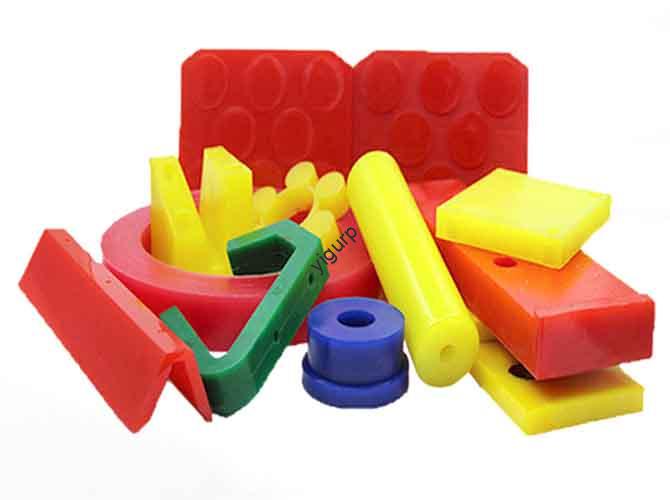
Dans le domaine de la fabrication additive, matériaux en résine pour l'impression 3D (également appelées résines photosensibles) sont devenus indispensables pour créer des, pièces détaillées. Contrairement aux thermoplastiques utilisés dans l'impression FDM, ces résines durcissent rapidement sous des longueurs d'onde lumineuses spécifiques (UV ou LED), permettant la production de composants complexes, des modèles dentaires aux prototypes de bijoux. This guide explores their core composition, propriétés clés, genres, candidatures, and best practices for use, helping users select the right resin for their projects.
1. Core Composition of Resin Materials for 3D Printing
The performance of matériaux en résine pour l'impression 3D is determined by their three main components, each playing a critical role in curing, force, et la convivialité. Understanding this composition helps users troubleshoot issues (par ex., poor curing, brittle parts) and choose resins tailored to their needs.
1.1 Key Components & Their Functions
| Component | Role & Technical Details | Impact on Resin Performance |
|---|---|---|
| Prepolymer | – Le “backbone” of the resin; typically consists of acrylates, epoxy resins, or urethanes.- Determines the resin’s base properties (par ex., dureté, flexibilité, résistance chimique). | – Acrylate-based prepolymers: Deliver fast curing and high impact strength (ideal for functional parts).- Epoxy-based prepolymers: Offer superior chemical resistance (suitable for industrial components). |
| Photoinitiator | – Absorbs light energy (UV/LED, 365–405 nm wavelength) to produce reactive radicals or ions.- Triggers the cross-linking reaction that turns liquid resin into a solid. | – Fast-acting photoinitiators (par ex., TPO): Reduce curing time by 30–50% (improves printing efficiency).- UV-stable initiators: Prevent post-cure yellowing (critical for transparent parts like lenses). |
| Monomer | – Dilutes the prepolymer to adjust viscosity (lower viscosity = easier printing).- Participates in the curing reaction to enhance mechanical properties (par ex., flexibilité, résistance à la traction). | – Low-viscosity monomers (par ex., HDDA): Improve resin flow in DLP/SLA printers (reduces layer adhesion issues).- Flexible monomers (par ex., PPGDA): Increase the resin’s elongation at break (ideal for rubber-like parts). |
2. Key Properties of Resin Materials for 3D Printing
When selectingmatériaux en résine pour l'impression 3D, users must evaluate six critical properties to ensure the final part meets performance requirements—from surface smoothness to heat resistance.
2.1 Critical Properties & Evaluation Criteria
| Propriété | Définition & Mesures | Ideal Ranges for Common Applications |
|---|---|---|
| Curing Speed | Time required for the resin to solidify under light; measured in seconds per layer. | – Fast curing (2–5 seconds/layer): Pour une production en grand volume (par ex., dental molds).- Slow curing (5–10 seconds/layer): Pour les grandes pièces (reduces warping). |
| Lissé de la surface | The texture of the cured part; measured by Ra (arithmetic mean deviation). | – Râ < 0.4 µm: For visible parts (par ex., bijoux, biens de consommation).- Râ < 0.8 µm: For functional parts (par ex., composants mécaniques). |
| Dureté | Resistance to indentation; measured using Shore hardness scales (A for flexible resins, D for rigid resins). | – Shore 20A–80A: Flexible resins (par ex., robotic grippers, coques de téléphone).- Shore 60D–90D: Résines rigides (par ex., structural prototypes, couronnes dentaires). |
| Résistance mécanique | Résistance à la traction (resistance to pulling) and impact strength (resistance to sudden force). | – Résistance à la traction > 50 MPa: Rigid resins for load-bearing parts (par ex., parenthèses).- Résistance aux chocs > 10 kj /: Resins for durable parts (par ex., jouets, outils). |
| Résistance chimique | Ability to withstand exposure to chemicals (par ex., eau, alcohol, huiles). | – Water-resistant resins: For parts used in humid environments (par ex., bathroom fixtures).- Résines résistantes aux produits chimiques: Pour pièces industrielles (par ex., équipement de laboratoire). |
| Stabilité thermique | Ability to retain properties at high temperatures; measured by Tg (glass transition temperature). | – Tg > 60°C: Resins for parts exposed to mild heat (par ex., boîtiers électroniques).- Tg > 120°C: High-temperature resins (par ex., composants automobiles). |
3. Common Types of Resin Materials for 3D Printing
Resin materials for 3D printing are categorized based on their end-use, chacun optimisé pour des applications spécifiques. Below is a breakdown of the four most widely used types, with their strengths and ideal use cases.
3.1 Type Comparison & Applications
| Resin Type | Propriétés clés | Applications idéales | Printing Notes |
|---|---|---|---|
| Standard Rigid Resin | – Shore 70D–85D hardness; high surface smoothness (Râ < 0.4 µm).- Fast curing (3–5 seconds/layer); faible coût. | Prototypage (par ex., product designs, modèles architecturaux), pièces décoratives (par ex., figurines), non-functional enclosures. | Works with most DLP/SLA printers; avoid use for load-bearing parts (low impact strength). |
| Flexible Resin | – Shore 20A–70A hardness; high elongation at break (100–300%).- Rubber-like feel; bonne résistance aux chocs. | Pièces flexibles (par ex., phone case grips, robotic fingers), wearable devices (par ex., fitness trackers), jouets. | Use slower print speeds (20–30 mm/s) to avoid layer separation; post-cure for 10–15 minutes to boost flexibility. |
| Dental/Medical Resin | – Biocompatible (conforme à l'ISO 10993 or FDA standards); low toxicity.- Haute précision (tolerances ±0.01 mm); resistant to sterilization (autoclavage). | Dental models (par ex., couronnes, aligneurs), guides chirurgicaux, prototypes de dispositifs médicaux (par ex., conseils sur les cathéters). | Must use certified medical-grade resins; avoid cross-contamination with non-medical resins. |
| High-Temperature Resin | – Tg > 120°C; retains strength at 80–150°C.- Chemical resistance to oils, solvants, and high humidity. | Composants automobiles (par ex., boîtiers de capteurs), pièces industrielles (par ex., heat-resistant brackets), boîtiers électroniques. | Requires longer post-cure (20–30 minutes at 60–80°C); use heated build plates to improve adhesion. |
4. Step-by-Step Guide to Using Resin Materials for 3D Printing
To achieve high-quality results withmatériaux en résine pour l'impression 3D, follow this workflow—from printer setup to post-processing. Skipping steps (par ex., proper cleaning) can lead to defects like sticky surfaces or brittle parts.
4.1 Workflow for Resin 3D Printing
- Printer & Configuration de la résine
- Choose the right printer: Use DLP (for large-area prints) ou SLA (for ultra-high precision) printers—both compatible with most resins.
- Calibrate the printer: Level the build plate (to ensure uniform layer thickness) and set the correct light exposure time (follow the resin manufacturer’s recommendations—e.g., 4 seconds/layer for standard resin).
- Prepare the resin: Shake the resin bottle for 2–3 minutes to mix components evenly; pour into the printer’s resin tank (avoid overfilling to prevent spills).
- Processus d'impression
- Monitor the first layer: Ensure the first layer adheres firmly to the build plate (poor adhesion causes parts to detach mid-print).
- Control environment: Keep the printing area at 20–25°C (extreme temperatures slow curing or cause resin separation).
- Avoid resin contamination: Use clean tools to handle resin; never mix different resin types (causes curing failures).
- Post-traitement (Critical for Performance)
- Remove excess resin: Après l'impression, dip the part in isopropyl alcohol (API, 90%+ concentration) for 5–10 minutes to remove uncured resin. Use a soft brush to clean hard-to-reach areas (par ex., petits trous).
- Post-cure the part: Place the cleaned part in a UV curing chamber (365–405 nm) for 10–30 minutes. This step increases hardness by 20–40% and improves chemical resistance.
- Finition (optional): Sand the part with 400–1000 grit sandpaper for a smoother surface; apply a clear coat for a glossy finish (ideal for decorative parts).
5. Real-World Applications of Resin Materials for 3D Printing
Resin materials for 3D printing are used across industries that demand precision and detail. Below are their most impactful use cases, with examples of how they solve traditional manufacturing challenges.
5.1 Applications spécifiques à l'industrie
| Industrie | Exemples d'application & Avantages |
|---|---|
| Dentaire & Médical | – Dental crowns/aligners: Biocompatible resin prints models with ±0.01 mm precision—ensuring a perfect fit for patients.-Guides chirurgicaux: Resin guides help surgeons place implants accurately (reducing operation time by 30%).Exemple: A dental clinic used resin 3D printing to produce 50+ aligner models daily—cutting costs by 50% contre. traditional wax models. |
| Bijoux & Luxury | – Jewelry prototypes: High-detail resin prints capture intricate patterns (par ex., filigree, micro-engravings) that are later used for lost-wax casting.-Custom pendants: Resin allows for fast iteration of designs (1–2 days vs. 1–2 weeks with metal machining).Exemple: A jewelry brand used resin to prototype a new necklace collection—testing 10 designs in a week before finalizing metal production. |
| Conception de produits & Prototypage | – Consumer goods prototypes: Resin prints of phone cases, watch faces, or toy parts let designers test form and function quickly.-Production en petits lots: Resin produces low-volume parts (1–100 unités) sans moules coûteux.Exemple: A tech startup used resin to print 20 prototype smartwatch bands—gathering user feedback in 2 weeks to refine the design. |
| Automobile & Industriel | – Boîtiers de capteurs: High-temperature resin resists engine heat (jusqu'à 120°C) and protects sensitive electronics.-Joints & scellés: Flexible resin creates custom seals that fit irregular shapes (reducing leakage in industrial machinery).Exemple: An automotive manufacturer used resin to print 50 sensor housing prototypes—cutting lead time from 4 semaines à 3 jours. |
Yigu Technology’s Perspective on Resin Materials for 3D Printing
Chez Yigu Technologie, we recognizematériaux en résine pour l'impression 3D as a key enabler of precision manufacturing. Our team offers tailored resin solutions: biocompatible resins for medical use (meeting ISO 10993 normes), high-temperature resins for automotive parts, and flexible resins for wearables. We’ve optimized our DLP printers to work seamlessly with these resins—reducing curing time by 25% and improving part strength by 30%. As demand for customization grows, we’re developing eco-friendly resins (bio-based prepolymers) to reduce environmental impact, making 3D printing more sustainable for small businesses and large enterprises alike.
FAQ: Common Questions About Resin Materials for 3D Printing
- Q: How long do resin materials for 3D printing last in storage?UN: Unopened resin lasts 6–12 months if stored in a cool (20–25°C), dark place (away from UV light). Opened resin should be used within 3–6 months—contamination (par ex., dust, humidité) or exposure to light can degrade its performance. Always seal the bottle tightly after use.
- Q: Can resin 3D printed parts be painted?UN: Yes—with proper preparation. Sand the part with 400 grit sandpaper to create a rough surface (improves paint adhesion), clean with IPA, and use acrylic or spray paint. For best results, apply a primer first—this prevents paint peeling and ensures even color.
- Q: Are resin materials for 3D printing toxic?UN: Most resins are low-toxic when handled properly, but uncured resin can irritate skin/eyes. Always wear nitrile gloves and safety glasses when handling resin; work in a well-ventilated area. Cure resin waste (par ex., leftover resin, cleaning rags) under UV light for 24 hours before disposal—this neutralizes its reactivity.