
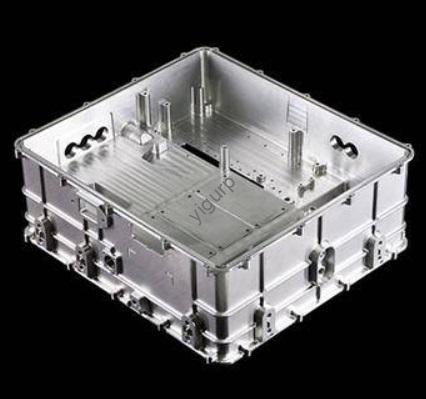
Si vous avez entendu le terme “prototype rapide” jetés dans les cercles de fabrication ou de développement de produits, vous vous demandez peut-être exactement ce que cela signifie. Est-ce juste un nom fantaisiste pour un modèle, ou y a-t-il plus à faire? En termes simples, prototypage rapide is a set of techniques used to quickly create physical models of a product from digital designs. These prototypes help teams test ideas, identify flaws, and refine designs before investing in expensive production tooling. Let’s dive deeper into what rapid prototyping really is, comment ça marche, and why it’s become essential in modern product development.
What Exactly Is a Rapid Prototype?
À la base, un prototype rapide (sometimes called a “handboard” in local industry terms or “verification piece” in professional language) is a physical model of a product manufactured in small quantities before final design approval. Unlike traditional prototypes that might take weeks or months to produce, rapid prototypes leverage advanced technologies to create models quickly—often in days rather than weeks.
The Fundamental Purpose of Rapid Prototyping
Rapid prototyping serves a critical function in product development: verifying design feasibility without the cost and risk of creating production molds first. Think of it as a safety net for new products. When a product is first developed or designed, teams create one or several prototypes based on appearance or structural drawings to:
- Check the rationality of the product’s appearance
- Verify the structural integrity of the design
- Identify defects, deficiencies, or shortcomings in the most direct way
- Make targeted improvements until issues are resolved
- Provide a basis for final product approval and mass production
Without rapid prototyping, companies would face enormous risks. A flawed design that goes straight to production could result in wasted manpower, material resources, and time. Rapid prototypes minimize these risks by allowing teams to fail fast and iterate quickly with minimal losses.
How Rapid Prototyping Differs from Traditional Methods
Traditional prototyping often involved painstaking manual work or expensive custom tooling, making it slow and costly. Rapid prototyping changes this equation by:
- Using digital design files (GOUJAT) to drive automated manufacturing processes
- Reducing production cycles from weeks to days
- Lowering the cost of creating multiple design iterations
- Enabling more complex geometries that would be difficult to produce manually
- Supporting small-batch production for testing and validation
This shift has revolutionized product development, making it more accessible for startups and established companies alike to test new ideas.
Types of Rapid Prototypes: Classifications and Characteristics
Rapid prototypes come in various forms, each suited for different stages of development and different testing requirements. Let’s explore the main classifications:
Classification by Production Method
The manufacturing technology used to create the prototype largely determines its characteristics and applications:
1. Manual Prototypes
As the name suggests, these prototypes involve significant handwork. While less common in modern rapid prototyping, they still have uses for simple models or initial concept validation. Their main advantage is low setup cost for very basic shapes, but they lack the precision and consistency of automated methods.
2. CNC Prototypes
CNC (Commande numérique par ordinateur) prototypes are created using machining centers that follow digital instructions to remove material from a solid block. This method offers:
- Exceptional accuracy in reflecting design drawings
- High surface quality that can be enhanced further with spraying or silk screening
- The ability to produce parts that sometimes look better than mold-produced items
- Compatibility with both metal and plastic materials
CNC prototyping has become the mainstream choice for many applications due to its reliability and quality.
3. Laser Rapid Prototyping (PR)
This category includes technologies like SLA (Stéréolithographie), which builds parts layer by layer using laser technology to cure liquid resin:
- Fast production speed compared to CNC machining
- Excellent for highly detailed parts with complex geometries
- Ideal for visual prototypes and form studies
- Less suitable for functional testing of mechanical properties
Comparison of RP and CNC Prototypes
| Aspect | RP Prototypes (par ex., ANS) | CNC Prototypes |
| Vitesse | Faster for complex geometries | Slower but more consistent |
| Qualité des surfaces | Generally rougher, requires post-processing | Higher initial quality |
| Options matérielles | Limited to photopolymer resins | Wide range of plastics and metals |
| Wall Thickness Constraints | Cannot produce very thin walls | Handles thin walls better with proper tooling |
| Précision | Good for form, less precise for dimensions | Excellent dimensional accuracy |
| Idéal pour | Modèles conceptuels, 外观验证 (appearance verification) | Functional testing, structural validation |
Classification by Material Used
The materials chosen for a rapid prototype depend on the intended use and required properties:
1. Plastic Prototypes
Using plastic as the raw material, these prototypes are common for consumer products:
- Typical applications: TVs, monitors, telephones, and most electronic devices
- Avantages: Lower cost, easier machining, wide range of available plastics
- Common materials: ABS, PC, acrylique, POM, et PP
2. Silicone Prototypes
Silicone prototypes focus on design visualization and appearance:
- Typical applications: Composants automobiles, mobile phones, jouets, handicrafts, daily necessities
- Avantages: Flexibilité, good detail reproduction, relatively low cost
- Limites: Less suitable for structural or functional testing
3. Metal Prototypes
Created from metals like aluminum and magnesium alloys, these prototypes serve high-end applications:
- Typical applications: Ordinateurs portables, high-end audio players, MP3 players, CD players
- Avantages: Haute résistance, durabilité, résistance à la chaleur
- Common materials: Alliages d'aluminium (6063, 6061, 7075 série), acier inoxydable (SUS304, 316)
4. Oil Clay Prototypes
Also known as clay carving prototypes, these use oil sludge as the primary material:
- Main use: Early-stage appearance design and development
- Creation process: Clay masters shape the material based on imagination or reference images
- Current status: Being replaced by digital methods like Freeform modeling in many industries
Classification by Purpose and Effect
Prototypes are also categorized by the specific goals they help achieve:
1. Appearance Prototypes
Focused solely on visual design validation:
- Requirements: Exquisite appearance, accurate color matching
- Limites: Low requirements for internal structure or functionality
- Applications: Market research, design reviews, and stakeholder presentations
2. Structural Prototypes
Designed to test the rationality of a product’s structure:
- Requirements: High dimensional accuracy, precise fit between components
- Limites: Lower emphasis on surface finish or aesthetics
- Normes: Particularly strict requirements in international markets
3. Prototypes fonctionnels
The most demanding type, these aim to replicate the final product:
- Requirements: Must match the appearance, structure, and function of the real product
- Complexité: Considered “unmarketed finished products”
- Applications: Functional testing, user trials, and pre-production validation
Materials Used in Rapid Prototyping
The choice of material significantly impacts a prototype’s performance and suitability for different tests. Let’s explore the most common options:
Matériaux métalliques
Metals are chosen for their strength and durability in functional prototypes:
Alliages d'aluminium
- Most commonly used metal prototype materials
- Key series: 6063, 6061, et 7075 (each offering different strength characteristics)
- Typical surface treatments: Sandblasting and anodizing
- Avantages: Good strength-to-weight ratio, usinabilité, et résistance à la corrosion
- Applications: Composants structurels, dissipateurs de chaleur, and high-strength parts
Acier inoxydable
- Common grades: SUS304 (general purpose), 316 (higher corrosion resistance)
- Propriétés: Haute résistance, excellente résistance à la corrosion
- Special characteristic: Stainless iron variants are magnetically absorbent for specific applications
- Applications: Medical components, pièces de qualité alimentaire, and high-wear components
Matières plastiques
Plastics offer versatility and cost-effectiveness for many prototyping needs:
ABS
- Propriétés: Bonne résistance aux chocs, force, dureté, and moderate temperature resistance
- Processing advantages: Facile à usiner, convenient to disassemble, simple to glue
- Applications: Wide range of prototype models across industries
PC (Polycarbonate)
- Propriétés: Haute résistance, dureté, résistance aux chocs, et résistance à la température
- Additional benefits: Good insulation, naturally translucent, paintable and dyeable
- Applications: Transparent or translucent components, pièces résistantes aux chocs
Acrylique (PMMA)
- Also known as plexiglass
- Propriétés: Superior transparency compared to PC
- Limites: More brittle and prone to cracking
- Applications: Lentilles, couvertures d'affichage, and transparent enclosures
TPE/TPU
- Propriétés: Flexible, rubber-like characteristics
- Plage de dureté: 30–90 degrees Shore A
- Applications: Soft rubber components, silicone buttons, télécommandes
POM (Polyoxyméthylène)
- Nickname: “Race Steel”
- Propriétés: Haute dureté, surface lisse, high density, excellente résistance à l'usure
- Applications: Gear prototypes, composants coulissants, and mechanical parts
PP (Polypropylène)
- Propriétés: Léger, good elasticity, temperature resistance up to ~100°C
- Processing method: Suitable for low-pressure infusion
- Applications: Automotive console parts, pare-chocs, and medical device housings
Nylon (Pennsylvanie)
- Propriétés: Haute résistance, excellente résistance à l'usure
- Limitation: Difficult to glue, not ideal for parts that need disassembly
- Applications: Wear-resistant components, engrenages, et pièces de structure
Common Rapid Prototyping Processes
The method chosen to create a rapid prototype depends on factors like material, complexité, and turnaround time:
1. Manual Prototyping
- Traditional method involving handcrafting techniques
- Idéal pour: Simple shapes, initial concept models, low-cost validation
- Limites: Limited precision, time-consuming for complex parts
- Matériels: Clay, mousse, bois, and basic plastics
2. CNC Prototyping
- Computer-controlled machining removes material from solid blocks
- Idéal pour: Pièces de haute précision, prototypes fonctionnels, both metals and plastics
- Avantages: Excellent accuracy, bonne finition de surface, compatibilité matérielle étendue
- Limites: Less suitable for highly complex internal geometries
3. 3D Printing Prototyping
- Additive manufacturing builds parts layer by layer from digital files
- Common technologies: FDM (Modélisation des dépôts fondus), ANS (Stéréolithographie)
- Idéal pour: Géométries complexes, délai d'exécution rapide, modèles conceptuels
- Avantages: Design freedom, no tooling costs, quick iteration
- Limites: Some technologies have size restrictions, surface finish may require post-processing
Advantages of Rapid Prototyping in Product Development
Rapid prototyping offers numerous benefits that make it indispensable in modern product development:
Risk Reduction
- Identifies design flaws early before expensive production tooling
- Minimizes the risk of costly mistakes in mass production
- Allows testing of multiple design iterations with minimal investment
Gain de temps
- Shortens development cycles from months to weeks or days
- Enables faster feedback loops between design and testing
- Accelerates time-to-market for new products
Rentabilité
- Reduces material waste compared to traditional manufacturing
- Eliminates the need for expensive custom tooling for initial designs
- Lowers the cost of design iterations and improvements
Improved Collaboration
- Provides a physical object for stakeholders to evaluate
- Facilitates better communication between design, ingénierie, and marketing teams
- Enables early user testing and feedback
Yigu Technology’s Perspective
Chez Yigu Technologie, we view rapid prototyping as the backbone of successful product development. It transforms abstract designs into tangible objects that reveal critical insights no digital model can match. We leverage CNC machining for precision functional prototypes and 3D printing for complex geometries, selecting materials that best simulate production characteristics. By integrating rapid prototyping early in development, we help clients reduce risks, accelerate timelines, and ensure their final products meet both design intent and market needs.
FAQ
1. How long does it take to create a rapid prototype?
The timeline depends on the complexity, taille, and manufacturing method. Simple CNC prototypes can be completed in 1–3 days, while complex 3D-printed parts might take 2–5 days. More intricate assemblies with multiple components could take up to a week, but this is still significantly faster than traditional prototyping methods.
2. What’s the difference between a rapid prototype and a production part?
Rapid prototypes focus on speed and cost-effectiveness for design validation, using materials and processes that may differ from mass production. Production parts use optimized manufacturing methods (comme le moulage par injection) for efficiency at scale, with materials chosen specifically for long-term performance in real-world conditions.
3. Les prototypes rapides peuvent-ils être utilisés pour les tests fonctionnels?
Oui, depending on the type of prototype and materials used. CNC prototypes made from production-grade materials often perform well in functional tests. Cependant, some 3D printing materials may not have the same mechanical properties as production materials, making them better suited for form and fit testing rather than stress or durability testing.