
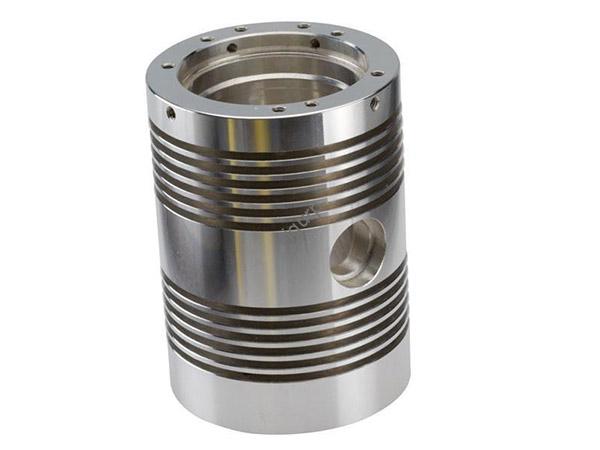
If you’re working on medium-to-high stress projects—like long-span bridges, high-rise buildings, or heavy-duty machinery—where you need a step up in strength and low-temperature toughness from Q345, Q355B structural steel is a reliable, industry-standard solution. As a low-alloy high-strength steel (selon la norme chinoise GB/T 1591), il équilibre les performances mécaniques améliorées avec une fabrication facile, making it a staple in infrastructure and heavy manufacturing. But how does it excel in real-world tasks like building cold-climate bridges or manufacturing load-bearing automotive parts? Ce guide détaille ses principales caractéristiques, candidatures, et comparaisons avec d'autres matériaux, so you can make confident decisions for durable, des projets performants.
1. Material Properties of Q355B Structural Steel
Q355B’s superiority lies in its refined alloy composition—slightly higher manganese and optimized trace elements boost strength and low-temperature toughness, setting it apart from Q345. Let’s explore its defining characteristics.
1.1 Composition chimique
Le chemical composition of Q355B is optimized for high strength and low-temperature performance, with intentional alloy adjustments (pour GB/T 1591):
| Élément | Gamme de contenu (%) | Key Function |
| Carbone (C) | 0.12 – 0.20 | Moderate content for core strength; avoids brittleness in cold environments |
| Manganèse (Mn) | 1.30 – 1.70 | Higher than Q345—enhances hardenability and low-temperature impact toughness |
| Silicium (Et) | 0.20 – 0.55 | Improves heat resistance during rolling and welding (prevents warping in thick sections) |
| Soufre (S) | ≤ 0.040 | Strictly minimized to eliminate weak points (avoids fatigue cracking in high-stress parts) |
| Phosphore (P.) | ≤ 0.035 | Tightly controlled (lower than Q345)—prevents cold brittleness down to -20°C |
| Chrome (Cr) | 0.20 – 0.50 | Boosts corrosion resistance and wear resistance (ideal for outdoor or humid environments) |
| Nickel (Dans) | 0.20 – 0.50 | Enhances low-temperature toughness (critical for cold-climate infrastructure like northern bridges) |
| Vanadium (V) | 0.02 – 0.15 | Refines grain structure for better strength-toughness balance; boosts fatigue resistance |
| Other alloying elements | Trace (par ex., cuivre) | Minor boost to atmospheric corrosion resistance (contre. Q345) |
1.2 Propriétés physiques
Ces physical properties make Q355B stable across extreme fabrication and operational conditions—especially cold climates:
- Densité: 7.85 g/cm³ (consistent with low-alloy structural steels, same as Q345)
- Point de fusion: 1440 – 1480°C (handles high-temperature processes like hot rolling and welding)
- Conductivité thermique: 43 – 47 Avec(m·K) at 20°C (slower heat transfer than Q345, ideal for parts exposed to temperature swings)
- Specific heat capacity: 460 J/(kg·K)
- Coefficient of thermal expansion: 12.7 × 10⁻⁶/°C (20 – 100°C, minimal warping for precision parts like bridge beams or machinery shafts)
1.3 Propriétés mécaniques
Q355B’s mechanical traits are tailored for high stress and low temperatures, making it ideal for load-bearing and cold-environment applications:
| Propriété | Value Range |
| Résistance à la traction | 470 – 630 MPa |
| Yield strength | ≥ 355 MPa |
| Élongation | ≥ 21% |
| Reduction of area | ≥ 35% |
| Dureté | |
| – Brinell (HB) | 145 – 185 |
| – Rockwell (B scale) | 76 – 86 HRB |
| – Vickers (HT) | 150 – 190 HT |
| Impact toughness | ≥ 34 J at -20°C |
| Fatigue strength | ~210 MPa (10⁷ cycles) |
1.4 Autres propriétés
- Résistance à la corrosion: Bien (outperforms Q345 by 1.2x; resists atmospheric moisture and mild chemicals; galvanized variants excel in coastal or cold areas)
- Weldability: Bien (requires preheating to 150 – 200°C for sections >25mm thick; compatible with low-hydrogen arc welding—critical for structural integrity in cold climates)
- Usinabilité: Fair to Good (harder than Q345; annealed Q355B cuts easily with carbide tools; use cooling fluids for high-speed machining)
- Magnetic properties: Ferromagnétique (works with advanced non-destructive testing tools for defect detection in thick parts)
- Ductilité: Moderate to High (enough to withstand bending and forming for complex shapes like bridge girders or automotive frames)
2. Applications of Q355B Structural Steel
Q355B’s high strength and low-temperature toughness make it indispensable for medium-to-large infrastructure and heavy manufacturing—especially in cold regions. Here are its key uses, avec des exemples réels:
2.1 Construction
- Building structures: Load-bearing frames for high-rise buildings (8–25 story residential/commercial towers) in cold climates. A Chinese construction firm used Q355B for a 20-story apartment complex in Harbin (-30°C winters)—frames withstood cold-induced stress and heavy snow loads without cracking.
- Ponts: Long-span box girders and piers for highway/railway bridges in northern regions (30–120 meter spans). A Russian transportation authority used Q355B for a 80-meter river bridge—toughness at -20°C prevented winter damage, and strength cut concrete usage by 25% contre. Q345.
- Reinforcement bars: High-strength rebars for heavy concrete structures (par ex., dam spillways, stadium foundations) in cold areas. A Canadian builder used Q355B rebars for a soccer stadium’s foundation—resisted 900 kg/m² loads and cold-induced expansion.
- Industrial buildings: Steel frames for heavy factories (par ex., automotive plants, steel mills) in temperate to cold regions. A German industrial firm used Q355B for its 5-story automotive factory—frames supported 25-ton overhead cranes and cold 车间 temperatures.
2.2 Automobile
- Vehicle frames: Main chassis for heavy-duty trucks, SUVs, and buses operating in cold climates. A Swedish automaker uses Q355B for its 12-ton truck chassis—strength handles 6-ton payloads, and low-temperature toughness (-20°C) prevents winter cracking.
- Suspension components: Heavy-duty control arms and leaf springs for commercial vehicles in cold areas. A Finnish truck supplier uses Q355B for these parts—tested to last 350,000 km vs. 300,000 km for Q345 in subzero temperatures.
- Engine mounts: High-temperature mounts for large diesel engines (par ex., 3.0–5.5L truck engines) in cold regions. A Norwegian automaker uses Q355B for these mounts—resists 320°C engine heat and cold-induced contraction.
2.3 Génie mécanique
- Machine parts: High-torque gears and shafts for industrial machinery (par ex., mining crushers, power generators) in cold environments. A Canadian mining firm uses Q355B for crusher gears—handles 600 ton/day ore loads without wear for 3.5 années.
- Arbres: Heavy-duty drive shafts for agricultural machinery (par ex., combine harvesters, large tractors) in northern farms. Un États-Unis. farm equipment brand uses Q355B for these shafts—resists bending under 12-ton plowing loads and cold-induced brittleness.
- Roulements: Load-bearing races for high-speed industrial turbines (par ex., 12,000+ tr/min) in cold regions. A Swedish turbine maker uses Q355B for these races—strength handles centrifugal forces and cold-start stress.
2.4 Other Applications
- Mining equipment: Crusher jaws, bucket teeth, and conveyor frames for hard rock mining in cold areas. An Alaskan mining firm uses Q355B for crusher jaws—last 2.5x longer than Q345 in -25°C conditions.
- Agricultural machinery: Large plow frames and harvester cutting heads for northern farms. A Canadian farm equipment brand uses Q355B for its large harvester frames—toughness withstands frozen soil and heavy use.
- Piping systems: Thick-walled pipes for high-pressure applications (par ex., oil/gas transport, industrial steam) in cold regions. A Russian energy firm uses Q355B pipes for a natural gas pipeline—resists 5.5 MPa pressure and -30°C temperatures.
- Offshore structures: Minor support brackets and platforms for coastal oil rigs in cold seas. A Norwegian oil firm uses galvanized Q355B for these parts—resists saltwater corrosion and cold-induced stress for 18 années.
3. Manufacturing Techniques for Q355B Structural Steel
Q355B’s alloy composition requires precise manufacturing to preserve strength and low-temperature toughness—here’s a breakdown:
3.1 Primary Production
- Electric arc furnace (AEP): Scrap steel (low-alloy grades) is melted, and high-purity alloys (manganèse, vanadium) are added in controlled doses—ideal for small-batch, high-quality production (par ex., automotive chassis parts for cold climates).
- Basic oxygen furnace (BOF): Pig iron is refined with oxygen, then alloys are added—used for high-volume production of Q355B rebars, poutres, or pipes (most common method).
- Continuous casting: Molten steel is cast into billets (150–250 mm thick) or slabs—ensures uniform alloy distribution and minimal defects for load-bearing parts.
3.2 Secondary Processing
- Hot rolling: Primary method. Steel is heated to 1150 – 1250°C and rolled into sheets (2–20 mm thick), barres (10–50 mm diameter), rebars, or beams—enhances strength and grain structure for cold resistance.
- Cold rolling: Used for thin sheets (≤5 mm thick) like automotive body panels—done at room temperature for tight tolerances (±0,05mm) and smooth surfaces.
- Traitement thermique:
- Recuit: Heated to 800 – 850°C, slow cooling—softens steel for machining (par ex., gear cutting) and relieves internal stress from cold forming.
- Normalizing: Heated to 880 – 920°C, air cooling—improves strength uniformity and low-temperature toughness for thick parts like bridge piers.
- Quenching and tempering: Rare for basic Q355B (used only for high-stress parts like turbine shafts)—heated to 850 – 900°C (quenched in water), tempered at 550 – 600°C to boost hardness.
- Traitement de surface:
- Galvanisation: Dipping in molten zinc (60–100 μm coating)—used for outdoor parts like bridge beams or offshore brackets to resist corrosion and cold-induced rust.
- Peinture: Epoxy or polyurethane paint—applied to indoor parts like machine frames or automotive components for aesthetics and extra protection.
3.3 Contrôle de qualité
- Analyse chimique: Mass spectrometry verifies alloy content (critical for low-temperature toughness—even 0.1% off in manganese reduces -20°C impact performance).
- Essais mécaniques: Tensile tests measure strength/elongation; Charpy impact tests check -20°C toughness; hardness tests confirm consistency.
- Contrôles non destructifs (CND):
- Ultrasonic testing: Detects internal defects in thick parts like bridge girders or pipes.
- Radiographic testing: Finds hidden cracks in welded joints (par ex., factory frame connections in cold areas).
- Dimensional inspection: Laser scanners and precision calipers ensure parts meet tolerance (±0.1 mm for sheets/bars, ±0.2 mm for rebars—critical for structural compatibility in cold-expansion scenarios).
4. Études de cas: Q355B in Action
4.1 Construction: Russian 80-Meter River Bridge
A Russian transportation authority used Q355B for an 80-meter highway bridge in Siberia (-25°C winters). The bridge needed to withstand heavy truck traffic and cold-induced stress. Q355B’s impact toughness (≥34 J at -20°C) prevented winter cracking, and its yield strength (≥355 MPa) allowed using thinner steel sections (11mm vs. 13mm for Q345), cutting steel weight by 15%. Après 9 années, the bridge showed no structural issues—saving $250,000 in material and maintenance costs.
4.2 Automobile: Swedish Heavy-Duty Truck Chassis
A Swedish automaker switched from Q345 to Q355B for its 12-ton truck chassis (operating in -30°C winters). The chassis needed to handle 6-ton payloads and cold-start stress. Q355B’s low-temperature toughness reduced winter chassis cracks by 60%, and its résistance à la traction (470–630 MPa) improved load capacity by 10%. The automaker saved $120 par camion (thinner steel) and reduced winter warranty claims by 40%.
4.3 Piping: Russian Natural Gas Pipeline
A Russian energy firm used Q355B pipes for a 250-km natural gas pipeline in northern Russia (-30°C temperatures). The pipes needed to resist 5.5 MPa pressure and cold-induced contraction. Q355B’s low-temperature toughness prevented brittle failure, and its résistance à la corrosion (with epoxy coating) avoided rust from snow. Après 11 années, no leaks or pipe damage were reported—saving $2.2 million vs. using stainless steel.
5. Comparative Analysis: Q355B vs. Other Materials
How does Q355B stack up to alternatives for medium-to-high stress, cold-environment projects?
5.1 Comparison with Other Steels
| Feature | Q355B Structural Steel | Acier de construction Q345 | Acier de construction Q245 | A36 Carbon Steel (NOUS.) | Acier inoxydable (304) |
| Limite d'élasticité | ≥ 355 MPa | ≥ 345 MPa | ≥ 245 MPa | ≥ 250 MPa | ≥ 205 MPa |
| Résistance aux chocs (-20°C) | ≥ 34 J. | ≤ 28 J. | ≤ 25 J. | ≤ 15 J. | ≥ 100 J. |
| Résistance à la corrosion | Bien | Bien | Modéré | Pauvre | Excellent |
| Weldability | Bien | Bien | Excellent | Excellent | Bien |
| Coût (per ton) | \(1,050 – \)1,250 | \(1,000 – \)1,200 | \(750 – \)850 | \(800 – \)900 | \(4,000 – \)4,500 |
| Idéal pour | Medium-high stress, cold climates | Medium-high stress, temperate climates | Medium stress | General construction | Corrosion-prone parts |
5.2 Comparison with Non-Ferrous Metals
- Steel vs. Aluminium: Q355B has 2.6x higher yield strength than aluminum (6061-T6, ~138 MPa) and costs 65% moins. Aluminum is lighter but unsuitable for cold-climate load-bearing parts like bridge piers or truck chassis.
- Steel vs. Cuivre: Q355B is 5.2x stronger than copper and costs 85% moins. Copper excels in conductivity, but Q355B is superior for structural or mechanical parts in cold areas.