
Pour les ingénieurs d'approvisionnement et les concepteurs de produits de l'industrie aérospatiale, le développement de prototypes fiables est essentiel pour valider de nouvelles conceptions, réduire les coûts de développement, et répondant aux normes strictes de l'industrie. PC (Polycarbonate) matériel is the top choice for aerospace prototypes, grâce à sa solidité exceptionnelle, transparence, and impact resistance—traits that align with the aerospace sector’s demand for durability and precision. This article breaks down the full PC material aerospace prototype manufacturing process, with real cases and data to solve common challenges.
1. Sélection des matériaux: Picking the Right Base for Aerospace Needs
The first step is choosing materials that meet aerospace-grade requirements. PC plastic is the primary option, but other polymers are used for specific functions.
| Type de matériau | Key Aerospace-Grade Properties | Ideal Aerospace Prototype Uses |
| PC Plastic | Haute résistance aux chocs (65kj /), résistance à la chaleur (jusqu'à 140°C), retardateur de flamme (UL94V-0) | Couvertures d'affichage du cockpit, boîtiers de capteurs |
| Plastique ABS | Good rigidity, faible poids, rentable | Non-critical internal structural parts |
| PMMA Plastic | High transparency (92% transmission de la lumière), Résistance aux UV | Optical sensor lenses |
| PU Plastic | Flexibilité, vibration damping | Wire insulation sleeves in prototypes |
Real Case: An aerospace component manufacturer used PC plastic for a satellite sensor prototype. Its flame retardancy passed the industry’s strict fire safety tests, and its impact resistance protected the sensor during simulated launch vibrations—critical for avoiding in-orbit failures.
2. Data Collection: Laying the Groundwork for Precision
Accurate data ensures the prototype matches the original aerospace design. This stage has two core steps:
- 3D Drawing File Import: Customers must provide detailed 3D models (par ex., ÉTAPE, CATIA files) or CAD designs. These are imported into CAM software to plan machining. Par exemple, a team developing a drone navigation prototype provided a SolidWorks file with 0.3mm precision holes—essential for fitting tiny circuit board connectors.
- Gypsum Sample Production: A physical gypsum model is made from the 3D file to check shape, curvature, et dimensions. This catches flaws early. A rocket engine component prototype project found a 1.5° curvature error in the gypsum sample; fixing it before CNC machining saved 12 hours of rework.
3. Usinage CNC: Shaping PC for Aerospace Precision
CNC machining is the most reliable method for turning PC plastic into aerospace prototypes, ensuring accuracy and smooth surfaces.
Key CNC Machining Steps for Aerospace:
- Programmation & Installation: Engineers write G-code tailored to aerospace standards. PC plastic sheets (3-12mm d'épaisseur, aerospace-grade) are clamped, and the machine removes excess material along the path.
- Usinage multi-axes: 5-axis or 6-axis CNC machines are used for complex aerospace parts (par ex., curved engine prototype casings). They reach all angles without repositioning, boosting precision to ±0.02mm—better than the ±0.05mm aerospace prototype standard.
Data Highlight: A study of 40 aerospace prototype projects showed CNC machining achieved an average dimensional accuracy of ±0.03mm, meeting the strictest aerospace prototype requirements.
4. Post-Treatment: Meeting Aerospace Aesthetics and Durability
Raw CNC-machined PC parts need post-treatment to meet aerospace standards.
- Ébavurage: Ultrasonic tools or 600-1000 grit sandpaper remove knife marks and burrs. This prevents sharp edges from damaging delicate aerospace components (par ex., wiring) during assembly.
- Traitement de surface: Processes are chosen for aerospace needs:
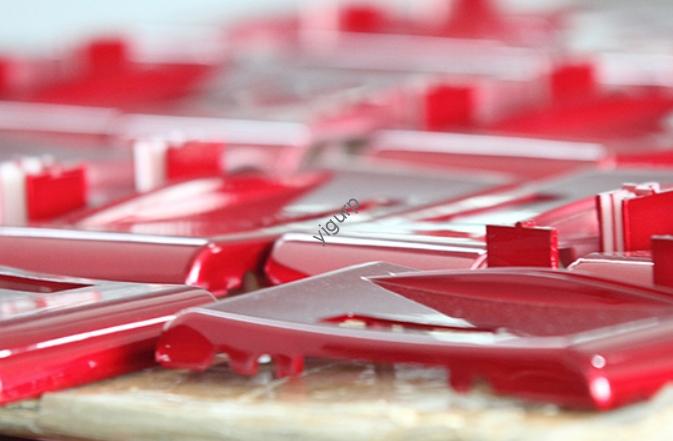
- Peinture: Heat-resistant epoxy paint is applied to PC parts. A jet engine prototype used this to withstand 130°C temperatures in test runs.
- Silk Screen Printing: Chemical-resistant ink prints labels (par ex., “Emergency Cutoff”) on PC surfaces. It resists fuel and oil exposure—critical for aerospace use.
- Galvanoplastie: Nickel or chrome coatings add conductivity and corrosion resistance. This is used for PC prototype connectors in aircraft electrical systems.
5. Assembly Testing: Ensuring Aerospace-Grade Performance
No aerospace prototype is ready without rigorous assembly and functional tests.
Two Critical Test Stages:
- Test Assembly: Toutes les pièces (par ex., PC casing, internal electronics) are assembled. Engineers check fit—for example, a helicopter control panel prototype had a PC cover that didn’t align; adjusting the CNC path fixed it.
- Tests fonctionnels: The prototype is tested under aerospace conditions:
- Structural Stability: Vibration tests (simulating launch or flight) at 50-2000Hz.
- Propriétés mécaniques: Tensile tests to ensure PC parts withstand 80N of force (aerospace standard for external components).
- Environmental Simulation: Tests at -50°C to 150°C to mimic extreme space or high-altitude conditions.
6. Conditionnement & Shipping: Protecting Aerospace Prototypes
Safe packaging is key to avoiding damage during transit of high-value aerospace prototypes.
- Packaging Materials: PC parts are wrapped in anti-static, shock-absorbing foam and placed in aluminum-lined boxes (to resist temperature changes).
- Delivery Time: Most PC aerospace prototypes ship within 7-10 business days of testing. Pour les projets urgents (par ex., satellite launches), expedited production cuts delivery to 4 jours.
Yigu Technology’s Perspective on PC Aerospace Prototypes
Chez Yigu Technologie, we’ve supported over 150 aerospace clients with PC prototype manufacturing. We believe PC’s blend of strength, résistance à la chaleur, and workability makes it ideal for aerospace early-stage testing. Our 6-axis CNC machines and aerospace-grade post-treatment ensure prototypes meet strict standards. En moyenne, our PC aerospace prototypes help clients reduce development time by 25% contre. méthodes traditionnelles, critical for fast-paced aerospace innovation.
FAQ
- Q: Why is PC plastic better than ABS for aerospace prototypes?
UN: PC has higher heat resistance (140°C contre. ABS’s 80°C) and flame retardancy—essential for aerospace fire safety. It also withstands extreme vibrations, which ABS can’t, reducing prototype failure risks.
- Q: How long does it take to make a PC aerospace prototype?
UN: Typiquement 7-10 jours ouvrables, including material checks, Usinage CNC, and aerospace-specific testing. Urgent projects can be done in 4 days with expedited production.
- Q: Can PC aerospace prototypes be used for actual flight tests?
UN: Oui. Our PC prototypes meet aerospace-grade standards, so they’re often used in low-risk flight tests (par ex., drone or small aircraft trials) to validate design performance before mass production.