
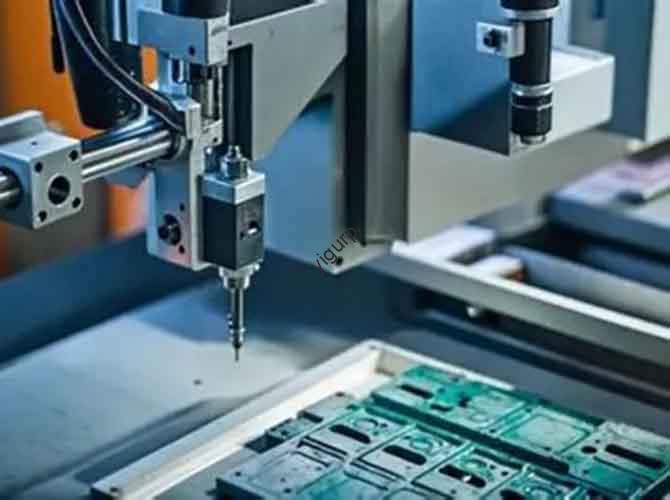
Dans le paysage manufacturier de haute technologie d’aujourd’hui, precision machining components serve as the backbone of countless industries—from aerospace and medical devices to automotive and electronics. Ces composants, conçu avec une précision et une cohérence exceptionnelles, garantir la fiabilité, efficacité, et performances des produits finis. Que vous soyez un ingénieur sélectionnant des composants pour un nouveau projet, un spécialiste des achats en approvisionnement en matériaux, or a manufacturer looking to optimize production, understanding the nuances of precision machining components est critique. Ce guide couvre tout ce que vous devez savoir: from core definitions and manufacturing processes to material selection, assurance qualité, and expert tips for success. À la fin, you’ll have the knowledge to make informed decisions about precision machining components and leverage their full potential in your applications.
1. Introduction to Precision Machining Components
1.1 What Are Precision Machined Components (PMC)?
Precision Machined Components (PMC) are custom-fabricated parts produced through machining processes that achieve extremely tight tolerances—typically ranging from ±0.001 mm to ±0.05 mm—and superior surface finishes. Unlike standard machined parts, which prioritize basic functionality, PMCs are engineered for applications where dimensional accuracy, répétabilité, and reliability are non-negotiable. Examples include engine valves in high-performance vehicles, surgical instruments in medical procedures, and sensor housings in aerospace systems.
A key distinction of precision machining components is their ability to meet strict design specifications even for complex geometries. Par exemple, Yigu Technology has manufactured precision gear components for industrial robots with a tolerance of ±0.002 mm, enabling the robots to achieve precise movement control with a repeatability rate of 99.9%. This level of accuracy is unattainable with conventional machining methods and underscores why PMCs are essential in advanced manufacturing.
1.2 Définitions clés: Accuracy vs. Precision in Machining
To fully grasp precision machining components, it’s critical to distinguish between two foundational terms: accuracy and precision—two concepts often used interchangeably but with distinct meanings in machining.
| Terme | Définition | Relevance to Precision Machining Components | Exemple |
|---|---|---|---|
| Précision | The degree to which a machined part’s actual dimensions match the intended design specifications. | Ensures PMCs fit and function as designed in the final assembly. | A precision shaft designed to be 10.000 mm in diameter that measures 10.001 mm is highly accurate. |
| Précision | The consistency of repeated machining results—i.e., how closely multiple identical parts match each other. | Guarantees scalability and uniformity in mass-produced PMCs. | Ten identical precision bolts all measuring 5.002 ±0.0005 mm demonstrate high precision. |
Pour precision machining components, both accuracy and precision are non-negotiable. A part that is accurate but not precise may work in a single assembly but fails in mass production. Conversely, a precise but inaccurate part will produce consistent flaws, rendering the entire batch useless. Leading manufacturers like Yigu Technology use advanced metrology tools (par ex., machines à mesurer tridimensionnelles, MMT) to verify both accuracy and precision throughout production.
2. Le processus d'usinage de précision
2.1 Core Steps of Manufacturing Precision Machined Components
The production of precision machining components is a systematic process that combines advanced technology, skilled craftsmanship, and strict quality control. Below is a step-by-step breakdown of the core workflow, with insights from Yigu Technology’s manufacturing practices:
- Conception & Modélisation CAO: The process begins with a detailed 3D CAD (Conception Assistée par Ordinateur) model of the component, which defines all dimensions, tolérances, et exigences de finition de surface. For complex PMCs (par ex., aerospace hydraulic fittings), Yigu’s engineers use CAD software with simulation tools to test for potential machining challenges, such as tool access or material stress points, avant le début de la production.
- Sélection des matériaux: Based on the component’s application (par ex., high-temperature environments, résistance à la corrosion), the appropriate material is chosen (voir la rubrique 3 pour plus de détails). Yigu often selects titanium alloy for medical PMCs due to its biocompatibility and strength.
- Programmation CNC: The CAD model is converted into G-code (a programming language for CNC machines) that guides the machining tools. Pour les pièces de haute précision, Yigu uses CAM (Fabrication assistée par ordinateur) software to optimize tool paths, reducing cycle time and minimizing errors.
- Opération d'usinage: The selected material is loaded into a CNC machine (par ex., fraisage, tournant, affûtage) that removes excess material to shape the component. For ultra-precise PMCs (tolérance < ±0,001 mm), Yigu uses 5-axis CNC machines, which can move the tool along five axes simultaneously, enabling complex geometries with minimal setup changes.
- Processus de finition: Post-machining steps (par ex., ébavurage, polissage, revêtement) are performed to improve surface finish and enhance component performance. Par exemple, Yigu applies a PTFE coating to precision hydraulic components to reduce friction and wear.
- Contrôle qualité: Each component undergoes rigorous inspection using advanced metrology tools (MMT, scanners laser, comparateurs optiques) to ensure it meets design specifications. Yigu’s quality control team rejects any part that deviates from tolerances by more than 0.0005 mm.
2.2 What Sets Precision CNC Machining Equipment Apart from Conventional Machining Tools
The production of precision machining components relies heavily on CNC (Commande numérique par ordinateur) équipement, which differs significantly from conventional (manuel) machining tools in terms of accuracy, répétabilité, et efficacité. The table below highlights the key differences:
| Feature | Precision CNC Machining Equipment | Conventional Machining Tools | Impact on Precision Machining Components |
|---|---|---|---|
| Contrôle | Computer-controlled, with automated tool paths and minimal human intervention. | Manual operation, dependent on the skill of the machinist. | CNC eliminates human error, ensuring consistent accuracy for PMCs. |
| Tolerance Capability | Can achieve tolerances as tight as ±0.0001 mm (micron-level). | Limited to tolerances of ±0.1 mm to ±0.05 mm. | CNC enables the production of high-precision components for critical applications (par ex., médical, aérospatial). |
| Répétabilité | Near-perfect repeatability (±0.0005 mm) across thousands of parts. | Variable repeatability, as results depend on machinist consistency. | CNC ensures uniform PMCs for mass production. |
| Complexité | Capable of machining complex geometries (par ex., 3D contours, cavités internes) en toute simplicité. | Limited to simple shapes and requires multiple setups for complex parts. | CNC supports the design flexibility needed for advanced PMCs. |
| Efficacité | High-speed machining with 24/7 operation capability (avec automatisation). | Lent, with frequent breaks and limited to 8-hour shifts. | CNC reduces lead times for PMCs, critique pour les projets urgents. |
Yigu Technology’s investment in 5-axis CNC machines and automated inspection systems has allowed the company to produce precision machining components avec un 99.8% taux de rendement, significantly higher than the industry average of 95% for conventional machining.
3. Materials for Precision CNC Machining
3.1 Overview of Commonly Used Materials
The selection of materials for precision machining components is a critical decision that impacts the component’s performance, coût, et fabricabilité. The ideal material must balance mechanical properties (force, dureté, ductilité), environmental resistance (corrosion, température), and compatibility with machining processes. Below is an overview of the most commonly used materials, along with their key characteristics and typical applications:
3.2 Popular Metallic Materials for Precision CNC Machining
Metallic materials are the most common choice for precision machining components due to their superior strength, durabilité, et stabilité thermique. The table below details the top metallic materials used by Yigu Technology and other leading manufacturers:
| Matériel | Propriétés clés | Applications typiques | Indice d'usinabilité (1-100, Higher = Better) |
|---|---|---|---|
| Alliages d'aluminium (6061, 7075) | Léger, résistant à la corrosion, bonne conductivité thermique, haute ductilité. | Composants aérospatiaux (supports d'aile), boîtiers électroniques, pièces automobiles (composants du moteur). | 75-85 |
| Acier inoxydable (304, 316) | Haute résistance à la corrosion, force, and hygiene (for food/medical applications). | Instruments médicaux (surgical scalpels), équipement de transformation des aliments, composants marins. | 30-40 |
| Alliages de titane (Ti-6Al-4V) | Rapport résistance/poids exceptionnel, biocompatible, corrosion-resistant at high temperatures. | Implants orthopédiques (arthroplasties de la hanche), pièces de moteurs aérospatiaux, military equipment. | 20-25 |
| Laiton (C36000) | Excellente usinabilité, electrical conductivity, et résistance à la corrosion. | Connecteurs électriques, vannes, raccords, instruments de musique. | 90-95 |
| Alliages d'acier (4140, 1018) | Haute résistance, dureté, et résistance à l'usure (4140); low cost and good ductility (1018). | Engrenages industriels, arbres, attaches, tooling components. | 60-70 |
Un exemple concret: Yigu Technology manufactured precision titanium alloy components for a medical device company producing hip implants. The Ti-6Al-4V alloy was selected for its biocompatibility and strength, ensuring the implants could withstand daily use for up to 20 années. The machining process required specialized cutting tools and coolants to handle titanium’s low thermal conductivity, which can cause tool wear and material deformation if not managed properly.
3.3 Popular Non-Metallic Materials for Precision CNC Machining
Non-metallic materials are increasingly used for precision machining components in applications where weight reduction, isolation électrique, or chemical resistance is critical. Below are the most popular non-metallic materials:
| Matériel | Propriétés clés | Applications typiques | Indice d'usinabilité (1-100, Higher = Better) |
|---|---|---|---|
| Plastiques (POM, PTFE, ABS) | Léger, faible friction (PTFE), résistant aux chocs (ABS), résistance chimique. | Engrenages, roulements, composants intérieurs automobiles, boîtiers électroniques. | 80-90 |
| Céramique (Alumine, Zircone) | Dureté extrême, résistance aux hautes températures, isolation électrique. | Insulators for high-voltage equipment, outils de coupe, implants médicaux (couronnes dentaires). | 10-15 |
| Composites (Carbon Fiber-Reinforced Polymer, CFRP) | Rapport résistance/poids exceptionnel, résistant à la corrosion, haute rigidité. | Composants aérospatiaux (fuselage parts), racing car bodies, wind turbine blades. | 25-35 |
| Delrin (Acétal) | High mechanical strength, stabilité dimensionnelle, faible absorption d'humidité. | Engrenages de précision, bagues, sièges de soupape, équipement de transformation des aliments. | 85-90 |
Yigu Technology recently worked on a project for an aerospace client requiring precision CFRP components for a satellite’s structural frame. The challenge was machining the composite without causing fiber fraying—a common issue with CFRP. Yigu used diamond-tipped tools and a low-feed, high-speed machining strategy to achieve the required tolerance of ±0.003 mm, ensuring the components could withstand the harsh conditions of space.
4. Advantages and Benefits of Precision Machined Parts
Composants d'usinage de précision offer a range of advantages that make them indispensable in modern manufacturing. These benefits extend beyond just accuracy, impacting product performance, rentabilité, and market competitiveness. Below are the key advantages, supported by real-world data and case studies:
- Enhanced Product Reliability: PMCs with tight tolerances ensure consistent performance, reducing the risk of component failure. According to a study by the American Society of Mechanical Engineers (ASME), products using precision machined components have a 40% lower failure rate than those using standard machined parts. Yigu Technology’s precision gears for industrial robots, Par exemple, have a mean time between failures (MTBF) de 10,000 heures, par rapport à 6,000 hours for standard gears.
- Efficacité améliorée: The accuracy of PMCs reduces friction, energy loss, et porter, improving the overall efficiency of the end product. Par exemple, a automotive manufacturer using Yigu’s precision fuel injection components reported a 15% increase in fuel efficiency and a 10% reduction in emissions.
- Reduced Assembly Costs: PMCs fit together seamlessly, eliminating the need for time-consuming adjustments or rework during assembly. A study by McKinsey found that manufacturers using precision machined components reduce assembly time by 25-30%, leading to significant labor cost savings. Yigu’s clients report an average 28% reduction in assembly costs after switching to their PMCs.
- Flexibilité de conception: Precision CNC machining enables the production of complex geometries that would be impossible with conventional methods. This flexibility allows engineers to design more innovative, compact, and lightweight products. Par exemple, Yigu manufactured a precision 3D-printed (CNC-finished) component for a wearable medical device that was 30% smaller and 25% lighter than the previous design.
- Évolutivité: CNC machining’s repeatability ensures that thousands of identical PMCs can be produced with consistent quality, making it ideal for mass production. Yigu Technology can produce up to 100,000 precision components per month with a 99.8% taux de rendement, meeting the high-volume demands of automotive and electronics clients.
- Longer Component Lifespan: The use of high-quality materials and precise machining reduces wear and tear, extending the lifespan of PMCs. Yigu’s stainless steel precision valves for marine applications have a lifespan of 15-20 années, par rapport à 5-10 years for standard valves.
5. Common Types of Precision Machined Components
Composants d'usinage de précision come in a wide range of shapes and sizes, adapté à des applications spécifiques. Below are the most common types, along with their design considerations and use cases:
| Component Type | Design Considerations | Applications typiques | Example from Yigu Technology |
|---|---|---|---|
| Engrenages & Gear Teeth | Tooth profile accuracy, contrecoup (clearance between teeth), état de surface. | Industrial robots, transmissions automobiles, moteurs aérospatiaux. | Precision helical gears for a robotic arm manufacturer, with a tooth profile tolerance of ±0.002 mm. |
| Arbres & Axles | Précision dimensionnelle, rectitude, surface hardness (pour la résistance à l'usure). | Motor shafts, automotive drivetrains, équipement médical (MRI machines). | Titanium alloy shafts for a medical imaging company, with a straightness tolerance of 0.001 mm/m. |
| Vannes & Raccords | Sealing accuracy, résistance à la corrosion, pressure rating. | Hydraulic systems, fuel injection systems, marine equipment. | Stainless steel precision valves for an offshore oil rig, rated for 10,000 psi pressure. |
| Attaches (Boulons, Vis, Nuts) | Thread accuracy, torque resistance, material strength. | Composants aérospatiaux, automotive assemblies, electronic devices. | Titanium bolts for a satellite manufacturer, with a thread tolerance of 6H (precision class). |
| Logements & Boîtiers | Stabilité dimensionnelle, wall thickness uniformity, conductivité thermique. | Electronic sensors, dispositifs médicaux, industrial controllers. | Aluminum alloy enclosures for a IoT sensor company, with a wall thickness tolerance of ±0.005 mm. |
| Roulements & Bagues | Finition superficielle (faible friction), précision dimensionnelle, résistance à l'usure. | Roues automobiles, machines industrielles, robotique. | PTFE-lined precision bushings for a conveyor system manufacturer, reducing friction by 35%. |
6. Advanced Capabilities in Precision CNC Machining
6.1 Materials and Composition Analysis
To ensure the quality and performance of precision machining components, advanced materials and composition analysis is a critical step in the manufacturing process. This analysis verifies that the selected material meets the required chemical composition and mechanical properties, preventing material defects that could compromise component performance. Yigu Technology uses the following advanced techniques for materials analysis:
- Spectroscopy: X-ray fluorescence (XRF) spectroscopy is used to analyze the chemical composition of metallic materials, ensuring they meet alloy specifications. Par exemple, Yigu uses XRF to verify that titanium alloys contain the correct percentage of aluminum (6%) et du vanadium (4%) pour applications médicales.
- Mechanical Testing: Essais de traction, essai de dureté, and fatigue testing are performed to measure the material’s strength, ductilité, et durabilité. Yigu’s tensile testing of steel alloys ensures a minimum yield strength of 500 MPa for industrial components.
- Microstructural Analysis: Optical microscopy and scanning electron microscopy (SEM) are used to examine the material’s microstructure, identifying defects such as cracks, inclusions, or grain irregularities. This is particularly important for high-stress applications, such as aerospace components.
A recent project at Yigu involved materials analysis for a batch of stainless steel precision machining components destined for a food processing client. XRF analysis revealed a slight deviation in chromium content (17.5% instead of the required 18%), which would have reduced corrosion resistance. The batch was rejected, and the material supplier was notified—preventing potential product failures and reputational damage for the client.
6.2 Quality Assurance in Precision Machining
Assurance qualité (QA) is a cornerstone of producing high-qualityprecision machining components. Yigu Technology has implemented a comprehensive QA system that covers every stage of production, from material incoming inspection to final component testing. Key QA practices include:
- Incoming Material Inspection: All raw materials are inspected for chemical composition, propriétés mécaniques, and surface defects before machining. This ensures that only high-quality materials are used.
- In-Process Inspection: Pendant l'usinage, components are inspected at critical stages (par ex., after roughing, before finishing) using tools such as calipers, micromètres, et comparateurs optiques. This catches errors early, reducing rework and waste.
- Final Inspection with Advanced Metrology: Finished components undergo rigorous inspection using CMMs, scanners laser, and coordinate measuring arms. Yigu’s CMMs can measure up to 1000 points per component, ensuring all dimensions meet design specifications.
- Contrôle statistique des processus (CPS): Yigu uses SPC software to monitor machining processes in real time, identifying trends and variations that could affect quality. This proactive approach ensures process stability and consistent component quality.
- Attestation & Documentation: Tous precision machining components come with a certificate of conformity (CoC) that includes material test reports (MTRs) and inspection data. This documentation is critical for clients in regulated industries (par ex., médical, aérospatial).
Yigu Technology’s QA system is certified to ISO 9001:2015 et AS9100 (for aerospace applications), demonstrating the company’s commitment to quality. This certification has helped Yigu secure clients in highly regulated industries, où la précision et la fiabilité sont primordiales.
6.3 Packaging and Logistics for Precision Components
The care of precision machining components doesn’t end with production—packaging and logistics are critical to ensuring components arrive at the client’s facility in perfect condition. PMCs are often fragile, avec des tolérances serrées, so improper packaging can cause damage (par ex., rayures, déformation) that renders them unusable. Yigu Technology’s packaging and logistics practices are tailored to protect precision components:
- Custom Packaging: Components are packaged in custom foam inserts, anti-static bags, or vacuum-sealed containers to prevent movement and protect against scratches, humidité, and electrostatic discharge (ESD). Par exemple, électronique precision machining components are packaged in anti-static bags to avoid damage from static electricity.
- Labeling & Tracking: Each package is labeled with detailed information (component part number, quantité, batch number, inspection status) and equipped with a barcode for real-time tracking. This ensures full traceability from Yigu’s facility to the client’s assembly line.
- Climate-Controlled Shipping: For components sensitive to temperature or humidity (par ex., composites, certain plastics), Yigu uses climate-controlled shipping containers to maintain stable conditions during transit.
- Partnered Logistics Providers: Yigu works with logistics providers specializing in high-value, composants de précision, ensuring timely and secure delivery. The company offers both air and sea shipping options, with expedited services for time-sensitive projects.
A recent example: Yigu shipped 5,000 precision titanium components to a medical device client in Europe using climate-controlled air freight. The components were packaged in custom foam inserts and vacuum-sealed bags, and tracked in real time. The client reported zero damage or defects upon receipt, highlighting the effectiveness of Yigu’s packaging and logistics practices.
7. Expert Tips for Improving Precision CNC Machining Outcomes
Based on Yigu Technology’s years of experience in manufacturing precision machining components, the following expert tips will help you optimize your precision CNC machining processes, réduire les coûts, and improve component quality:
- Optimize Tool Selection: Choose cutting tools made from high-performance materials (par ex., carbure, diamond) for hard-to-machine materials like titanium or ceramics. Par exemple, using diamond-tipped tools for CFRP components reduces tool wear by 50% and improves surface finish. Yigu also recommends using variable-pitch end mills to reduce vibration, which can compromise tolerance accuracy.
- Control Cutting Parameters: Adjust cutting speed, vitesse d'avance, and depth of cut based on the material and component geometry. Par exemple, machining aluminum requires higher cutting speeds (1500-3000 RPM) and lower feed rates (0.1-0.3 mm/rev) to prevent material melting, while titanium requires lower speeds (50-150 RPM) and higher feed rates to avoid work hardening. Yigu uses CAM software to simulate cutting parameters before production, optimizing for both quality and efficiency.
- Maintain Machine Calibration: Regularly calibrate CNC machines and metrology tools to ensure accuracy. Yigu calibrates its 5-axis CNC machines every 3 months and CMMs every 6 mois, en utilisant les normes traçables du NIST. This prevents drift in machine performance, which can lead to out-of-tolerance components.
- Manage Coolant Effectively: Use the correct coolant for the material and machining process to reduce heat buildup, lubricate the cutting tool, and improve surface finish. Par exemple, water-soluble coolants are ideal for aluminum, while oil-based coolants are better for titanium. Yigu also filters coolants regularly to remove debris, which can cause scratches on precision components.
- Conception pour la fabricabilité (DFM): Collaborate with your machining partner early in the design phase to optimize component geometry for CNC machining. Avoid sharp corners, deep pockets, and complex features that are difficult to machine. Yigu’s engineers work with clients to modify designs—for example, replacing a deep pocket with a stepped feature—to reduce machining time and improve tolerance accuracy.
- Implement SPC for Process Stability: Use statistical process control software to monitor key machining parameters (par ex., usure des outils, cutting temperature) en temps réel. This allows you to identify and address variations before they affect component quality. Yigu’s SPC system has reduced process variation by 35%, improving yield rates and reducing waste.
8. Applications of Precision Machining Components
Composants d'usinage de précision are used in nearly every industry that requires high-performance, reliable products. Below is an overview of key industries and their specific uses for PMCs, with case studies from Yigu Technology:
| Industrie | Applications of Precision Machining Components | Yigu Technology Case Study |
|---|---|---|
| Aérospatial | Composants du moteur (engrenages, arbres), fuselage fittings, satellite structural parts, boîtiers avioniques. | Manufactured precision CFRP fuselage components for a commercial airline, reducing weight by 20% and improving fuel efficiency by 12%. |
| Médical | Instruments chirurgicaux, implants orthopédiques (hip, genou), medical imaging components, drug delivery systems. | Produced titanium alloy hip implants for a medical device company, avec un 99.9% biocompatibility rate and a 20-year lifespan guarantee. |
| Automobile | Fuel injection components, engrenages de transmission, systèmes de freinage, soupapes du moteur, véhicule électrique (VE) motor parts. | Supplied precision aluminum fuel injection components to an EV manufacturer, improving battery range by 15% and reducing emissions. |
| Électronique | Semiconductor test sockets, boîtiers électroniques, boîtiers de capteurs, connecteurs. | Manufactured precision ceramic insulators for a semiconductor company, with a dielectric strength of 20 kV/mm and a tolerance of ±0.001 mm. |
| Machines industrielles | Robot gears and shafts, conveyor system bearings, vannes hydrauliques, industrial controller housings. | Produced precision helical gears for a robotic automation company, enabling the robots to achieve a repeatability of ±0.01 mm. |
| Marin | Corrosion-resistant valves and fittings, arbres d'hélice, marine engine components. | Supplied stainless steel precision valves to an offshore oil rig, rated for 10,000 psi pressure and resistant to saltwater corrosion. |
9. Yigu Technology’s Perspective on Precision Machining Components
Chez Yigu Technologie, we believe that precision machining components are the foundation of innovation in advanced manufacturing. As the demand for smaller, plus léger, and more reliable products grows—particularly in industries like aerospace, médical, and EVs—the role of PMCs will only become more critical. Our years of experience in manufacturing PMCs have taught us that success lies in three core principles: expertise technique, rigorous quality control, and customer collaboration.
Technical expertise is essential to overcoming the challenges of machining complex materials and geometries. Our investment in 5-axis CNC machines, advanced metrology tools, and skilled engineers allows us to produce PMCs with tolerances as tight as ±0.0001 mm, meeting the most demanding client requirements. Rigorous quality control, from incoming material inspection to final testing, ensures that every component we produce is reliable and consistent. Enfin, collaboration with our clients—from design to delivery—enables us to optimize processes, réduire les coûts, and deliver components that exceed expectations.
Looking to the future, we see two key trends shaping the precision machining components industrie: the adoption of AI and machine learning for process optimization, and the growing use of sustainable materials. Yigu Technology is already exploring AI-driven predictive maintenance for our CNC machines, which will reduce downtime and improve process stability. We are also investing in sustainable materials like recycled aluminum and biodegradable plastics, helping our clients reduce their environmental footprint.
In conclusion, precision machining components are more than just parts—they are enablers of progress. Chez Yigu Technologie, we are committed to pushing the boundaries of precision machining, delivering high-quality components that help our clients innovate and succeed in a competitive global market.
10. FAQ About Precision Machining Components
Q1: What is the typical tolerance range for precision machining components?
The typical tolerance range for precision machining components is ±0.001 mm to ±0.05 mm. For ultra-precise applications (par ex., implants médicaux, composants aérospatiaux), tolerances can be as tight as ±0.0001 mm. Yigu Technology specializes in producing PMCs with tolerances as low as ±0.0005 mm.
Q2: How do I choose the right material for my precision machining components?
When choosing a material for precision machining components, consider the component’s application (par ex., haute température, résistance à la corrosion, biocompatibilité), propriétés mécaniques (force, dureté), et usinabilité. Work with your machining partner (comme la technologie Yigu) to select the material that balances performance and cost. Par exemple, titanium is ideal for medical implants (biocompatible), while aluminum is best for lightweight aerospace components.
Q3: What is the difference between precision machining and conventional machining?
Precision machining uses CNC equipment to achieve tight tolerances (±0.0001 mm to ±0.05 mm), high repeatability, and complex geometries. Conventional machining is manual, with limited tolerance capability (±0.1 mm to ±0.05 mm) and lower repeatability. Precision machining is ideal for high-volume, high-accuracy applications, while conventional machining is better for simple, pièces à faible volume.
Q4: How long does it take to produce precision machining components?
Lead times for precision machining components vary based on complexity, volume, et du matériel. Pour les petits lots (1-100 parties), les délais de livraison sont généralement 1-2 semaines. For high-volume batches (10,000+ parties), les délais peuvent être 3-4 semaines. Yigu Technology offers expedited services for time-sensitive projects, avec des délais aussi courts que 3-5 days for small batches.
Q5: What quality certifications should I look for in a precision machining supplier?
Look for suppliers certified to ISO 9001:2015 (general quality management) and industry-specific certifications like AS9100 (aérospatial) ou ISO 13485 (médical). Yigu Technology is certified to ISO 9001:2015 et AS9100, ensuring our precision machining components meet the highest quality standards for regulated industries.
Q6: Can precision machining components be recycled?
Oui, many precision machining components can be recycled. Metallic components (aluminium, acier, titane) are highly recyclable, while some plastics (ABS, POM) can also be recycled. Yigu Technology offers recycling services for scrap material from machining processes, helping clients reduce their environmental footprint.
Q7: How do I ensure my precision machining components arrive undamaged?
Choose a supplier that uses custom packaging (par ex., foam inserts, anti-static bags) and climate-controlled shipping for sensitive components. Yigu Technology’s packaging and logistics practices include real-time tracking, emballage personnalisé, and partnered logistics providers specializing in high-value precision components, ensuring zero damage during transit.