
Our Polymethyl Methacrylate PMMA Injection Molding Services
Elevate your products with Yigu Technology’s Polymethyl Methacrylate (PMMA) Injection Molding services—the gold standard for high-clarity, high-performance acrylic components. From optical-grade automotive lenses to UV-stable architectural glazing, we combine precision optical-grade PMMA molding, clean-room production, and advanced formulations to deliver parts that blend visual appeal with rugged reliability. Backed by ISO 9001/IATF 16949 certifications and 24/7 support, we turn your PMMA molding challenges into cost-effective, market-leading solutions.
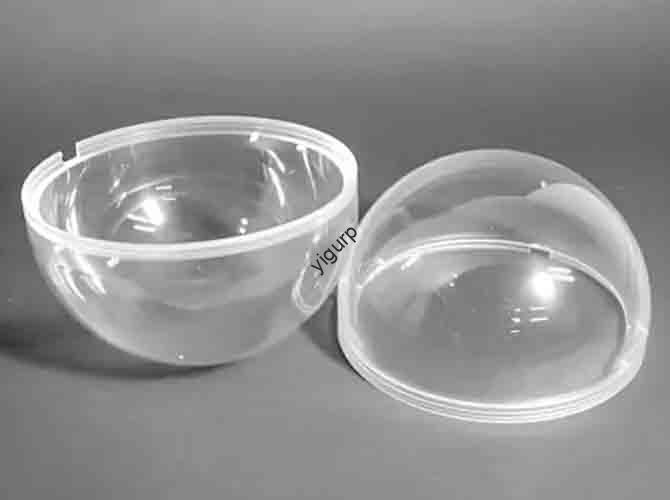
What Is PMMA Injection Molding?
PMMA Injection Molding is a specialized manufacturing process that shapes Polymethyl Methacrylate (PMMA)—commonly known as acrylic—a versatile thermoplastic, into custom parts via high-pressure injection into precision molds. Unlike glass (its traditional alternative), PMMA offers the perfect balance of clarity and impact resistance, making Acrylic thermoplastic molding ideal for applications where both aesthetics and durability matter.
At its core, PMMA plastic molding leverages the material’s unique molecular structure: long chains of methyl methacrylate monomers that create a transparent, rigid matrix. This structure delivers PMMA optical clarity (92% light transmission—nearly equal to glass) while being 50% lighter and 17 times more impact-resistant. It’s why Polymethyl Methacrylate (acrylic) molding is trusted across industries from automotive to cosmetics.
Key Traits of PMMA Molding
| Trait | Description | Relevance to Molding |
| Optical Clarity | 92% light transmission (vs. 90% for glass) | Ideal for lenses, lighting diffusers, and display covers |
| Thermoplastic Behavior | Softens at 160–200°C, hardens when cooled—reversible | Enables complex geometries (e.g., thin-wall cosmetic containers) |
| UV Resistance | Blocks 98% of UV rays (with UV-stabilized grades) | Perfect for outdoor applications (architectural glazing, signs) |
| Impact Resistance | 17x more shatterproof than glass (density: 1.19 g/cm³) | Safe for medical devices and automotive components |
Our PMMA Injection Molding Capabilities: Precision Meets Versatility
Yigu Technology’s PMMA injection molding capacity is engineered to handle projects of all scales—from micro-optical components to high-volume consumer goods—while maintaining strict quality standards. Our facility specializes in overcoming PMMA’s unique challenges (like sensitivity to shear heating) to deliver consistent, high-clarity parts.
Core Capabilities Breakdown
| Capability | Specification | Ideal Applications |
| Tolerance Control | ±0.01 mm for optical parts; ±0.03 mm for standard components | Automotive lenses, microfluidic chips |
| Optical-Grade PMMA Molding | <0.1% haze (per ASTM D1003), <50 nm surface roughness | Lighting diffusers, aircraft windows |
| High-Volume Production | Up to 8 million parts/year (via 32-cavity tooling) | Cosmetic containers, consumer electronics covers |
| Clean-Room PMMA Service | Class 7 (10,000) certified rooms | Medical device housings, surgical instrument handles |
| Thin-Wall PMMA Molding | Walls as thin as 0.3 mm (with uniform thickness) | Perfume caps, electronic device bezels |
| Insert & Over-Molding PMMA | Compatible with metals (aluminum, stainless steel) and plastics | Over-molded light guides, instrument panels |
The PMMA Injection Molding Process: Step-by-Step Excellence
PMMA’s sensitivity to heat and shear requires careful process control—mistakes can cause yellowing, haze, or warping. Our optimized workflow ensures every PMMA part meets the highest clarity and precision standards.
Step 1: Resin Preparation
We start with dry PMMA resin grades—moisture content must stay <0.02% (PMMA absorbs water easily, leading to bubbles). For specialized parts, we blend additives: UV stabilizers (for outdoor use), impact modifiers (for durability), or pigments (for color). Pigmented PMMA pellets are mixed in a twin-screw extruder to ensure uniform color distribution.
Step 2: Screw & Barrel Setup
PMMA’s low thermal conductivity demands specialized PMMA screw & barrel design:
- Low-compression ratios (1.8:1 to 2.2:1) to avoid shear heating
- Polished barrel surfaces (Ra <0.2 μm) to prevent resin sticking
- Long metering zones (40% of screw length) to ensure uniform melting
This setup prevents yellowing and maintains optical clarity.
Step 3: Injection & Temperature Control
Resin is heated to the PMMA melt temperature window (180–230°C)—too high (over 240°C) causes degradation; too low leads to incomplete filling. We inject at 600–1,000 bar pressure, with slow injection speeds (20–50 mm/s) for optical parts to avoid jetting. In-mold cooling for PMMA uses precision water channels (mold temp: 40–60°C) to reduce PMMA molding cycle time (20–60 seconds, depending on part size).
Step 4: Demolding & Degating
After cooling, parts are demolded gently (PMMA is brittle when cool). We use automated PMMA degating technique—laser cutting for optical parts (to avoid scratches) or punch tools for standard components. For thin-wall parts (e.g., perfume caps), we use vacuum ejectors to prevent warping.
Step 5: Quality Inspection
Every batch undergoes 100% inspection:
- Optical tests (haze, light transmission via haze meter)
- Dimensional checks (CMM machines for ±0.01 mm tolerance)
- PMMA mold shrinkage control (shrinkage rate: 0.5–0.8% for standard grades)
Impact resistance tests (Izod impact: 20–30 J/m for impact-modified grades)
PMMA Materials: Formulations for Every Industry Need
The right PMMA formulation defines part performance. We offer a range of PMMA resin grades tailored to industry-specific demands—from optical-clear automotive parts to UV-stable outdoor products.
Popular PMMA Formulations We Supply
| Formulation Type | Key Properties | Target Applications |
| General-Purpose PMMA | 92% clarity, good dimensional stability | Consumer electronics covers, cosmetic jars |
| Optical PMMA Compounds | <0.1% haze, high light transmission (93%) | Automotive lenses, lighting diffusers |
| UV-Stabilized PMMA Grades | Blocks 98% UV rays (UVA/UVB), 5-year outdoor lifespan | Architectural glazing, outdoor signs |
| Impact-Modified PMMA | Izod impact: 40–60 J/m (vs. 20 J/m for standard) | Medical device housings, aircraft window components |
| FDA-Compliant PMMA Resins | FDA 21 CFR 177.1010 compliant, non-toxic | Cosmetic containers, dental tools |
| Anti-Static PMMA Grades | Surface resistance: 10⁶–10⁸ Ω, dust-repellent | Electronic device bezels, clean-room equipment |
PMMA Surface Treatment: Enhancing Aesthetics & Functionality
PMMA’s natural clarity is excellent, but surface treatment can boost durability, printability, or specialized performance. Our services ensure parts look great and perform better.
Common PMMA Surface Treatments
| Treatment Method | Purpose | Benefits |
| PMMA Surface Polishing | Reduces surface roughness (Ra <10 nm) | Enhances optical clarity; removes micro-scratches |
| Diamond-Polish PMMA Parts | Creates mirror-like finish (Ra <5 nm) | Ideal for luxury perfume caps, high-end display covers |
| PMMA Hard-Coat Application | Adds 2–5 μm protective layer (Mohs hardness: 3–4) | Improves scratch resistance (5x vs. untreated PMMA) |
| PMMA Anti-Fog Coating | Prevents condensation (contact angle: <30°) | Critical for medical device windows, bathroom mirrors |
| PMMA Printability Enhancement | Increases surface energy (from 38 to 60 dynes/cm) | Enables sharp, long-lasting pad-printing (for logos/text) |
Advantages of PMMA: Why It Outperforms Alternatives
PMMA stands out among transparent materials (glass, polycarbonate) for its unbeatable balance of clarity, cost, and versatility. Here’s why it’s the top choice for demanding applications:
- PMMA Optical Clarity Advantage: 92% light transmission (vs. 88% for polycarbonate), making it perfect for lenses and lighting—without glass’s weight.
- PMMA UV Resistance Benefit: UV-stabilized grades block 98% of UV rays (vs. polycarbonate’s 85%), extending outdoor part lifespan to 5+ years.
- PMMA Weatherability Edge: Resists yellowing and brittleness in extreme temps (-40°C to 80°C), ideal for architectural glazing and outdoor signs.
- PMMA Colorability Plus: Available in 100+ custom colors (via pigmented PMMA pellets) with uniform hue—even in thin-wall parts.
- PMMA Chemical Resistance Value: Resists alcohols, detergents, and weak acids (vs. polycarbonate’s sensitivity to solvents), safe for cosmetic and medical use.
- PMMA Dimensional Stability: Shrinkage rate of 0.5–0.8% (vs. 1.5% for polycarbonate), ensuring tight fits for automotive and electronic parts.
PMMA Gloss & Surface Finish: Natural gloss (70–80 GU) that requires no additional coating—saving time and cost for consumer goods.
PMMA Injection Molding Applications: Across Key Industries
PMMA’s versatility makes it indispensable in industries where clarity, durability, and aesthetics converge. Our clients trust our molding expertise to solve their toughest challenges.
Industry-by-Industry Applications & Solutions
| Industry | Key Applications | Our Molding Solution |
| Automotive | PMMA molded automotive lenses (headlights, taillights), instrument panels | Optical-grade PMMA, IATF 16949 compliance, ±0.01 mm tolerance |
| Medical | PMMA medical device housings, surgical instrument handles, dental imaging windows | FDA-compliant PMMA, clean-room molding (Class 7) |
| Consumer Electronics | PMMA consumer electronics covers (smartphone bezels, laptop screens), light guides | Anti-static PMMA, thin-wall molding (0.3–0.5 mm) |
| Architecture | PMMA architectural glazing frames, skylights, outdoor signs | UV-stabilized PMMA, impact-modified grades |
| Cosmetics | PMMA cosmetic containers (perfume caps, lotion bottles), lipstick cases | High-gloss PMMA, diamond polishing, custom pigmentation |
| Aerospace | PMMA aircraft windows (cockpit side windows), interior lighting diffusers | Flame-retardant PMMA, optical clarity (<0.1% haze) |
Case Study: High-Beam Automotive Lens for a Global OEM
A leading automotive OEM needed a PMMA high-beam lens that met strict optical standards (92% light transmission, <0.1% haze) and withstood extreme under-hood temps (-40°C to 85°C). Their previous polycarbonate lens suffered from yellowing after 6 months of use.
Our Solution:
- Material Selection: Chose optical PMMA compound with UV stabilizers and heat-resistant additives (continuous use temp: 90°C).
- Mold Design: Used a single-cavity, polished-steel mold (Ra <5 nm) with in-mold cooling for PMMA—precision water channels ensured uniform cooling to prevent warping. Added gate locations at the lens edge to avoid optical distortion.
- Process Optimization: Set melt temp to 210°C, mold temp to 50°C, and injection speed to 30 mm/s (low-shear to maintain clarity). Used PMMA low-shear molding to avoid resin degradation.
Results:
- The lens achieved 92.5% light transmission and 0.08% haze—exceeding the OEM’s requirements.
- No yellowing or haze after 1,000 hours of UV testing (equivalent to 5 years of outdoor use).
- Production cost was 15% lower than polycarbonate, with a 20% faster cycle time (35 vs. 45 seconds).
The OEM scaled up to 1.2 million lenses/year, with zero defects in the first 6 months.
Why Choose Yigu Technology for PMMA Injection Molding?
When it comes to PMMA injection molding, Yigu Technology stands out for our deep material expertise, strict quality control, and customer-centric approach. Here’s why clients worldwide trust us:
- Certified Quality: Our plant holds ISO 9001 (general quality) and IATF 16949 (automotive) certifications—ensuring compliance with global standards.
- Optical Expertise: We specialize in optical-grade PMMA molding with dedicated equipment (polished molds, haze meters) to deliver museum-quality clarity.
- End-to-End Service: From in-house PMMA tool design & simulation (MoldFlow) to global logistics, we handle every step—no middlemen.
- Rapid Prototyping: Get functional PMMA prototypes in 4–6 days (vs. 2 weeks from competitors) to accelerate product development.
- 24/7 Support: Our team is available around the clock to resolve issues—critical for high-volume automotive and consumer goods clients.
- Competitive Pricing: We leverage bulk resin purchasing and multi-cavity tooling to offer parts 10–18% below market averages.
Global Reach: Our global PMMA logistics network delivers JIT to 40+ countries, with full PPAP & FAI documentation for automotive clients.