
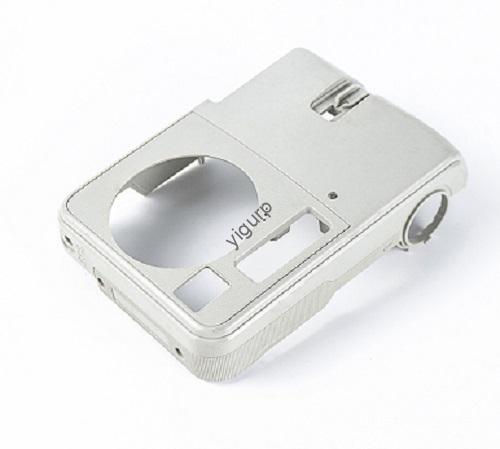
Dans le domaine de la fabrication d'instruments, vérifier la faisabilité et la fonctionnalité de la conception avant la production en série est essentiel pour réduire les coûts et éviter les risques. Le plastic instrument prototype model plays a vital role here—it allows teams to test designs, valider les performances, et collecter des données fiables à moindre coût, poser une base solide pour une production de masse ultérieure. Whether you’re a procurement engineer selecting suitable plastic materials or a product engineer optimizing instrument structures, this guide covers all the essential information needed to create high-quality plastic instrument prototypes.
1. Why Plastic Materials Are Ideal for Instrument Prototypes
Plastic materials stand out in the production of instrument prototypes due to their excellent comprehensive properties. They balance processability, performance, et la rentabilité, and can meet the diverse needs of different types of instruments (such as precision measuring instruments, industrial control instruments).
Below is a detailed breakdown of common plastic materials for instrument prototypes, leurs propriétés clés, and practical application scenarios:
| Type de matériau | Propriétés clés | Instrument Use Case Example | Temperature Resistance Range | Processing Difficulty |
| ABS | Good transparency, facile à traiter, moderate impact resistance | Shells of precision measuring instruments, panneaux de contrôle | -20°C à 80°C | Faible |
| PC (Polycarbonate) | Haute résistance aux chocs, excellent high-temperature resistance, good dimensional stability | High-temperature instrument housings, sensor protective covers | -40°C à 120°C | Modéré |
| PMMA (Acrylique) | High transparency (jusqu'à 92%), good weather resistance, facile à colorier | Display windows of industrial control instruments, optical instrument components | -30°C to 70°C | Faible |
| Unité centrale (Polyuréthane) | Good elasticity, résistance à l'usure, suitable for small-batch mold production | Sealing parts of instrument interfaces, soft touch buttons | -50°C à 80°C | Modéré |
Étude de cas: A leading industrial instrument manufacturer used PC plastic prototypes to test the housing of a high-temperature process control instrument. The prototypes were exposed to a continuous 110°C environment (simulating on-site working conditions) pour 1,000 heures, and there was no deformation or cracking. This early test confirmed the design’s reliability, sauver l'entreprise $150,000 in potential rework costs for mass-produced housings.
2. Step-by-Step Process to Create Plastic Instrument Prototype Models
Creating a high-quality plastic instrument prototype model requires following a strict and precise workflow. Below is a proven process adopted by top instrumentation manufacturers:
Étape 1: Material Selection – Match Materials to Instrument Needs
Choosing the right plastic material is the first critical step. When making a selection, focus on the following factors:
- Instrument Working Environment: If the instrument is used in a high-temperature workshop, prioritize PC with good high-temperature resistance; if it’s a display instrument requiring high transparency, PMMA is the best choice.
- Mechanical Performance Requirements: For instrument parts that need to withstand external impacts (such as instrument shells), ABS or PC with strong impact resistance are suitable; for flexible parts (such as sealing rings), PU is more appropriate.
- Processing Convenience: For prototypes with complex structures, choose materials that are easy to process (comme l'ABS) to reduce machining difficulty and shorten production cycles.
Pro Tip: A small instrument startup once chose PMMA instead of PC for the housing of a high-temperature instrument prototype. When tested at 90°C, the PMMA housing deformed, leading to a 3-week project delay. Always match materials to the instrument’s actual working conditions!
Étape 2: Data Collection – Lay the Foundation for Accurate Prototypes
This step ensures that the prototype fully conforms to the design requirements:
- 3D Drawing File Import: Request customers to provide 3D drawings or CAD design files (such as STEP and IGES formats). These files are the core basis for prototype processing. Importing them into professional software allows for subsequent data analysis, path planning, and programming. A sensor instrument manufacturer once provided incomplete CAD files (missing hole position dimensions), resulting in a prototype that couldn’t install sensors—always double-check the integrity of design files.
- Gypsum Sample Production: Create gypsum samples based on 3D drawing files to confirm key parameters such as the prototype’s shape, curvature, et normes de taille. This step is equivalent to a “preliminary inspection” of the design. If there are deviations in the gypsum sample, adjustments can be made in a timely manner to avoid errors in subsequent mold manufacturing and machining. A precision meter manufacturer uses gypsum samples to verify the arc of the instrument’s operation panel, ensuring a margin of error within 0.1mm for a perfect fit with internal components.
Étape 3: CNC Machining – Achieve High-Precision Shaping
CNC machining is the core link in prototype production, ensuring the prototype’s accuracy and surface quality:
- Programmation & Setting: Based on the 3D design files, use professional software (such as Mastercam) to compile machining programs and set parameters (such as cutting speed and feed rate). The CNC machine then performs engraving and cutting operations on the selected plastic material, removing excess material according to the preset path and retaining the part that forms the product shape. CNC machining can accurately restore the details of the design drawings, with a surface roughness as low as Ra 1.6μm, which fully meets the precision requirements of instrument prototypes. Par exemple, when processing the internal grooves of instrument shells, CNC machining can ensure uniform groove width and smooth walls, avoiding assembly problems caused by size deviations.
- Multi-Axis Machining Technology: For plastic instrument prototypes with complex structures (such as curved sensor brackets and multi-cavity instrument housings), adopt multi-axis CNC machining technology. This technology can process complex parts in one go without the need for multiple clamping, which not only improves machining precision (reducing errors by 20% compared to traditional 3-axis machining) but also shortens the production cycle. A smart instrument brand used 5-axis CNC machining to produce a curved instrument base prototype, reducing the production time from 5 jours pour 2 jours.
Étape 4: Post-Treatment – Enhance Aesthetics and Durability
Post-treatment improves the overall performance and appearance of the prototype to meet the actual use needs of the instrument:
- Ébavurage: Use tools such as 400-grit sandpaper and deburring knives to polish the knife marks, bavures, and sharp edges on the surface of the plastic prototype. Burrs not only affect the appearance of the prototype but also may scratch operators or damage internal components during assembly—this step must not be omitted.
- Traitement de surface: Perform targeted surface treatment according to the instrument’s use scenarios and design requirements. Les traitements courants comprennent:
- Peinture: Spray anti-corrosion or anti-static paint on the prototype surface to improve its adaptability to harsh environments (such as humid workshops).
- Silk Screen Printing: Print labels (such as button functions and parameter indicators) on the instrument panel prototype to facilitate operation and use.
- Galvanoplastie: Electroplate a metal layer (such as chrome or nickel) on the prototype surface to enhance wear resistance and conductivity (suitable for instrument contact parts). A industrial control instrument manufacturer adds an anti-static coating to the plastic prototype of the control panel, which reduces the impact of static electricity on instrument circuits by 35%.
Étape 5: Assemblée & Testing – Ensure Prototype Functionality
This step verifies whether the prototype meets the design’s functional and performance requirements:
- Test Assembly: Assemble all processed prototype parts (including plastic components, metal accessories, and electronic components) to check whether the size matching between parts is reasonable, whether the assembly process is smooth, and whether there are problems such as gaps or tight fits. Par exemple, when assembling an instrument’s shell and internal circuit board, test assembly can confirm whether the fixing holes are aligned and whether the circuit board can be installed in place smoothly.
- Tests fonctionnels: Conduct comprehensive functional tests on the assembled plastic instrument prototype, y compris:
- Structural Stability: Apply external forces (such as vibration and impact) to simulate the instrument’s transportation and use environment, checking whether the prototype is deformed or loose.
- Propriétés mécaniques: Test indicators such as the prototype’s compressive strength and tensile strength (Par exemple, ABS prototypes generally have a tensile strength of 30-40 MPa) to ensure they can withstand long-term use.
- Environmental Adaptability: Place the prototype in environments with different temperatures (such as high temperature, low temperature) and humidity to test its performance stability. A temperature-sensing instrument prototype underwent a cyclic test of -30°C to 80°C, and its measurement error remained within the allowable range, proving its good environmental adaptability.
Étape 6: Conditionnement & Shipping – Protect the Prototype and Deliver on Time
Proper packaging and timely delivery ensure that the prototype reaches the customer in good condition and meets the project schedule:
- Safe Packaging: Use shock-absorbing materials (such as foam and bubble film) and hard packaging boxes to package the prototype, preventing damage during transportation (such as scratches and collisions). A instrument R&D company once received a prototype with a cracked shell due to simple packaging, which delayed the design verification progress—invest in high-quality packaging to avoid unnecessary losses.
- Delivery Time: Formulate a reasonable production schedule based on the customer’s project progress and requirements, and strictly control each link’s time to ensure on-time delivery. Generally, the production cycle of plastic instrument prototypes is 2-3 semaines. If there are special circumstances (such as material shortages or complex machining processes), communicate with the customer in a timely manner to adjust the schedule.
3. Yigu Technology’s Perspective on Plastic Instrument Prototype Models
Chez Yigu Technologie, we have provided plastic instrument prototype model development services for more than 300 instrumentation clients over the past 8 années. We believe that the core of creating high-quality prototypes lies in “precision customization” and “strict quality control”. Par exemple, we customized a PC-ABS composite material prototype for a high-precision analytical instrument client—this material combines the high-temperature resistance of PC and the easy processing of ABS, fully meeting the instrument’s requirements for both performance and machining efficiency. En outre, we have established a 3-level quality inspection system (raw material inspection, machining process inspection, and final prototype testing) to ensure that each prototype meets the precision standards of instrumentation manufacturing. For procurement engineers and product engineers, choosing a supplier with rich experience in the instrumentation industry can not only improve the prototype’s quality but also save time and cost in the R&D process.
FAQ
- Q: How long does it take to produce a plastic instrument prototype model?
UN: It usually takes 2-3 semaines, depending on the prototype’s complexity. Simple prototypes (such as instrument panels) can be completed in 2 semaines, while complex prototypes (such as multi-part instrument housings) may take 3 semaines, considering factors like machining difficulty and post-treatment processes.
- Q: Can plastic instrument prototypes be used for small-batch production of instruments?
UN: Oui, some plastic materials (such as PU) are suitable for small-batch production using silicone molds. If the customer needs 50-200 sets of small-batch instruments, we can directly produce them based on the optimized prototype, avoiding the high cost of opening large-scale production molds and shortening the production cycle.
- Q: Do you provide material performance test reports for plastic instrument prototypes?
UN: Absolument. For each prototype, we provide a detailed material performance test report, including parameters such as the material’s temperature resistance, résistance aux chocs, and tensile strength. This report can help customers verify whether the material meets the instrument’s use requirements and provide data support for subsequent mass production material selection.