
Our Perfluoroalkoxy PFA Injection Molding Services
Unlock exceptional performance with our premium Perfluoroalkoxy PFA Injection Molding services—where PFA’s unmatched high-temperature stability, chemical inertness, and biocompatibility meet micro-precision and scalable production. From medical devices to semiconductor parts, we deliver PFA-molded solutions that excel in the world’s harshest environments.
What Is PFA Injection Molding?
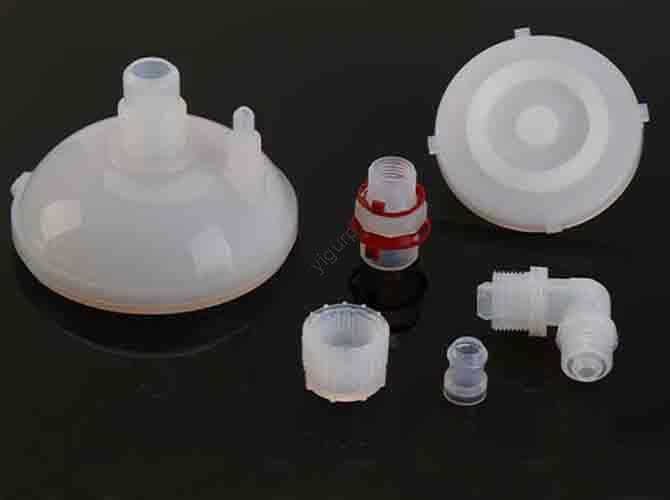
PFA injection molding is a manufacturing process that shapes PFA (Perfluoroalkoxy), a melt-processable fluoropolymer, into custom parts using injection molding technology. As a PFA melt-processable fluoropolymer, it combines PTFE’s (Teflon) extreme chemical resistance with the moldability of thermoplastics—filling a critical gap for applications needing both durability and design flexibility.
To clarify key terms, here’s a simple breakdown:
| Term | Explanation |
| PFA thermoplastic molding | Melting PFA resin (a thermoplastic) and injecting it into molds to create functional parts. |
| Perfluoroalkoxy molding meaning | Producing components from PFA, a material valued for heat resistance, non-stick properties, and biocompatibility. |
| PFA plastic molding overview | A versatile method for making everything from tiny microfluidic parts to large industrial fittings—all with consistent quality. |
In short, PFA injection molding turns raw PFA resin into tailored components that outperform most plastics in extreme conditions.
Our PFA Injection Molding Capabilities: Precision for Every Need
At Yigu Technology, our PFA injection molding capacity is built to handle projects of all sizes—from low-volume prototypes to high-volume production runs. We specialize in tight PFA molding tolerances and offer niche services that address unique industry demands.
Below is a detailed look at our core capabilities:
| Capability | Specification | Application Fit |
| PFA molding tolerances we hold | ±0.0015” (0.038mm) for micro parts; ±0.006” (0.152mm) for standard parts | High-precision items like PFA microfluidic manifolds or semiconductor wafer carriers. |
| Micro PFA molding capability | Molding parts as small as 0.3mm (0.012”) with intricate features (e.g., 0.1mm channels) | Medical microcatheters, lab-on-a-chip devices, and miniaturized sensors. |
| High-volume PFA production | 150,000+ parts/month per production line | Automotive wire insulation, PFA food-contact molded parts (e.g., filling machine components). |
| Clean-room PFA molding service | Class 7 (10,000) cleanrooms (ISO 14644-1 compliant) | PFA medical device components (e.g., syringe tips) and pharmaceutical labware. |
| Multi-cavity PFA tooling | Up to 48-cavity molds for cost-effective high-volume runs | Small, uniform parts like PFA quick-connect couplings or valve cores. |
| Insert & over-molding PFA | Bonding PFA to metals (e.g., titanium, stainless steel) or ceramics | PFA over-molded RF connectors and sensor housings needing insulation. |
| PFA biocompatible molding | Molding with USP Class VI-certified PFA resins | Implantable medical parts and sterile disposable devices. |
The PFA Injection Molding Process: Step-by-Step Control
PFA’s unique properties (high melting point, low viscosity when molten) require specialized process control. Our step-by-step approach ensures consistent, high-quality parts every time.
Key Process Steps & Critical Parameters
| Step | Description | Critical Parameter | Target Value |
| 1. Resin Preparation | Dry PFA resin grades for molding to eliminate moisture (moisture causes bubbles/voids). | Drying Time/Temperature | 6 hours at 150°C |
| 2. Melting | Heat resin in the injection unit—PFA’s high melting point demands precise temperature control. | PFA melt temperature window | 350°C – 420°C (662°F – 788°F) |
| 3. Injection | Force molten PFA into the mold—low viscosity requires slow, steady pressure to avoid flash. | Injection Pressure | 600 – 1,000 bar |
| 4. Holding & Cooling | Maintain pressure to fill mold cavities fully, then cool to solidify PFA. | In-mold cooling for PFA | 15 – 25 seconds (varies by part thickness) |
| 5. Venting | Release trapped air to prevent defects—critical for PFA’s low gas permeability. | PFA venting & decompression | 0.02mm vent gaps; 50 bar decompression pressure |
| 6. Demolding & Finishing | Remove parts and trim excess material (gates/runners). | PFA degating technique | Laser degating (for micro parts); automated cold degating (standard parts) |
| 7. Quality Check | Verify dimensions and surface finish. | PFA mold shrinkage control | 3.0% – 4.0% (adjusted via mold design) |
Other vital details:
- PFA screw & barrel design: Hardened steel barrels with chrome plating (resists PFA’s abrasive nature) and low-compression screws (prevents resin degradation).
PFA molding cycle time: 45 – 90 seconds for small parts; 3 – 7 minutes for large, thick-walled components (e.g., PFA chemical processing fittings).
PFA Materials: Choosing the Right Resin for Your Project
The performance of your PFA part depends on selecting the correct resin. We offer a full range of PFA resin grades for molding, each engineered for specific industry needs.
PFA Resin Options: Features & Applications
| Resin Type | Key Feature | Compliance | Ideal Application |
| FDA-compliant PFA compounds | Non-toxic, food-safe, and resistant to hot oils/chemicals | FDA 21 CFR 177.1550; EU 10/2011 | PFA food-contact molded parts (e.g., beverage dispense nozzles) |
| Pigmented PFA pellets | Custom colors (white, black, green) with no loss of core properties | RoHS; REACH | Consumer electronics (e.g., PFA wire & cable insulation for visible components) |
| Anti-static PFA formulations | Surface resistance: 10⁷ – 10¹⁰ Ω (prevents electrostatic discharge) | SEMI F47 | PFA molded semiconductor parts (wafer carriers, chamber liners) |
| High-purity PFA resin | < 5 ppm metal impurities (ultra-low extractables) | ISO 10993; USP Class VI | PFA labware & analytical cells; medical devices (e.g., dialysis components) |
| Bondable PFA modifiers | Improved adhesion to metals/plastics (no primer needed) | ASTM D3359 (adhesion test) | Insert & over-molding PFA (e.g., sensor housings bonded to aluminum) |
| PFA conductive grades | Volume resistivity: 10⁴ – 10⁶ Ω·cm (dissipates static) | UL 94 V0 (flame retardant) | Explosion-proof applications (e.g., chemical processing valves in hazardous areas) |
PFA Surface Treatment: Boosting Functionality
PFA’s natural non-stick surface is perfect for many uses, but some projects need better bonding, printability, or adhesion. Our PFA surface treatment services solve these challenges without compromising PFA’s core properties.
PFA Surface Treatment Methods: Purpose & Results
| Treatment Method | Purpose | Measurable Result |
| Plasma treatment for PFA | Increase surface energy to improve adhesive bonding | Surface energy: 40 – 48 dynes/cm (from 22 dynes/cm untreated) |
| Chemical etching PFA parts | Create micro-roughness on the surface for stronger bonds | Bond strength: 18 – 24 N/cm (tested per ASTM D1002) |
| PFA surface activation | Break down fluorine-carbon bonds to promote ink adhesion | UV ink retention: 98% after 2,000 hours of UV exposure |
| Adhesion promotion PFA | Prepare surfaces for bonding to dissimilar materials (e.g., glass) | Peel strength: 5 N/cm (vs. 1 N/cm for untreated PFA) |
| PFA printability enhancement | Allow permanent marking (e.g., part numbers, logos) | Ink durability: Passes 500 cycles of abrasion testing (ASTM F2357) |
These treatments are essential for applications like PFA sterile disposable syringe tips (needing bonded labels) or PFA over-molded RF connectors (needing secure adhesion to metal pins).
Advantages of PFA Injection Molding: Why PFA Stands Out
PFA offers unique benefits that make it the top choice for demanding applications. Its combination of heat resistance, chemical inertness, and moldability outperforms most fluoropolymers and standard plastics.
PFA’s Key Advantages: Technical Specs & Real-World Benefits
| Advantage | Technical Specification | Benefit for Your Project |
| PFA chemical resistance benefit | Resists 99% of industrial chemicals (acids, bases, solvents) at 260°C | PFA chemical processing fittings last 3x longer than stainless steel alternatives. |
| PFA optical clarity advantage | Transmittance: 96% (400 – 700 nm wavelength) | Ideal for PFA optical windows in sensors and analytical equipment. |
| Low-friction PFA molding | Coefficient of friction: 0.12 (dry); 0.08 (lubricated) | Parts like PFA impellers run smoother with less energy loss and wear. |
| PFA high-temperature stability | Continuous use temperature: -200°C to 260°C; short-term use up to 300°C | Perfect for PFA aerospace injection molding (engine components, wire insulation). |
| PFA non-stick properties | Surface tension: 16 mN/m (lower than FEP) | PFA food-contact parts (e.g., baking molds) release easily with no residue. |
| PFA electrical insulation value | Volume resistivity: >10¹⁸ Ω·cm; dielectric strength: 25 kV/mm | PFA wire & cable insulation performs reliably in high-voltage applications (e.g., power grids). |
| PFA stress-crack resistance | No cracking after 10,000 hours in aggressive environments (e.g., hot water + chlorine) | PFA water treatment components (valves, pipes) avoid premature failure. |
PFA Injection Molding Applications by Industry
PFA’s versatility makes it indispensable across industries. Below are key use cases where our services deliver maximum value:
Industry-Specific Applications & Our Service Fit
| Industry | Key Applications | Our Tailored Service |
| Semiconductor | PFA molded semiconductor parts (wafer carriers, electrostatic chucks, chamber liners) | Anti-static PFA formulations; Class 7 cleanroom molding |
| Medical | PFA medical device components (catheters, syringe tips, implantable parts) | Biocompatible PFA resins; ISO 13485 compliance |
| Aerospace | PFA aerospace injection molding (wire insulation, hydraulic fittings, engine sensors) | High-temperature PFA grades; PPAP documentation |
| Chemical Processing | PFA chemical processing fittings (valve bodies, pumps, pipes) | Chemical-resistant PFA; stress-crack-resistant formulations |
| Food & Beverage | PFA food-contact molded parts (filling machine nozzles, conveyor belts, baking molds) | FDA-compliant PFA; non-stick surface treatment |
| Electronics | PFA wire & cable insulation, connectors, and circuit board components | Conductive/anti-static PFA; pigmented pellets |
| Renewable Energy | PFA photovoltaic connectors, solar panel junction boxes | UV-resistant PFA; high-temperature stability |
| Laboratory & Analytical | PFA labware & analytical cells (beakers, test tubes, flow cells) | High-purity PFA resin; low-extractable formulations |
Case Studies: Real-World PFA Molding Success
Our expertise isn’t just theoretical—here are three projects where we solved complex challenges with PFA injection molding:
Case 1: PFA High-Purity Valve Body for Semiconductor Manufacturing
- Challenge: A semiconductor client needed valve bodies that could handle ultra-pure chemicals (e.g., hydrofluoric acid) without contaminating wafers. The parts required ±0.002” tolerance and low metal impurities.
- Solution: Used high-purity PFA resin (< 5 ppm metals) and micro PFA molding capability with a 16-cavity mold. We added anti-static treatment to prevent electrostatic discharge.
- Result: 99.8% yield; parts passed SEMI F47 testing; client reduced wafer contamination rates by 70%.
Case 2: PFA 300°C Sensor Housing for Aerospace
- Challenge: An aerospace manufacturer needed sensor housings that could withstand 300°C (short-term) in engine bays while insulating electrical components. The housing also required bonding to a titanium bracket.
- Solution: Molded with high-temperature PFA resin (continuous use up to 260°C) and used chemical etching PFA parts to improve adhesion to titanium. We optimized in-mold cooling for PFA to reduce cycle time.
- Result: Housings passed 1,000 hours of thermal testing; bond strength exceeded 20 N/cm; production time cut by 25%.
Case 3: PFA Microfluidic Manifold for Medical Diagnostics
- Challenge: A diagnostic company needed a manifold with 0.1mm channels for a lab-on-a-chip device. The part required biocompatibility (USP Class VI) and precise flow control.
- Solution: Used micro PFA molding capability with a custom 4-cavity mold. We added plasma treatment for PFA to bond the manifold to a glass substrate.
Result: Channels maintained consistent flow (±5% variation); parts passed ISO 10993 biocompatibility tests; 100,000+ units produced monthly with zero defects.
Why Choose Our PFA Injection Molding Services?
We don’t just mold PFA—we partner with you to turn challenges into solutions. Here’s what sets us apart:
- ISO 13485 & 9001 PFA molding plant: Dual certification ensures quality for medical (ISO 13485) and industrial (ISO 9001) applications.
- 24/7 PFA production support: Our team is available around the clock to resolve issues (e.g., mold adjustments, production delays) and keep projects on track.
- In-house PFA tool design & simulation: We design molds using 3D simulation (Moldflow) to predict defects early—reducing tooling costs by 20% and lead times by 30%.
- Rapid PFA prototyping service: Get functional prototypes in 3 – 5 days (vs. 2+ weeks from competitors) to test designs fast.
- Competitive PFA part pricing: Our high-volume capacity and efficient tooling cut costs by 18 – 25% for large runs (100,000+ parts).
- Full PPAP & FAI documentation: We provide complete Production Part Approval Process (PPAP, up to Level 5) and First Article Inspection (FAI) reports for automotive/aerospace clients.
Global PFA logistics & VMI programs: Deliver parts to 40+ countries with door-to-door shipping; our Vendor-Managed Inventory (VMI) program ensures you never run out of critical components.