
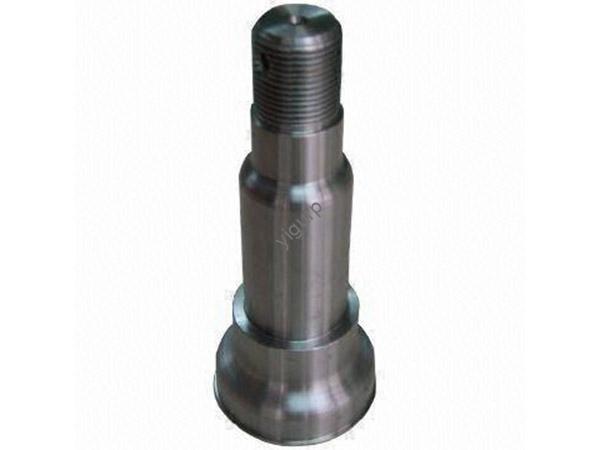
Nitronique 50 stainless steel is a high-performance austenitic alloy renowned for its high nitrogen content, qui offre une solidité et une résistance à la corrosion exceptionnelles. Il surpasse de nombreux aciers inoxydables standards dans des environnements difficiles, de l'eau de mer aux usines de traitement chimique.. Dans ce guide, nous allons décomposer ses principales caractéristiques, utilisations réelles, comment c'est fait, et comment il se compare à d'autres matériaux, helping you select it for your most demanding projects.
1. Key Material Properties of Nitronic 50 Acier inoxydable
Nitronic 50’s standout performance stems from its carefully engineered chemical composition, which shapes its reliable physical properties, robust propriétés mécaniques, and other critical characteristics.
Composition chimique
Nitronic 50’s formula is optimized for strength and corrosion resistance, with key elements including:
- High nitrogen content: 0.40-0.60% (the star additive—boosts tensile strength and pitting resistance without sacrificing ductility)
- Chromium content: 21-23% (forms a protective oxide layer for superior corrosion resistance)
- Nickel content: 12-14% (stabilizes the austenitic structure, enhancing ductility and toughness)
- Manganese content: 4.0-6.0% (works with nitrogen to further improve strength)
- Carbon content: ≤0.08% (minimizes intergranular corrosion risk)
- Silicon content: ≤1.0% (aids in deoxidation during manufacturing)
- Phosphorus content: ≤0.045% (controlled to avoid brittleness)
- Sulfur content: ≤0,03% (reduced to maintain corrosion resistance)
Propriétés physiques
| Propriété | Valeur typique |
| Densité | 7.8 g/cm³ |
| Conductivité thermique | 16 Avec(m·K) (at 20°C) |
| Specific Heat Capacity | 0.5 J/(g·K) (at 20°C) |
| Coefficient de dilatation thermique | 17.5 × 10⁻⁶/°C (20-500°C) |
| Propriétés magnétiques | Non magnétique (even after cold working) |
Propriétés mécaniques
Thanks to its high nitrogen content, Nitronique 50 delivers industry-leading strength while retaining ductility:
- Haute résistance à la traction: 850-1,000 MPa (far higher than standard austenitic grades like 304)
- Yield strength: 500-650 MPa (2.5x higher than 304 acier inoxydable)
- Élongation: 25-35% (dans 50 mm—maintains flexibility despite high strength)
- Dureté: 220-260 Brinell, 90-100 Rockwell B, 230-270 Vickers
- Fatigue strength: 350-400 MPa (at 10⁷ cycles—ideal for parts under repeated stress, like pump shafts)
- Impact toughness: 120-180 J. (at room temperature—resists cracking from sudden impacts)
Other Critical Properties
- Excellente résistance à la corrosion: Outperforms 304 et 316 in harsh environments—resists acids, industrial chemicals, and saltwater.
- Pitting resistance: Superior—nitrogen and chromium prevent pitting in chloride-rich settings (par ex., marine seawater or chemical tanks).
- Stress corrosion cracking resistance: Very good—handles tensile stress in corrosive conditions better than 316 or duplex stainless steels.
- Résistance à l'usure: Good—harder than 304 et 316, making it suitable for parts with friction (par ex., tiges de valve).
- Usinabilité: Moderate—requires sharp carbide tools and cooling; slower than 304 but faster than high-strength alloys like titanium.
- Weldability: Excellent—can be welded via MIG, TIG, or stick methods without preheating; welds retain strength and corrosion resistance.
2. Real-World Applications of Nitronic 50 Acier inoxydable
Nitronic 50’s blend of haute résistance à la traction et excellente résistance à la corrosion makes it a top choice for industries where materials face extreme conditions. Voici ses utilisations les plus courantes:
Équipement industriel
- Pompes: Pump shafts and impellers use Nitronic 50—its wear and corrosion resistance prevents premature failure in wastewater or chemical systems.
- Vannes: Valve bodies and stems handle high pressure and corrosive fluids (par ex., raffineries de pétrole) without deforming or rusting.
- Aubes de turbines: Small gas turbine blades rely on its high-temperature strength (retains properties up to 650°C).
Exemple de cas: A manufacturing plant replaced 316 stainless steel pump shafts with Nitronic 50. The new shafts lasted 4x longer (depuis 5 mois à 20 mois) et réduisez les coûts de maintenance en $75,000 annuellement.
Traitement chimique
- Storage tanks: Tanks holding aggressive acids (par ex., acide chlorhydrique) or solvents use Nitronic 50—its corrosion resistance prevents leaks and contamination.
- Piping systems: Pipes transporting chemicals avoid rust buildup, ensuring consistent flow and reducing downtime.
- Reactors: Reaction vessels handle high temperatures and corrosive reactants without degrading.
Aerospace and Automotive Industries
- Aérospatial: Aircraft fasteners and engine brackets use its high strength-to-weight ratio and resistance to jet fuel corrosion.
- Automobile: High-performance engine parts (par ex., composants du turbocompresseur) and racing exhaust systems withstand extreme heat and vibration.
Industrie maritime
- Seawater systems: Heat exchangers and seawater intake pipes resist pitting and corrosion—outperforming 316 and even some duplex stainless steels.
- Ship components: Ship hull fasteners and propeller shafts avoid rust in marine environments, reducing maintenance needs.
Food and Beverage Industry
- Processing equipment: Conveyors and mixers use Nitronic 50—its corrosion resistance stands up to food acids (par ex., tomato sauce or citrus juice) and frequent cleaning.
- Storage containers: Tanks for liquids like milk or beer are easy to sanitize and won’t leach metals into food.
3. Manufacturing Techniques for Nitronic 50 Acier inoxydable
Producing Nitronic 50 requires precise steps to preserve its high nitrogen content and ensure uniform properties. Here’s the process:
1. Metallurgical Processes
- Four à arc électrique (AEP): The primary method—scrap steel, chrome, nickel, and manganese are melted at 1,650-1,750°C. Nitrogen gas is injected into the molten alloy to reach the target 0.40-0.60% contenu.
- Four à oxygène de base (BOF): Used for large-scale production—oxygen is blown to remove impurities, then nitrogen and other alloys are added to adjust composition.
2. Rolling Processes
- Hot rolling: The molten alloy is cast into slabs, heated to 1,150-1,250°C, and rolled into thick shapes (barres, assiettes) for industrial parts.
- Cold rolling: Cold-rolled to make thin sheets (for piping or food equipment) with a smooth surface; slightly increases hardness but retains ductility.
3. Traitement thermique
- Solution annealing: Heated to 1,080-1,180°C and held for 30-60 minutes, then water-quenched. This dissolves precipitated carbides, restoring corrosion resistance and ductility.
- Stress relief annealing: Heated to 800-900°C for 1-2 heures, puis refroidi lentement. Reduces internal stress from welding or forming without lowering strength.
4. Forming and Surface Treatment
- Forming methods:
- Press forming: Uses hydraulic presses to shape parts like valve bodies or pump housings.
- Pliage: Creates angles for piping or structural brackets (maintains strength after bending).
- Usinage: Forets, moulins, or turns parts to precise sizes—uses carbide tools and cutting fluids to prevent overheating.
- Traitement de surface:
- Pickling: Dipped in acid to remove scale from hot rolling.
- Passivation: Treated with nitric acid to enhance the chromium oxide layer, boosting corrosion resistance.
- Électropolissage: Crée une douceur, sanitizable surface (critical for food equipment or aerospace components) and removes surface impurities.
5. Contrôle de qualité
- Ultrasonic testing: Checks for internal defects (par ex., fissures) in thick parts like turbine blades.
- Radiographic testing: Inspects welds for flaws (par ex., porosité) to ensure structural integrity.
- Essais de traction: Verifies haute résistance à la traction (850-1,000 MPa) and yield strength (500-650 MPa).
- Microstructure analysis: Examines the alloy under a microscope to confirm a uniform austenitic structure and proper nitrogen distribution.
4. Étude de cas: Nitronique 50 in Food Processing Equipment
A large food manufacturer struggled with rust on 304 stainless steel mixers used to process tomato sauce. Le 304 mixers developed pitting after 6 months of exposure to tomato acids, requiring costly replacements. They switched to Nitronic 50, and the results were transformative:
- Résistance à la corrosion: Après 18 mois, the Nitronic 50 mixers showed no pitting or rust—3x longer lifespan than 304.
- Sanitation: The smooth, electropolished surface was easier to clean, reducing bacteria growth and passing food safety audits with zero issues.
- Économies de coûts: The manufacturer saved $120,000 annually by eliminating frequent mixer replacements and downtime.
5. Nitronique 50 Stainless Steel vs. Autres matériaux
How does Nitronic 50 compare to other popular alloys? Let’s break it down with a detailed table:
| Matériel | Coût (contre. Nitronique 50) | Résistance à la traction | Limite d'élasticité | Résistance à la corrosion (Seawater) | Weldability |
| Nitronique 50 | Base (100%) | 850-1,000 MPa | 500-650 MPa | Excellent | Excellent |
| Nitronique 40 | 80% | 700-900 MPa | 400-550 MPa | Very Good | Excellent |
| 316 Acier inoxydable | 60% | 515 MPa | 205 MPa | Bien | Excellent |
| Duplex 2205 | 110% | 620-800 MPa | 450 MPa | Excellent | Bien |
| Alliage de titane (Ti-6Al-4V) | 450% | 860 MPa | 795 MPa | Excellent | Modéré |
Application Suitability
- Industrial Pumps: Nitronique 50 outperforms Nitronic 40 et 316 (durée de vie plus longue, résistance supérieure) and is cheaper than duplex 2205.
- Marine Systems: Better than 316 and Nitronic 40 in seawater; more cost-effective than titanium.
- Transformation des aliments: Superior to 304 (resists food acids) and easy to sanitize—meets strict food safety standards.
- Composants aérospatiaux: Balances strength and weight better than 316; cheaper than titanium while retaining weldability.
Yigu Technology’s View on Nitronic 50 Acier inoxydable
Chez Yigu Technologie, we see Nitronic 50 as a game-changer for high-stress, corrosive applications. C'est high nitrogen content delivers unmatched strength and corrosion resistance, making it ideal for our clients in marine, chimique, and food industries. We often recommend it for pump shafts, food mixers, and marine heat exchangers—where it cuts maintenance costs and extends part lifespans. While pricier than 304/316, its long-term durability offers better value, aligning with our goal of sustainable, des solutions rentables.
FAQ
1. Is Nitronic 50 stainless steel magnetic?
Non, Nitronique 50 is non-magnetic. Its austenitic structure (stabilized by nickel and nitrogen) stays non-magnetic even after cold working, unlike ferritic or martensitic stainless steels.
2. Can Nitronic 50 be used in food processing?
Oui, Nitronique 50 is excellent for food processing. It resists corrosion from food acids, is easy to sanitize, and meets global food safety standards (par ex., FDA, UE 10/2011). Its smooth surface also prevents food buildup.
3. How does Nitronic 50 compare to Nitronic 40?
Nitronique 50 has higher nitrogen content (0.40-0.60% contre. 0.15-0.30% for Nitronic 40), giving it 15-20% higher tensile/yield strength and better corrosion resistance. It’s ideal for more demanding applications (par ex., marine seawater, aggressive chemicals) while retaining similar weldability.