
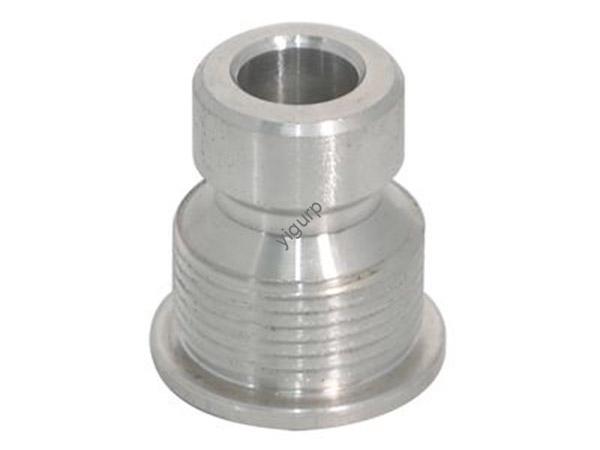
Si vous recherchez un matériau alliant résistance à la corrosion, force, et polyvalence, que ce soit pour les réacteurs chimiques, implants médicaux, or aircraft parts—micro alloy stainless steel delivers. Ce guide détaille ses principales caractéristiques, applications du monde réel, et comment il surpasse les autres matériaux, afin que vous puissiez choisir la bonne option pour votre projet.
1. Core Material Properties of Micro Alloy Stainless Steel
What makesmicro alloy stainless steel unique? Its carefully balanced chemistry and well-rounded performance. Below’s a detailed look at its properties:
1.1 Composition chimique
Unlike conventional stainless steels, it uses small (micro) additions of alloying elements to boost performance without extra cost. Typiquecomposition chimique comprend:
- Chrome (Cr): 16–20% (forme une couche d'oxyde protectrice pour la résistance à la corrosion)
- Nickel (Dans): 4–10% (enhances ductility and toughness, surtout à basse température)
- Molybdène (Mo): 1–3% (improves resistance to acidic and chloride environments)
- Azote (N): 0.1–0.2% (increases tensile strength without reducing ductility)
- Carbone (C): <0.08% (kept low to avoid carbide formation, which weakens corrosion resistance)
- Manganèse (Mn): 1–2% (aids in steelmaking and improves formability)
- Silicium (Et): 0.3–0,8% (helps deoxidize the steel during production)
- Phosphore (P.): <0.045% (minimized to prevent brittleness)
- Soufre (S): <0.03% (kept low for better weldability and corrosion resistance)
- Autres éléments d'alliage: Des traces de titane (De) ou niobium (Nb) (stabilize carbon to boost high-temperature strength).
1.2 Propriétés physiques
These traits affect how the steel behaves in different conditions:
| Propriété physique | Valeur typique |
|---|---|
| Densité | 7.8–7.9 g/cm³ |
| Point de fusion | 1450–1510°C |
| Conductivité thermique | 15–20 W/(m·K) (20°C) |
| Coefficient de dilatation thermique | 11.0–13.0 × 10⁻⁶/°C (20–100°C) |
| Résistivité électrique | 0.70–0.80 Ω·mm²/m |
1.3 Propriétés mécaniques
It strikes a balance between strength and flexibility—critical for most industrial uses:
- Résistance à la traction: 500–700 MPa (higher than many conventional stainless steels like 304, which averages 515 MPa)
- Limite d'élasticité: 250–400 MPa (resists deformation under load)
- Dureté: 150–200 HB (Brinell) or 30–35 HRC (Rockwell C.)
- Résistance aux chocs: 40–80 J (Charpy V-notch at 20°C)—tough enough for low-temperature applications
- Ductilité: 25–35% elongation (easy to shape into complex parts)
- Résistance à la fatigue: 200–300 MPa (handles repeated stress, ideal for moving components)
- Résistance à la rupture: 60–100 MPa·m¹/² (prevents sudden cracking in high-stress scenarios).
1.4 Autres propriétés
- Excellente résistance à la corrosion: Stands up to water, acides doux, et produits chimiques industriels (better than carbon steels; close to high-alloy stainless steels in many cases).
- Bonne résistance à l'oxydation: Resists scaling up to 800°C, making it suitable for high-temperature parts like exhaust systems.
- Résistance à haute température: Maintains strength at 500–600°C (thanks to titanium/niobium additions).
- Soudabilité: Easy to weld without cracking (low carbon and sulfur content).
- Formabilité: Can be rolled, forgé, or stamped into shapes (works for both small parts like fasteners and large components like reactors).
2. Key Applications of Micro Alloy Stainless Steel
Its versatility makesmicro alloy stainless steel a top choice across industries. Voici ses utilisations les plus courantes, associé à des études de cas réels:
2.1 Aérospatial
Aerospace needs materials that handle stress, corrosion, et les changements de température:
- Composants d'avion: Fuel lines and engine casings (resist fuel corrosion and high heat)
- Attaches: Bolts and nuts (secure critical parts without adding weight).
Étude de cas: A global aerospace firm used micro alloy stainless steel for aircraft fuel lines. Testing showed the lines resisted jet fuel corrosion 20% better than conventional 304 acier inoxydable, and lasted twice as long in high-altitude conditions.
2.2 Automobile
Cars rely on it for parts that face heat and moisture:
- Systèmes d'échappement: Mufflers and tailpipes (resist rust from road salt and exhaust heat)
- Composants du moteur: Water pumps and sensor housings (handle engine heat and coolant corrosion).
Étude de cas: A major carmaker switched to micro alloy stainless steel for exhaust mufflers. Customer feedback showed mufflers lasted 3 years longer (contre. acier standard) in snowy regions, réduisant les réclamations au titre de la garantie en 25%.
2.3 Traitement chimique
Chemical plants need materials that stand up to harsh fluids:
- Réacteurs chimiques: Vessels for mixing acids or solvents (resist chemical attack)
- Systèmes de tuyauterie: Tubes that transport corrosive liquids (prevent leaks)
- Réservoirs de stockage: Containers for chemicals like sulfuric acid (maintenir l'intégrité structurelle).
2.4 Transformation des aliments
Hygiene and corrosion resistance are non-negotiable here:
- Équipement: Mixers, convoyeurs, et outils de coupe (easy to clean and resist food acids like tomato or citrus)
- Containers: Tanks for storing juices or sauces (prevent contamination and rust).
2.5 Équipement médical
Biocompatibility and durability matter for medical use:
- Instruments chirurgicaux: Scalpels et pinces (resist corrosion from sterilization and body fluids)
- Implants: Small components like bone screws (biocompatible and strong enough for long-term use).
2.6 Marin & Construction
- Marin: Composants du navire (aménagements de coque, arbres d'hélice) et offshore structures (platform supports)—resist saltwater corrosion.
- Construction: Architectural components (mains courantes, panneaux de façade)—balance durability with aesthetic appeal.
3. Manufacturing Techniques for Micro Alloy Stainless Steel
To get the most out ofmicro alloy stainless steel, precise manufacturing steps are key:
3.1 Processus de fabrication de l'acier
- Four à arc électrique (AEP): Melts scrap steel and alloying elements (chrome, nickel, etc.) à haute température. Ideal for small-batch production and custom compositions.
- Four à oxygène de base (BOF): Blows oxygen into molten iron to remove impurities. Utilisé pour la production à grande échelle (cost-effective for high volumes).
3.2 Traitement thermique
Heat treatment refines its properties for specific uses:
- Recuit: Heat to 1050–1150°C, cool slowly. Softens the steel for easier forming and restores corrosion resistance after welding.
- Trempe et revenu: Chauffer à 900-1000°C, quench in water, then temper at 500–600°C. Augmente la force et la dureté (used for high-stress parts like engine components).
- Traitement en solution: Heat to 1000–1100°C, cool quickly. Dissolves unwanted carbides and improves corrosion resistance.
- Durcissement par précipitation: Heat to 450–550°C after solution treatment. Forms fine precipitates (from titanium/niobium) to increase high-temperature strength.
3.3 Processus de formage
It’s easy to shape into different forms:
- Laminage à chaud: Creates thick sheets or bars (used for reactors or structural parts)
- Laminage à froid: Produces thin, feuilles lisses (for food processing equipment or medical instruments)
- Forgeage: Shapes into complex parts like valves or fasteners (adds strength)
- Extrusion: Pushes through a die to make tubes or profiles (used for piping)
- Estampillage: Presses into flat parts like sensor housings (fast and cost-effective).
3.4 Traitement de surface
Enhances durability or appearance:
- Passivation: Dips the steel in nitric acid to strengthen the oxide layer (augmente la résistance à la corrosion).
- Placage (par ex., chromium plating): Ajoute un dur, shiny layer (used for architectural parts or surgical instruments).
- Revêtement (par ex., nitrure de titane): Améliore la résistance à l'usure (for cutting tools or marine components).
- Polissage: Crée une douceur, finition réfléchissante (ideal for food equipment or architectural panels).
4. How Micro Alloy Stainless Steel Compares to Other Materials
Choisirmicro alloy stainless steel means knowing how it stacks up to alternatives. Below’s a clear comparison:
| Catégorie de matériau | Points de comparaison clés |
|---|---|
| Conventional stainless steels (par ex., 304) | – Force: Micro alloy steel is 15–30% stronger (tensile strength 500–700 MPa vs. 515 MPa pour 304). – Résistance à la corrosion: Similar in mild environments; micro alloy steel is better in acidic conditions (thanks to molybdenum). – Coût: Micro alloy steel is ~10% more expensive but lasts longer. |
| Aciers au carbone | – Résistance à la corrosion: Micro alloy steel is far better (resists rust; carbon steel needs painting). – Force: Similar in tensile strength, but micro alloy steel has better toughness. – Use case: Choose carbon steel for low-cost, utilisations non corrosives; micro alloy for harsh environments. |
| Aciers fortement alliés (par ex., 316L) | – Résistance à la corrosion: High-alloy steel is better (resists saltwater and strong acids). – Coût: Micro alloy steel is 30–40% cheaper. – Use case: High-alloy for extreme chemicals; micro alloy for moderate corrosion. |
| Alliages d'aluminium | – Poids: L'aluminium est plus léger (densité 2.7 contre. 7.8 g/cm³). – Résistance à la corrosion: Micro alloy steel is better in chemicals; aluminum is better in mild water. – Force: Micro alloy steel is 2–3x stronger. |
| Matériaux composites | – Specific strength (strength-to-weight): Composites are better (par ex., fibre de carbone). – Coût: Micro alloy steel is 50–60% cheaper. – Fabrication: Micro alloy steel is easier to form (no special molds needed). |
5. Yigu Technology’s Perspective on Micro Alloy Stainless Steel
Chez Yigu Technologie, nous recommandonsmicro alloy stainless steel for clients needing a balance of performance and cost. It’s our go-to for chemical processing piping and automotive exhaust parts—where its corrosion resistance and formability solve common pain points like leaks or short part life. We often pair it with passivation to boost durability, and its weldability makes on-site installation smooth. While it’s not the cheapest option, its long service life and low maintenance costs make it a cost-effective choice for most industrial and medical applications.
FAQ About Micro Alloy Stainless Steel
- Is micro alloy stainless steel suitable for saltwater environments?
It has moderate saltwater resistance—good for near-shore marine parts like handrails, but not for deep-sea components (where high-alloy steels like 316L are better). For saltwater use, add a coating like titanium nitride to boost protection. - Can it be welded to other materials like carbon steel?
Oui, but you’ll need a compatible filler metal (par ex., austenitic stainless steel filler) pour éviter les fissures. Post-weld annealing is also recommended to restore corrosion resistance at the weld joint. - What’s the typical lead time for micro alloy stainless steel parts?
Pour les pièces standards (par ex., tuyauterie, feuilles), le délai de livraison est de 2 à 3 semaines. Pour les pièces personnalisées (par ex., implants médicaux, reactor vessels), it’s 4–6 weeks (includes forging, traitement thermique, and surface finishing).