
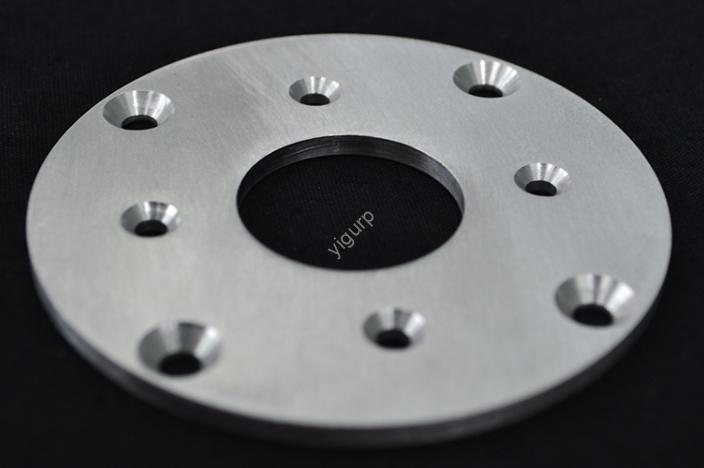
Si vous êtes un spécialiste des achats ou un ingénieur produit en robotique, mastering themetal robot prototype model process is key to turning design ideas into functional, robots fiables. Les prototypes métalliques vous permettent de tester la durabilité, mouvement, et stabilité structurelle – essentielle pour éviter des erreurs coûteuses dans la production de masse. Ci-dessous un exemple pratique, détail détaillé de chaque étape, with real cases and data to help you make smart decisions.
1. Sélection des matériaux: Pick Metals That Fit Robot Needs
Choosing the right metal is the first big step in building ametal robot prototype. Robots need materials that balance strength, poids, and cost—here’s how to choose:
| Metal Type | Propriétés clés | Ideal Robot Components | Real-World Example | Fourchette de coût (USD/livre) |
|---|---|---|---|---|
| Alliage d'aluminium | Faible densité (2.7 g/cm³), facile à usiner | Arm joints, cadres légers | A factory robot maker used 6061 aluminum for arm prototypes—cut weight by 35% contre. acier, improving movement speed. | $2–$5 |
| Acier inoxydable | Résistant à la corrosion, haute résistance | Grippers, outdoor robot bodies | A warehouse robot prototype used 316 stainless steel for grippers—no rust after 8 months of handling wet packages. | $3–$8 |
| Laiton | Bonne conductivité électrique | Sensor mounts, small connectors | A service robot team used brass for sensor prototypes—ensured stable signal transmission during tests. | $8–$12 |
| Magnesium Alloy | Ultra-léger, haute rigidité | Small robot frames (par ex., drones) | A medical robot prototype used magnesium alloy for its body—weighed 20% moins que l'aluminium, ideal for tight spaces. | $10–15$ |
| Zinc Alloy | Faible coût, bonne coulabilité | Decorative covers, pièces simples | A toy robot company used zinc alloy for prototype covers—saved 40% on material costs vs. aluminium. | $1.5–$4 |
Tip for procurement: For robots that move often (par ex., factory arms), aluminum alloy is the best mix of cost and performance. Pour une utilisation en extérieur, stainless steel is a must.
2. Data Collection: Lay the Groundwork for Accuracy
You can’t build a good prototype without clear data. This stage ensures your prototype matches your design exactly.
2.1 Import 3D/CAD Files
Ask your design team or client for3D drawings or CAD files—these are the blueprint for your prototype. Sans eux, you risk misinterpreting sizes or shapes.
Common tools: AutoCAD (for 2D files), SolidWorks (for 3D models), Fusion 360 (great for small teams).
Exemple: A robot startup once skipped checking CAD files—their prototype’s arm joint was 1mm too small, so it couldn’t move smoothly. Always verify file details first!
2.2 Create Initial Prototypes
Turn 2D/3D files into simple prototypes to test basic fit. Two common methods:
- SLA Laser Rapid Prototyping: Rapide (1–2 jours) pour les petits, pièces détaillées (par ex., supports de capteur).
- Usinage CNC: Better for larger, sturdier parts (par ex., robot frames).
Cas: A logistics robot team used SLA to make gripper prototypes—they realized the grippers were too narrow for boxes, fixing the issue before full machining.
3. Usinage CNC: Turn Metal into Robot Parts
CNC machines are the heart ofmetal robot prototype manufacturing—they make precise parts quickly.
3.1 Programmation & Installation
Engineers write code for the CNC machine using your 3D/2D files. This code tells the machine how to cut, percer, and shape the metal.
Key benefits:
- Haute précision (tolérances aussi serrées que ±0,001 mm) – critical for robot joints that need smooth movement.
- Consistent results – every part is the same, so assembly is easy.
Exemple: A factory robot maker used CNC programming for arm prototypes—all 10 parts fit perfectly, aucune retouche n'est nécessaire.
3.2 Usinage multi-axes
Pour pièces complexes (par ex., curved robot bodies or multi-angle joints), utilisermulti-axis CNC machines (3-axe, 5-axe, ou plus).
- 3-machines à axes: Good for simple parts (par ex., flat frames).
- 5-machines à axes: Reach hard-to-access areas (par ex., inside arm joints) – cuts production time by 30% contre. 3-axe.
Stat: 5-axis machining reduces prototype errors by 50% par rapport aux méthodes traditionnelles (per robotics manufacturing data).
4. Manual Processing: Fix Small Flaws
Even CNC parts need a little hands-on work to be perfect.
4.1 Ébavurage
Utilisez du papier de verre, deburring tools, or brushes to smoothsharp edges and knife marks on metal parts. This prevents scratches on other components or workers.
Why it matters: A robot arm prototype once had a sharp edge—during testing, it scratched a conveyor belt. Deburring fixes this easy-to-miss issue.
4.2 Affûtage & Polissage
Check your drawings to ensure the surface is smooth enough. Par exemple:
- Robot joints need polished surfaces to move without friction.
- External covers need grinding to look neat.
Exemple: A service robot team polished their prototype’s body—testers said the smooth surface was easier to clean, a big plus for public spaces.
5. Appearance Treatment: Boost Durability & Looks
Robots need to last and look good—surface treatment does both.
Key Surface Processes for Metal Robot Prototypes
| Processus | But | Ideal Robot Components |
|---|---|---|
| Peinture | Ajouter de la couleur, hide scratches | External bodies, covers |
| Sablage | Create a matte, surface antidérapante | Grippers, foot pads |
| Oxydation | Prevent rust (for aluminum parts) | Arm joints, cadres |
| Gravure Laser | Add logos or labels (par ex., “Power”) | Panneaux de contrôle |
| Silk Screen Printing | Add text (par ex., “Caution”) | Safety covers, boutons |
Cas: An outdoor robot company used oxidation on aluminum arm prototypes—after 6 months in rain and snow, there was no rust, and the arms moved like new.
6. Assemblée & Essai: Make Sure the Robot Works
Put all parts together, then test if the prototype functions as planned.
6.1 Test Assembly
D'abord, assemble the prototype to check:
- Do parts fit? (par ex., Does the arm attach to the body correctly?)
- Is the structure stable? (par ex., Can the robot hold 5kg without tipping?)
Exemple: A medical robot team tested assembly and found the sensor mount was misaligned—they adjusted it, avoiding a failure in functional tests.
6.2 Tests fonctionnels
Test how the prototype performs in real situations:
- Structural stability: Shake the robot to see if parts loosen.
- Mechanical properties: Check if joints move smoothly (par ex., Can the arm lift 3kg 100 times?).
- Simulated use: Run the robot in a test environment (par ex., a factory robot moving boxes).
Cas: A warehouse robot prototype failed a simulated use test—it couldn’t grip wet boxes. The team added a rubber layer to the grippers, fixing the problem.
7. Conditionnement & Shipping: Protect Your Prototype
Don’t ruin your hard work with bad packaging.
- Safe packaging: Use foam, bubble wrap, or custom boxes to prevent damage. Par exemple, robot arms need rigid packaging to avoid bending.
- On-time delivery: Work with reliable logistics to meet deadlines. Most robotics teams need prototypes in 2–3 weeks to stay on schedule.
Tip: Add a packing list—this helps clients check if all parts (par ex., vis, capteurs) arrive.
Yigu Technology’s Perspective
Chez Yigu Technologie, we know themetal robot prototype model process thrives on precision and practicality. Many teams overcomplicate it—like using 5-axis machining for simple frames when 3-axis works. We work with clients to pick materials (par ex., aluminum for moving parts, stainless steel for outdoors) and processes that fit their goals. Our manual processing and testing teams focus on real use: we don’t just build prototypes—we build robots that work when it matters. This balance saves time, cuts costs, and gives clients confidence in their final product.
FAQ
- Q: How long does it take to make a metal robot prototype?
UN: It depends on complexity. Petites pièces (par ex., supports de capteur) prendre 1 à 2 semaines. A full robot prototype (par ex., a factory arm) takes 3–4 weeks, y compris la conception et les tests. - Q: Which material is best for a metal robot prototype on a tight budget?
UN: Zinc alloy or aluminum alloy (6061 grade). Zinc is cheap for simple parts, alors que 6061 aluminum is affordable and works for most moving components. - Q: Do I need to test assembly before functional testing?
UN: Oui! Assembly testing catches fit issues (par ex., misaligned parts) that functional tests might miss. Skipping it can waste time—fixing assembly problems later takes 2x longer.