
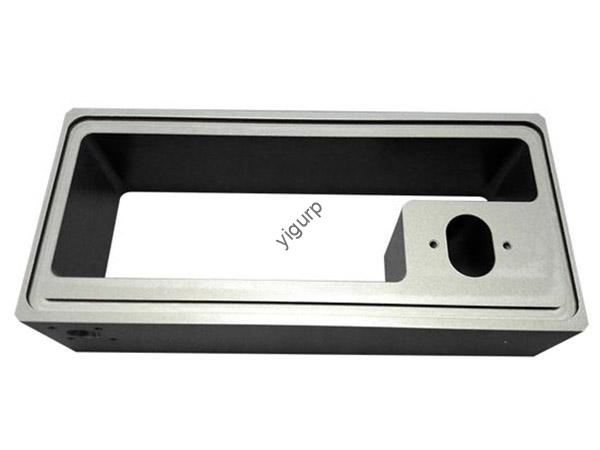
Si vous êtes ingénieur, fabricant, ou un professionnel des achats travaillant sur des projets qui exigent de la durabilité, résistance à l'usure, et la force, manganese steel structural components are likely on your radar. Ce guide détaille tout ce que vous devez savoir, de ses propriétés principales aux applications réelles., techniques de fabrication, et comment il se compare à d'autres matériaux. À la fin, you’ll have the insights to decide if manganese steel is the right choice for your next project.
1. Core Properties of Manganese Steel Structural
Manganese steel’s unique performance starts with its composition and properties. Let’s break this down into four key categories, with critical metrics highlighted for clarity.
1.1 Composition chimique
The “secret” behind manganese steel’s strength lies in its composition chimique, especially its high manganese content. Contrairement aux aciers standards, it contains:
- High manganese (Mn) contenu: Typically 10–14% (the primary alloying element that boosts toughness).
- Carbone (C) contenu: 1.0–1.4% (works with Mn to create austenitic structure).
- Oligoéléments: De petites quantités de silicium (Et) (0.3–0,8%, improves casting quality), phosphore (P.) (<0.07%, contrôlé pour éviter la fragilité), soufre (S) (<0.05%, reduces hot cracking), and sometimes chrome (Cr) ou molybdène (Mo) (améliore la résistance à la corrosion).
1.2 Propriétés physiques
These properties affect how manganese steel behaves in different environments (par ex., high temperatures or cold conditions). Here’s a quick reference table:
| Propriété physique | Valeur typique |
| Densité | 7.85 g/cm³ |
| Point de fusion | 1,450–1,500°C |
| Conductivité thermique | 40 Avec(m·K) (à 20°C) |
| Coefficient de dilatation thermique | 18 × 10⁻⁶/°C (20–100°C) |
| Résistivité électrique | 0.8 × 10⁻⁶ Ω·m |
1.3 Propriétés mécaniques
For structural applications, propriétés mécaniques like strength and toughness are non-negotiable. Manganese steel stands out here:
- Résistance à la traction: 600–800MPa (higher than many low-alloy steels).
- Limite d'élasticité: 300–400 MPa (balances strength with ductility).
- Dureté: 200–250 HB (unworked); increases to 500+ HB when impacted (a key advantage for wear-prone parts).
- Résistance aux chocs: >200 J/cm² (excellent for low-temperature or high-shock environments).
- Élongation: 20–30% (allows forming without cracking).
1.4 Autres propriétés clés
- Excellente résistance à l'usure: Critical for mining or railway parts (par ex., revêtements de concasseur).
- Bonne résistance à la corrosion: Performs better than carbon steels in mild outdoor or marine settings.
- Résistance à haute température: Maintains rigidity up to 600°C (suitable for high-heat applications).
- Soudabilité: Requires preheating (200–300°C) but welds well with matching electrodes.
- Formabilité: Peut être laminé à chaud, forgé, ou extrudé dans des formes complexes (par ex., poutres de pont).
2. Real-World Applications of Manganese Steel Structural
Manganese steel’s versatility makes it a top choice across industries. Voici ses utilisations les plus courantes, with case studies to illustrate real impact.
2.1 Construction
- Composants de construction en acier: Poutres, colonnes, and building frames (par ex., entrepôts industriels).
- Ponts: Used in bridge decks and supports for heavy load-bearing.
Étude de cas: UN 2022 project in Canada replaced carbon steel bridge beams with manganese steel. The new beams reduced maintenance costs by 35% sur 5 années, thanks to better résistance à l'usure et résistance à la corrosion.
2.2 Mining and Excavation
This industry relies heavily on manganese steel’s durability:
- Rock crushers: Wear liners and jaws (resist abrasion from hard rocks).
- Grinding balls/rods: Used in mills to crush ore (last 2x longer than high-carbon steel balls).
Étude de cas: A South African mine switched to manganese steel grinding balls dans 2021. The balls lasted 18 mois (contre. 8 mois pour l'acier au carbone), réduisant les coûts de remplacement en 45%.
2.3 Automobile
- Châssis de véhicules: Pour les camions lourds (handles repeated stress).
- Composants de suspension: Engrenages et arbres (resist fatigue from rough roads).
2.4 Chemin de fer
- Voies ferrées: Sections in high-traffic areas (par ex., train stations).
- Railway wheels/switches: Withstand constant friction and impact.
Étude de cas: A European railway network tested manganese steel railway switches dans 2023. The switches showed 60% moins d'usure après 1 year compared to standard steel switches.
2.5 Machines agricoles
- Plowshares et herses: Resist wear from soil and rocks.
- Combine harvesters: Cutting blades and augers (durable in tough farming conditions).
2.6 Marin
- Ship hulls: Sections exposed to saltwater (better corrosion resistance than carbon steel).
- Hélices: Withstand marine debris and saltwater erosion.
3. Manufacturing Techniques for Manganese Steel Structural
Turning manganese steel into usable components requires specific processes. Voici comment c'est fait:
3.1 Processus de fabrication de l'acier
- Four à arc électrique (AEP): La méthode la plus courante. Scrap steel is melted with manganese ore, then adjusted for carbone (C) et silicium (Et) contenu.
- Four à oxygène de base (BOF): Utilisé pour la production à grande échelle (faster than EAF but requires more raw materials).
3.2 Traitement thermique
Heat treatment optimizes manganese steel’s properties:
- Trempe et revenu: Heated to 1,050–1,100°C, then quenched in water to harden. Tempered at 200–300°C to reduce brittleness.
- Recuit: Heated to 800–900°C and cooled slowly (améliore formabilité pour les formes complexes).
- Normalisation: Heated to 950–1,000°C and air-cooled (améliore résistance à la traction).
3.3 Processus de formage
- Laminage à chaud: Utilisé pour les poutres, assiettes, and tracks (heated to 1,100–1,200°C for easy shaping).
- Laminage à froid: Creates thin sheets (improves surface finish but reduces ductilité).
- Forgeage: Makes high-strength parts like gears or shafts (compresses metal for better grain structure).
- Extrusion: Produces long, formes uniformes (par ex., railway rails).
3.4 Traitement de surface
To boost performance further:
- Chromage: Ajoute un dur, couche résistante à la corrosion (used for automotive parts).
- Titanium nitride coating: Améliore résistance à l'usure (ideal for mining tools).
- Grenaillage de précontrainte: Fait exploser la surface avec de petites billes métalliques (reduces fatigue cracks).
- Polissage: Improves aesthetics and reduces corrosion (for marine components).
4. Manganese Steel vs. Other Common Materials
How does manganese steel compare to alternatives? Below is a side-by-side comparison of key factors.
| Matériel | Force (Traction) | Résistance à l'usure | Résistance à la corrosion | Coût (contre. Acier au manganèse) | Idéal pour |
| Acier au manganèse | 600–800MPa | Excellent | Bien | Base (100%) | Crushers, rails, ponts |
| High Carbon Steels | 500–700 MPa | Bien | Pauvre | 70% | Simple tools, pièces à faible contrainte |
| Low Alloy Steels | 550–750 MPa | Modéré | Modéré | 90% | General structural parts |
| Aciers inoxydables | 500–700 MPa | Excellent | Excellent | 200% | Transformation des aliments, marine hulls |
| Tool Steels | 800–1,000 MPa | Excellent | Pauvre | 150% | Outils de coupe, meurt |
Points clés à retenir:
- Manganese steel beats high carbon steels dans dureté et résistance à la corrosion.
- It’s more cost-effective than aciers inoxydables while offering similar résistance à l'usure for non-food applications.
- Compared to tool steels, it’s cheaper and more ductile (but less strong for extreme cutting tasks).
5. Yigu Technology’s Perspective on Manganese Steel Structural
Chez Yigu Technologie, we’ve seen firsthand how manganese steel structural components solve our clients’ toughest durability challenges. Whether it’s optimizing mining equipment for longer lifespans or designing corrosion-resistant marine parts, manganese steel’s balance of résistance à l'usure, dureté, and cost-effectiveness makes it a go-to material. We recommend it for projects where long-term performance matters—especially in high-shock or high-abrasion environments. Our engineering team also helps clients refine manufacturing processes (par ex., EAF tuning or heat treatment) to get the most out of manganese steel’s properties.
6. FAQ About Manganese Steel Structural
T1: Is manganese steel suitable for cold environments?
Oui! Its high résistance aux chocs (>200 J/cm²) means it performs well in temperatures as low as -40°C, making it ideal for cold-region projects (par ex., Arctic pipelines or Canadian bridges).
T2: Can manganese steel be welded to other steels?
Oui, mais cela demande des soins. Utilisez des électrodes à faible teneur en hydrogène (par ex., E309L) and preheat the manganese steel to 200–300°C to avoid cracking. Post-weld annealing may also be needed for high-stress parts.
T3: How long does manganese steel last in mining applications?
It depends on the use, but typically 2–3x longer than high-carbon steel. Par exemple, grinding balls last 12–18 months (contre. 6–8 months for carbon steel), et revêtements de concasseur can last up to 5 années avec un bon entretien.