
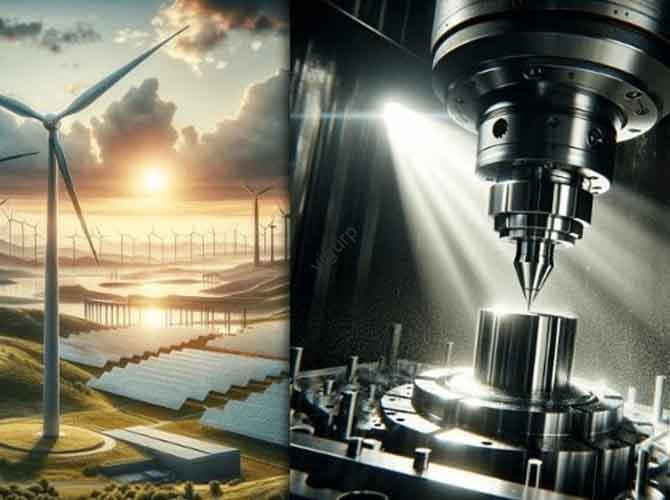
Si vous vous êtes déjà demandé comment l'avion dans lequel vous volez, la voiture que tu conduis, ou les implants médicaux qui sauvent des vies sont fabriqués, you’re looking at the work of themachining industries. L'usinage ne consiste pas seulement à couper du métal : c'est un domaine axé sur la précision qui alimente des secteurs critiques dans le monde entier., turning raw materials into components that meet strict standards for safety, performance, et durabilité.
Dans ce guide, we’ll break down the most important sectors of the machining industry, explore the unique challenges and requirements of each, and share real-world insights to help you understand how machining shapes our daily lives. Whether you’re a manufacturer looking to expand into new markets, an engineer researching material options, or simply curious about the industry, this article will answer your key questions.
1. Aerospace and Defense Machining: Where Precision Meets Safety
The aerospace and defense sector is one of the most demanding for machining—even a tiny error can lead to catastrophic failures. This industry relies on machining to create components that withstand extreme temperatures, pression, et le stress, all while meetingtolérances serrées (often as small as 0.0005 pouces).
Key Components and Materials
Aerospace machining focuses on critical parts likeaircraft structural components (ailes, sections du fuselage), pales de turbine (used in jet engines), pièces de moteur (chambres de combustion, arbres), train d'atterrissage (which supports the entire weight of an aircraft), composants de missiles, etpièces satellites. These components are typically made fromalliages à haute résistance comme le titane, Inconel, and aluminum-lithium—materials that are lightweight but incredibly strong, yet difficult to machine.
Étude de cas réel: Turbine Blade Machining
A leading aerospace manufacturer once faced a challenge: their existing machining process for turbine blades was taking 12 hours per part and producing a 15% rejection rate due to inconsistent surface finish. By switching to high-speed machining with carbide tools and implementing real-time temperature monitoring, they reduced production time to 8 hours per part and cut the rejection rate to 2%. This improvement wasn’t just about efficiency—it also ensured the blades could withstand the 2,000°F temperatures inside a jet engine without warping.
Critical Certification: NADCAP
Unlike other industries, aerospace machining requires strict certification to ensure quality. The most important isNADCAP Certification (National Aerospace and Defense Contractors Accreditation Program), which is mandatory for suppliers working with companies like Boeing and Lockheed Martin. NADCAP audits cover everything from machining processes to material traceability, ensuring every component meets aerospace standards.
Key Facts & Données
- Aerospace machining components must often meet AS9100 quality standards, qui sont 30% more rigorous than general ISO 9001 normes.
- The global aerospace machining market is projected to reach $48.2 billion by 2028 (Grand View Research), driven by increased air travel and defense spending.
2. Automotive and Transportation Machining: Vitesse, Volume, and Cost Efficiency
The automotive industry is all aboutproduction en grand volume—machining facilities can produce thousands of identical parts per day while keeping costs low. Unlike aerospace, where precision is the top priority, automotive machining balances accuracy with speed and affordability.
Common Components and Materials
Automotive machining focuses on parts likeblocs moteurs (le “heart” of a car), engrenages de transmission (which transfer power to the wheels), culasses (where fuel combustion happens), composants de suspension (amortisseurs, control arms), etbrake system parts (rotors, étriers). The most commonly used materials arealliages d'aluminium (léger, améliore le rendement énergétique) etcast iron (durable, used for engine blocks in heavy-duty vehicles).
The Role of Prototyping in Automotive Machining
Before full-scale production, automotive manufacturers rely onprototypage to test new designs. Par exemple, a car company developing an electric vehicle (VE) might use CNC machining to create a prototype of a new battery housing. This prototype is then tested for strength, résistance à la chaleur, and fit—if issues are found, the design is adjusted before millions of dollars are invested in production tooling.
Comparing High-Volume vs. Low-Volume Automotive Machining
| Facteur | High-Volume Machining (par ex., Mass-Produced Cars) | Low-Volume Machining (par ex., Luxury or Racing Cars) |
|---|---|---|
| Volume de production | 10,000+ pièces par mois | 10–1,000 parts per month |
| Machining Method | Automated CNC lines with robotic loading | Manual or semi-automated CNC machines |
| Material Focus | Alliages d'aluminium, cast iron | High-strength steel, composites en fibre de carbone |
| Tolerance Requirements | ±0,005 pouces | ±0,001 pouces (tighter for performance parts) |
| Cost Per Part | $5–50$ | $500–$5,000 |
Key Facts & Données
- The average passenger car contains over 300 machined components (Automotive Manufacturers Association).
- Aluminum use in cars has increased by 500% since 1990, driving demand for aluminum machining expertise (Lightweight Materials Coalition).
3. Medical and Life Sciences Machining: Biocompatibility and Sterility
Machining in the medical industry is a matter of life and death. Components must not only be precise but alsobiocompatible (safe for use inside the human body) etsterilization compatible (able to withstand high heat, produits chimiques, or radiation without degrading).
Essential Medical Components
Medical machining produces parts likeinstruments chirurgicaux (scalpels, forceps), implants (knee and hip replacements, pacemaker casings), dental components (couronnes, implants), etboîtiers pour dispositifs médicaux (MRI machine frames, insulin pump casings).
Matériels: Safety First
The most common materials arematériaux biocompatibles comme le titane (used for hip implants because it bonds with bone) etacier inoxydable (used for surgical instruments because it resists rust and bacteria). Some applications also use ceramics (for dental crowns) or polymers (for lightweight device housings).
Micro-Machining: Petites pièces, Big Impact
Many medical components are tiny—think of the 1mm-wide screws used in eye surgery. This requiresmicro-machining, a specialized process that uses tools as small as 0.001 inches to create intricate details. Par exemple, a manufacturer of glucose monitors uses micro-machining to create the tiny channels that allow blood to flow into the device’s sensor. Without this precision, the monitor couldn’t accurately measure blood sugar levels.
Real-World Example: Knee Implant Machining
A medical device company was struggling with patient complaints about knee implants loosening over time. After investigating, they found that the implant’s surface finish wasn’t rough enough to bond with bone. By adjusting their machining process to create ahigh surface finish (Râ 0.8 µm) using abrasive polishing, they improved bone integration by 40%, reducing the need for revision surgery.
Key Facts & Données
- The global medical machining market is expected to grow at a 7.2% annual rate through 2030 (Market Research Future), fueled by an aging population.
- All medical machined parts must comply with FDA regulations, which require 100% traceability of materials (from raw metal to finished product).
4. Moule, Die and Tool Making: Le “Tools That Make Tools”
Moule, mourir, and tool making is the backbone of manufacturing—these machined tools are used to produce other products. Par exemple, uninjection mold is used to make plastic bottles, tandis qu'unstamping die is used to cut sheet metal into car body panels.
Types of Molds and Dies
- Moules à injection: Used for plastic parts (jouets, coques de téléphone).
- Stamping Dies: Used for cutting or shaping metal (car fenders, aluminum cans).
- Forging Dies: Used for heating and shaping metal into strong parts (ébauches d'engrenages, vilebrequins).
- Extrusion Dies: Used for creating long, uniform shapes (PVC pipes, aluminum window frames).
- EDM Electrodes: Used in electrical discharge machining (GED) to create complex shapes in hard materials.
Materials for Mold and Die Making
Molds and dies need to be durable, so they’re often made fromacier à outils (resists wear from repeated use) or graphite (used for EDM electrodes because it conducts electricity). Par exemple, a stamping die used to make 1 million aluminum cans per day will last 5+ years if made from high-quality tool steel.
High-Speed Machining for Complex Shapes
Many molds and dies havecomplex 3D surfaces (like the mold for a toy car’s curved body). To machine these, manufacturers useusinage à grande vitesse (HSM), which uses spindle speeds up to 60,000 RPM to remove material quickly and smoothly. HSM not only reduces production time but also improves surface finish, so the final product (like the toy car) has no visible flaws.
Key Facts & Données
- A single injection mold can cost $10,000–$1 million, en fonction de la complexité (Plastics Technology).
- The global mold and die market is valued at $220 billion (Statista), with China being the largest producer.
5. Energy and Heavy Machinery Machining: Big Parts, Big Challenges
The energy and heavy machinery sector deals with some of the largest machined parts—think of a wind turbine’s 30-foot-long rotor hub. This industry requires machining that can handle massive materials while ensuring reliability (a broken turbine component can shut down a power plant).
Key Components
Energy and heavy machinery machining produces parts likecomposants de turbines (wind turbine blades, steam turbine rotors), corps de vannes (used to control fluid flow in pipelines), corps de pompe (for water or oil pumps), generator parts (for power plants), ethuile & gas drilling equipment (forets, well casings).
Materials for Heavy-Duty Use
These components are made fromwear-resistant materials such as hardened steel (for drill bits that cut through rock) or nickel alloys (for steam turbine parts that withstand high pressure). Some parts also use composite materials (for wind turbine blades, which are lightweight but strong).
Machining Large-Scale Parts
Large-scale parts (like a 5-ton pump housing) require specialized equipment—CNC machines with tables that can hold 10+ tons and spindles powerful enough to cut thick metal. Par exemple, a manufacturer of wind turbines uses a gantry CNC machine to machine rotor hubs. The process takes 48 heures, and the hub must meet tolerances of ±0.01 inches to ensure it fits with the turbine’s blades.
Real-World Challenge: Oil Drill Bit Machining
An oil company was experiencing frequent drill bit failures in deep wells (10,000+ pieds). The issue was that the drill bit’ssealing surfaces (which prevent oil leaks) were wearing down too quickly. By switching to a wear-resistant carbide material and using cryogenic machining (cooling the tool to -300°F to reduce heat damage), the company extended drill bit life by 60%, économie $2 million per well in replacement costs.
Key Facts & Données
- The global energy machining market is driven by renewable energy—wind turbine production alone requires 50+ machined components per turbine (American Wind Energy Association).
- Oil and gas machining components must withstand pressures up to 15,000 psi (more than 1,000 times atmospheric pressure).
Yigu Technology’s Perspective on Machining Industries
Chez Yigu Technologie, we believe the future of machining industries lies in the fusion of precision and sustainability. As sectors like aerospace and medical demand tighter tolerances, we’re seeing a shift toward AI-powered CNC machining—this technology uses real-time data to adjust cutting parameters, reducing waste and improving consistency. Par exemple, our AI-driven systems have helped automotive clients cut material waste by 25% while maintaining high-volume production. We also recognize the growing importance of eco-friendly materials: as the world focuses on sustainability, machining processes that work with recycled alloys or biodegradable polymers will become critical. Finalement, the most successful machining partners will be those who balance technical expertise with a focus on solving their clients’ unique challenges—whether that’s reducing production time, improving part durability, or meeting strict certifications.
FAQ: Common Questions About Machining Industries
1. What is the most important factor in aerospace machining?
The most critical factor istolérances serrées. Aerospace components often require tolerances as small as 0.0005 inches to ensure safety—even a tiny deviation can cause a part to fail under extreme conditions. NADCAP certification is also mandatory for aerospace suppliers.
2. Why is aluminum so widely used in automotive machining?
Aluminum is lightweight (30% plus léger que l'acier), which improves a car’s fuel efficiency or EV range. It’s also easier to machine than steel, allowing for faster production. Par exemple, using aluminum engine blocks instead of cast iron can reduce a car’s weight by 50 pounds.
3. What makes a material “biocompatible” for medical machining?
A biocompatible material is one that doesn’t cause an adverse reaction in the human body (like inflammation or rejection). Titanium is biocompatible because it’s non-toxic and bonds with bone, while stainless steel is biocompatible because it resists corrosion and bacteria growth.
4. How long does it take to make a mold for injection molding?
The time depends on complexity: a simple mold (for a plastic spoon) peut prendre 2 à 4 semaines, while a complex mold (for a car dashboard) can take 3–6 months. The cost also varies—simple molds start at $10,000, while complex ones can exceed $1 million.
5. What challenges do manufacturers face when machining large energy components?
Grandes pièces (like wind turbine hubs) require specialized equipment (par ex., gantry CNC machines) and take longer to machine (48+ hours per part). They also need to be transported carefully—moving a 5-ton pump housing requires specialized trucks and cranes to avoid damage.