
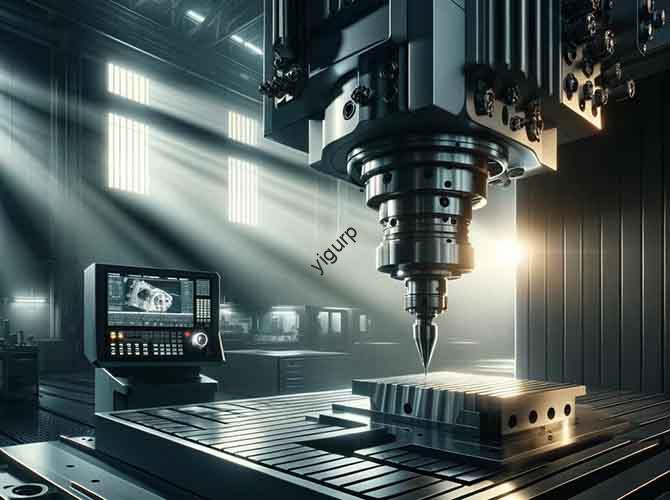
Dans des industries comme la fabrication de moules, décoration architecturale, et production d'œuvres d'art, créer un grand, les pièces complexes avec une grande précision sont un défi constant. La gravure manuelle traditionnelle est lente, incompatible, et ne peut pas gérer des conceptions complexes à grande échelle. That’s where Gravure fine CNC à grande échelle entre. Cette technologie combine une commande numérique par ordinateur (CNC) with advanced engraving tools to solve these pain points, delivering millimeter-level precision, production rapide, and flexibility across materials. Explorons comment cela fonctionne, its key features, and why it’s a game-changer for modern manufacturing.
1. What Is Large-scale CNC Fine Engraving? Core Principles
Gravure fine CNC à grande échelle is a manufacturing process that uses computer-controlled machines to carve, moulin, and detail large workpieces (often meters in size) with extreme precision. Unlike small-scale CNC engraving, it’s designed for big projects—think architectural columns, large mold cavities, or life-sized artworks—while maintaining the same high accuracy as smaller systems.
Step-by-Step Workflow of Large-scale CNC Fine Engraving
- Conception numérique (GOUJAT): A designer creates a 3D model of the part using CAD software (par ex., AutoCAD, SolidWorks). Par exemple, an architect might design a 3m-tall column with intricate floral patterns.
- Toolpath Generation (CAME): CAM software converts the 3D model into a Code G—a set of instructions that tells the CNC machine where to move, how fast to cut, and which tool to use.
- Configuration de la machine: The large workpiece (par ex., a block of aluminum, bois, or stone) is secured to the machine’s bed. The operator loads the required tools (par ex., end mills for milling, engraving bits for detail work) into the tool magazine.
- Engraving Process: The CNC machine uses high-speed rotating tools (jusqu'à 24,000 RPM) to carve the design into the workpiece. The machine’s servo drive system ensures smooth, precise movement across the large surface.
- Contrôle qualité: Après gravure, the part is checked for accuracy using tools like laser scanners or coordinate measuring machines (MMT) to ensure it matches the CAD model within ±0.1mm.
Exemple: Making a Large Mold Cavity
A mold manufacturer needs a 2m × 1.5m mold for plastic automotive bumpers:
- The CAD model of the bumper’s shape is created, including small details like mounting holes.
- CAM software generates a toolpath that first removes excess material (roughing) and then adds fine details (finition).
- A large-scale CNC engraving machine with a 3m bed processes the aluminum block over 8 heures.
- Inspection confirms the mold’s cavity is accurate to ±0.05mm—perfect for producing consistent bumper parts.
2. Key Equipment Features of Large-scale CNC Fine Engraving Machines
What makes large-scale CNC engraving machines different from standard CNC mills? Their design is optimized for stability, précision, and handling big workpieces—critical for avoiding errors in large projects.
Critical Equipment Components
| Component | Principales fonctionnalités | Why It Matters |
| Sturdy Bed Structure | Made of high-grade cast iron or steel; manually ground for flatness | Prevents vibration during engraving (vibration causes inaccuracies in large parts) |
| Servo Drive System | High-end bus absolute servo motors on all axes (X, Oui, Z, and often A/B for rotation) | Ensures precise positioning (répétabilité jusqu'à 0,001 mm) even across 5m+ distances |
| Broche & Outillage | Multi-speed spindles (5,000–24,000 RPM); in-line or disc tool magazines (holds 10–50 tools); custom automatic fixtures | Handles different materials (bois, métal, pierre) et processus (fraisage, gravure, forage) without manual tool changes |
| Circuit de refroidissement | Liquid cooling for spindles and workpieces | Empêche la surchauffe (critical for long engraving jobs on large parts) |
Comparaison: Large-scale vs. Small-scale CNC Engraving Machines
| Feature | Gravure fine CNC à grande échelle | Small-scale CNC Engraving |
| Bed Size | 2m × 1m to 10m × 3m | 0.5m × 0.5m to 1m × 1m |
| Workpiece Weight | Up to 10,000kg | Jusqu'à 500 kg |
| Typical Use Case | Architectural columns, large molds, big artworks | Bijoux, petites pièces, coques de téléphone |
| Tool Magazine Size | 10–50 tools | 1–10 tools |
3. Applications of Large-scale CNC Fine Engraving: Where It Shines
Gravure fine CNC à grande échelle is used across industries that need big, pièces détaillées. Its ability to handle diverse materials and complex designs makes it versatile.
Industry Applications and Use Cases
| Industrie | Common Projects Using Large-scale CNC Fine Engraving | Problem It Solves |
| Fabrication de moules | Large mold cavities for automotive parts, appareils électroménagers, or furniture | Traditional manual mold making takes 4–6 weeks; CNC cuts time to 3–5 days |
| Architectural Decoration | Colonnes, garde-corps, wall panels with intricate patterns (par ex., marble or wood carvings) | Manual carving of large architectural elements is slow and inconsistent; CNC ensures uniform detail |
| Artwork Production | Life-sized sculptures, large murals (engraved on metal or stone) | Artists can create complex, large artworks without physical strain; designs are easily replicated |
| Aérospatial & Automobile | Grandes pièces de structure (par ex., aluminum frames for aircraft wings) with precise engravings | Meets strict industry standards for accuracy; reduces weight by engraving lightweight patterns |
Étude de cas: Architectural Wood Panels
A hotel needs 20 large wood panels (2.5m × 1m each) with a custom geometric pattern for its lobby:
- Traditional wood carving would require 5 craftsmen working 2 weeks per panel (40 weeks total).
- Using a large-scale CNC fine engraving machine:
- The pattern is designed in CAD and converted to G-code.
- The machine processes 2 panels per day (using a wood engraving bit).
- Total time: 10 days—80% faster than manual work.
The panels also have uniform patterns, something hard to achieve with manual carving.
4. Technical Advantages of Large-scale CNC Fine Engraving
What makes Gravure fine CNC à grande échelle better than traditional methods like manual carving or small-scale CNC? Its advantages solve the biggest pain points of large-project manufacturing.
Key Advantages Explained
| Avantage | Détails | Real-World Impact |
| Haute précision | Réalise millimeter-level accuracy (±0,1mm) and sub-micron repeatability | A large mold for a boat hull has consistent thickness across its 5m length—critical for buoyancy |
| Haute efficacité | 5–10x faster than manual engraving. Par exemple, a 3m stone sculpture takes 3 jours contre. 3 weeks manually | Manufacturers meet tight deadlines for large orders (par ex., 50 architectural columns in 2 semaines) |
| Flexibilité matérielle | Works with wood, métal (aluminium, acier), pierre (marble, granit), plastique, and foam | A single machine can make a wooden railing, a metal sign, and a stone fountain—no need for multiple tools |
| Automation & Intelligence | With AI integration, machines can detect tool wear and adjust cutting parameters automatically | Reduces human error; a machine might slow down the cutting speed if a tool becomes dull, preventing damage to the workpiece |
Why This Matters for Manufacturers
- Économies de coûts: Faster production means lower labor costs. For a large mold project, CNC engraving cuts labor expenses by 60% contre. manual work.
- Cohérence: Every part is identical—critical for industries like automotive, where 100 identical large parts are needed for assembly.
- Liberté de conception: Complex patterns that were impossible to carve manually (par ex., 3D curved surfaces with tiny holes) are easy with CNC.
5. Materials Used in Large-scale CNC Fine Engraving
Gravure fine CNC à grande échelle works with a wide range of materials, each requiring specific tools and settings. Choosing the right material depends on the project’s needs—durability, apparence, ou le coût.
Common Materials and Machining Tips
| Type de matériau | Key Characteristics | Best Tools for Engraving | Ideal Projects |
| Alliages d'aluminium | Léger, facile à usiner, résistant à la corrosion | Fraises en carbure (for milling), engraving bits (for detail) | Aerospace frames, pièces automobiles, large molds |
| Bois | Doux, easy to carve, natural appearance | Acier rapide (HSS) morceaux, spiral cutters | Architectural panels, sculptures, meubles |
| Pierre (Marble/Granite) | Dur, durable, aesthetically pleasing | Diamond-tipped tools (for cutting hard surfaces) | Monuments, outdoor decor, building facades |
| Plastiques (ABS/PP) | Faible coût, léger, personnalisable | HSS or carbide tools (low cutting speed to avoid melting) | Large plastic signs, présentoirs |
Yigu Technology’s Perspective
Chez Yigu Technologie, we see Gravure fine CNC à grande échelle as a cornerstone of large-format manufacturing. We’ve designed machines with 5m beds, high-torque servo systems, and AI-driven tool wear detection—helping 80+ clients (from mold makers to architects) cut production time by 70% and improve accuracy to ±0.08mm. For a recent architectural project, our machine processed 12 marble columns (3je suis grand) dans 10 days—work that would have taken 2 months manually. Looking ahead, we’ll integrate 5-axis movement to handle more complex 3D shapes, making large-scale engraving even more versatile. Pour les entreprises, this technology isn’t just about size—it’s about doing big things with precision.
FAQ
- Q: What’s the maximum size of workpiece a large-scale CNC fine engraving machine can handle?
UN: Most machines have beds from 2m × 1m to 10m × 3m, but custom machines can handle even larger workpieces (par ex., 15m-long ship parts).
- Q: How long does it take to engrave a large part (par ex., a 3m × 2m aluminum panel)?
UN: It depends on the design complexity. A simple pattern takes 4–6 hours; a detailed design with small features takes 12–24 hours.
- Q: Is large-scale CNC fine engraving expensive for small-batch production?
UN: It’s more cost-effective than manual engraving even for small batches (par ex., 5 grandes pièces). While the machine upfront cost is higher, you save on labor and avoid errors that waste material.