
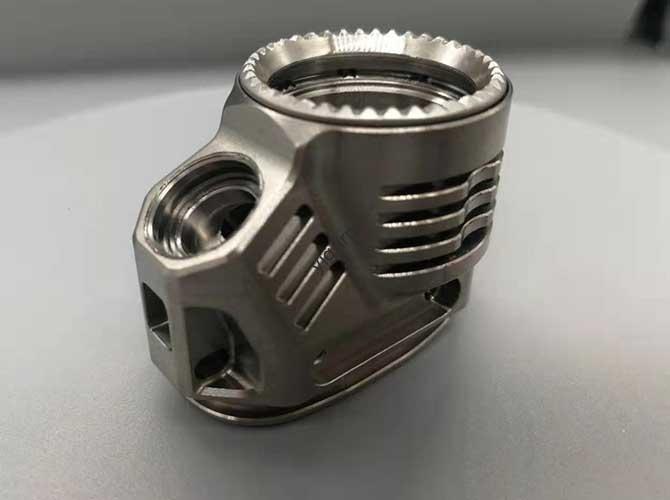
Le moulage de précision et le moulage sous pression sont deux processus fondamentaux de formage des métaux, chacun est adapté à des besoins de fabrication distincts, mais leurs différences sont souvent mal comprises, conduisant à une mauvaise sélection de processus coûteuse. Le moulage de précision excelle dans la création de pièces très complexes, pièces à faible volume avec une précision exceptionnelle, tandis que le moulage sous pression domine la production en grand volume de matériaux légers, composants à parois minces. Pour les constructeurs qui choisissent entre les deux, understanding their core distinctions in principles, flux de travail, and applications is critical to avoiding defects, réduire les coûts, and meeting project goals. This article systematically breaks down their differences, supported by data, tableaux, and real-world examples, to help you make informed decisions.
1. Core Principles: How They Work (Fundamental Differences)
The most critical distinction between precision casting and moulage sous pression lies in their core working mechanisms—specifically, how molten metal is shaped and solidified. This section uses a contrast structure to highlight their unique principles, with key terms emphasized for clarity.
1.1 Moulage de précision (Lost Wax Casting)
Moulage de précision, souvent appelé “investment casting,” relies on replica wax patterns et refractory shells to achieve near-net shaping. Its core principle is:
- Create a wax pattern identical to the final part (using a metal die or 3D printing).
- Coat the wax pattern with multiple layers of refractory material (par ex., silica sol, zircon sand) to form a rigid shell.
- Melt and drain the wax (le “lost wax” étape), leaving a hollow cavity in the shell.
- Roast the shell to strengthen it and remove residual wax.
- Pour molten metal (par ex., acier inoxydable, alliage de titane) into the hot shell—gravity drives filling, no external pressure is applied.
- Cool, break the shell, and finish the part (traitement thermique, polissage).
Its defining trait is precision through replication: the wax pattern captures every detail, and the shell ensures the metal retains that detail during solidification. No high pressure is used, making it ideal for parts with intricate features (par ex., turbine blades with 0.1mm-thin airfoils).
1.2 Moulage sous pression
Die casting uses high pressure and high speed to force molten metal into a precision metal mold (mourir). Its core principle is:
- Clamp two halves of a metal die (typically H13 steel) shut to form a cavity matching the part’s shape.
- Heat non-ferrous metal (par ex., aluminium, zinc) to a liquid state (600-700°C for aluminum).
- Inject the molten metal into the die cavity at high pressure (10-175 MPa) et la vitesse (3-50 MS) via a hydraulic punch.
- Hold pressure while the metal solidifies quickly (5-30 secondes) to eliminate porosity and ensure dimensional stability.
- Open the die, eject the part, and trim excess material (coureurs, éclair).
Its key advantage is efficiency through pressure: high pressure ensures fast filling and uniform solidification, making it perfect for mass-produced parts like smartphone frames or automotive housings.
2. Workflow Comparison: Step-by-Step Process Differences
The workflow of each process further highlights their suitability for different production scenarios. Below is a side-by-side table of their key steps, with focus areas and timeframes:
| Stage | Moulage de précision (Lost Wax) | Moulage sous pression | Key Difference |
| Pattern/Mold Preparation | – Make wax pattern (1-2 hours per pattern)- Coat with 5-8 refractory layers (24-48 hours total)- Dewax and roast shell (8-12 heures) | – Machine metal die (1-3 months for complex dies)- Preheat die to 180-250°C (10-15 minutes per cycle)- Apply release agent (10-20 seconds per cycle) | Precision casting has longer prep time per batch; die casting has high upfront die costs but fast per-cycle prep. |
| Fusion des métaux & Filling | – Melt metal (par ex., titanium at 1668°C) in a crucible furnace (30-60 minutes)- Pour metal into shell via gravity (no pressure; 1-5 minutes per shell) | – Melt aluminum/zinc in a holding furnace (continuous, no per-cycle delay)- Inject metal at 10-175 MPa (0.5-2 seconds per cycle) | Die casting filling is 100x faster; precision casting handles high-melting metals die casting can’t. |
| Solidification & Démoulage | – Cool metal in shell (1-4 heures, en fonction de la taille de la pièce)- Break shell manually or with vibration (10-30 minutes par partie) | – Solidify under pressure (5-30 secondes)- Eject part with pins (10-20 seconds per cycle) | Die casting cycle time (60-120 seconds/part) is exponentially faster than precision casting (hours/part). |
| Post-traitement | – Remove gating (affûtage, 5-10 minutes par partie)- Heat treat (par ex., titanium alloy annealing, 2-4 heures)- Polish to Ra 0.8-3.2 µm (15-30 minutes par partie) | – Trim flash with a press (5-10 secondes par partie)- Minimal machining (only for critical features, 1-5 minutes par partie)- Surface coating (par ex., anodisation, 30-60 minutes par lot) | Precision casting needs more post-processing; die casting requires minimal finishing due to high die accuracy. |
3. Key Performance & Application Differences
Beyond principles and workflows, precision casting and die casting differ sharply in performance metrics and ideal use cases. The following sections use tables and examples to clarify these distinctions.
3.1 Performance Metrics Comparison
| Metric | Moulage de précision | Moulage sous pression |
| Précision dimensionnelle | ±0.1-0.2 mm for parts ≤300mm; ideal for tight tolerances | ±0.05-0.1 mm for small parts; slightly lower for large parts (>500mm: ±0.2-0.3 mm) |
| Finition de surface | Râ 0.8-3.2 µm (can reach Ra 0.4 μm with polishing) | Râ 1.6-6.3 µm (better for aluminum/zinc; rougher for magnesium) |
| Compatibilité des matériaux | Tous les métaux: acier inoxydable, titane, acier au carbone, nickel superalloys | Limited to non-ferrous metals: aluminium (60% of die casts), zinc (25%), magnésium (15%) |
| Part Complexity | Handles extreme complexity: cavités internes, parois minces (0.5mm), contre-dépouilles | Best for external complexity; internal features need removable cores (add cost/defect risk) |
| Porosity | Faible (<1%)—gravity filling minimizes air entrainment | Plus haut (2-5% for standard die casting); reduced to <1% with vacuum die casting |
| Résistance mécanique | Higher strength after heat treatment (par ex., titanium alloy σb=900-1200 MPa) | Moderate strength (aluminum ADC12 σb=300-350 MPa); limited heat treatment due to porosity |
3.2 Ideal Application Scenarios
3.2.1 Moulage de précision: High-Value, Low-Volume Parts
Precision casting shines in industries where complexity, performances matérielles, and accuracy are prioritized over speed:
- Aérospatial: Aubes de turbines (alliage de titane, complex airfoils), engine combustion chambers (nickel superalloys, résistance aux hautes températures). Exemple: GE uses precision casting for jet engine blades that withstand 1200°C and 50,000 RPM.
- Dispositifs médicaux: Instruments chirurgicaux (acier inoxydable, biocompatibilité), implants de hanche (alliage de titane, bone-like strength). Exemple: Stryker’s hip implants use precision casting to achieve 0.1mm accuracy for bone fitting.
- Huile & Gaz: Valve cores (super duplex stainless steel, résistance à la corrosion), wellhead components (acier au carbone, high pressure tolerance). Exemple: Schlumberger uses precision cast valve cores for offshore drilling (30,000 psi pressure rating).
3.2.2 Moulage sous pression: High-Volume, Pièces légères
Die casting dominates industries where speed, coût, and lightweighting are key:
- Automobile: Cadres de batterie EV (aluminium, 500,000+ unités/an), carters de transmission (zinc, 1M+ units/year). Exemple: Tesla’s Model 3 uses die cast aluminum battery frames to reduce weight by 30%.
- Electronique grand public: Smartphone middle frames (magnésium, 10M+ units/year), laptop palm rests (aluminium, 5M+ units/year). Exemple: Apple uses die cast aluminum for MacBook housings (1.5parois minces de mm, 100,000 units/day).
- Appareils électroménagers: Air conditioner compressor shells (aluminium, 2M+ units/year), washing machine motor brackets (zinc, 1.5M+ units/year). Exemple: Haier uses die cast zinc brackets for washing machines (faible coût, 20-second cycle time).
4. Comparaison des coûts: When to Choose Which for ROI
Cost is a decisive factor, and the two processes have vastly different cost structures. The table below breaks down costs for a 10,000-unit production run of a 500g part:
| Cost Category | Moulage de précision (Stainless Steel Part) | Moulage sous pression (Aluminum Part) |
| Upfront Costs | – Wax die: \(5,000<br>- Shell materials: \)2,000 | – Metal die: \(50,000<br>- Die casting machine setup: \)10,000 |
| Per-Part Costs | – Wax pattern: \(5<br>- Refractory materials: \)3- Labor (shell making, pouring): \(12<br>- Post-traitement: \)8 | – Métal: \(1.5<br>- Labor (automatisé): \)0.5- Post-traitement: $1 |
| Total 10k-Unit Cost | \(280,000 (\)28/partie) | \(85,000 (\)8.5/partie) |
Key Cost Takeaways:
- Moulage de précision: Lower upfront costs make it economical for small batches (<5,000 unités). Per-part costs stay high due to manual labor.
- Moulage sous pression: High upfront costs (mourir + machine) are offset by low per-part costs for large batches (>10,000 unités). Pour 100,000 unités, die casting’s total cost drops to \(115,000 (\)1.15/partie), while precision casting remains at $280,000.
5. Yigu Technology’s Perspective on Process Selection
Chez Yigu Technologie, we believe process selection should be driven by “fit for purpose”—not trends. Many clients mistakenly choose die casting for low-volume, high-complexity parts (par ex., 1,000 supports aérospatiaux), wasting $50k+ on dies that are never fully utilized. Others use precision casting for high-volume consumer parts (par ex., 100,000 coques de téléphone), doubling production costs.
We recommend a 3-step decision framework: 1. Define non-negotiables (volume, matériel, complexité). 2. Calculate total cost of ownership (not just per-part cost). 3. Test with small batches (par ex., 100 precision cast prototypes vs. 100 die cast samples) to validate performance.
For hybrid needs (par ex., high complexity + medium volume), we advocate combining processes: use precision casting for critical components (par ex., medical implant heads) and die casting for non-critical housings. By aligning process capabilities with project goals, manufacturers can cut costs by 30-50% while improving quality.
6. FAQ: Common Questions About Precision Casting vs. Moulage sous pression
Q1: Can die casting produce parts with the same complexity as precision casting (par ex., internal undercuts)?
Technically yes, but it’s costly and risky. Die casting requires removable metal cores to create internal undercuts—each core adds \(10k-\)20k to die costs and increases defect risk (cores can get stuck or misaligned). Moulage de précision, par contre, creates undercuts easily via wax patterns—no extra cost or risk. For complex internal features, precision casting is far more practical.
Q2: Is precision casting always more expensive than die casting?
No—only for large batches. For small runs (<5,000 unités), precision casting is cheaper. Par exemple, 1,000 stainless steel parts cost \(53,000 with precision casting vs. \)61,000 with die casting (due to $50k die costs). Die casting becomes cheaper only when volume exceeds ~8,000 units, where low per-part costs offset upfront investments.
Q3: Can die casting parts be heat treated to match precision casting’s strength?
Rarely. Die casting parts have inherent porosity—heat treatment (par ex., T6 for aluminum) causes pores to expand, leading to cracking or deformation. Precision casting parts, à faible porosité, can undergo full heat treatment (par ex., recuit, trempe) to reach high strength (par ex., titanium alloy σb=1200 MPa). For high-strength applications (par ex., aerospace structural parts), precision casting is the only viable option.