
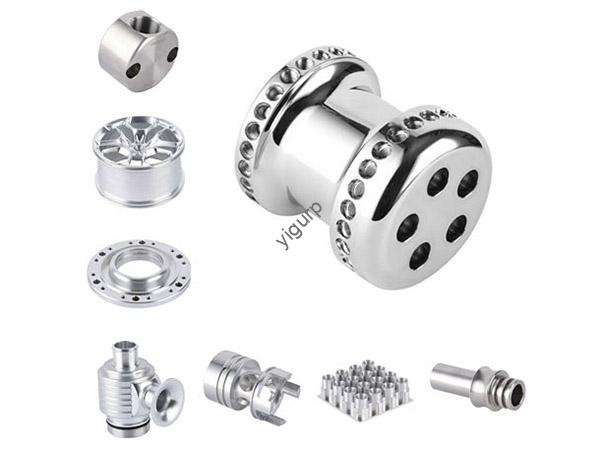
Si vous avez besoin d'un acier inoxydable qui prospère dans des environnements difficiles, comme l'eau de mer, produits chimiques, or high heat—JIS SUS316 stainless steel est l'étalon-or. Il est plus résistant à la corrosion que le SUS304 commun, grâce au molybdène supplémentaire, ce qui en fait un premier choix pour la marine, pharmaceutique, et projets industriels. Ce guide détaille tout ce que vous devez savoir pour l'utiliser efficacement.
1. Material Properties of JIS SUS316 Stainless Steel
JIS SUS316 stainless steel owes its performance to its uniquepropriétés des matériaux—from its alloy makeup to its mechanical strength. Plongeons-nous:
Alloy Composition
The key to its corrosion resistance is molybdenum, a component missing in basic SUS304. Here’s the detailed breakdown:
| Element | Content Range | Role in Performance |
|---|---|---|
| Chromium | 16.0% – 18.0% | Forme une couche protectrice d'oxyde (fights rust and pitting) |
| Nickel | 10.0% – 14.0% | Stabilizes the austenitic structure (boosts ductility and toughness) |
| Molybdène | 2.0% – 3.0% | Enhances resistance to chlorides (critical for seawater and chemicals) |
| Carbon | ≤0.08% | Maintains strength without increasing corrosion risk |
| Manganese | ≤2.0% | Improves workability during manufacturing (par ex., rolling, soudage) |
Mécanique & Physical Properties
It balances strength and flexibility, making it suitable for diverse projects. Here’s how it performs:
| Propriété | Valeur typique (Annealed) | Practical Benefit |
|---|---|---|
| Résistance mécanique (Traction) | 515 MPa | Handles high pressure (ideal for chemical pipes or marine shafts) |
| Yield Strength | 205 MPa | Resists bending (great for structural parts like offshore brackets) |
| Élongation | ≥40% | Bends and stretches without cracking (perfect for curved marine parts) |
| Dureté | ≤210 HB (Brinell) | Soft enough for machining, yet durable against scratches |
| Densité | 8.0 g/cm³ | Slightly denser than SUS304 (adds stability for heavy-duty parts) |
| Conductivité thermique | 16.2 W/m·K (at 100°C) | Transfers heat evenly (suitable for heat exchangers in chemical plants) |
| Conductivité électrique | 1.3 x 10⁶ S/m | Lower than copper (good for parts needing electrical insulation) |
| Magnetic Properties | Non magnétique | Won’t stick to magnets (unlike ferritic steels like SUS430) |
A marine engineering firm in Japan uses SUS316 for propeller shafts. Its high tensile strength (515 MPa) withstands the torque of spinning propellers, while its non-magnetic property avoids interfering with navigation equipment.
2. Applications of JIS SUS316 Stainless Steel
Thanks to its corrosion resistance, JIS SUS316 stainless steel is used in industries where failure is not an option. Here are its topcandidatures:
- Marine Applications: Ship hulls, arbres d'hélice, and offshore platforms. A shipyard in South Korea builds coastal patrol vessels with SUS316 hulls—no rust after 5 years in saltwater.
- Chemical Processing Plants: Pipes, reactors, and storage tanks for acids (par ex., acide sulfurique) et solvants. A chemical firm in Germany uses SUS316 for nitric acid tanks—no corrosion or leaks for 8 années.
- Pharmaceutical Equipment: Drug manufacturing tanks and sterile conveyors. It meets strict purity standards (par ex., FDA) and resists cleaning chemicals. A Swiss pharma company uses it for vaccine mixing tanks—no metal leaching into products.
- Food Processing Equipment: Seafood processing machines and saltwater-based cleaning systems. A fish cannery in Norway uses SUS316 for conveyor belts—resists saltwater and fish oils.
- Composants aérospatiaux: Engine parts and fuel lines (handles high heat and jet fuels). An aerospace supplier in the U.S. uses SUS316 for fuel connectors—withstands temperatures up to 600°C.
- Sanitary Fittings: Hospital faucets and lab sinks (easy to sterilize and resists disinfectants). A Singapore hospital uses SUS316 for operating room sinks—no corrosion from daily bleach cleaning.
3. Manufacturing Processes for JIS SUS316 Stainless Steel
JIS SUS316 stainless steel is versatile to manufacture, though its molybdenum content requires slight adjustments compared to SUS304. Voici la cléprocédés de fabrication:
- Hot Rolling: Heated to 1100–1200°C and rolled into thick plates, barres, or pipe blanks. Used for large parts like marine propeller shafts. A steel mill in China uses hot rolling for SUS316 bars—ensures uniform strength.
- Cold Rolling: Done at room temperature to make thin sheets (par ex., pièces aérospatiales) or precise components. Improves surface smoothness—critical for pharmaceutical equipment.
- Recuit: Heated to 1050–1150°C and quenched in water. Softens the steel after cold working (par ex., flexion) and restores corrosion resistance. A fabricator anneals SUS316 sheets before forming them into lab sinks—prevents cracking.
- Pickling: Treated with nitric acid to remove scale (from rolling or welding). Enhances the oxide layer—key for marine parts. A shipyard pickles SUS316 hull plates before painting—ensures no rust under the coating.
- Usinage: Drilled, fraisé, or turned with high-speed steel (HSS) or carbide tools. Use coolant to avoid overheating (molybdenum can make it slightly harder to machine than SUS304). A machine shop uses carbide tools to make SUS316 valve parts—achieves tight tolerances.
- Formation: Deep drawing (for sinks), flexion (pour garniture), and extrusion (for pipes) are all possible, thanks to its high elongation (≥40%). A sink manufacturer deep-draws SUS316 into seamless marine sinks—no leaks.
4. Corrosion Resistance of JIS SUS316 Stainless Steel
The biggest advantage ofJIS SUS316 stainless steel is its exceptionalrésistance à la corrosion—it outperforms most stainless steels in harsh conditions:
- Pitting Resistance: Molybdenum prevents small holes (pitting) in chlorides. Tests show it resists pitting in 3.5% saltwater (simulating seawater) at temperatures up to 80°C—SUS304 fails at 60°C.
- Crevice Corrosion: Performs well in tight spaces (par ex., bolted joints) if cleaned regularly. A marine engineer tested SUS316 in crevices filled with seawater—no corrosion after 18 mois.
- Intergranular Corrosion: Low carbon content (≤0.08%) prevents cracking in high heat (par ex., chemical reactors at 500°C). A refinery uses SUS316 for heated fuel lines—no issues for 6 années.
- Stress Corrosion Cracking (SCC): Resists SCC in chlorides and acids. A pharmaceutical plant uses SUS316 for pressure vessels holding acidic drugs—no cracking under 100 pression en bars.
- Surface Treatment for Extra Protection: Passivation (treating with nitric acid) thickens the oxide layer. A lab passivates SUS316 equipment—extends its life by 4x.
It’s not invincible (avoid concentrated hydrochloric acid), but it’s the best choice for most chloride-rich or chemical-heavy environments.
5. Welding JIS SUS316 Stainless Steel
JIS SUS316 stainless steel has goodsoudabilité, but you need to match the filler to its molybdenum content. Here’s how to do it right:
- Welding Processes: TIG (Tungsten Inert Gas) is best for thin parts (par ex., lab pipes), while MIG (Metal Inert Gas) works for thicker sections (par ex., marine brackets). A welder in Australia uses TIG for SUS316 pharmaceutical pipes—creates clean, leak-proof welds.
- Welding Rods: Use molybdenum-rich fillers like AWS ER316L (faible teneur en carbone) or ER316. Avoid SUS304 fillers—they lack molybdenum, leading to corrosion in the weld. A shipyard once used ER308 (SUS304 filler)—the weld rusted in 3 mois.
- Welding Gases: Use argon (for TIG) or argon-2% CO₂ (for MIG) to protect the weld from oxygen. This prevents oxidation and weak spots.
- Post-Weld Heat Treatment: Not always needed, but annealing at 1050–1150°C removes stress (critical for load-bearing parts like offshore shafts). A structural fabricator anneals SUS316 welds—ensures no cracking under wave pressure.
- Welding Inspection: Use X-ray or ultrasonic testing for critical parts (par ex., réacteurs chimiques). A quality control team tests SUS316 welds—catches tiny defects before they cause leaks.
- Welding Safety: Wear a heat-resistant jacket and welding helmet—SUS316 produces intense sparks during welding.
6. Standards and Specifications for JIS SUS316 Stainless Steel
To ensure quality, JIS SUS316 stainless steel follows strict global standards. Here’s what you need to know:
- JIS G4304: The Japanese Industrial Standard for hot-rolled stainless steel plates, feuilles, and strips (covers SUS316’s dimensions and composition).
- ASTM A240: Les États-Unis. standard (ASTM A240 Type 316 is equivalent to JIS SUS316)—you can use them interchangeably.
- DANS 10088: The European standard (DANS 10088-2 X5CrNiMo17-12-2 is the equivalent grade).
- ISO Standards: OIN 15510 specifies its chemical composition and mechanical properties for global projects.
- Certification des matériaux: Ask for a Mill Test Certificate (MTC) pour vérifier la conformité. A marine client requires MTCs for all SUS316 parts—ensures they meet seawater resistance standards.
- Contrôle de qualité: Manufacturers test for molybdenum content, résistance à la corrosion, and tensile strength. A steel supplier rejects batches of SUS316 with less than 2.0% molybdenum—they won’t perform in seawater.
7. Comparison with Other Materials
How doesJIS SUS316 stainless steel stack up against other common materials? Here’s a clear breakdown:
| Matériel | Key Advantage vs. SUS316 | Key Disadvantage vs. SUS316 | Idéal pour |
|---|---|---|---|
| SUS304 | Lower cost (~20% cheaper) | Poor chloride resistance | Indoor applications (par ex., kitchen sinks) |
| SUS316L | Better intergranular corrosion resistance (faible teneur en carbone) | Slightly lower strength | High-heat chemical reactors |
| Acier au carbone | Much cheaper (~50% lower) | No corrosion resistance | Indoor structural parts (par ex., poutres) |
| Acier inoxydable duplex | Résistance supérieure | Less ductile (harder to form) | High-pressure oil pipes |
| Alliages de titane | Extreme corrosion resistance | Very expensive (~5x cost) | Deep-sea equipment, pièces aérospatiales |
| Alliages d'aluminium | Plus léger (densité 2.7 g/cm³) | Less strong (traction 276 MPa) | Lightweight parts (par ex., cadres de vélo) |
For marine, chimique, or pharmaceutical projects, SUS316 offers the best balance of performance and cost—beating SUS304 in harsh conditions and titanium in affordability.
Yigu Technology’s Perspective on JIS SUS316 Stainless Steel
Chez Yigu Technologie, JIS SUS316 is our top recommendation for clients in marine, chimique, and pharmaceutical sectors. Its molybdenum-enhanced corrosion resistance solves their biggest pain point: frequent equipment replacement due to rust or chemical damage. We help clients optimize welding (using ER316 fillers) and manufacturing to maximize its lifespan—whether it’s for offshore platforms or sterile drug tanks. While SUS316 costs more than SUS304, its 2–3x longer service life makes it a cost-effective choice long-term.
FAQ About JIS SUS316 Stainless Steel
- Is JIS SUS316 better than SUS304 for outdoor use?
Yes—especially in coastal areas. SUS316’s molybdenum makes it resistant to saltwater spray, while SUS304 may rust within 2–3 years near the ocean. For inland outdoor use, SUS304 is cheaper, but SUS316 lasts longer. - Can JIS SUS316 be used in food processing?
Absolument! It meets FDA and JIS Z 2801 food safety standards. It’s ideal for seafood processing (resists saltwater) or acidic food production (par ex., tomato sauce)—unlike SUS304, it won’t corrode from food acids. - Is JIS SUS316 hard to machine?
It’s slightly harder to machine than SUS304 (due to molybdenum), but manageable. Utiliser des outils en carbure (instead of HSS) and plenty of coolant to avoid overheating. A machine shop can achieve precise cuts with the right tools—no extra effort needed.