
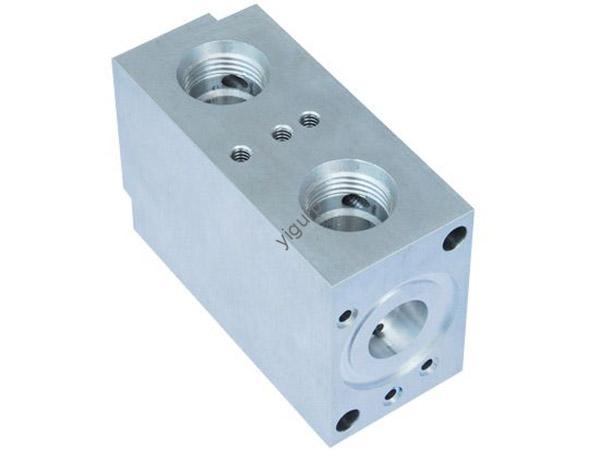
Si vous recherchez un produit rentable, high-strength alloy steel for mechanical parts like gears or shafts—JIS SCR440 alloy steel est un excellent choix. En tant qu'acier allié au chrome standard japonais, il équilibre la trempabilité solide, résistance à l'usure, et usinabilité. Ce guide détaille tout ce que vous devez savoir, de sa composition chimique aux utilisations réelles, to help you make informed decisions for your projects.
1. Material Properties of JIS SCR440 Alloy Steel
JIS SCR440’s performance is rooted in its well-balanced properties, all compliant with Japan’sJIS G4105 standard. Let’s explore each key aspect clearly.
1.1 Composition chimique
The elements in JIS SCR440 work together to boost strength, dureté, et durabilité. Below is the standard composition range:
| Élément | Symbole | Composition Range (%) | Key Role in the Alloy |
|---|---|---|---|
| Carbone (C) | C | 0.38 – 0.45 | Améliorerésistance à la traction and surface hardness; critical for wear-resistant parts |
| Chrome (Cr) | Cr | 0.90 – 1.20 | Amélioretrempabilité etrésistance à la corrosion; prevents oxidation at moderate temperatures |
| Manganèse (Mn) | Mn | 0.60 – 0.90 | Boosteusinabilité and grain refinement; réduit la fragilité après traitement thermique |
| Silicium (Et) | Et | 0.15 – 0.35 | Agit comme désoxydant lors de la fabrication de l'acier; strengthens the alloy without losing ductility |
| Molybdène (Mo) | Mo | ≤ 0.15 | Trace amounts slightly enhance high-temperature stability; not a primary alloying element |
| Nickel (Dans) | Dans | ≤ 0.25 | Minimal content; small amounts slightly improverésistance aux chocs |
| Soufre (S) | S | ≤ 0.030 | Kept low to avoid cracking and brittleness in high-stress applications |
| Phosphore (P.) | P. | ≤ 0.030 | Limité pour éviter la fragilité au froid (fracture in low-temperature environments) |
| Vanadium (V) | V | ≤ 0.03 | Tiny amounts refine grain structure for uniform strength across the part |
1.2 Propriétés physiques
These traits determine how JIS SCR440 behaves in different working conditions—like temperature changes or magnetic fields:
- Densité: 7.85 g/cm³ (consistent with most ferrous alloys, easy to integrate into existing designs)
- Point de fusion: 1430 – 1450°C (high enough for applications à haute température like industrial rollers or engine parts)
- Conductivité thermique: 45 Avec(m·K) à 20°C (retains heat well, suitable for parts that operate continuously)
- Capacité thermique spécifique: 470 J/(kg·K) à 20°C (absorbs heat steadily, avoiding warping from sudden temperature swings)
- Coefficient de dilatation thermique: 12.0 µm/(m·K) (faible expansion, critical for precision parts like gears or shafts)
- Propriétés magnétiques: Ferromagnétique (attire les aimants, useful for tools like magnetic clamps or sensors)
1.3 Propriétés mécaniques
JIS SCR440’s full mechanical strength is unlocked aftertrempe + trempe (its standard heat treatment). Below are typical values tested to Japanese standards:
| Propriété | Valeur typique | Norme d'essai (IL) |
|---|---|---|
| Résistance à la traction | ≥ 1000 MPa | JIS Z2241 |
| Limite d'élasticité | ≥ 800 MPa | JIS Z2241 |
| Élongation | ≥ 12% | JIS Z2241 |
| Réduction de superficie | ≥ 45% | JIS Z2241 |
| Dureté (Brinell) | 229 – 286 HB | JIS Z2243 |
| Dureté (Rockwell C.) | 23 – 30 CRH | JIS Z2245 |
| Dureté (Vickers) | 230 – 290 HT | JIS Z2244 |
| Résistance aux chocs | ≥ 50 J. | JIS Z2242 |
| Résistance à la fatigue | ~520 MPa | JIS Z2273 |
1.4 Autres propriétés
- Résistance à la corrosion: Modéré (résiste à une légère humidité, huiles, et produits chimiques industriels; use zinc plating or paint for outdoor/humid environments)
- Résistance à l'usure: Bien (grâce à chrome (Cr) et traitement thermique; suitable for moving parts like bearings or rollers)
- Usinabilité: Équitable (softer in annealed state; use high-speed steel (HSS) or carbide tools with cutting fluid to reduce tool wear)
- Soudabilité: Acceptable (préchauffer à 250 – 300°C and post-weld heat treat to avoid cracking; utiliser des électrodes à faible teneur en hydrogène)
- Trempabilité: Excellent (heat treatment penetrates deeply, ensuring uniform strength in thick parts like heavy machinery shafts)
2. Applications of JIS SCR440 Alloy Steel
JIS SCR440’s mix of strength, abordabilité, and versatility makes it ideal forapplications à forte contrainte dans tous les secteurs. Voici ses utilisations les plus courantes, avec des exemples concrets:
2.1 Industrie automobile
Cars and commercial vehicles rely on its durability for key mechanical parts:
- Engrenages: A Japanese automaker uses it for manual transmission gears—its résistance à l'usure prolonge la durée de vie des engrenages de 30% contre. acier au carbone.
- Arbres: Compact trucks use JIS SCR440 drive shafts; c'est limite d'élasticité (≥800 MPa) handles 20-ton loads without bending.
- Bolts and fasteners: High-performance sedans use it for engine mount bolts—their résistance à la traction (≥1000 MPa) resist vibration loosening.
2.2 Génie mécanique
Industrial machines need parts that last through continuous use:
- Roulements: A manufacturing plant uses it for conveyor belt bearings—its dureté (229–286 HB) cuts maintenance downtime by 20%.
- Rouleaux: Printing machinery uses it for pressure rollers; c'est résistance à la fatigue (~520 MPa) withstands repeated contact with paper.
- Ressorts: Small construction tools (like jackhammers) use it for compression springs; its elasticity (from tempering) poignées 8,000+ cycles.
2.3 Machinerie lourde
For large-scale equipment, it provides reliable strength:
- Crane shafts: Small port cranes use it for hoist shafts—its résistance aux chocs (≥50 J) prevents fracture when lifting 25-ton containers.
- Structural fasteners: Machines agricoles (like tractors) uses JIS SCR440 bolts; leur résistance à la corrosion (with anti-rust coating) stands up to mud and rain.
3. Manufacturing Techniques for JIS SCR440 Alloy Steel
To maximize JIS SCR440’s performance, follow these industry-proven manufacturing steps:
3.1 Processus de fabrication de l'acier
It’s typically produced using two methods:
- Four à arc électrique (AEP): Most common for medium batches. Scrap steel is melted with electrodes, alors chrome (Cr) is added to reach the target composition. EAF is flexible and reduces waste, ideal for custom parts like large gears.
- Four à oxygène de base (BOF): Used for mass production. Molten iron is mixed with oxygen to remove impurities, then alloy elements are added. BOF is faster and cost-effective for standard parts like bolts.
3.2 Traitement thermique
Heat treatment is critical to unlock JIS SCR440’s full potential. The standard process for high-stress parts is:
- Recuit: Chauffer à 820 – 850°C, cool slowly. Softens the alloy for easier machining (cuts tool wear by 30%).
- Trempe: Chauffer à 840 – 860°C, cool rapidly in oil. Hardens the steel to reach résistance à la traction ≥1000 MPa.
- Trempe: Chauffer à 500 – 550°C, cool in air. Reduces brittleness while retaining strength—critical for parts like gears or shafts.
- Cémentation (facultatif): Chauffer à 900 – 950°C dans une atmosphère riche en carbone. Adds a hard outer layer (0.8–1.0 mm thick) to boost résistance à l'usure (ideal for bearings).
3.3 Processus de formage
JIS SCR440 is shaped into parts using:
- Forgeage: Hammered or pressed at 1100 – 1200°C. Aligns the metal’s grain structure, increasing résistance à la traction par 12% contre. pièces moulées. Utilisé pour les engrenages, arbres, and crane components.
- Roulement: Passed through rollers to make bars, feuilles, ou des tiges. Used for basic shapes like bolt blanks or spring stock.
- Extrusion: Pushed through a die to make complex shapes (par ex., arbres creux). Ideal for precision parts like automotive transmission components.
3.4 Machining Processes
Après avoir formé, parts are finished with precision machining:
- Tournant: Uses a lathe to make cylindrical parts (par ex., arbres). Use cutting fluid (par ex., huile minérale) to prevent overheating and tool wear.
- Fraisage: Uses a rotating cutter to shape gear teeth or bearing races. Carbide tools work best for high precision (par ex., gear tooth tolerance ±0.02 mm).
- Forage: Creates holes for bolts or fasteners. High-speed drills (900–1400 RPM) avoid cracking.
- Affûtage: Smooths surfaces to tight tolerances (par ex., ±0.01 mm for bearing inner rings). Améliore résistance à l'usure by reducing surface friction.
4. Étude de cas: JIS SCR440 in Automotive Transmission Gears
A Japanese automotive parts supplier faced a problem: their carbon steel transmission gears failed after 160,000 kilomètres, leading to customer complaints. They switched to JIS SCR440—and solved the issue.
4.1 Défi
The supplier’s gears were used in compact cars with frequent city driving (start-stop cycles). Carbon steel gears had lowrésistance à la fatigue (400 MPa) etrésistance à l'usure, leading to tooth wear and transmission slippage. The failure rate was 6% par année, hurting the supplier’s reputation.
4.2 Solution
They switched to JIS SCR440 gears, en utilisant:
- Forgeage (1150°C) to align grain structure and boost strength.
- Trempe (850°C) + trempe (530°C) to reach 820 MPa limite d'élasticité et 55 J. résistance aux chocs.
- Precision grinding to smooth gear teeth, réduisant la friction et l'usure.
4.3 Résultats
- Service life: Gears now last 320,000 km—double the previous lifespan.
- Économies de coûts: Reduced replacement part costs by ¥240,000 per year.
- Fiabilité: Failure rate dropped from 6% à 1%, restoring customer trust.
5. Analyse comparative: JIS SCR440 vs. Autres matériaux
How does JIS SCR440 stack up against common alternatives? Below is a side-by-side comparison of key traits:
| Matériel | Résistance à la traction | Résistance aux chocs | Résistance à la corrosion | Coût (contre. JIS SCR440) | Idéal pour |
|---|---|---|---|---|---|
| JIS SCR440 | ≥1000 MPa | ≥50 J | Modéré | 100% (base) | Très stressant, cost-sensitive parts |
| Acier inoxydable (SUS304) | 515 MPa | 60 J. | Excellent | 170% | Food/chemical equipment |
| Acier au carbone (S45C) | 600 MPa | 35 J. | Faible | 50% | Pièces à faible contrainte (parenthèses) |
| Acier allié (SCM440) | 1080 MPa | 60 J. | Modéré | 110% | Des pièces performantes (arbres de moteur) |
| Aluminium (A6061) | 310 MPa | 110 J. | Bien | 120% | Pièces légères (cadres de voiture) |
À retenir: JIS SCR440 offers betterrésistance à la traction than carbon steel and aluminum, while being cheaper than SCM440 or stainless steel. It’s the best value forhigh-stress, applications sensibles aux coûts like standard transmission gears or medium-duty shafts.
Yigu Technology’s Perspective on JIS SCR440 Alloy Steel
Chez Yigu Technologie, JIS SCR440 is a go-to for clients needing reliable, affordable high-strength parts. We’ve supplied it for automotive gears and machinery shafts for 10+ années, et sontrempabilité etrésistance à l'usure consistently meet mid-range performance needs. We often recommend annealing for easier machining and anti-rust coatings for outdoor use, helping clients cut maintenance costs by 25%. For manufacturers balancing performance and budget, JIS SCR440 is an unbeatable choice.
FAQ About JIS SCR440 Alloy Steel
1. Can JIS SCR440 be used in cold temperatures?
Oui, c'estrésistance aux chocs (≥50 J) lets it perform reliably at temperatures down to -15°C. For colder climates (-20°C or below), adjust the tempering process (lower to 480–500°C) to boost toughness to ≥60 J.
2. What’s the difference between JIS SCR440 and SCM440?
SCM440 containsmolybdène (Mo) (0.15–0,25%), le donner 8% plus hautrésistance à la traction and better high-temperature stability than SCR440. Choose SCM440 for extreme stress; SCR440 for cost-sensitive, medium-stress parts.
3. How to improve JIS SCR440’s corrosion resistance?
Add a protective coating: zingage (for outdoor bolts), revêtement en poudre (for structural components), or chrome plating (for moving parts like bearings). These treatments extend service life in humid environments by 5–8 years.