
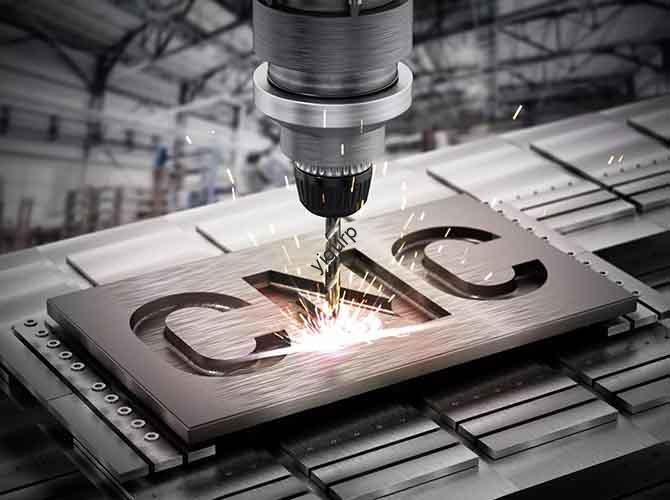
Dans l'industrie de la bijouterie de luxe, Usinage CNC de bijoux has revolutionized how intricate, des pièces de haute qualité sont créées. Contrairement à l'artisanat manuel traditionnel, qui repose sur les compétences des artisans et est sujet aux erreurs humaines, cette technologie utilise une commande numérique par ordinateur. (CNC) systèmes to carve, couper, et polir les matériaux métalliques avec une précision au micron. Ce guide explore ses principes fondamentaux, avantages clés, sélection des matériaux, processus d'usinage, applications du monde réel, and why it’s become a cornerstone of modern jewelry production.
1. Core Definition & Working Principle of Jewelry CNC Machining
To understand its value, we first clarify what Usinage CNC de bijoux is and how it transforms digital designs into physical jewelry—two foundational elements that set it apart from traditional methods.
1.1 Basic Definition
Usinage CNC de bijoux is an advanced manufacturing process that uses commande numérique par ordinateur (CNC) systèmes to direct specialized machine tools (par ex., CNC mills, tours) in shaping metal materials (par ex., or, argent, platine) into jewelry components or finished pieces. It follows pre-programmed tool paths based on 3D digital models, ensuring consistent precision across every piece—even for the most complex patterns (par ex., micro-engravings, filigree details).
1.2 Step-by-Step Working Principle
The technology operates on a seamless, data-driven cycle to turn designs into wearable art:
- 3D Design Creation: Jewelry designers use software (par ex., Rhinocéros, ZBrush) to create a detailed 3D model of the piece—including tiny details like gemstone settings, surface engravings, or curved edges.
- Programmation de trajectoire d'outil: The 3D model is imported into CNC software (par ex., Mastercam for Jewelry), which generates optimized tool paths. This software calculates tool movements, cutting depths, and speeds to avoid material waste and ensure precision.
- Configuration de la machine: The CNC machine is configured with the right tools (par ex., diamond-tipped end mills for hard metals) and raw material (par ex., a gold block). The machine’s worktable is calibrated to ensure alignment with the tool path.
- Usinage automatisé: The CNC system sends signals to the machine, which executes cutting, carving, or grinding operations automatically. Par exemple, it may carve a ring’s band, engrave a pattern on a pendant, or create a setting for a diamond—all without manual intervention.
- Post-traitement: The machined piece undergoes polishing, ponçage, ou placage (par ex., rhodium plating for silver) to enhance its appearance and durability.
2. Unmatched Advantages of Jewelry CNC Machining
Compared to traditional manual jewelry crafting, Usinage CNC de bijoux offers four key benefits that solve critical pain points—from inconsistent quality to slow production times.
2.1 Advantage Breakdown (with Data & Impact)
| Avantage | Key Details & Industrial Impact |
| Micron-Level Precision | Achieves tolerances as tight as ±0,01 mm (10 microns)—critical for tiny details like micro-engravings (0.1 mm de profondeur) or gemstone settings (to secure stones without gaps). This precision reduces gemstone loss by 90% compared to manual setting. |
| High Consistency & Quality Stability | Le contrôle informatique élimine l’erreur humaine (par ex., uneven engraving, mismatched patterns) across batches. Par exemple, a set of 100 identical earrings will have identical dimensions and finishes—something impossible with manual crafting. Quality defect rates drop from 15–20% (manuel) à <2% (CNC). |
| Exceptional Efficiency | Les machines CNC fonctionnent 24/7 avec un minimum de supervision, cutting production time by 50–70%. A manually crafted pendant (with complex engravings) takes 8–10 hours; a CNC machine can produce the same piece in 1–2 hours. This speeds up time-to-market for new collections. |
| Flexibility for Customization | Change designs in minutes by updating the CNC program—no need for new molds or tools. This is ideal for: – Custom jewelry (par ex., engraved name necklaces, personalized engagement rings). – Low-batch, high-variety production (par ex., collections en édition limitée). Traditional methods require 1–2 days to retool for a new design; CNC takes <30 minutes. |
3. Material Selection for Jewelry CNC Machining
The choice of material directly impacts the Usinage CNC de bijoux processus, as well as the final piece’s appearance, durabilité, et le coût. Below are the most common metals used, leurs propriétés, and ideal applications.
3.1 Material Comparison Chart
| Type de matériau | Propriétés clés | Machining Notes | Ideal Jewelry Pieces |
| Or (18K, 24K) | – Malléable (easy to shape) but soft (requires careful cutting). – High luster (needs minimal post-polishing). – Résistant à la corrosion. | Use diamond-tipped tools to avoid scratching; lower cutting speed (500–800 RPM) to prevent material deformation. | Bagues de fiançailles, colliers, bracelets (prime, high-value pieces). |
| Argent (Sterling, Bien) | – More rigid than gold (easier to machine). – Affordable vs. gold/platinum. – Prone to tarnishing (requires plating post-machining). | Use high-speed milling (1,000–1,500 RPM) for efficiency; apply rhodium plating after machining to prevent tarnish. | Boucles d'oreilles, casual bracelets, personalized pendants (mid-range, high-volume pieces). |
| Platine (Pt950, Pt900) | – Ultra-dur (requires specialized tools). – Exceptionally durable (résiste aux rayures). – High density (feels substantial). | Use carbide tools with TiAlN coating; slower feed rate (0.02–0.05 mm/rev) to manage hardness. Post-polish with diamond abrasives for maximum luster. | Luxury rings, alliances, high-end necklaces (long-lasting, heirloom-quality pieces). |
| Palladium (Pd950) | – Léger (lighter than platinum). – Hypoallergénique (safe for sensitive skin). – Similar luster to platinum but more affordable. | Machinability similar to platinum; use high-speed steel (HSS) tools for cost-effectiveness. Avoid high temperatures (melts at 1,555°C) during machining. | Hypoallergenic earrings, casual rings, everyday jewelry. |
4. Core Machining Processes for Jewelry CNC Machining
Creating a finished jewelry piece via Usinage CNC de bijoux involves five sequential steps—each optimized for the tiny size (souvent <50mm) and intricate details of jewelry.
4.1 Step-by-Step Machining Workflow
- Material Trimming (Blank Preparation)
- But: Cut raw metal (par ex., a gold bar, silver sheet) into small blanks (slightly larger than the final piece) to reduce machining time and waste.
- Équipement: CNC saws (pour les métaux) or laser cutters (for thin sheets).
- Key Requirement: Ensure blank flatness (≤0.05 mm) to avoid alignment errors in later steps.
- Usinage grossier
- But: Remove 70–80% of excess material to form the basic shape of the jewelry (par ex., a ring’s band, a pendant’s outline).
- Outils: Large-diameter end mills (3–5mm) for fast material removal.
- Parameters: Vitesse de broche (800–1,200 RPM for gold/platinum), vitesse d'avance (0.05–0.1 mm/rev), depth of cut (0.5–1 mm).
- Fine Machining
- But: Add intricate details (par ex., gravures, sertissages de pierres précieuses, filigree patterns) and refine dimensions to meet design standards.
- Outils: Small-diameter, precision tools (0.1–1 mm) — often diamond-tipped to handle hard metals like platinum.
- Critical Parameters:
- Contrôle de tolérance: ±0,01 mm (for gemstone settings to ensure a tight fit).
- Rugosité de la surface: Râ < 0.4 µm (for visible surfaces to avoid a “grainy” look).
- Vitesse de broche: 1,500–2,000 RPM (higher speed for smoother finishes).
- Forage & Setting Prep
- Forage: Create tiny holes (0.3–1 mm) for gemstone prongs or chains. Use peck drilling (intermittent feeding) to avoid chip clogging (critical for small holes).
- Setting Prep: Carve recesses (par ex., bezel settings, prong seats) for gemstones—ensuring the stone sits securely without gaps.
- Post-traitement (Finition)
- Polissage: Use mechanical polishing (abrasive papers, meules de polissage) or electrochemical polishing to achieve a mirror-like finish (Râ < 0.2 µm).
- Placage: Apply coatings like rhodium (for silver) ou de l'or (for base metals) to enhance durability and appearance.
- Assemblée: For multi-part pieces (par ex., earrings with posts, necklaces with clasps), assemble components using laser welding (for strong, invisible joints).
5. Real-World Applications of Jewelry CNC Machining
Usinage CNC de bijoux is used to create almost every type of jewelry—from everyday pieces to high-end luxury items. Below are its most impactful applications, with examples.
5.1 Application Breakdown
| Jewelry Type | Exemples & Machining Highlights |
| Anneaux | – Bagues de fiançailles: CNC machines carve custom band shapes (par ex., courbé, squared) and create precise settings for diamonds (Tolérance de ±0,01 mm). – Wedding bands: Engrave intricate patterns (par ex., floral designs, personalized names) avec 0.1 mm depth—something manual crafting can’t replicate consistently. Exemple: A jewelry brand used CNC machining to produce 500 custom engagement rings with identical diamond settings—defect rate was 0.5% (contre. 18% for manual production). |
| Colliers & Pendentifs | – Name pendants: CNC machines engrave names or initials with 0.1 mm line width—sharp and consistent across every piece. – Statement pendants: Create 3D shapes (par ex., animal figures, geometric patterns) with hollow interiors (pour réduire le poids) and surface details (par ex., scales, textures). Exemple: A luxury brand’s CNC-machined floral pendants had 99% consistency in petal shape and engraving depth—boosting customer satisfaction by 40%. |
| Boucles d'oreilles | – Boucles d'oreilles clous: CNC machines cut tiny posts (0.5 mm diamètre) and carve settings for small gemstones (par ex., pearls, sapphires). – Dangle earrings: Create multi-layered designs (par ex., cascading shapes) with precise joints—ensuring the earrings hang evenly. Exemple: A fast-fashion jewelry brand used CNC machining to produce 1,000 pairs of stud earrings in 2 days—vs. 1 week with manual crafting. |
| Other Accessories | – Bracelets: Engrave link patterns (par ex., link chains with engraved flowers) and create secure clasps (±0.02 mm tolerance to avoid breakage). – Brooches: Carve 3D shapes (par ex., vintage-style birds, flowers) with fine details (par ex., feather textures, petal veins). |
Yigu Technology’s Perspective on Jewelry CNC Machining
Chez Yigu Technologie, we see Usinage CNC de bijoux as a bridge between art and precision. Our solutions integrate high-precision CNC machines (optimized for gold, argent, and platinum) with AI-driven tool path optimization—reducing material waste by 30% and cutting production time by 45%. We’ve helped jewelry brands create custom pieces with 0.01 mm detail accuracy and batch-produced items with 99% cohérence. As consumer demand for customization grows, we’re developing user-friendly CNC software for small jewelry studios—making precision machining accessible to more creators.
FAQ: Common Questions About Jewelry CNC Machining
- Q: Is Jewelry CNC Machining suitable for small jewelry studios, or is it only for large brands?
UN: It’s suitable for all sizes. Entry-level jewelry CNC machines cost \(10,000–)30,000 (affordable for small studios) and come with user-friendly software. Cloud-based design tools also reduce upfront costs—small studios can outsource 3D design and focus on machining, making it a cost-effective option.
- Q: Can CNC machining create the same “handmade” look as traditional crafting?
UN: Yes—with post-processing. CNC machines can carve organic shapes (par ex., irregular edges, textured surfaces) that mimic handmade pieces. Adding manual touches (par ex., hand-polishing small areas) further enhances the “artisanal” sentir, while retaining CNC’s precision and consistency.
- Q: What’s the maximum size of jewelry that can be made with CNC machining?
UN: Most jewelry CNC machines handle pieces up to 100x100x50 mm—ideal for standard jewelry (par ex., large pendants, bracelets). For larger pieces (par ex., statement necklaces over 150 mm), industrial CNC mills with larger worktables can be used—though these are more common in large-scale production facilities.