
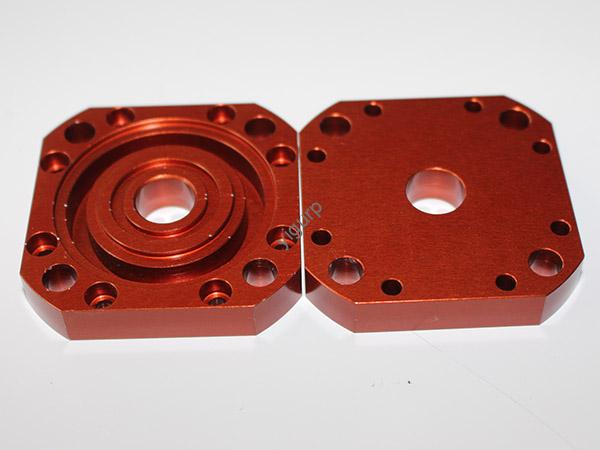
Si vous travaillez sur des projets très stressants, comme des véhicules militaires, coques de navires, or heavy-duty bridges—HY 100 structural steel is a high-strength solution that balances toughness and durability. Cet acier allié est conçu pour des conditions extrêmes, mais comment cela fonctionne-t-il dans des scénarios du monde réel? Ce guide détaille ses principales caractéristiques, applications spécialisées, et comparaisons avec d'autres matériaux, so you can make confident decisions for demanding projects.
1. Material Properties of HY 100 Acier de construction
HY 100’s performance is rooted in its precision alloy composition and rigorous processing, making it ideal for applications where failure isn’t an option. Let’s explore its defining properties.
1.1 Chemical Composition
Le chemical composition of HY 100 is tailored for high strength and toughness (per military and industrial standards):
| Element | Content Range (%) | Key Function |
| Carbon (C) | 0.18 – 0.23 | Provides core strength without brittleness |
| Manganese (Mn) | 0.70 – 1.00 | Enhances ductility and weldability |
| Silicium (Et) | 0.15 – 0.35 | Improves heat resistance during fabrication |
| Sulfur (S) | ≤ 0.015 | Minimized to avoid weak points (critical for high-stress parts) |
| Phosphorus (P.) | ≤ 0.015 | Controlled to prevent cold cracking |
| Chromium (Cr) | 0.40 – 0.65 | Boosts wear resistance and hardenability |
| Nickel (Dans) | 2.30 – 2.80 | Enhances low-temperature toughness (vital for marine or arctic use) |
| Molybdène (Mo) | 0.20 – 0.30 | Improves high-temperature strength and fatigue resistance |
| Vanadium (V) | 0.03 – 0.08 | Refines grain structure for better impact resistance |
| Other alloying elements | Trace (par ex., cuivre) | No major impact on core properties |
1.2 Physical Properties
HY 100’s physical properties make it stable under extreme temperatures and pressures:
- Densité: 7.85 g/cm³ (consistent with most high-strength structural steels)
- Point de fusion: 1430 – 1470°C
- Conductivité thermique: 44 W/(m·K) at 20°C (slower heat transfer, ideal for parts exposed to temperature fluctuations)
- Specific heat capacity: 460 J/(kg·K)
- Coefficient of thermal expansion: 13.1 × 10⁻⁶/°C (20 – 100°C, minimal warping for precision parts)
1.3 Propriétés mécaniques
These traits set HY 100 apart for heavy-duty applications:
- Résistance à la traction: 827 – 965 MPa
- Yield strength: ≥ 690 MPa (the “100” in HY 100 refers to its ~100 ksi yield strength, équivalent à 690 MPa)
- Élongation: ≥ 18% (enough flexibility to withstand sudden impacts without breaking)
- Dureté: 220 – 260 HB (Brinell scale, adjustable via heat treatment)
- Résistance aux chocs: ≥ 80 J at -40°C (excellent for cold environments, like arctic military operations)
- Fatigue resistance: ~410 MPa (handles repeated loads, par ex., ship hulls in rough seas)
- Weldability: Bien (requires preheating to 150 – 200°C and low-hydrogen electrodes to avoid post-weld cracking)
1.4 Other Properties
- Résistance à la corrosion: Modéré (needs coatings like epoxy or zinc-nickel plating for marine or outdoor use; resists saltwater better than standard carbon steel)
- Usinabilité: Équitable (best when annealed to reduce hardness; uses carbide tools for precision cutting)
- Magnetic properties: Ferromagnetic (works with magnetic inspection tools for defect detection)
- Ductilité: Modéré (can be formed into shapes like ship hull plates or armor panels)
- Toughness: Haut (resists brittle fracture under extreme stress, par ex., military vehicle impacts)
2. Applications of HY 100 Acier de construction
HY 100’s high strength and toughness make it a top choice for specialized, high-risk projects. Here are its key uses, avec des exemples réels:
- General construction:
- Structural frameworks: Heavy-duty supports for industrial cranes (lift 50+ ton loads). Un États-Unis. port used HY 100 for its crane frames—withstood 10 years of daily heavy lifts without fatigue.
- Beams and columns: Load-bearing parts in earthquake-resistant buildings (high seismic zones like Japan).
- Mechanical engineering:
- Machine parts: High-torque shafts for mining equipment (handles abrasive dust and heavy loads). An Australian mine uses HY 100 for its excavator shafts—last 2x longer than alloy steel.
- Shafts and axles: Thick axles for industrial presses (resist bending under pressure).
- Industrie automobile:
- Composants du châssis: frames for heavy-duty trucks (haul 30+ ton cargo). A European truck maker uses HY 100 for its dump truck chassis—withstands off-road rough terrain.
- Suspension parts: Heavy-duty shock absorber mounts (handle constant vibration).
- Construction navale:
- Hull structures: Naval ship hulls and submarine pressure hulls (resist deep-sea pressure). Les États-Unis. Navy uses HY 100 for its Arleigh Burke-class destroyers—hulls withstand 10+ years of saltwater exposure.
- Propulsion components: Ship propeller shafts (resist torque and corrosion).
- Railway industry:
- Railway tracks: Heavy-duty rail joints for freight trains (carry 100+ ton cargo). Indian Railways used HY 100 for its coal transport lines—reduced track replacements by 40%.
- Locomotive components: Engine crankshafts (high-speed rotation and torque).
- Infrastructure projects:
- Ponts: Long-span highway bridges (resist wind and traffic stress). A Canadian province used HY 100 for a 100-meter bridge—withstands winter ice loads and spring floods.
- Highway structures: Median barriers for high-speed highways (resist truck impacts).
- Defense and military:
- Blindage: Lightweight armor for military vehicles (par ex., Humvees). Les États-Unis. Army uses HY 100 for its vehicle armor—stops small-arms fire while keeping weight low.
- Vehicle components: Tank hulls and artillery recoil parts (handle explosive forces). A European defense firm uses HY 100 for its tank hulls—resists shrapnel and impacts.
3. Manufacturing Techniques for HY 100 Acier de construction
Producing HY 100 requires precise processes to maintain its high-strength properties:
3.1 Rolling Processes
- Hot rolling: Primary method—steel heated to 1150 – 1250°C, pressed into plates (coques de navires) or bars (arbres). Hot-rolled HY 100 has a rough surface but maximum strength.
- Cold rolling: Rare (used only for thin sheets like armor panels) for tight tolerances—done at room temperature for smooth finish.
3.2 Traitement thermique
Critical for unlocking HY 100’s full strength:
- Recuit: Heated to 800 – 850°C, slow cooling. Softens steel for machining complex parts (par ex., armor panels).
- Normalizing: Heated to 850 – 900°C, air cooling. Improves uniformity for large parts (par ex., poutres de pont).
- Quenching and tempering: Heated to 830 – 860°C (quenched in oil), tempered at 550 – 600°C. Creates balance of strength and toughness—essential for military or marine parts.
3.3 Fabrication Methods
- Coupe: Plasma cutting (fast for thick plates) ou découpe laser (precision for armor parts). Uses low-heat techniques to avoid weakening the steel.
- Welding techniques: Arc welding (on-site shipbuilding) ou soudage au laser (military parts). Preheating and post-weld heat treatment mandatory to prevent cracking.
- Bending and forming: Done when annealed—pressed into curved shapes (par ex., coques de navires) with heavy-duty presses.
3.4 Contrôle de qualité
- Méthodes de contrôle:
- Ultrasonic testing: Checks for internal defects (par ex., holes in armor plating).
- Magnetic particle inspection: Finds surface cracks (par ex., welded ship hulls).
- Essais de traction: Verifies yield strength meets ≥690 MPa standard (critical for military approval).
- Certification standards: Meets ASTM A723 (HY 100 steel standard) et MIL-DTL-16212 (military specification for shipbuilding steel).
4. Études de cas: HY 100 in Action
4.1 Défense: NOUS. Navy Arleigh Burke-Class Destroyers
Les États-Unis. Navy chose HY 100 for the hulls of its Arleigh Burke-class destroyers. These ships operate in saltwater, face rough seas, and need to withstand potential impacts. HY 100’s résistance à la corrosion (with epoxy coating) et résistance à la traction (827–965 MPa) kept hulls intact for 15+ years of service. Compared to standard ship steel, HY 100 reduced hull maintenance by 35% and extended the ships’ lifespan by 5 années.
4.2 Infrastructure: Canadian Long-Span Bridge
A Canadian province used HY 100 for a 100-meter highway bridge in a harsh winter region. The bridge needed to handle heavy truck traffic (50+ ton loads) and -40°C temperatures. HY 100’s résistance aux chocs (≥80 J at -40°C) prevented cold cracking, and its résistance à la fatigue (410 MPa) withstood daily traffic vibrations. Après 8 années, the bridge showed no signs of wear—saving $2 million in maintenance.
5. Comparative Analysis: HY 100 contre. Other Materials
How does HY 100 stack up to standard steels and alternatives?
5.1 contre. Other Types of Steel
| Feature | HY 100 Acier de construction | Acier au carbone (A36) | Acier allié (EN19) |
| Yield Strength | ≥ 690 MPa | ≥ 250 MPa | ≥ 400 MPa |
| Résistance aux chocs (at -40°C) | ≥ 80 J | ≤ 20 J | ≥ 45 J |
| Résistance à la corrosion (Saltwater) | Bien | Pauvre | Équitable |
| Coût (per ton) | \(2,000 – \)2,500 | \(600 – \)800 | \(1,000 – \)1,200 |
5.2 contre. Non-Metallic Materials
- Béton: HY 100 is 10x stronger in tension and 3x lighter. Concrete is cheaper for foundations, but HY 100 is better for load-bearing parts (par ex., poutres de pont) where weight matters.
- Matériaux composites (par ex., fibre de carbone): Composites are lighter but 3x more expensive and less tough. HY 100 is better for military or marine parts that need to withstand impacts.
5.3 contre. Other Metallic Materials
- Alliages d'aluminium: Aluminum is lighter but has lower yield strength (200 – 300 MPa). HY 100 is better for heavy-load parts (par ex., truck chassis).
- Acier inoxydable: Stainless steel resists corrosion but has lower yield strength (≥205 MPa) and costs 2x more. HY 100 is better for high-strength, corrosion-resistant needs (par ex., coques de navires).
5.4 Coût & Environmental Impact
- Cost analysis: HY 100 costs 3x more than carbon steel but saves money long-term (fewer replacements, lower maintenance). A military project using HY 100 enregistré $500,000 sur 10 années contre. acier allié.
- Environmental impact: 100% recyclable (enregistre 75% energy vs. new steel). Production uses more energy than carbon steel but less than composites—eco-friendly for long-lifespan projects.
6. Yigu Technology’s View on HY 100 Acier de construction
Chez Yigu Technologie, we recommend HY 100 for high-stress, mission-critical projects like military vehicles, construction navale, and heavy infrastructure. C'est exceptional yield strength et low-temperature toughness make it unmatched for extreme conditions. We pair HY 100 with our marine-grade anti-corrosion coatings to extend its saltwater lifespan by 8+ years and provide welding guidance to avoid defects. While HY 100 costs more upfront, its durability eliminates costly downtime—making it a smart investment for projects where safety and reliability are non-negotiable.
FAQ About HY 100 Acier de construction
- Can HY 100 be used for marine applications long-term?
Yes—with proper coating (par ex., époxy). Its nickel content improves saltwater resistance, and when paired with anti-corrosion coatings, it lasts 10+ years in marine environments (par ex., coques de navires).
- Is HY 100 difficult to weld?
It requires careful welding: preheat to 150 – 200°C, use low-hydrogen electrodes, and post-weld heat treatment. With proper techniques, welds maintain HY 100’s strength—critical for military or shipbuilding projects.
- When should I choose HY 100 over standard alloy steel?
Choose HY 100 if your project needs yield strength ≥690 MPa, low-temperature toughness, or resistance to extreme stress (par ex., military armor, deep-sea hulls). Standard alloy steel works for medium-stress tasks (par ex., engrenages industriels) to save cost.