
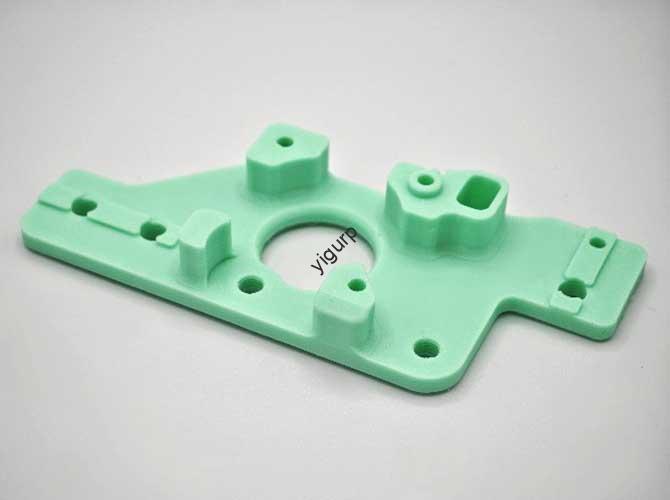
Le moulage sous pression à basse pression et le moulage sous pression par gravité sont deux processus fondamentaux de formage des métaux, chacun construit sur des principes mécaniques distincts. Tandis que tous deux façonnent le métal en fusion en pièces finies à l'aide de moules, leurs approches pour remplir les cavités, une approche pilotée par une pression contrôlée, l'autre par gravité naturelle - crée de fortes différences de qualité, efficacité, et le coût. Pour les fabricants, choosing between them means balancing needs like part strength, volume de production, et budget. But what exactly sets their workflows apart? How do these differences impact end-product performance? And which process is right for your specific application? This article answers these questions with detailed comparisons and actionable guidance.
1. Core Principles: The Fundamental Contrast in Filling Mechanisms
The biggest divide between the two processes lies in how molten metal is delivered to the mold cavity—a difference that shapes every other aspect of their operation.
UN. Coulée sous pression à basse pression
- Driving Force: Utilisations dry compressed air or inert gas (par ex., azote) to apply controlled pressure (typically 0.02–0.15MPa) to a sealed crucible holding molten metal.
- Filling Process: Pressure forces metal up a vertical liquid lift tube and into the mold cavity from the bottom up. This creates a slow, steady “laminar flow” (no turbulent splashing), ensuring the cavity fills completely without trapping air.
- Solidification: The pressure is maintained during cooling (pressure-holding crystallization). This pushes remaining molten metal into shrinkage gaps, eliminating defects like pores or voids.
B. Moulage sous pression par gravité
- Driving Force: Relies solely on metal’s own weight (gravity)—no external pressure is applied.
- Filling Process: Molten metal is poured into a sprue (funnel-shaped inlet) at the top of the mold. It flows downward through runners and gates into the cavity via “natural flow”—filling speed depends on the mold’s design and metal’s fluidity.
- Solidification: Cooling happens passively, with no pressure to counteract shrinkage. This means thicker sections may develop small shrinkage pores, though the slow filling reduces gas entrainment compared to high-pressure methods.
2. Side-by-Side Process Comparison: Key Operational Differences
To understand how these processes perform in practice, let’s break down their workflows, paramètres, and constraints in a clear, data-driven table:
| Process Aspect | Coulée sous pression à basse pression | Moulage sous pression par gravité |
| Filling Mode | Bottom-up laminar flow; pressure-controlled (0.02–0.15MPa). | Top-down gravity flow; no external pressure. |
| Filling Speed | Lent, uniform (typically 5–15cm/s); adjustable via pressure. | Variable (depends on mold design); faster than low-pressure but slower than high-pressure die casting. |
| Metal Fluidity Requirement | Faible à moyen; works with most non-ferrous alloys (aluminium, magnésium). | Haut; requires alloys with good flowability (par ex., aluminium, cuivre) to fill cavities via gravity alone. |
| Mold Design Complexity | Haut; needs sealed crucibles, liquid lift tubes, and pressure ports. | Faible; simple sprue-runner-gate systems (no pressure-related components). |
| Temps de cycle | Plus long (60–120 seconds per part); includes pressure ramp-up and holding. | Modéré (45–90 seconds per part); faster than low-pressure but slower than high-pressure die casting. |
| Waste Rate | Faible (5–8%); no need for risers (extra metal to feed shrinkage). | Plus haut (10–15%); may require risers for thick-walled parts, increasing material waste. |
3. Performance & Qualité: Which Delivers Better Results?
The filling mechanism directly impacts part quality, propriétés mécaniques, and defect rates. Below is a detailed comparison of key performance metrics:
| Performance Metric | Coulée sous pression à basse pression | Moulage sous pression par gravité |
| Densité des pièces | Haut (≥99.5% theoretical density); pressure eliminates shrinkage pores. | Modéré (98–99%); small pores may form in thick sections. |
| Résistance à la traction | Supérieur (par ex., 280–320MPa for aluminum alloys); dense structure boosts strength. | Bien (par ex., 240–280MPa for aluminum alloys); slightly lower due to minor porosity. |
| Finition de surface | Excellent (Ra 1.6–3.2μm); smooth filling avoids surface defects like cold shuts. | Modéré (Ra 3.2–6.3μm); may have minor surface irregularities from uneven flow. |
| Taux de défauts | Faible (2–5% scrap rate); minimal oxidation or gas defects. | Modéré (5–10% scrap rate); risks include cold shuts (from slow flow) or shrinkage pores. |
| Heat Treatment Compatibility | Excellent; uniform structure resists deformation during heat treatment (par ex., T6). | Bien; can be heat-treated but may require pre-inspection to avoid pore expansion. |
4. Applications: Matching Process to Part Needs
Each process excels in specific scenarios, based on part design, matériel, et exigences de performance. The table below maps processes to ideal use cases:
| Part Requirement | Prefer Low-Pressure Die Casting | Prefer Gravity Die Casting |
| Haute résistance, Safety-Critical Parts | Roues automobiles, engine blocks/covers (need density and strength to withstand loads). | None—safety parts require the higher density of low-pressure casting. |
| Large Thin-Walled Components | Missile housings, aircraft structural parts (laminar flow prevents thin-section voids). | Not suitable—gravity flow can’t fill thin walls (≤3mm) uniformly. |
| Thick-Walled, Simple Shapes | None—overkill for low-performance thick parts. | Rail transit accessories (par ex., bogie brackets), robot structural parts, ship propeller hubs (thick sections, low complexity). |
| Cost-Sensitive, Medium-Volume Parts | None—higher equipment costs make it uneconomical for low-margin parts. | Biens de consommation (par ex., large cookware), vannes industrielles (simple design, medium volume). |
| Non-Ferrous Alloy Parts | Ideal for aluminum, magnésium, and copper alloys (controllable flow suits these materials). | Best for aluminum and copper alloys (bonne fluidité); less suitable for low-fluidity alloys. |
5. Cost Analysis: Upfront Investment vs. Long-Term Savings
Cost is a critical factor for manufacturers. Below is a breakdown of equipment, moule, and per-part costs (based on aluminum alloy parts, 10,000-part batch):
| Cost Category | Coulée sous pression à basse pression | Moulage sous pression par gravité |
| Equipment Investment | Haut (\(150,000–)300,000); includes sealed crucibles, pressure control systems, and lift tubes. | Faible (\(50,000–)100,000); simple melting furnaces and open molds. |
| Mold Cost | Haut (\(15,000–)40,000); complex designs with sealed cavities and lift tubes. | Faible (\(5,000–)15,000); simple, open designs with minimal features. |
| Per-Part Material Cost | Faible (\(0.4–)0.6/kilos); no risers reduce waste. | Modéré (\(0.5–)0.7/kilos); risers increase material usage. |
| Labor Cost | Modéré; requires trained operators to monitor pressure (1–2 operators/line). | Faible; simple process needs minimal supervision (1 operator/2 lines). |
| Total Batch Cost | ~\(30,000–)60,000 | ~\(15,000–)30,000 |
6. Yigu Technology’s Perspective on the Two Processes
Chez Yigu Technologie, we see low-pressure and gravity die casting as complementary tools—each solving unique manufacturing challenges. For automotive clients needing high-strength wheels, our low-pressure casting lines (equipped with real-time pressure monitoring) deliver parts with 99.8% density and <3% scrap rates, meeting IATF 16949 normes. For rail transit clients, our gravity casting solutions cut upfront costs by 50% while producing durable brackets that pass 100,000-cycle load tests.
We’re optimizing both processes: 1) Adding AI to low-pressure systems to auto-adjust pressure for different part thicknesses (reducing cycle time by 15%); 2) Developing modular gravity molds that switch between part designs in 30 minutes (ideal for small-batch production). Our goal is to tailor each process to the client’s “pain points”—whether it’s quality, coût, or flexibility—instead of forcing a one-size-fits-all solution.
FAQ
- Can gravity die casting be used for thin-walled parts (par ex., 2mm d'épaisseur)?
No—gravity-driven flow can’t fill thin walls uniformly, leading to voids or incomplete filling. Thin-walled parts (≤3mm) require low-pressure die casting, which uses controlled pressure to push metal into narrow cavities without gaps.
- Is low-pressure die casting worth the higher upfront cost for medium-volume production (par ex., 5,000 parts/year)?
It depends on part value: Pour les pièces de grande valeur (par ex., roues automobiles, where defects cost $100+/part), yes—lower scrap rates and better quality offset equipment costs. For low-value parts (par ex., simple brackets), gravity casting is more economical, even with higher material waste.
- Which process is better for magnesium alloys—low-pressure or gravity die casting?
Low-pressure casting is better. Magnesium is prone to oxidation, and low-pressure’s sealed crucible and inert gas protection reduce oxidation by 80% compared to gravity casting (which exposes molten magnesium to air during pouring). This ensures magnesium parts meet corrosion-resistance standards (par ex., ASTMB94).