
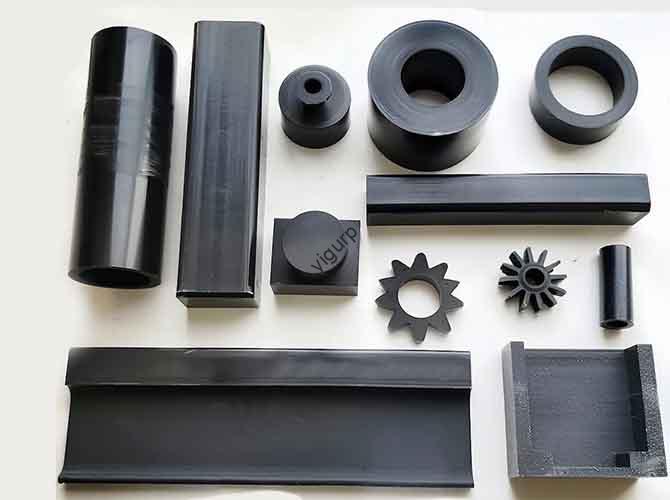
A well-crafted CNC machining soymilk machine prototype is a critical tool in product development—it validates design feasibility, teste les fonctions de base (comme la rotation de la lame et les performances étanches), et réduit les risques avant la production de masse. Cet article détaille l'ensemble du processus de développement, de la conception aux tests., utiliser des comparaisons claires, des conseils étape par étape, et des solutions pratiques pour relever les défis communs.
1. Préparation préliminaire: Build the Foundation for Prototype Success
Preliminary preparation sets the stage for accurate machining. It focuses on two key tasks: 3D model design et sélection des matériaux, both tailored to the unique needs of soymilk machines (par ex., sécurité alimentaire, résistance à la chaleur).
1.1 3D Model Design & Key Detail Planning
Use professional CAD software (par ex., SolidWorks, UG, Pro/E) to create a detailed 3D model of the soymilk machine. The model must include all components and highlight critical details to avoid machining errors:
- Component Breakdown: Split the machine into parts like the body shell, lid, blades, button panel, et base for easier machining and assembly.
- Critical Features to Mark:
- Dimensions of the inner container (tolérance: ±0,1mm, to ensure capacity accuracy).
- Position and size of the blade mounting slot (to guarantee smooth rotation).
- Groove for the silicone sealing ring (prevents liquid leakage during operation).
- Layout of control buttons (ergonomic design for easy use).
Why focus on these details? A missing dimension (par ex., incorrect blade slot size) could make the blade unmountable, requiring rework that adds 2–3 days to the timeline.
1.2 Sélection des matériaux: Match Materials to Component Functions
Different components of the soymilk machine need materials with specific properties (par ex., transparency for observation windows, food safety for inner parts). The table below compares the most suitable materials:
| Type de matériau | Avantages clés | Ideal Components | Fourchette de coût (par kg) | Usinabilité |
| Plastique ABS | Easy to cut, faible coût, compatible with injection molding | Body shell, handle, base (non-load-bearing parts) | \(2–)4 | Excellent (fast cutting, low tool wear) |
| PC (Polycarbonate) | Transparent, résistant aux chocs, résistant à la chaleur | Observation windows, high-strength covers | \(6–)9 | Bien (requires high-speed cutting to avoid cracking) |
| Alliage d'aluminium | Haute résistance, good heat dissipation, durable | Blade brackets, motor housings | \(7–)12 | Bien (needs anodizing to prevent rust) |
| Résine (par ex., Polyuréthane) | Can be cast into complex shapes | Small-batch replicas (with CNC-machined molds) | \(10–)15 | Modéré (used with CNC, not standalone) |
Exemple: The inner container, which contacts food directly, can use food-grade PC plastic. The body shell, a non-load-bearing part, is more cost-effective with Plastique ABS.
2. Processus d'usinage CNC: Turn Design into Physical Components
The CNC machining phase follows a linear workflow—programming → material preparation → rough machining → finishing—with special attention to soymilk machine-specific structures (par ex., small buttons, thin-walled bodies).
2.1 Programmation & Toolpath Setup
Use CAM software (par ex., Mastercam, PowerMill) to generate toolpaths and G-code. Follow these steps for precision:
- Tool Selection by Component:
- For blades: Utiliser carbide or high-speed steel tools (ensures sharp edges for efficient soybean crushing).
- For small buttons/buckles: Use small-diameter tools (Φ0.5mm or less) to avoid breaking.
- Cutting Parameters by Material:
- Plastique ABS: Cutting speed = 1800–2200 rpm; Feed rate = 600–800 mm/min.
- Alliage d'aluminium: Cutting speed = 1000–1500 rpm; Feed rate = 400–600 mm/min (use coolant to prevent sticking).
- PC Plastic: Cutting speed = 2000–2500 rpm; Feed rate = 300–500 mm/min (high speed reduces cracking).
- Special Structure Handling:
- Thin-walled parts (par ex., body shell): Reserve 0.2–0.3mm deformation allowance to avoid warping.
- Heat dissipation holes: Use hollow tools or GED (Usinage par électroérosion) for complex hole shapes; ensure chip evacuation to prevent residue.
2.2 Exécution de l'usinage: Étapes clés & Precautions
Proper execution ensures component accuracy. Follow this sequence:
- Préparation du matériel: Cut raw materials (par ex., ABS blocks, feuilles d'aluminium) into billets matching component sizes.
- Clamping: Secure billets to the machine table (use vacuum adsorption for ABS plastic, three-jaw chucks for aluminum alloy) pour empêcher le mouvement.
- Usinage grossier: Remove 80–90% of excess material quickly (use large-diameter tools to save time).
- Finition: Refine the surface to meet precision requirements (rugosité de la surface Ra <0.8μm for visible parts like the lid).
Critical Precaution: Replace worn tools immediately—dull tools can increase dimensional error by 0.2mm or more, ruining the component.
3. Post-traitement: Enhance Appearance & Fonctionnalité
Post-processing removes machining flaws and prepares components for assembly. It includes traitement de surface et pre-assembly checks.
3.1 Traitement de surface: Improve Look & Durabilité
Choose treatment methods based on the material and component function:
- Ponçage & Polissage: Utilisez du papier de verre (from 200-grit to 800-grit) to remove tool marks; polish exterior parts (par ex., body shell) to a smooth finish.
- Pulvérisation: Apply food-grade paints (par ex., huile de caoutchouc, UV paint) to plastic parts—this simulates the texture of mass-produced machines and enhances scratch resistance.
- Anodisation: Treat aluminum alloy parts (par ex., blade brackets) with anodizing to prevent rust and add a matte or glossy finish.
- Silk Screen Printing: Print brand logos, operation instructions (par ex., “Start,” “Soymilk,” “Faire le ménage”), and capacity scales on the body—use high-adhesion ink to avoid fading.
3.2 Pre-Assembly Checks
Before assembly, inspect each component for flaws:
- Check dimensions with calipers (ensure inner container capacity meets design specs).
- Test blade sharpness (run a quick rotation test to confirm no jitter).
- Verify sealing ring groove size (ensure the ring fits tightly to prevent leakage).
4. Assemblée & Essai: Validate Prototype Performance
Assembly and testing confirm the prototype works as intended. Follow a systematic approach to avoid mistakes.
4.1 Step-by-Step Assembly
- Attach the motor bracket (alliage d'aluminium) to the base using M2 screws (couple: 1.0–1.5 N·m).
- Install the blades into the mounting slot (ensure they rotate freely without obstruction).
- Fit the silicone sealing ring into the lid’s groove (press firmly to secure).
- Mount the button panel onto the body shell (align buttons with pre-machined holes).
- Assemble the lid to the body (test the hinge for smooth opening/closing).
4.2 Testing Checklist: Ensure Functionality & Safety
Test the prototype in three key areas to validate performance:
| Test Category | Tools/Methods | Pass Criteria |
| Functional Test | Manual operation, water test | – Blades rotate smoothly (no noise or jitter).- No water leakage from the lid or base.- Buttons respond correctly (par ex., “Start” triggers blade rotation). |
| Structural Test | Pull test (handle), pressure test | – Handle resists 3kg pull force without loosening.- Inner container withstands 1.5x its capacity of water without deformation. |
| Appearance Test | Inspection visuelle, gloss meter | – No scratches or paint chips on visible parts.- Silk screen logos/instructions are clear and not smudged. |
Yigu Technology’s Perspective
Chez Yigu Technologie, we see CNC machining soymilk machine prototypes as a “design validator”—they turn ideas into tangible products while minimizing risks. Our team prioritizes two key aspects: material safety and precision. For food-contacting parts (par ex., inner containers), we use food-grade PC or stainless steel to meet global standards (par ex., FDA). For critical components like blades, we optimize machining parameters (par ex., using carbide tools) to ensure sharpness and dynamic balance. We also integrate 3D scanning post-machining to verify dimensional accuracy (tolérance <0.05mm). By focusing on these details, we help clients reduce post-production defects by 20–25% and cut time-to-market by 1–2 weeks. Whether you need an appearance prototype for exhibitions or a functional one for testing, we tailor solutions to your goals.
FAQ
- Q: How long does it take to produce a CNC machining soymilk machine prototype?
UN: Typically 7–9 days. This includes 1–2 days for 3D design, 2–3 days for CNC machining, 1–2 days for post-processing, and 1–2 days for assembly and testing.
- Q: Can I use resin instead of ABS plastic for the body shell?
UN: Resin is not ideal for the body shell. While it can be cast into complex shapes, it has low strength and may crack when exposed to the vibration of rotating blades. ABS plastic is better for its durability and machinability.
- Q: What should I do if the prototype leaks during the water test?
UN: D'abord, check the silicone sealing ring—ensure it’s not damaged and fits tightly in the groove. If the ring is intact, verify the groove dimensions (tolerance should be ±0.05mm). If the groove is too large, add a thin silicone pad to the lid to improve sealing. This fix takes 1–2 hours and resolves most leakage issues.